
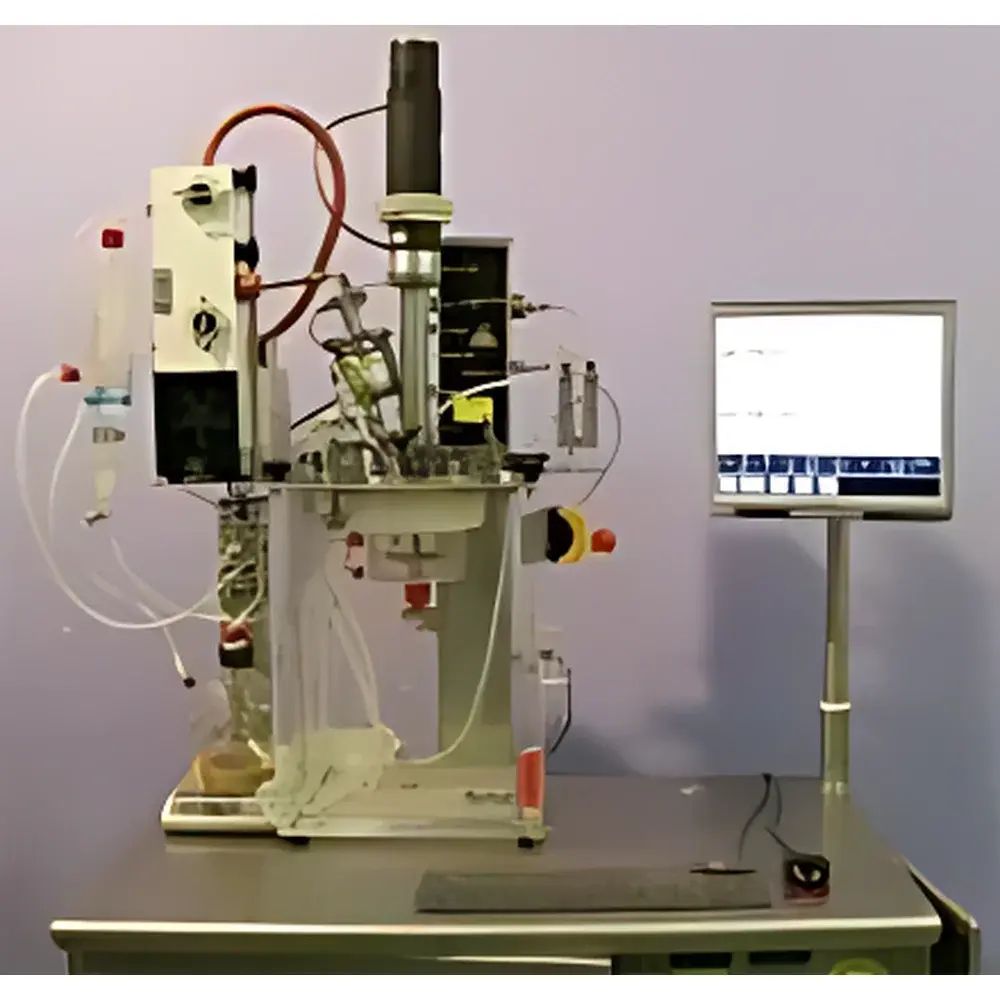
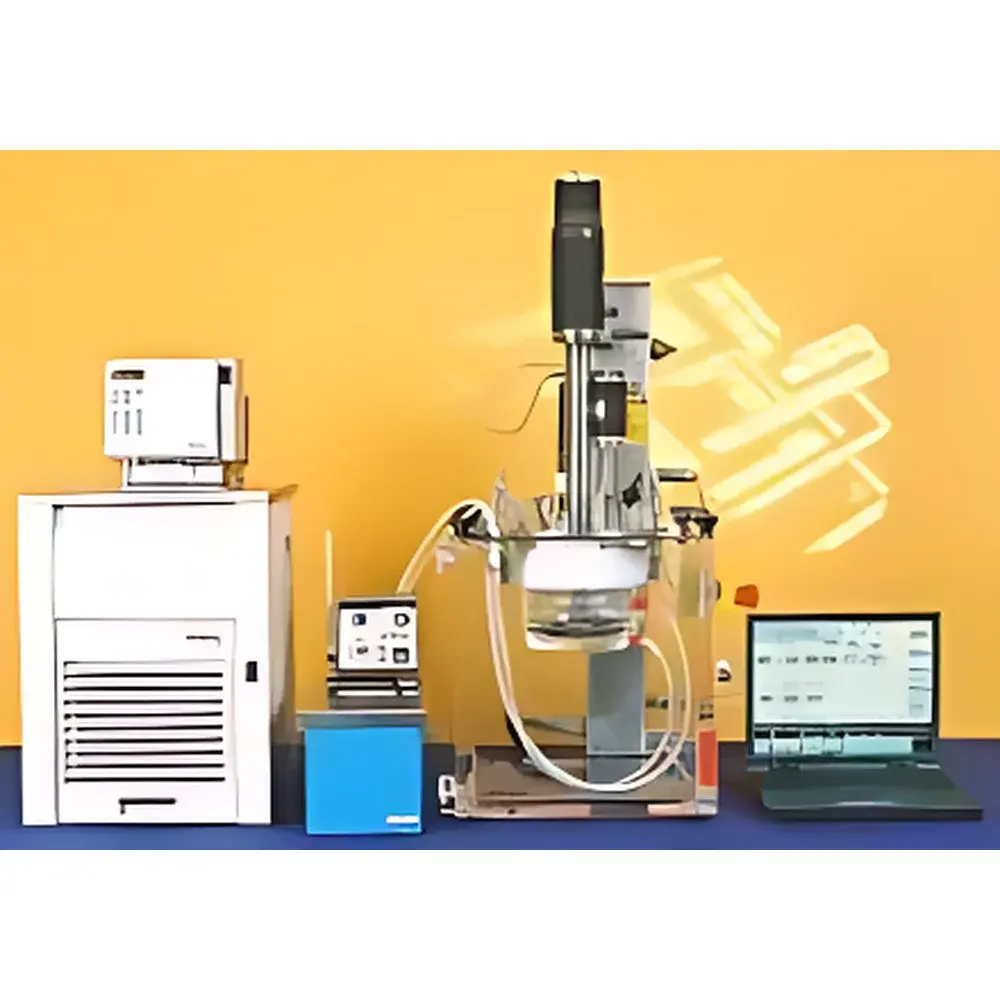
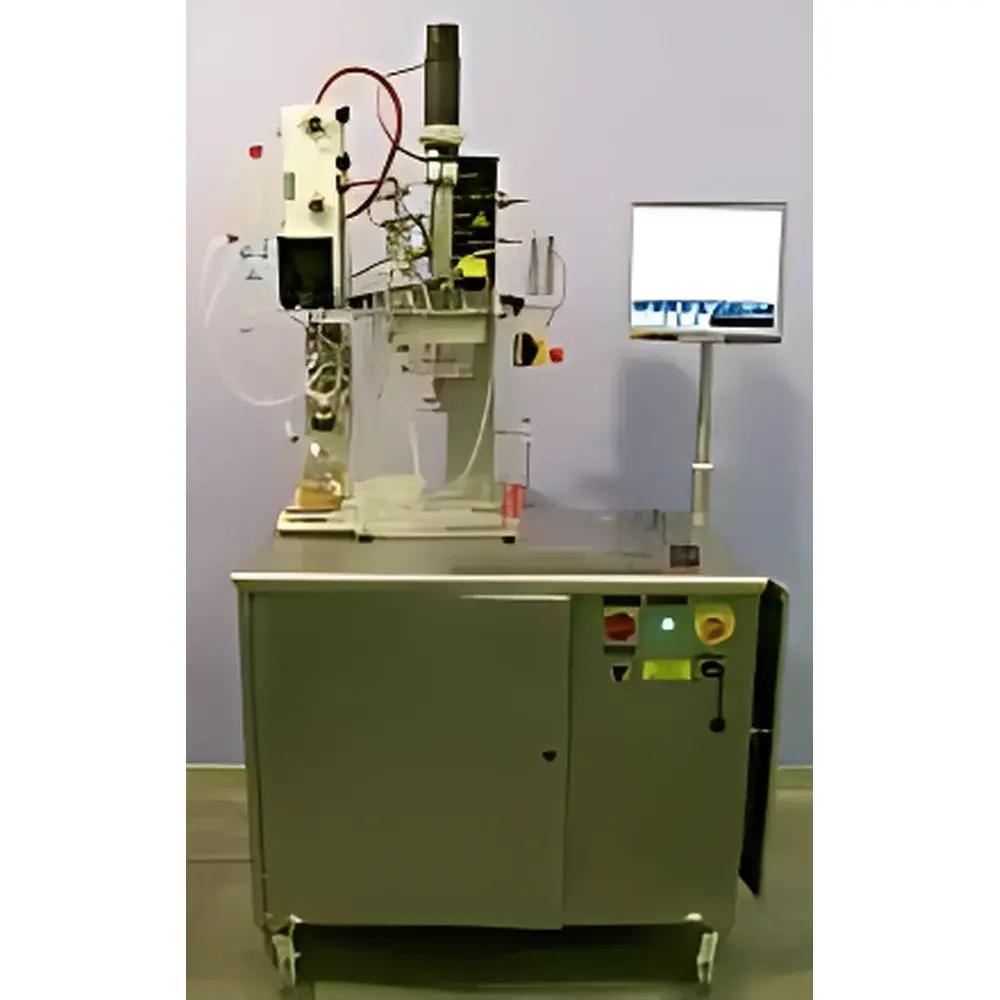
ProCepT Lab-Vac Laboratory-Scale Agitated Vacuum Dryer
| Brand | ProCepT (Belgium) |
|---|---|
| Origin | Belgium |
| Model | Lab-Vac |
| Capacity Range | 25–800 g API |
| Vessel Options | Borosilicate Glass (250 / 500 / 900 / 1900 / 5000 mL cylindrical |
| Temperature Control Range | −10 to +95 °C |
| Agitator Speed | Adjustable, Continuous Variable |
| Atmosphere Control | Programmable N₂ purge & inert gas overlay |
| Vacuum System | Integrated with calibrated pressure control, particulate filter, glass condenser, bypass valve, and vacuum pump |
| Compliance | Designed for GMP/GAMP-compliant process development and qualification |
Overview
The ProCepT Lab-Vac is a laboratory-scale agitated vacuum dryer engineered for rigorous early-phase drying process development of Active Pharmaceutical Ingredients (APIs) and New Chemical Entities (NCEs). It operates on the principle of simultaneous agitation and reduced-pressure evaporation, enabling precise control over heat and mass transfer dynamics under vacuum. Unlike static tray dryers, the Lab-Vac’s rotating agitator ensures uniform powder bed movement, minimizes crust formation, and enhances solvent removal kinetics—critical for thermolabile compounds and low-residual-solvent specifications. Its modular architecture supports direct translation from lab-scale kinetic studies to pilot- and manufacturing-scale equipment via scalable geometric and dynamic similarity parameters (e.g., power per unit volume, specific shear rate, and interfacial surface area evolution). The system is purpose-built for mechanistic drying modeling, endpoint determination, and critical process parameter (CPP) identification in line with ICH Q5C, Q8(R2), and Q9 frameworks.
Key Features
- Modular vessel configuration: Interchangeable borosilicate glass vessels (250, 500, 900, 1900, and 5000 mL cylindrical; 2000 mL conical) with PTFE-sealed flanged lids—enabling real-time visual monitoring of cake morphology, cracking behavior, and moisture migration without process interruption.
- Variable-speed agitator drive: Precision-controlled motor with torque feedback, supporting gentle scraping (for sticky pastes) or high-shear dispersion (for crystalline slurries), programmable via integrated HMI.
- Full environmental control stack: Independent regulation of jacket temperature (−10 to +95 °C), chamber pressure (down to <1 mbar abs, calibrated to ISO 2533 traceability), and inert gas flow (N₂ or Ar, mass-flow controlled with ±1% FS accuracy).
- Integrated condensation train: All-glass cold trap (−20 °C cooling capacity) with sight glass and drain port, coupled with HEPA-class particulate filtration upstream of the vacuum pump—ensuring solvent recovery integrity and operator safety per OSHA 1910.1200 and EU CLP requirements.
- GMP-ready mechanical design: Electropolished stainless steel frame (316L), IP54-rated electronics enclosure, and documentation-ready architecture compliant with Annex 11 and FDA 21 CFR Part 11 data integrity expectations.
Sample Compatibility & Compliance
The Lab-Vac accommodates a broad spectrum of pharmaceutical intermediates and final APIs—including hygroscopic solids, amorphous dispersions, co-crystals, and lyophilized pre-formulations. Its glass vessels permit UV-Vis and inline NIR probe integration (via optional quartz ports) for real-time solid-state monitoring. All wetted parts comply with USP Class VI and EP 3.1.1 extractables testing protocols. Full qualification packages—including FAT/SAT reports, IQ/OQ documentation templates, and calibration certificates traceable to NIST standards—are available upon request. The system meets fundamental requirements for GLP audits and supports Stage 3 (Process Validation) activities per FDA Guidance for Industry: Process Validation: General Principles and Practices (2011).
Software & Data Management
Equipped with ProCepT DryControl™ v3.2 software, the Lab-Vac delivers time-stamped, audit-trail-enabled acquisition of >20 process variables (vessel pressure, jacket temp, agitator torque, condensate mass, N₂ flow, etc.) at 1 Hz resolution. Data export conforms to ASTM E2500-13 and ISA-88 batch record structures. Electronic signatures, role-based user access, and configurable alarm thresholds satisfy 21 CFR Part 11 compliance. Raw datasets are stored in vendor-neutral CSV/ASAM MDF4 formats, facilitating import into MATLAB®, Python-based kinetic modeling tools (e.g., DRYKIN, PSE gPROMS), or enterprise LIMS platforms.
Applications
- Kinetic profiling of residual solvent desorption (e.g., acetone, THF, DMF) under controlled vacuum ramps and temperature gradients.
- Comparative evaluation of drying mechanisms: diffusion-controlled vs. interface-limited regimes in amorphous systems.
- Scale-down validation of commercial agitated dryers (e.g., CONI-DRIER®, FLO-DRIER®) using dimensionless number matching (Re, Ga, Bo).
- Stability-indicating endpoint detection via in situ moisture analyzers (e.g., tunable diode laser absorption spectroscopy) mounted on auxiliary ports.
- Supporting Quality-by-Design (QbD) initiatives through Design of Experiments (DoE) campaigns mapping CPP–CMAs relationships per ICH Q5A–Q5E.
FAQ
Can the Lab-Vac be used for drying oxygen-sensitive compounds?
Yes—integrated N₂/Ar purge capability enables full inert atmosphere operation, with O₂ levels maintainable below 50 ppm via continuous flow monitoring and closed-loop pressure compensation.
Is the glass vessel rated for vacuum cycling and thermal shock?
All borosilicate vessels meet DIN ISO 3585 specifications and are validated for ≥10,000 vacuum cycles between −10 °C and +95 °C with no observable stress fracture or seal degradation.
Does ProCepT provide support for regulatory submissions?
Yes—technical files include URS, FMEA, risk assessments, and raw calibration records suitable for inclusion in Module 3 (Quality) of CTD/eCTD dossiers.
How is cleaning validation addressed?
Vessels feature zero-dead-leg geometry and are fully drainable; swab recovery studies and rinse sampling protocols are documented in the optional Cleaning Validation Support Package.
Can third-party sensors be integrated?
Yes—the system offers 4× analog inputs (0–10 V / 4–20 mA), RS485 Modbus RTU, and Ethernet/IP interfaces for seamless integration of external probes (e.g., RH, Raman, dielectric spectroscopy).



