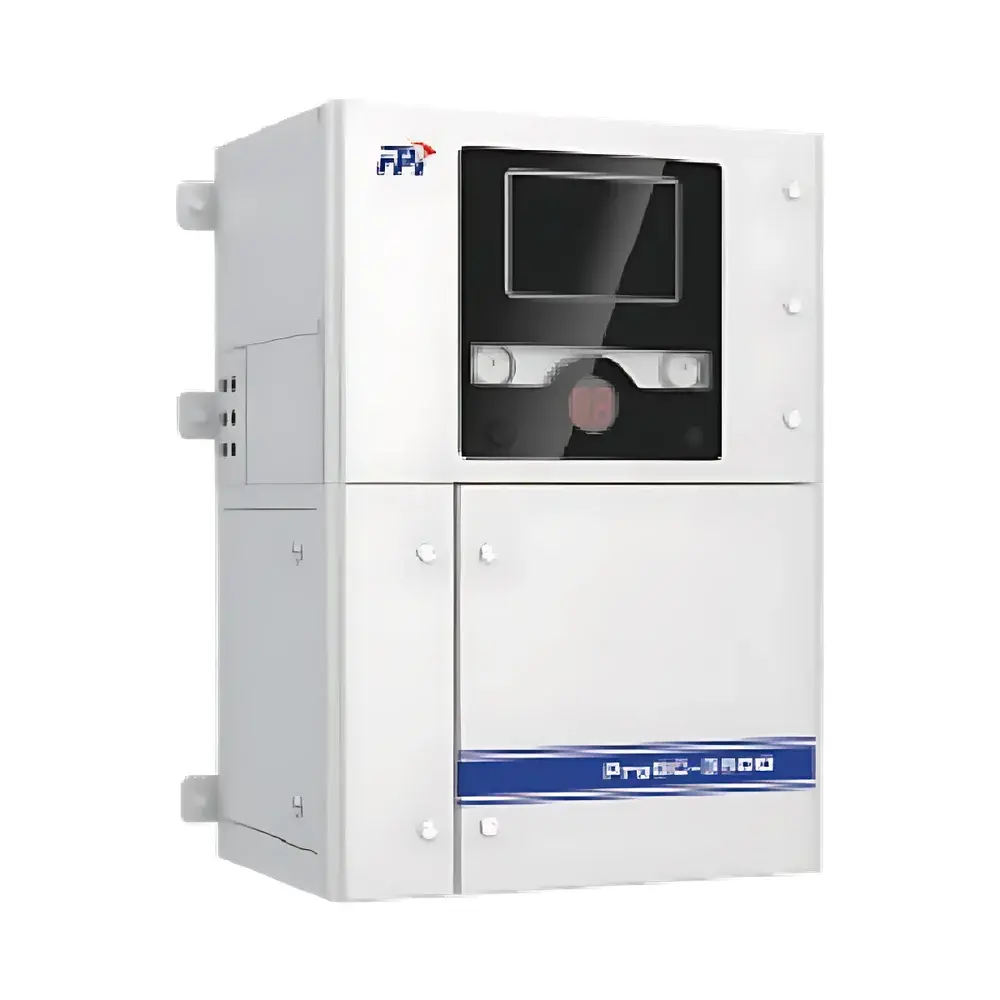
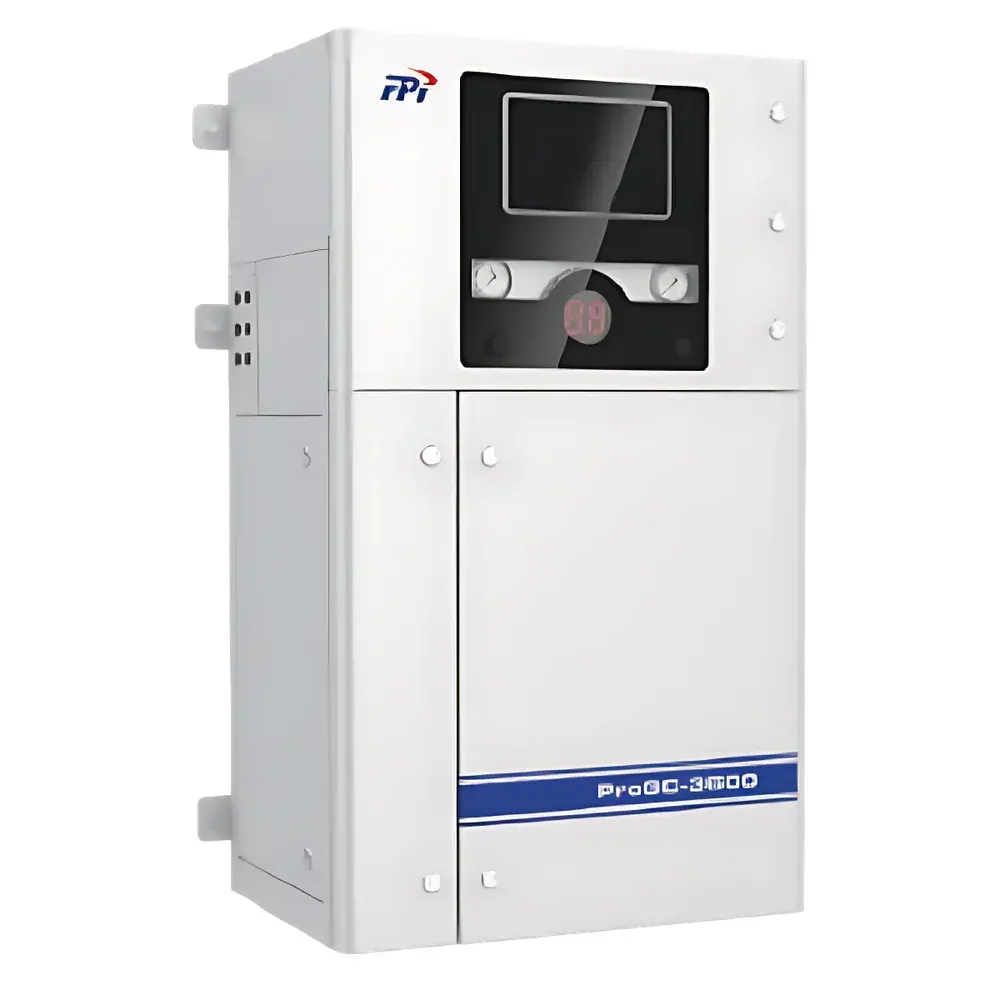
ProGC-3500/3600 Online Gas Chromatograph by SYSTEA
| Brand | SYSTEA |
|---|---|
| Model | ProGC-3500/3600 |
| Application Domain | Natural Gas, Metallurgy, Petrochemical, Coal Chemical, Power Generation, Pharmaceutical |
| Detector Options | TCD, FID, FPD, PDD |
| Explosion Protection Rating | IIC T5 |
| Origin | Zhejiang, China |
| Distribution Type | Authorized Distributor |
| Pricing | Available Upon Request |
Overview
The ProGC-3500/3600 Online Gas Chromatograph is an industrial-grade, continuous-process analytical instrument engineered for real-time compositional analysis of gaseous process streams. Based on capillary gas chromatography with temperature-programmed separation and high-selectivity detection, it delivers precise, repeatable quantification of permanent gases (e.g., H₂, O₂, N₂, CO, CO₂, CH₄), light hydrocarbons (C₁–C₆), sulfur compounds (H₂S, COS, mercaptans), and halogenated species in demanding production environments. Designed for 24/7 unattended operation, the system integrates robust sample conditioning—comprising pressure regulation, particulate filtration, moisture removal, and flow stabilization—to ensure consistent column performance and detector integrity. Its architecture adheres to ISA-84 and IEC 61511 functional safety principles for integration into safety instrumented systems (SIS) where applicable.
Key Features
- Explosion-proof enclosure certified to IEC 60079-0 and IEC 60079-1, meeting Class I, Division 1 / Zone 1 requirements with IIC T5 temperature classification—suitable for installation in hazardous areas adjacent to flare stacks, reformer outlets, or synthesis gas manifolds.
- Modular detector configuration supporting simultaneous or sequential operation of up to two detectors: Thermal Conductivity Detector (TCD) for inert gas and hydrogen analysis; Flame Ionization Detector (FID) for hydrocarbon quantification; Flame Photometric Detector (FPD) for sulfur- and phosphorus-containing compounds; and Pulsed Discharge Detector (PDD) for trace noble gas or helium purity assessment.
- Intelligent self-diagnostic firmware continuously monitors critical subsystems—including oven temperature stability (±0.1 °C), carrier gas pressure (0.1–5.0 bar range), detector baseline drift (<1 pA/h), and valve actuation timing—logging fault codes and predictive maintenance alerts via Modbus TCP or OPC UA interfaces.
- Pre-configured method libraries compliant with ASTM D1945, ASTM D1946, ISO 6974-2, and GB/T 13610 for natural gas composition, refinery gas, and syngas analysis—enabling rapid deployment without method development overhead.
- Industrial-grade thermal management system with dual-zone column oven (35–220 °C operating range) and independently controlled detector zones, minimizing thermal lag during rapid cycle times (typical analysis duration: 2–8 min).
Sample Compatibility & Compliance
The ProGC-3500/3600 accepts pressurized gas samples ranging from 0.5 to 3.0 bar(g), with inlet temperatures between −20 °C and 60 °C. Integrated sample conditioning accommodates feed streams containing up to 5 ppm condensable hydrocarbons and 10 ppm total sulfur, provided upstream coalescing and refrigerated drying are implemented per API RP 14E guidelines. The system complies with electromagnetic compatibility standards IEC 61326-1 (industrial environment) and meets CE marking requirements under the EU ATEX Directive 2014/34/EU. For regulated pharmaceutical and biotech applications, audit trail functionality supports FDA 21 CFR Part 11 compliance when paired with validated LIMS integration protocols.
Software & Data Management
ChromAccess™ v4.2 control and data acquisition software provides browser-based remote monitoring (HTML5-compatible), automated calibration sequence execution, and multi-point retention time locking for long-term method robustness. All raw chromatograms, peak tables, calibration curves, and system event logs are stored in a relational database with configurable retention policies (default: 180 days). Data export supports CSV, PDF, and ASTM E1394-compliant .cdx formats. Role-based access control (RBAC) enforces operator, supervisor, and administrator privileges, while electronic signature workflows satisfy GLP/GMP documentation requirements. Integration with DeltaV, Emerson DCS, and Siemens PCS7 is supported via native OPC UA server implementation.
Applications
- Natural gas custody transfer and Wobbe index calculation at pipeline interconnects and LNG terminals.
- Process gas monitoring in ammonia synthesis loops (N₂/H₂ ratio control), methanol reactors (CO/CO₂/H₂ balance), and Fischer–Tropsch units.
- Sulfur speciation in Claus tail gas and amine regenerator off-gas for SO₂ emission compliance (EPA Method 15/16).
- Purity verification of hydrogen streams in PEM electrolyzer output and fuel cell feed lines (per ISO 8573-8).
- Residual solvent analysis in pharmaceutical lyophilization chamber purge gases (ICH Q3C-aligned methods).
- Flue gas composition tracking (O₂, CO, NOₓ) in coal-fired boiler optimization and carbon capture readiness assessment.
FAQ
What sample introduction methods are supported?
Standard configuration includes a six-port, high-temperature rotary valve with fused silica sample loop (0.25–5.0 mL); optional heated diaphragm pump or pressure-driven flow injection is available for low-pressure or vacuum-sourced streams.
Can the system operate without external calibration gases?
Yes—internal standard addition and retention time locking enable drift-compensated quantification; however, periodic calibration with NIST-traceable gas standards (every 7–30 days, depending on application severity) is required for regulatory reporting.
Is cybersecurity hardening available?
All units ship with TLS 1.2 encryption, disabled default accounts, configurable firewall rules, and firmware signing validation—certified to IEC 62443-3-3 SL2 upon customer-requested configuration audit.
What is the typical mean time between failures (MTBF) for field-deployed units?
Based on 3-year field reliability data from 42 installations across petrochemical and power generation sites, MTBF exceeds 14,500 hours under continuous operation with scheduled preventive maintenance every 6 months.