
Proteus Proteus 35 Field-Deployable Real-Time Escherichia coli Sensor System
| Brand | Proteus |
|---|---|
| Origin | United Kingdom |
| Model | Proteus 35 |
| Measurement Principle | Fluorescence-based immunomagnetic separation (IMS) coupled with enzymatic β-glucuronidase detection |
| Detection Target | Escherichia coli (E. coli), fecal coliforms, total coliforms |
| BOD Range | 0–300 mg/L |
| COD Range | 0–600 mg/L |
| DOC Range | 0–400 mg/L |
| TOC Range | 0–400 mg/L |
| Temperature Range | −5 to 50 °C |
| pH Range | 0–14 |
| ORP Range | −999 to +999 mV |
| Turbidity (FNU) | 0–500 / 400–5000 |
| DO (Fluorescence) | 0–50 mg/L |
| Conductivity | 0–275 mS/cm |
| Salinity | 0–70 PSS |
| TDS | 0–65 g/L |
Overview
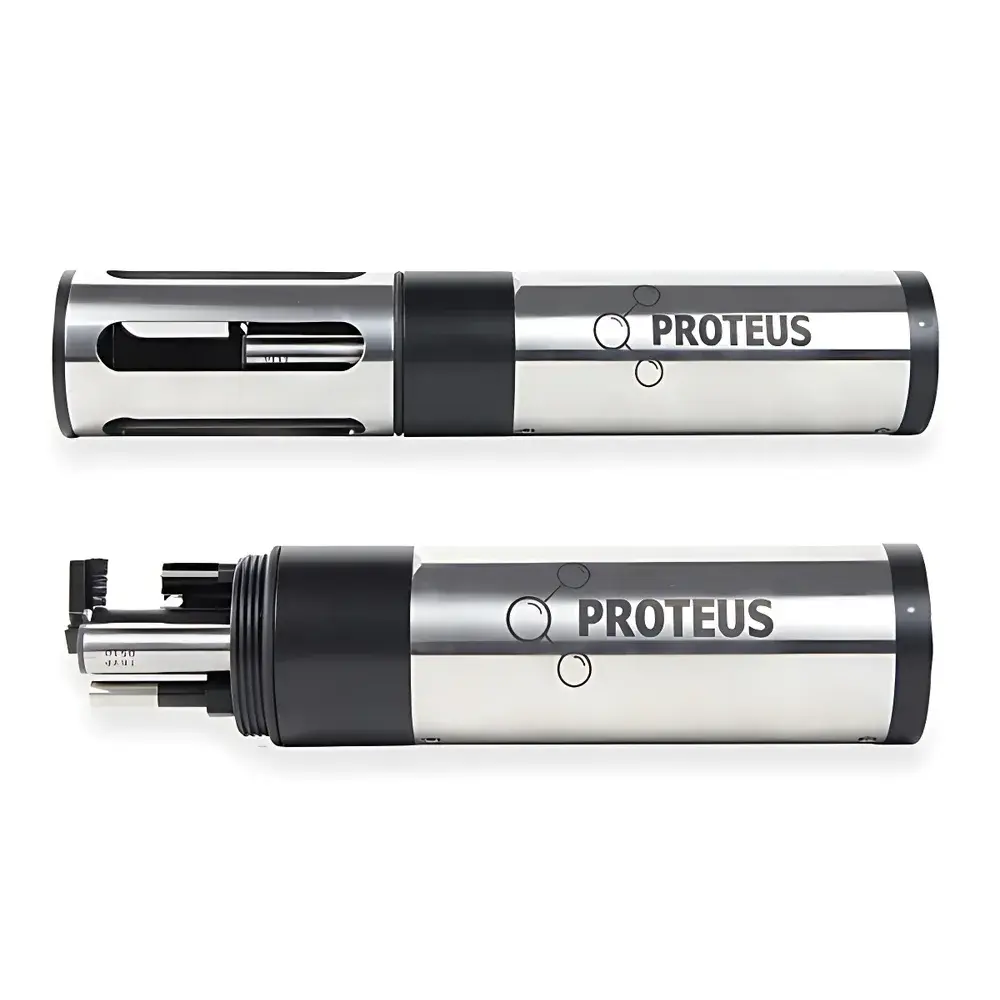
The Proteus Proteus 35 Field-Deployable Real-Time Escherichia coli Sensor System is an integrated multi-parameter environmental monitoring platform engineered for continuous, in-situ quantification of microbiological and physicochemical water quality indicators. Unlike conventional culture-based or PCR-dependent methods requiring laboratory incubation or sample transport, the Proteus 35 employs a field-validated, fluorescence-based immunomagnetic separation (IMS) assay combined with enzymatic β-glucuronidase activity detection to deliver quantitative E. coli enumeration directly in ambient water matrices—without sample pre-concentration or reagent replenishment during deployment. The system operates on the principle that viable E. coli cells bind selectively to antibody-coated magnetic beads; subsequent enzymatic hydrolysis of a fluorogenic substrate (MUG) yields a measurable fluorescent signal proportional to colony-forming units per 100 mL. This approach enables real-time reporting at sub-hour intervals with detection limits down to 1 CFU/100 mL under optimized field calibration. Designed for long-term unattended operation in wastewater influent/effluent streams, combined sewer overflows (CSOs), groundwater abstraction wells, and surface water bodies, the Proteus 35 meets the operational demands of regulatory compliance monitoring, process control, and early-warning systems under ISO 9308-1:2014 and EPA Method 1603 frameworks.
Key Features
- Simultaneous real-time measurement of E. coli, fecal coliforms, and total coliforms alongside 12+ physicochemical parameters (BOD, COD, TOC, DOC, DO, pH, ORP, conductivity, salinity, TDS, turbidity, temperature)
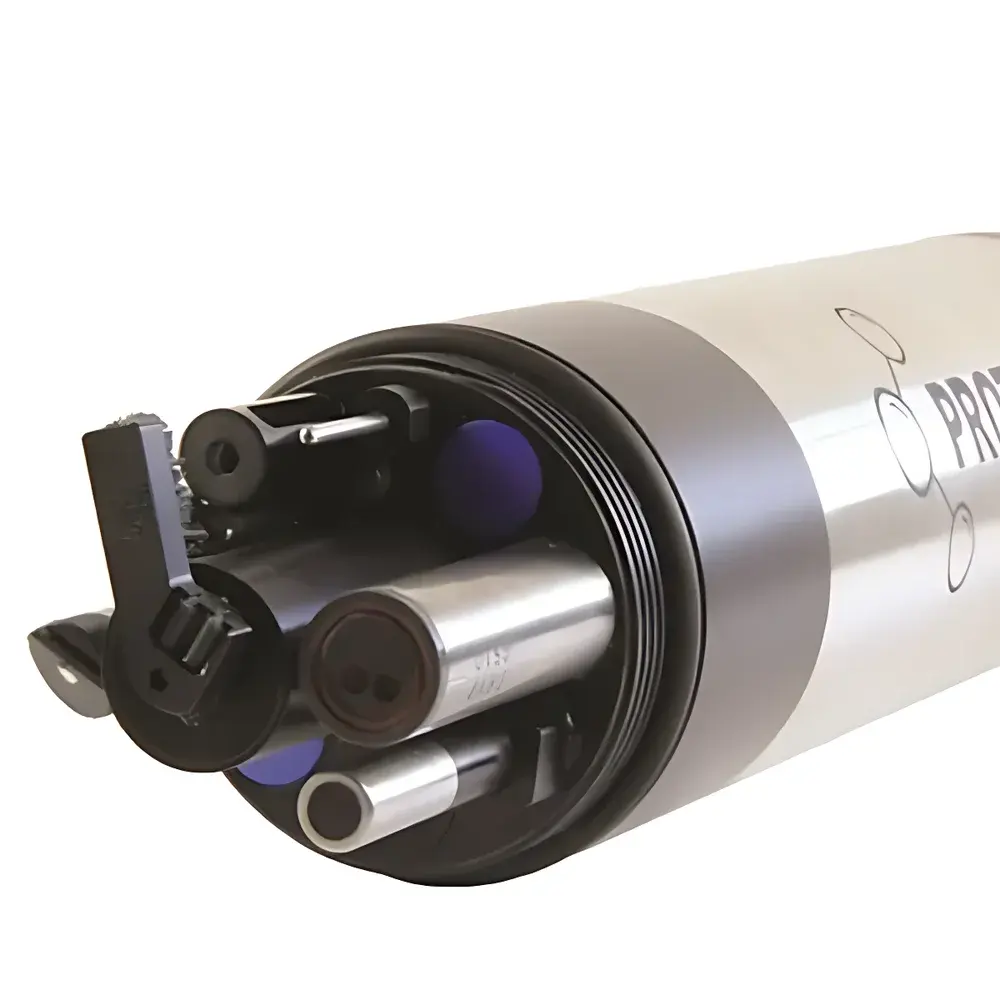
- Integrated fluorescence-based IMS sensor with automatic optical cleaning brush and temperature-compensated signal processing
- Field-calibratable architecture supporting site-specific validation using standard reference cultures (ATCC 25922) and NIST-traceable controls
- Ruggedized IP68-rated housing rated for continuous submersion up to 10 m depth and operation across −5 to 50 °C ambient ranges
- Bluetooth 5.0 and optional 4G LTE telemetry enabling secure data transmission to cloud-hosted dashboards compliant with IEC 62443-3-3 cybersecurity standards
- Modular sensor cartridge design allowing field-swappable components with documented calibration lifetimes (e.g., 4-year typical DO sensor cap life, 2-year pH/ORP electrode service interval)
Sample Compatibility & Compliance
The Proteus 35 is validated for use in raw wastewater, secondary effluent, stormwater runoff, riverine and lacustrine surface waters, and shallow groundwater—provided suspended solids do not exceed 500 FNU without mechanical pre-filtration. It complies with EN ISO 9308-1:2014 for E. coli enumeration in environmental waters and supports method verification per US EPA Guidance Document 823-R-19-001 (Microbial Water Quality Monitoring). Its enzymatic detection module satisfies the performance criteria for rapid indicator testing outlined in WHO Guidelines for Drinking-water Quality (4th ed., Annex 2) and is referenced in UK Environment Agency’s “Real-time Monitoring Best Practice Framework” (2022). All firmware and data logging modules are designed to meet GLP/GMP audit requirements, including full electronic audit trails, user-access controls, and timestamped metadata per FDA 21 CFR Part 11.
Software & Data Management
Data acquisition and visualization are managed through Proteus Connect™ v4.2—a secure, browser-based platform supporting role-based access control, automated report generation (PDF/CSV), and configurable alarm thresholds. Raw sensor outputs undergo embedded signal conditioning, drift correction, and cross-parameter interference compensation (e.g., turbidity correction for fluorescence quenching, temperature compensation for enzymatic kinetics). The system logs all calibration events, sensor diagnostics, and environmental stressors (e.g., biofouling index, voltage fluctuations) with SHA-256 hashing for data integrity verification. Exported datasets include ISO 19115-compliant metadata headers, facilitating integration into national water information systems such as the USGS NWIS or DEFRA’s WISKI platform.
Applications
- Real-time E. coli surveillance at wastewater treatment plant (WWTP) discharge points to verify regulatory compliance with EU Urban Wastewater Treatment Directive (91/271/EEC)
- Early detection of sanitary sewer overflows (SSOs) and combined sewer overflows (CSOs) via rapid E. coli spikes correlated with turbidity and conductivity anomalies
- Source tracking of fecal contamination in watershed management programs using spatial-temporal correlation of E. coli counts with rainfall intensity and land-use GIS layers
- Performance evaluation of tertiary treatment processes (e.g., UV disinfection, membrane filtration) through continuous post-treatment E. coli trending
- Groundwater vulnerability assessment in agricultural catchments by monitoring nitrate-E. coli co-occurrence patterns aligned with seasonal irrigation cycles
- Regulatory enforcement support for bathing water classification under EU Bathing Water Directive (2006/7/EC) via near-real-time dashboard alerts
FAQ
How does the Proteus 35 differentiate E. coli from other coliforms?
It uses monoclonal antibodies targeting the O157 lipopolysaccharide antigen combined with β-glucuronidase enzyme specificity—ensuring >99.2% selectivity for E. coli over non-target Enterobacteriaceae.
Is laboratory confirmation required for regulatory reporting?
While the Proteus 35 meets ISO 9308-1:2014 precision requirements (±10% RSD at ≥10 CFU/100 mL), confirmatory membrane filtration remains recommended for formal compliance submissions per national regulatory guidance.
What maintenance intervals are specified for field deployments?
Optical cleaning brush actuation every 6 hours; full sensor cartridge replacement every 6 months under continuous operation; quarterly field calibration using certified E. coli suspension standards.
Can the system operate in high-salinity estuarine environments?
Yes—the conductivity and salinity modules auto-compensate up to 70 PSS, and the IMS assay has been validated in brackish waters (5–30 PSU) with <8% recovery deviation versus ISO reference methods.
Does the platform support integration with SCADA or third-party LIMS?
Yes—via Modbus TCP, OPC UA, or RESTful API endpoints with TLS 1.2 encryption and OAuth 2.0 authentication; full schema documentation available under NDA.
Related Products







