
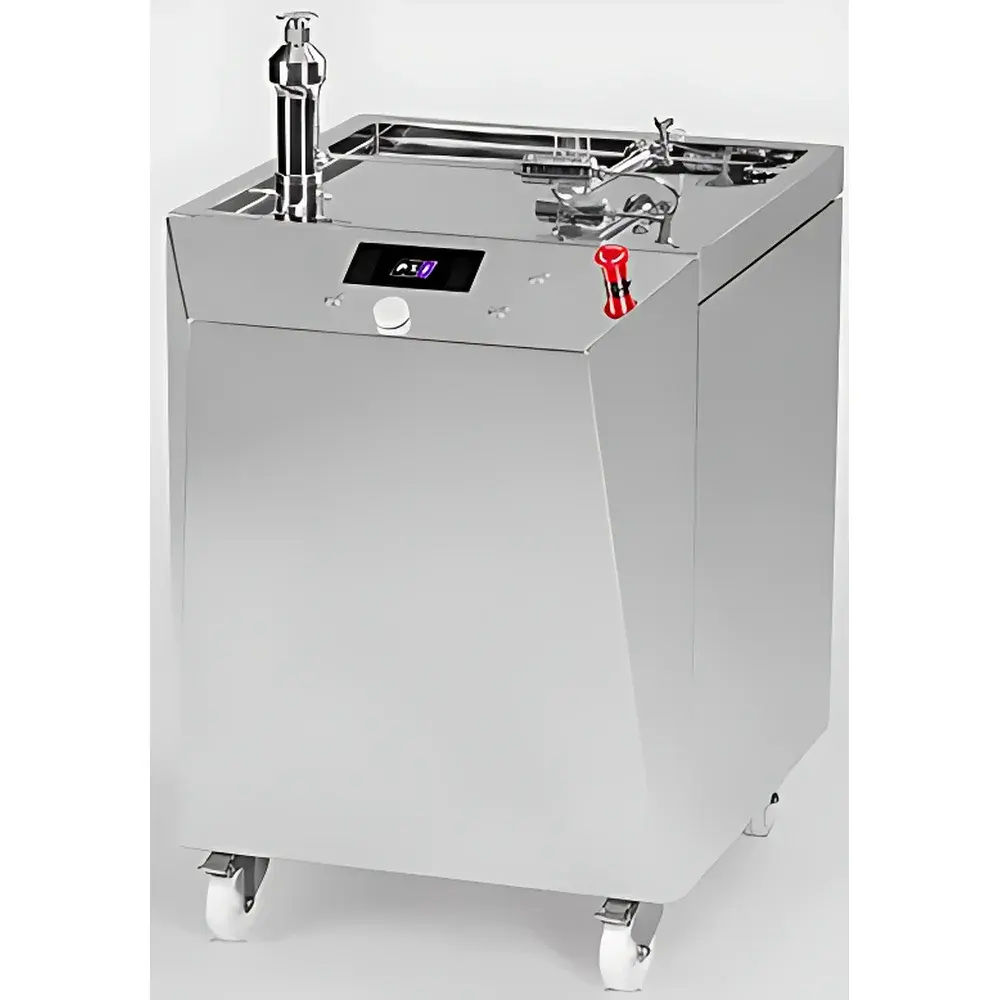
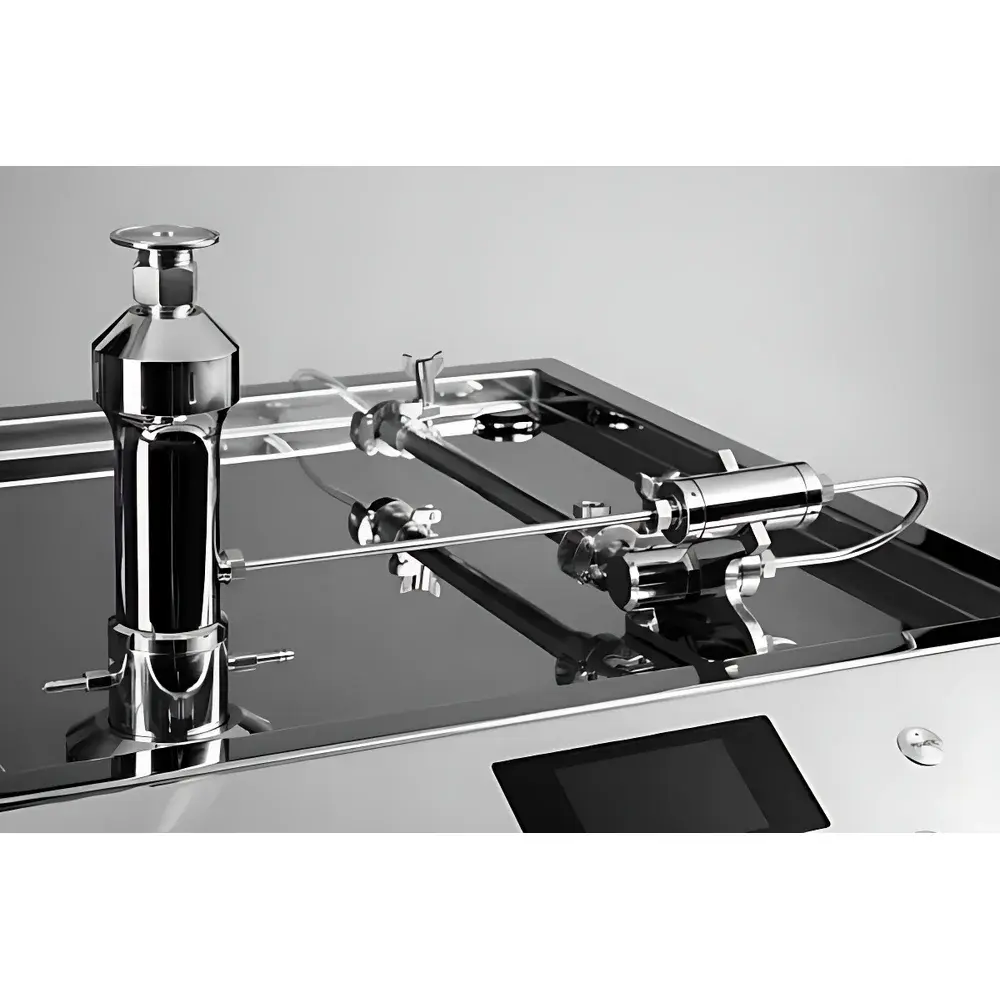
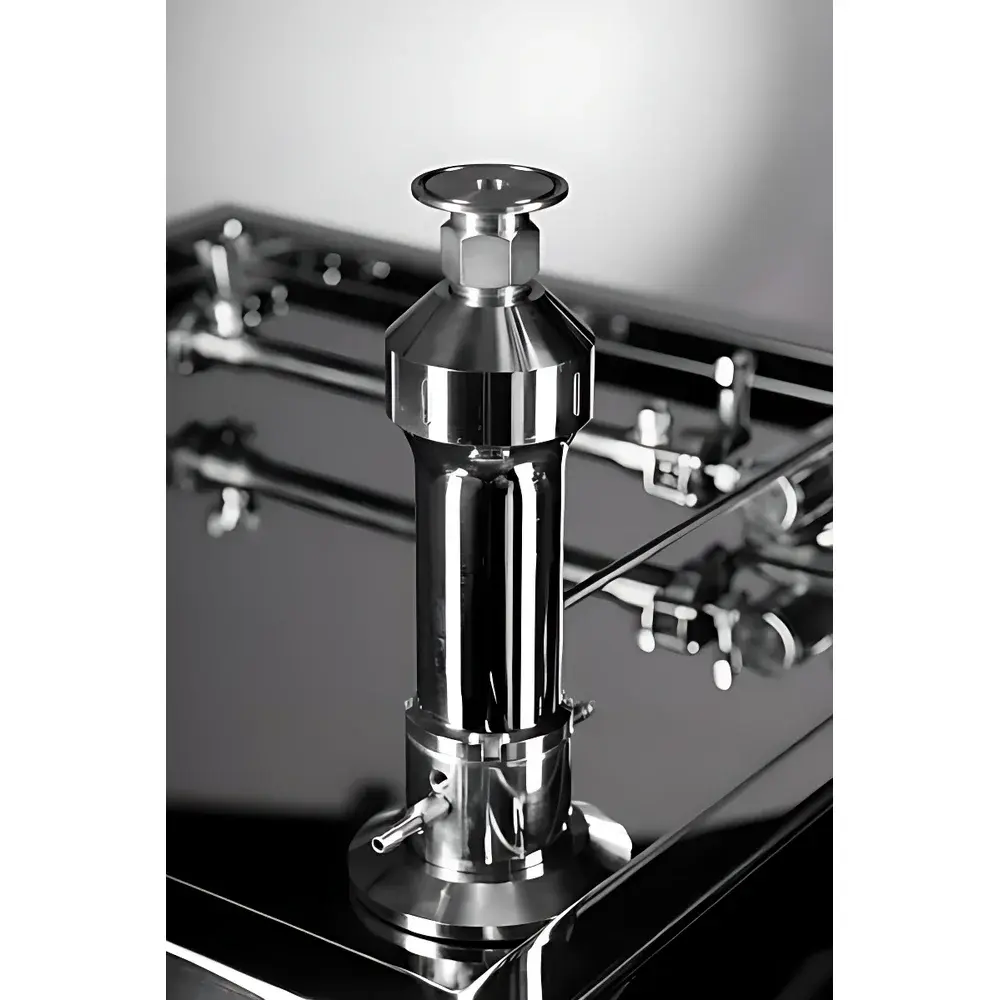
PSI-20 High-Pressure Microfluidizer Homogenizer
| Brand | PSI / Particle Solutions srl |
|---|---|
| Origin | Italy |
| Model | PSI-20 |
| Instrument Type | Microfluidic Homogenizer |
| Max. Homogenization Pressure | 2069 bar (30000 psi, 207 MPa) |
| Reservoir Capacity | 500 mL (optional: 750 mL, 1 L, 2 L, 6 L) |
| Minimum Sample Volume | 100 mL |
| Flow Rate | up to 25 L/h (416 mL/min) |
| Feed Temperature Range | ≤ 75 °C |
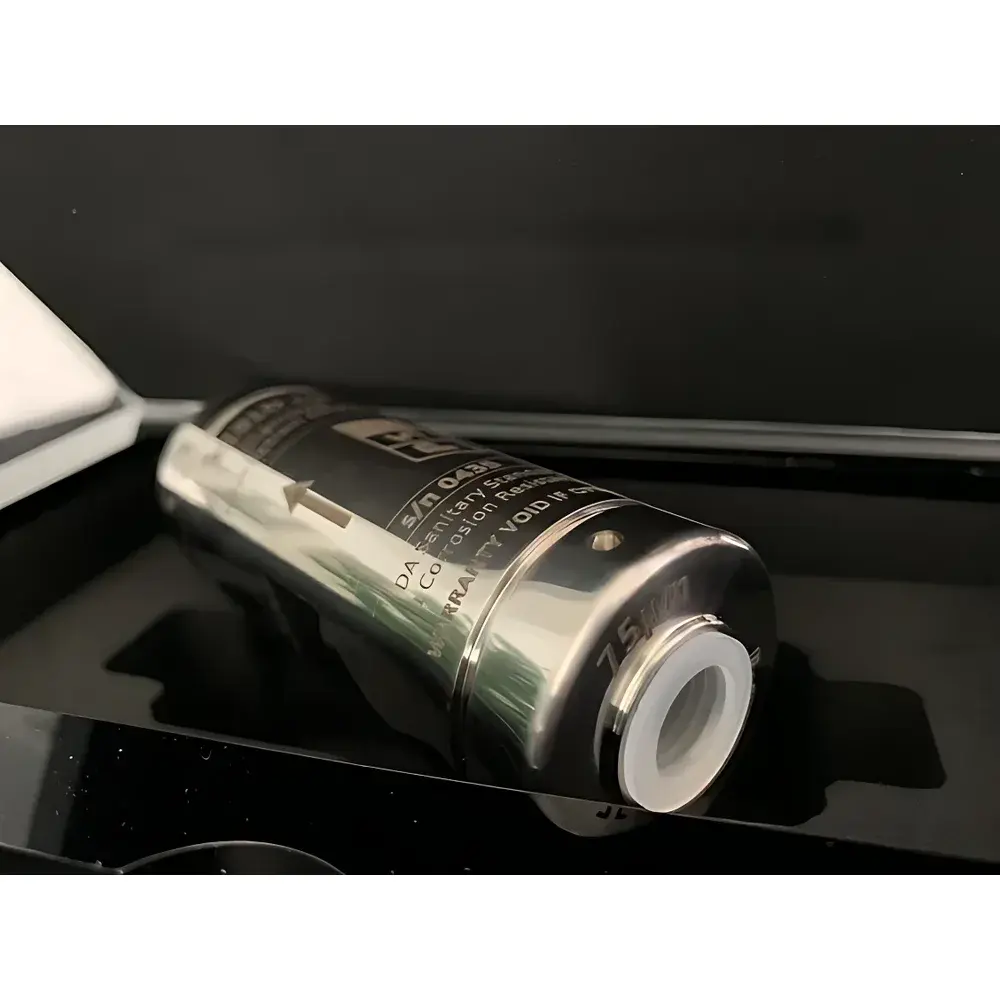
| Chamber Bore Sizes | 75 µm, 87 µm, 100 µm, 200 µm |
| Chamber Material | Diamond |
| Chamber Geometry | Y-shaped or Z-shaped |
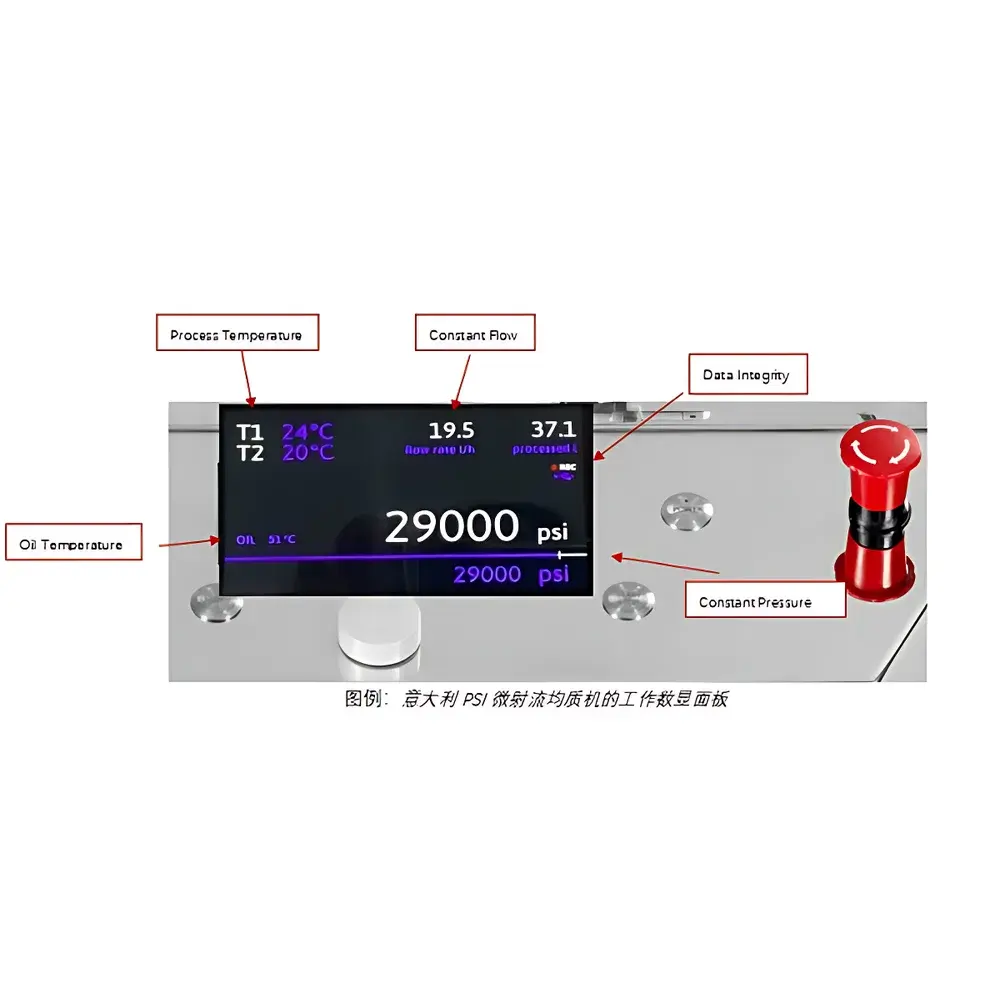
| Control Interface | Digital touchscreen with real-time parameter display and logging |
| Temperature Control | Automatic inlet/outlet temperature monitoring and regulation |
| Noise Level | < 68 dB(A) |
| Construction Material | Electropolished ASTM F899 Grade 316 stainless steel |
| Dimensions (W × D × H) | 650 × 900 × 1126 mm |
| Weight | 155 kg |
Overview
The PSI-20 High-Pressure Microfluidizer Homogenizer is an engineered solution for precise, scalable, and reproducible particle size reduction, cell disruption, and nanoemulsion formation under strictly controlled fluid dynamic conditions. Operating on the principle of microfluidic interaction—where pressurized sample streams are forced at supersonic velocity through fixed-geometry microchannels (Y- or Z-shaped diamond chambers)—the system delivers consistent high-shear, high-impact, and cavitation-based homogenization. Unlike conventional valve-based homogenizers, the PSI-20 employs a positive-displacement intensifier pump coupled with a rigid, non-adjustable microchannel architecture to maintain absolute pressure stability across repeated cycles. This ensures uniform energy input per unit volume, resulting in narrow particle size distributions (PDI < 0.1 in optimized formulations), minimal thermal load, and exceptional batch-to-batch reproducibility—critical for regulatory-compliant development of injectables, lipid nanoparticles (LNPs), and sterile biologics.
Key Features
- Electropolished 316 stainless steel construction compliant with ISO 13485 and ASME BPE-2022 standards for pharmaceutical manufacturing environments;
- Digital touchscreen interface displaying real-time pressure, flow rate, inlet/outlet temperatures, and cycle count—with automatic data logging traceable to 21 CFR Part 11 requirements;
- Modular chamber design supporting interchangeable diamond microchannels (75–200 µm bore) enabling method transfer across R&D, pilot, and GMP production scales;
- Integrated active cooling system with dual-point digital temperature monitoring (inlet and outlet) maintaining thermal stability within ±1.5 °C during extended operation;
- Acoustically optimized mechanical architecture achieving <68 dB(A) operational noise—enabling placement in shared laboratory spaces without dedicated sound-dampening enclosures;
- Self-cleaning capability via CIP-compatible wetted path; no disassembly required for routine cleaning validation;
- Validated performance: ≥99% E. coli lysis in single-pass mode at 1000 bar; sub-300 nm lipid nanoparticle formation in ≤2 passes under defined formulation conditions.
Sample Compatibility & Compliance
The PSI-20 accommodates viscous, shear-sensitive, and thermolabile samples—including liposomal suspensions (up to 25% w/v phospholipid), bacterial lysates, polymer dispersions, and cosmetic emulsions—with consistent throughput and minimal degradation. Its electropolished surface finish meets USP and EP 2.6.14 requirements for extractables/leachables control. All firmware and data handling protocols support ALCOA+ principles (Attributable, Legible, Contemporaneous, Original, Accurate, Complete, Consistent, Enduring, Available), facilitating audit readiness for FDA, EMA, and PMDA inspections. The system is routinely deployed in GLP-compliant toxicology studies and Phase I–III clinical manufacturing workflows.
Software & Data Management
Data acquisition and instrument control are managed via PSI’s proprietary MicroControl™ software suite, which provides role-based user access, electronic signatures, audit trail generation, and export in CSV, PDF, and XML formats. Raw sensor data—including pressure transients, temperature gradients, and volumetric flow pulses—is timestamped at 100 Hz resolution and stored locally with optional cloud backup. The software supports IQ/OQ documentation templates aligned with Annex 15 and ASTM E2500-13, streamlining qualification for regulated environments. Remote diagnostics and firmware updates are available via secure TLS 1.2 encrypted connection.
Applications
- Pharmaceutical: Lipid nanoparticle (LNP) formulation for mRNA delivery; nanoemulsion-based IV injectables; sterility-preserving microbial cell disruption;
- Biotechnology: High-yield extraction of intracellular proteins from E. coli, yeast, algae, and mammalian tissues; organelle isolation;
- Cosmeceuticals: Stable sub-100 nm pigment dispersions and encapsulated actives;
- Materials Science: Exfoliation of graphene oxide, nanocellulose fibrillation, carbon nanotube deagglomeration;
- Food & Nutrition: Casein micelle restructuring, plant-based protein nanostructuring, and functional ingredient stabilization.
FAQ
What regulatory standards does the PSI-20 comply with for pharmaceutical use?
The PSI-20 conforms to ISO 13485:2016, ASME BPE-2022, and USP / for material compatibility. Its data management architecture satisfies 21 CFR Part 11, EU Annex 11, and ICH GCP requirements.
Can the PSI-20 be integrated into automated process lines?
Yes—via Modbus TCP and OPC UA interfaces, the system supports seamless integration with SCADA, MES, and PAT frameworks for real-time SPC monitoring and closed-loop control.
How is pressure calibration verified and maintained?
Each unit ships with NIST-traceable pressure transducer certification. Annual recalibration is supported by PSI-certified field service engineers using deadweight testers calibrated to ISO/IEC 17025 standards.
Is training provided for method development and validation?
PSI offers on-site GxP-aligned training covering DoE-based parameter optimization, chamber selection logic, cleaning validation protocols, and PQ execution per ASTM E2500-13.
What maintenance intervals are recommended for diamond chambers?
Diamond chambers exhibit >5000 hours of operational life under typical pharmaceutical processing conditions (≤1500 bar, aqueous buffers). PSI recommends post-run visual inspection and quarterly ultrasonic integrity testing per SOP-MF-007.



