PSI Growth Capsule Containerized Plant Growth & Climate Chamber
| Brand | PSI |
|---|---|
| Origin | Czech Republic |
| Model | PSI Growth Capsule |
| Temperature Range | –5 to 40 °C (or 10 to 40 °C) |
| Humidity Range | 40–80% RH |
| Light Intensity | 0–1,000 µmol·m⁻²·s⁻¹ (optional up to 1,500 µmol·m⁻²·s⁻¹) |
| Air Exchange Rate | 20 L·min⁻¹·m⁻² |
| Light Source | Multi-channel programmable LED (white, RGB, NIR) |
| Control Interface | 10.5″ color touchscreen LCD |
| Dimensions (dual-unit) | 12.2 m (L) × 2.45 m (W) × 2.9 m (H) |
| Connectivity | LAN-based remote monitoring and data export |
| Compliance | Designed for GLP-compliant environmental simulation and phenotyping workflows |
Overview
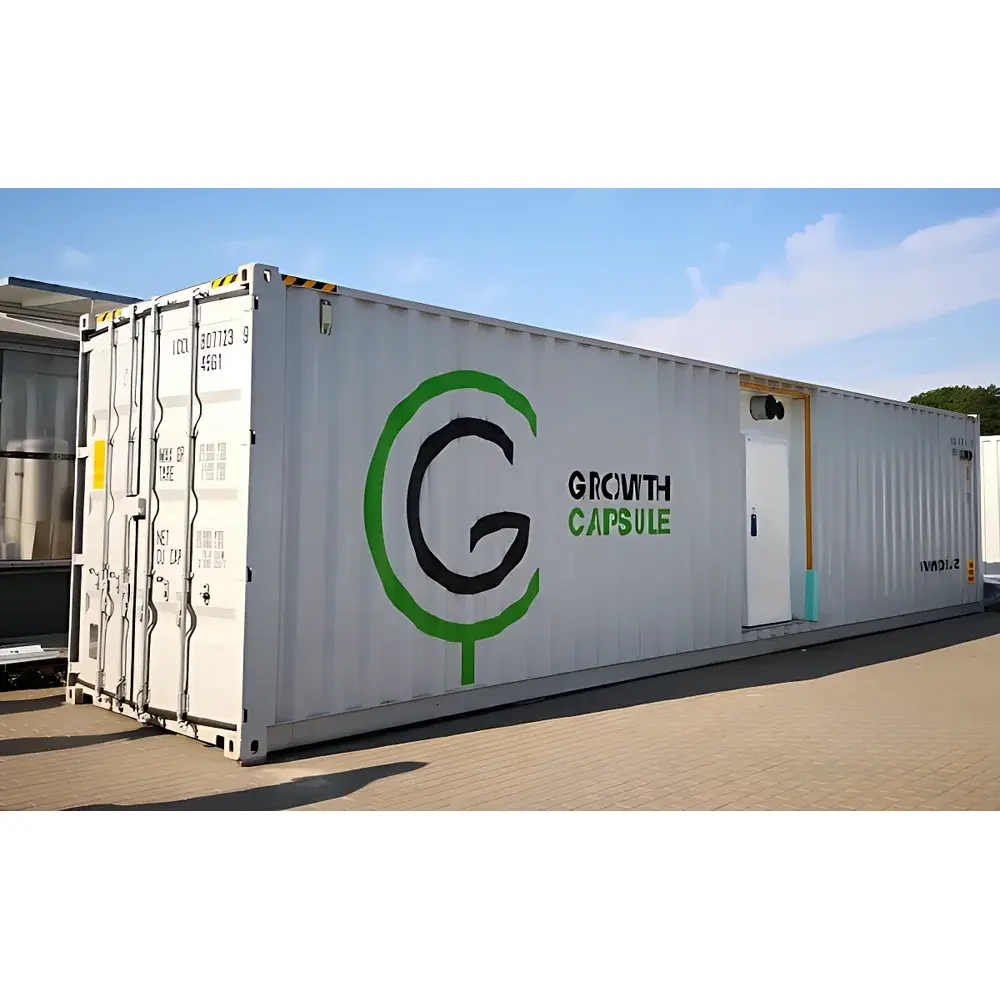
The PSI Growth Capsule is a modular, containerized plant growth and climate simulation system engineered for high-fidelity environmental control in field-deployable or semi-permanent installations. Unlike conventional walk-in growth chambers or greenhouse modules, the Growth Capsule leverages standardized ISO shipping container architecture—enabling rapid deployment, relocation, and scalable configuration (single- or dual-unit arrangements). Its core function is to replicate and precisely manipulate key abiotic parameters—including temperature, relative humidity, CO₂ concentration, and spectrally tunable photosynthetic photon flux density (PPFD)—to support controlled-environment experimentation across plant physiology, ecological modeling, algal biotechnology, and translational metabolic studies. The system operates on a closed-loop air handling principle with near-laminar airflow (20 L·min⁻¹·m⁻²), minimizing convective disturbance to sensitive specimens while ensuring uniform thermal and gaseous distribution. Temperature stability is maintained independently of lighting load—a critical feature for photobiological consistency—across a broad operational envelope from –5 °C to 40 °C.
Key Features
- Modular ISO-container form factor: Enables transport by truck, rail, or sea; supports outdoor installation without structural modification or HVAC integration.
- Independent environmental control per unit: Each capsule maintains autonomous regulation of temperature (±0.3 °C), humidity (±3% RH), CO₂ (±50 ppm), and dynamic light regimes via embedded PID controllers.
- Programmable multi-spectral LED illumination: Configurable white, RGB, and near-infrared (NIR) channels allow spectral composition tuning—from full-spectrum daylight simulation to targeted photomorphogenic or stress-induction protocols (e.g., dawn/dusk transitions, cloud cover emulation, circadian entrainment).
- Uniform irradiance delivery: Optical diffusers and optimized fixture geometry ensure ±5% spatial PPFD homogeneity across the entire cultivation area, validated per ASTM E2917-22 guidelines for photosynthetic lighting systems.
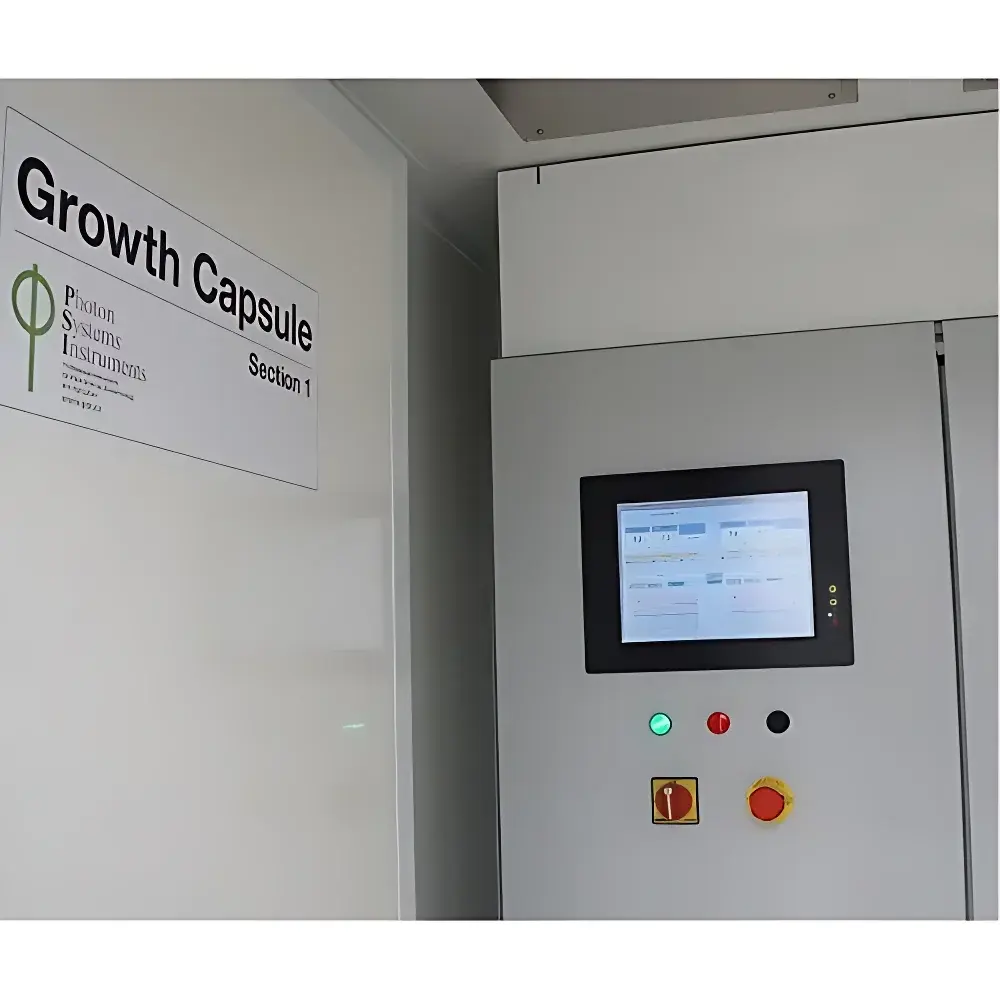
- Integrated 10.5″ industrial-grade touchscreen HMI: Provides real-time visualization of all sensor outputs, alarm status, and system diagnostics; supports user-defined protocol scheduling and manual override.
- LAN-enabled remote operation: Full bidirectional communication via TCP/IP allows secure access to live data streams, historical logs, firmware updates, and diagnostic reports from offsite locations.
Sample Compatibility & Compliance
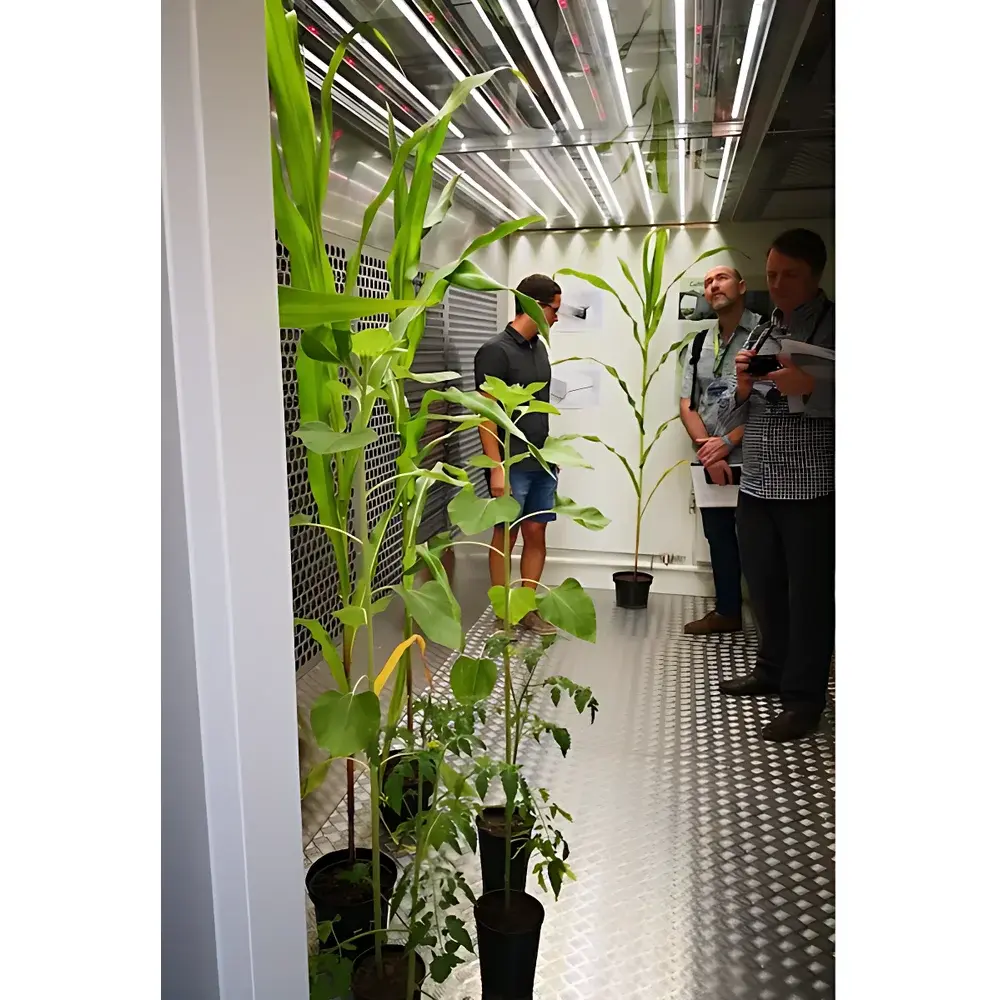
The Growth Capsule accommodates diverse biological models—from Arabidopsis thaliana seedlings and cereal crop stands to microalgae suspension cultures, small-mammal metabolic cages, and human subject monitoring setups. Its internal volume and structural integrity permit integration of third-party instrumentation including chlorophyll fluorescence imaging (PAM), gas exchange analyzers (CO₂/O₂/CH₄), thermal infrared cameras, and XYZ robotic phenotyping platforms such as the PlantScreen system. All environmental sensors are factory-calibrated traceable to NIST standards. The system architecture adheres to principles outlined in ISO 17025 for testing laboratories and supports audit-ready data integrity through timestamped, non-erasable logging—fully compatible with GLP and GMP documentation requirements. Optional 21 CFR Part 11-compliant software modules provide electronic signature capability, role-based access control, and immutable audit trails for regulated research environments.
Software & Data Management
Data acquisition is handled by an embedded Linux-based controller running proprietary PSI Environmental Control Software (v4.x). This platform delivers continuous sampling at 1 Hz resolution for all primary variables, with configurable aggregation intervals (1-min to 1-h) for long-term storage. Visualization tools include synchronized time-series plots, overlayable multi-parameter heatmaps, and export-ready CSV/JSON formats compliant with FAIR data principles. Networked units can be aggregated into a centralized dashboard for cross-chamber comparative analysis. System health monitoring includes predictive maintenance alerts based on compressor duty cycles, filter pressure differentials, and LED driver thermal profiles—all recorded with ISO 8601 timestamps and retained for ≥12 months onboard.
Applications
- Controlled-environment phenotyping: High-throughput screening under reproducible drought, heat, or spectral stress regimes; integration with automated imaging and morphometric analysis pipelines.
- Ecophysiological field validation: Deployment in geographically remote sites to bridge lab-to-field translation gaps—e.g., simulating alpine, desert, or boreal conditions adjacent to natural ecosystems.
- Algal bioreactor pre-screening: Optimization of light quality and diurnal cycles for lipid accumulation or hydrogen production in Chlamydomonas or Nannochloropsis cultures.
- Mammalian energy metabolism studies: Coupling with indirect calorimetry modules for longitudinal assessment of thermogenesis, respiratory exchange ratio (RER), and activity–metabolism coupling under defined climatic baselines.
- Climate change impact modeling: Multi-factorial experiments combining elevated CO₂, variable temperature amplitudes, and stochastic light patterns to assess species resilience thresholds.
FAQ
Can the Growth Capsule operate outdoors in extreme ambient temperatures?
Yes—the chamber’s refrigeration and heating subsystems are rated for uninterrupted operation in ambient conditions ranging from –25 °C to +45 °C, with external weatherproof cladding and condensate management systems included as standard.
Is it possible to synchronize lighting and environmental profiles across multiple capsules?
Yes—via the central network manager, users can deploy identical or staggered protocols across any number of interconnected units, enabling factorial experimental designs with spatial replication.
What level of spectral resolution does the LED system offer?
Each channel provides 16-bit intensity resolution (0–100% in 0.0015% increments), with spectral output characterized using calibrated spectroradiometry (350–800 nm, ±0.5 nm FWHM); custom spectra can be uploaded as CSV-defined wavelength–intensity arrays.
Does the system support third-party sensor integration?
Yes—RS-485, Modbus TCP, and analog 0–10 V inputs are available for connecting external probes (e.g., soil moisture, leaf temperature, PAR sensors), with automatic calibration mapping within the control software.
How is data security and integrity ensured during remote access?
All LAN communications use TLS 1.2 encryption; authentication requires dual-factor credentials; data writes are journaled to redundant eMMC storage with SHA-256 checksum verification on every logged record.