
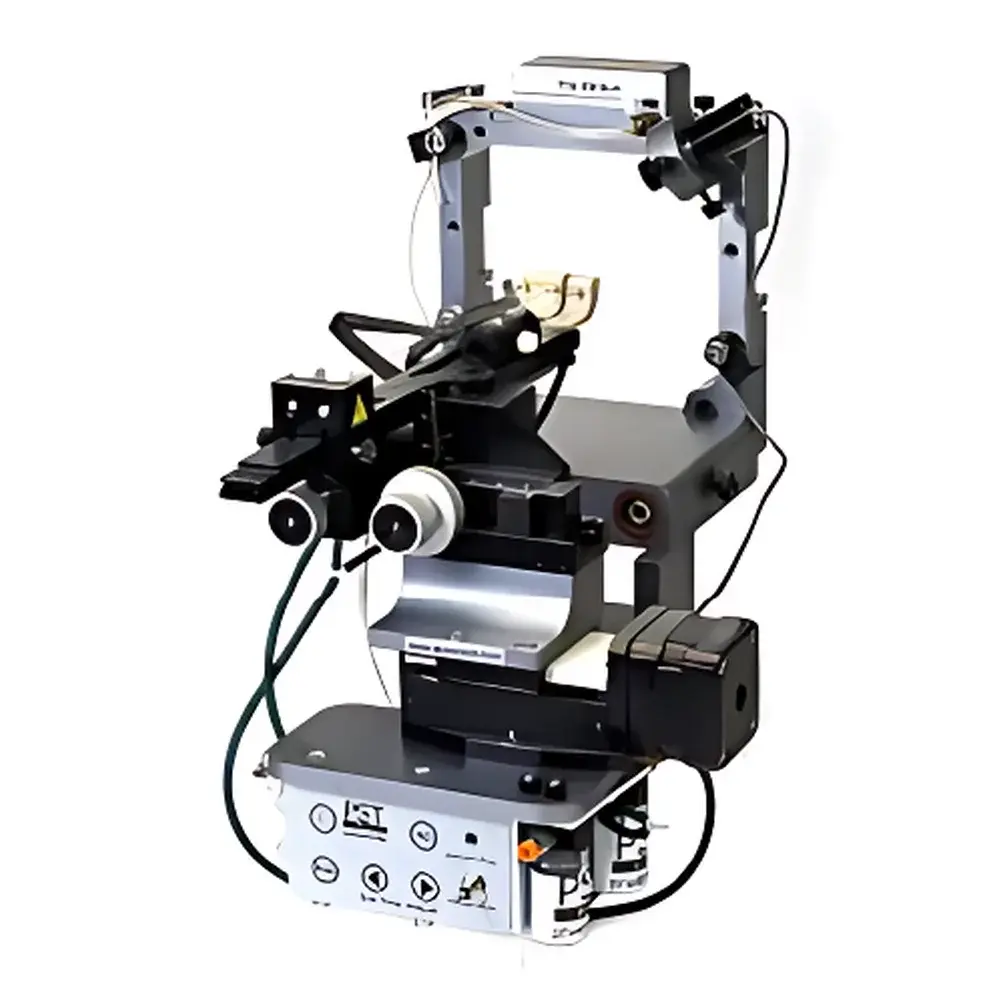
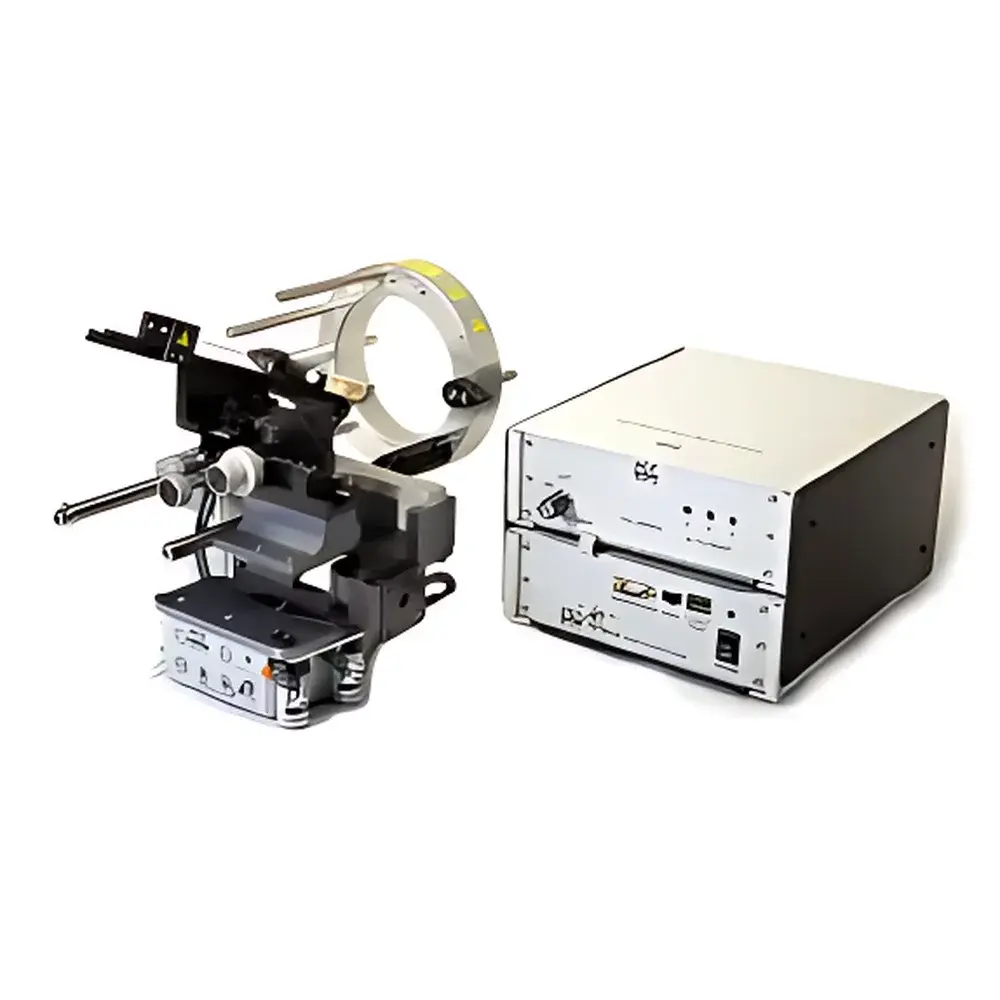
PST Nimbus Dual-Column Nanospray Ion Source
| Brand | ASPEC |
|---|---|
| Origin | USA |
| Manufacturer Type | Authorized Distributor |
| Origin Category | Imported |
| Model | Nimbus |
| Instrument Type | Electrospray Ionization (ESI) Source |
| Compatibility | Thermo and SCIEX LC-MS Systems |
| Operating Mode | Standalone (No External PC or Software Required) |
| Key Technology | Integrated eFrit Nanospray Emitters, Dual-Column Switching, On-Chip Column Heating & Temperature Control, Active Spray Tip Purging with Sheath Nitrogen Gas |
Overview
The PST Nimbus Dual-Column Nanospray Ion Source is an engineered electrospray ionization (ESI) interface designed for offline liquid chromatography–mass spectrometry (oLC-MS) workflows. Introduced by Phoenix S&T (USA) in March 2012, the Nimbus system implements a hardware-integrated, self-optimizing ESI architecture that eliminates dependency on external PCs or vendor-specific control software. It operates on the principle of autonomous electrospray stabilization—leveraging real-time feedback from spray current and droplet formation dynamics to dynamically adjust voltage, gas flow, and emitter alignment without user intervention. This embedded intelligence enables consistent nanoelectrospray performance across extended analytical runs, particularly critical for high-sensitivity, low-volume applications such as bottom-up proteomics, lipidomics, and targeted metabolite quantification using triple quadrupole (QQQ) or high-resolution accurate-mass (HRAM) mass spectrometers.
Key Features
- Standalone operation: Fully integrated microcontroller manages all ion source parameters—no external computer, driver software, or vendor SDK required.
- Dual-column switching architecture: One column performs online nanospray analysis while the second executes offline sample loading, desalting, and system washing—enabling true parallel operation and >2× throughput improvement over single-column systems.
- Active spray tip maintenance: Patented sheath nitrogen purging continuously cleans the emitter orifice during operation, minimizing salt crystallization and signal drift.
- eFrit nanospray emitters: Monolithic fused-silica emitters with electrochemically etched frits deliver >4–10× longer operational lifetime compared to conventional commercial emitters (e.g., New Objective PicoTips), reducing downtime and consumable costs.
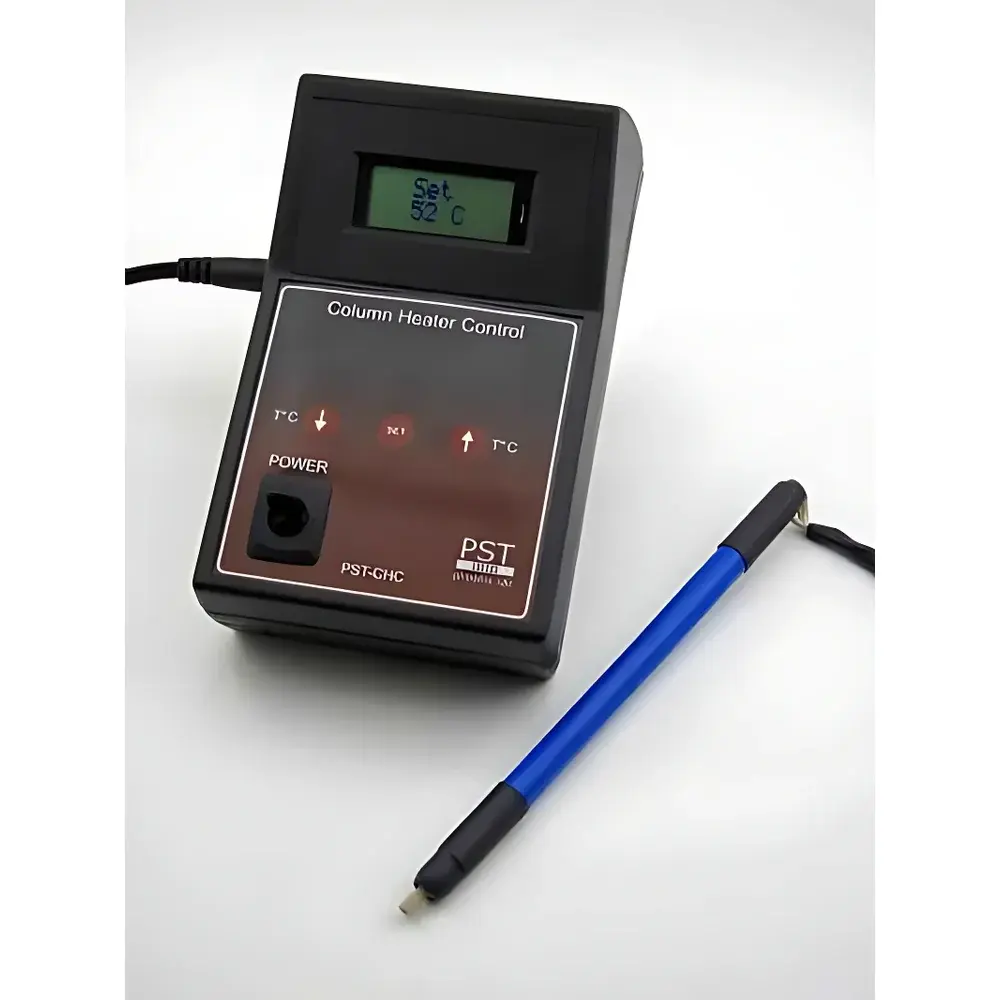
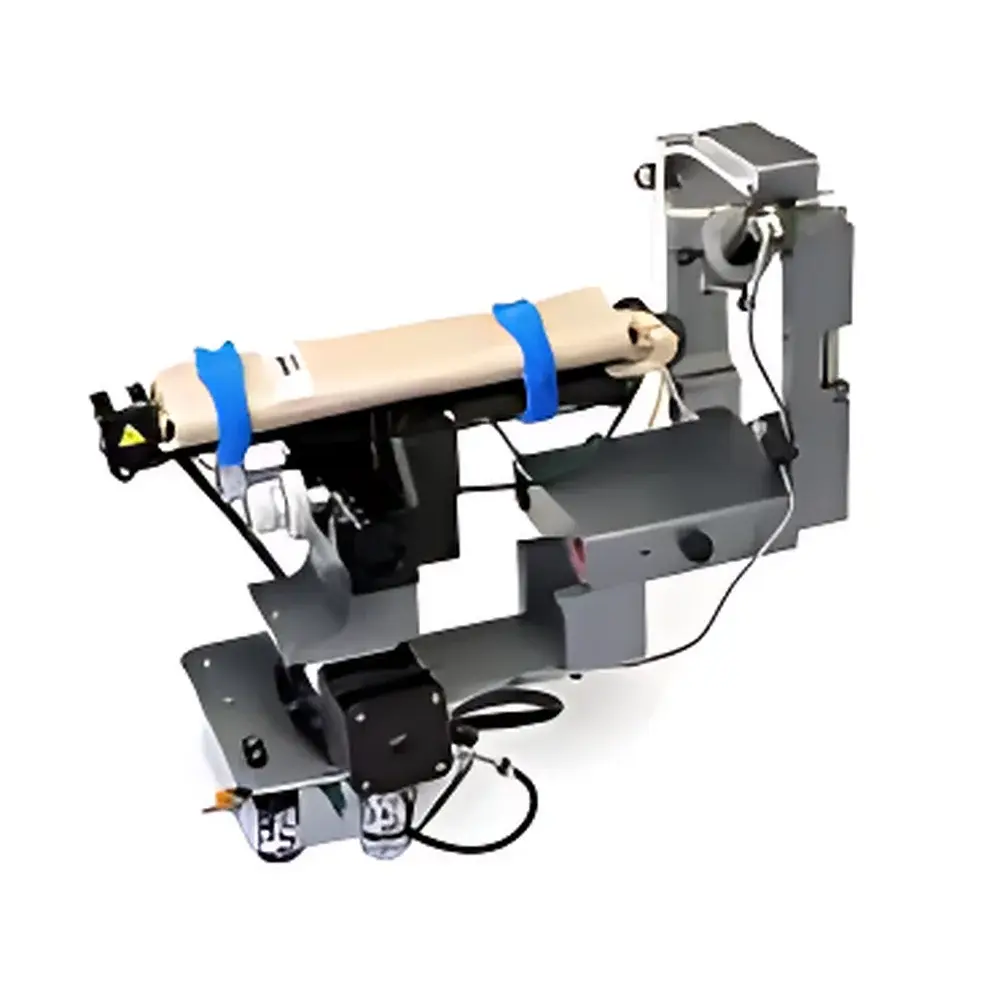
- Integrated column heating and temperature control: Butterfly-style dual-zone thermal enclosure maintains precise, uniform temperature (±0.5 °C) across nanocolumns and microcolumns (75–300 µm ID), improving peak shape, retention time reproducibility (<0.5% RSD), and signal-to-noise ratio.
- Independent ESI channel control: Separate high-voltage and gas flow regulation per column prevents cross-contamination between sequential analyses—critical for clinical and regulatory-compliant workflows.
- Bi-modal clinical operation: Supports both dual-column alternating mode and single-column triplicate injection mode for method validation and assay robustness assessment.
Sample Compatibility & Compliance
The Nimbus source accommodates a broad range of biological and pharmaceutical samples—including intact proteins, monoclonal antibodies, glycopeptides, phospholipids, small-molecule drugs, and endogenous metabolites—across volumes from 1–20 µL. Its design conforms to core principles of Good Laboratory Practice (GLP) and supports audit-ready data integrity when coupled with compliant mass spectrometers. While the Nimbus itself does not generate raw spectral data, its hardware-level stability contributes directly to meeting FDA 21 CFR Part 11 requirements for instrument control traceability and electronic record reliability when deployed within validated oLC-MS platforms. It is routinely used in laboratories adhering to ISO/IEC 17025 and CLIA standards for biomarker discovery and verification studies.
Software & Data Management
The Nimbus operates entirely without host software—its firmware handles real-time spray optimization, column switching timing, temperature setpoint enforcement, and fault diagnostics. All operational states (voltage, gas pressure, temperature, column position, spray status) are accessible via RS-232 or TTL serial interface for integration into custom laboratory information management systems (LIMS) or automated workflow orchestration engines. No proprietary drivers or API licensing is required. When paired with Thermo or SCIEX mass spectrometers, native acquisition software (e.g., Thermo Xcalibur, SCIEX Analyst) receives only MS-level signals; source control remains decoupled and deterministic—enhancing system uptime and simplifying qualification documentation.
Applications
- High-throughput discovery proteomics: Enables deep proteome coverage from sub-microgram tissue digests with improved peptide identification rates and quantitative precision.
- Lipidomics and metabolomics: Delivers stable ionization of low-abundance lipids (e.g., sulfatides, cardiolipins) and polar metabolites under both positive- and negative-ion modes with rapid polarity switching.
- Clinical biomarker verification: Supports multiplexed MRM assays for disease-associated proteins and post-translational modifications with inter-run CVs <8% across 50+ injections.
- Antibody-drug conjugate (ADC) characterization: Provides reproducible charge-state distribution and deconvolution fidelity for intact mAb and ADC analysis.
- Method development and QC: Facilitates rapid screening of nano-LC gradients, mobile phase additives, and column chemistries due to its plug-and-play compatibility and minimal tuning overhead.
FAQ
Does the Nimbus require a dedicated computer or third-party software to operate?
No. The Nimbus integrates a standalone microcontroller that autonomously manages all ion source functions—including spray optimization, column switching, and thermal regulation—without external computing resources.
Is the Nimbus compatible with non-Thermo and non-SCIEX mass spectrometers?
The Nimbus is electrically and mechanically optimized for Thermo and SCIEX LC-MS interfaces. Integration with other platforms (e.g., Waters, Bruker) requires custom mechanical mounting and HV/gas signal adaptation, and is not officially supported.
What is the expected lifetime of the eFrit emitters under typical proteomics usage?
Under standard oLC-MS conditions (200–500 nL/min flow, 0.1% formic acid, 2–5 µg/µL tryptic digest), eFrit emitters demonstrate median lifetimes of 120–200 hours—4 to 10 times longer than conventional pulled-glass or metal-coated emitters.
Can the Nimbus perform simultaneous positive- and negative-ion analysis?
No. Polarity switching is performed at the mass spectrometer level. However, the Nimbus supports rapid (<10 s) polarity transition cycles by maintaining stable spray conditions across both modes without re-tuning.
How is system cleaning and carryover mitigation handled?
The dual-column architecture allows one column to undergo full wash cycles (e.g., 95% ACN, 0.1% FA) while the other remains online. Combined with active nitrogen purging of the emitter tip, carryover is consistently reduced to <0.05% for high-concentration peptides.
Related Products





