
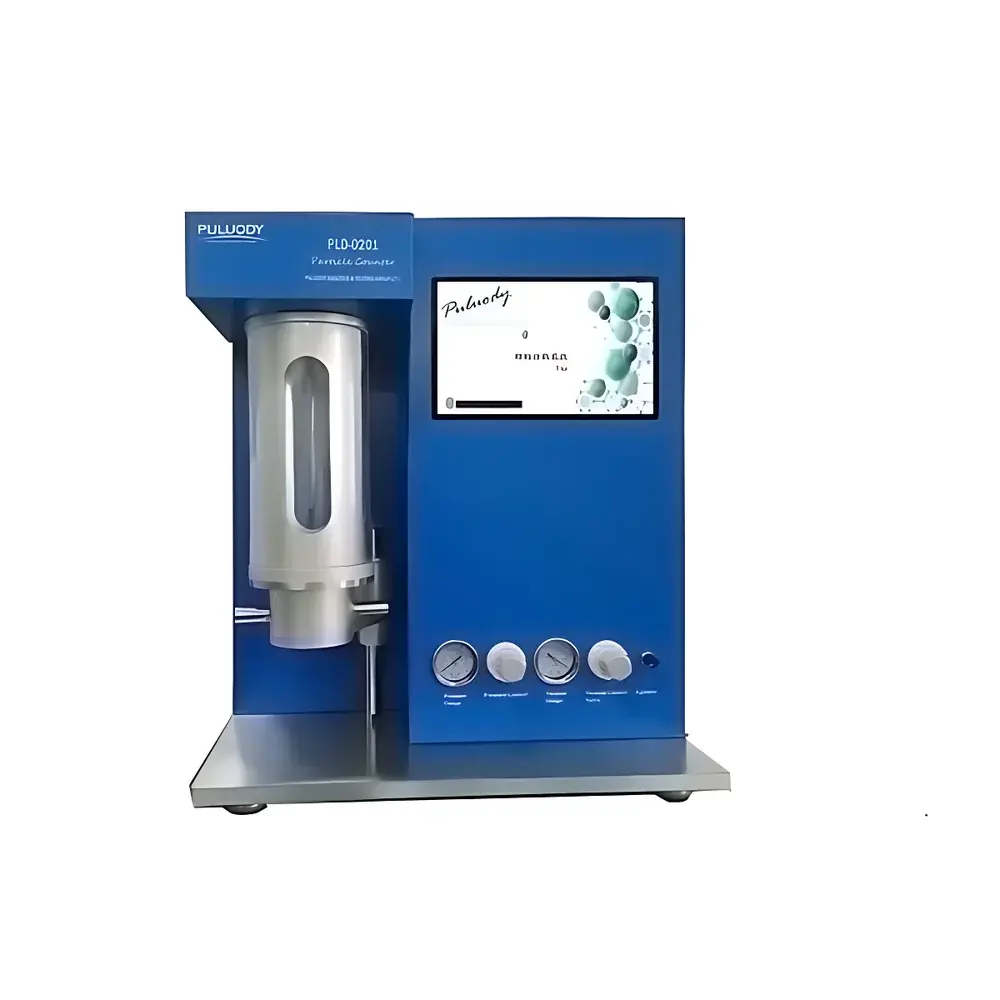
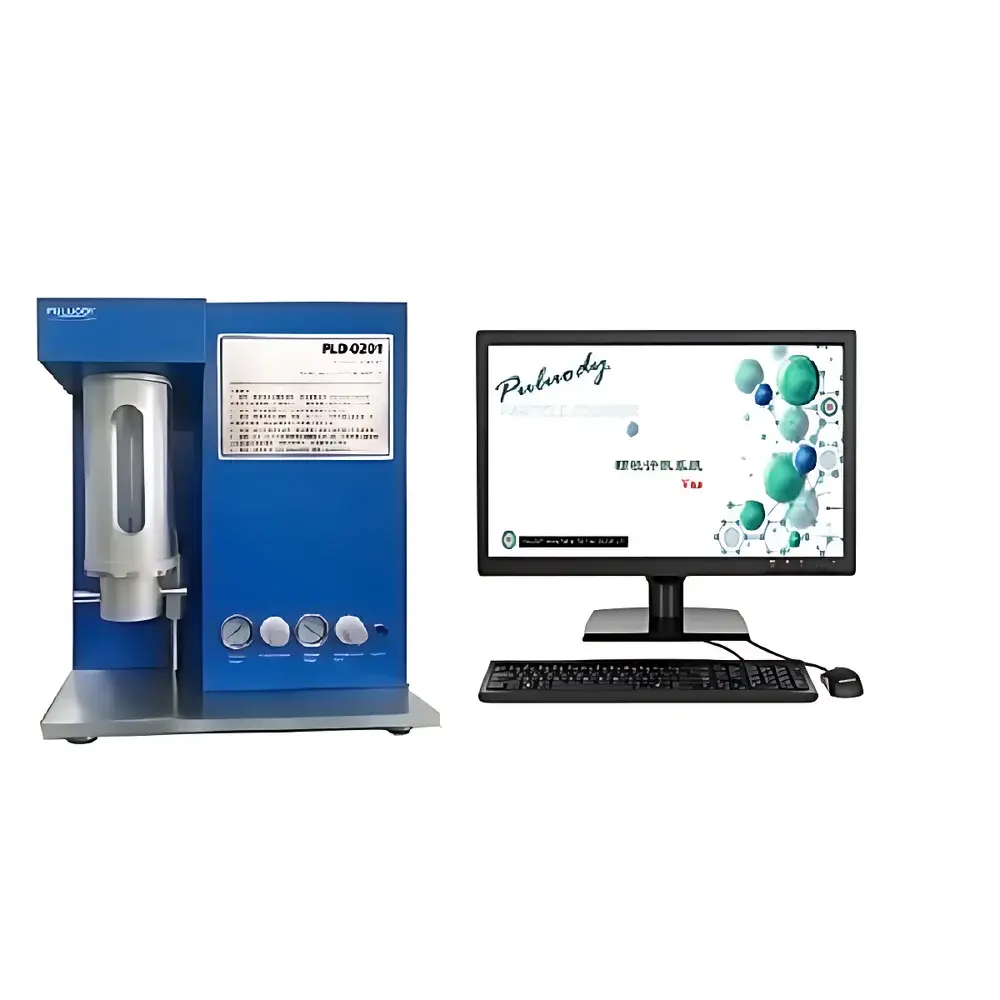
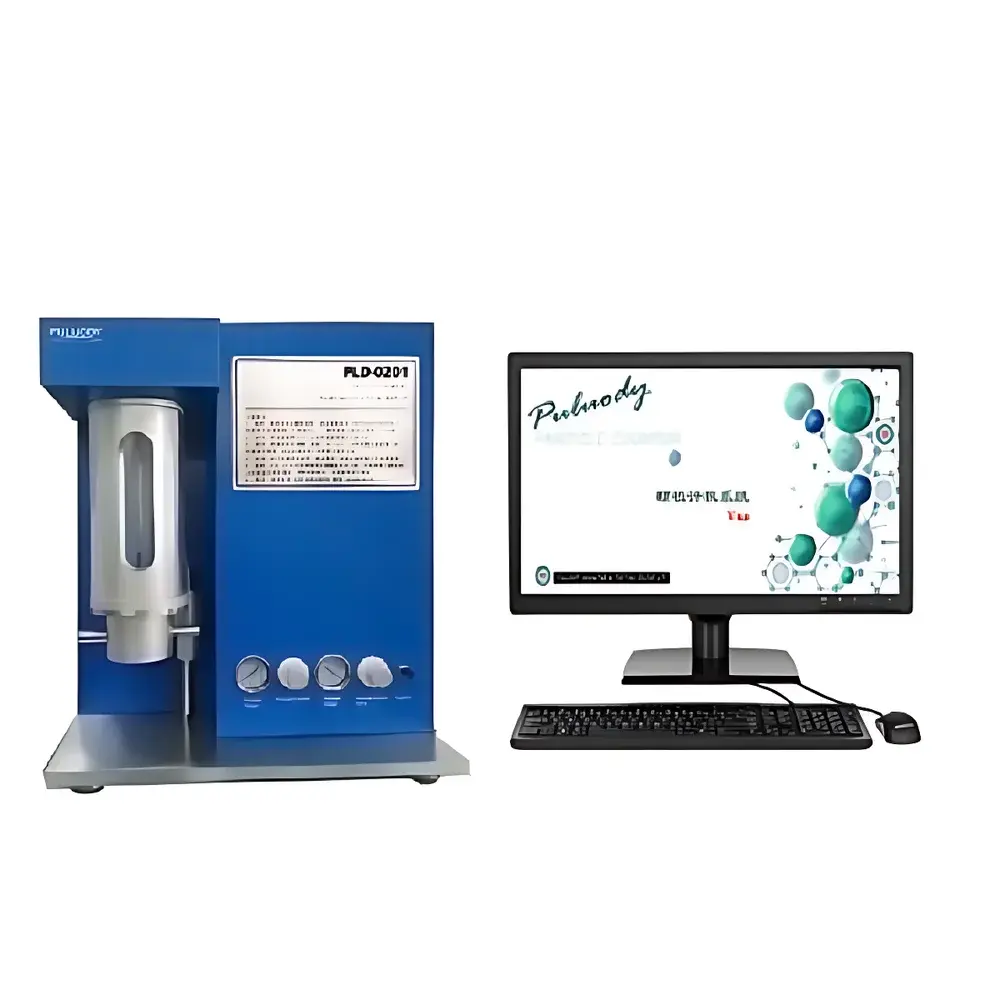
PULUODY PLD-0201-02 Optical Particle Counter for Turbine Oil Contamination Monitoring
| Brand | PULUODY |
|---|---|
| Origin | Shaanxi, China |
| Manufacturer Type | Authorized Distributor |
| Instrument Type | Optical Particle Counter |
| Detection Principle | Light Obscuration (LO) |
| Calibration Standards | ISO 11171, ISO 4402, GB/T 18854 |
| Measurement Range | 1–1000 µm (sensor-dependent) |
| Sensitivity | 1 µm (per ISO 4402), 4 µm(c) (per ISO 11171/GB/T 18854) |
| Channel Resolution | Up to 1000 user-configurable size channels |
| Sample Volume Accuracy | ±1% |
| Flow Rate | 5–60 mL/min (sampling), 10–100 mL/min (cleaning) |
| Viscosity Limit | ≤450 mm²/s |
| Operating Temperature | Ambient to 65 °C |
| Pressure Range | –0.08 to 0.8 MPa |
| Power Supply | 220 V, 50 Hz, <80 W |
| Data Storage | 3000 tests onboard |
| Compliance | DL/T 1096, GJB 420B, NAS 1638, ISO 4406, MOOG, ISO 11218, DL/T 432, ISO 11500 |
Overview
The PULUODY PLD-0201-02 Optical Particle Counter is a dedicated, in-laboratory and on-site contamination monitoring instrument engineered for precise quantification of solid particulate contamination in turbine oils, hydraulic fluids, lubricants, insulating oils, and other industrial liquid media. It operates on the light obscuration (LO) principle—where particles suspended in a flowing liquid stream pass through a focused laser beam, generating transient reductions in detected light intensity proportional to particle cross-sectional area. This analog pulse signal is digitized and classified into user-defined size bins, enabling direct enumeration of particle counts per milliliter across standardized thresholds. Designed specifically for power generation facilities—including thermal, nuclear, and hydroelectric plants—the PLD-0201-02 meets the stringent repeatability, traceability, and regulatory expectations of ISO 4406:2017, NAS 1638, and DL/T 1096–2008. Its dual-pressure (positive/negative) fluid handling architecture enables reliable analysis of high-viscosity or degassed samples without manual pretreatment, supporting continuous compliance with turbine oil cleanliness specifications mandated by OEMs such as Siemens, GE, and Mitsubishi.
Key Features
- Eight-generation dual-laser narrow-beam sensor architecture delivering enhanced signal-to-noise ratio, reduced coincidence error (<5% at 10,000 particles/mL), and long-term optical stability.
- Integrated precision piston pump and electromagnetic flow control system ensuring volumetric accuracy better than ±1% and consistent flow rates from 5 to 60 mL/min.
- Onboard pressure conditioning module (–0.08 to +0.8 MPa) with vacuum-assisted de-gassing and mechanical stirring for homogenization—critical for viscous or aerated samples up to 450 mm²/s.
- 1000-channel high-resolution particle sizing capability, configurable to match any global standard (e.g., GJB 420B 000–12, ISO 4406 0–28, NAS 1638 00–12) or custom binning schemes (1–100 µm at 0.1 µm increments).
- Embedded industrial-grade controller with 7-inch color touchscreen interface, full QWERTY keyboard support, and real-time visualization of histograms, cumulative curves, and raw pulse data.
- Self-contained operation: integrated thermal printer, RS232 serial interface for external data archiving, and local storage of 3000 test records with timestamp, operator ID, and method metadata.
Sample Compatibility & Compliance
The PLD-0201-02 is validated for use with mineral-based and synthetic turbine oils (including ISO VG 32, 46, and 68 grades), phosphate ester fire-resistant fluids, transformer oil (IEC 60296), hydraulic oils (ISO 11158 HM/HV), and water-glycol emulsions. It supports direct analysis of undiluted, unfiltered samples—eliminating preparation-induced bias. All calibration and verification procedures align with ISO 11171 (for equivalent spherical diameter traceability), ISO 4402 (for AC Fine Test Dust reference), and national metrological standards GB/T 18854 and JJG 1061. Optional certification reports are available from accredited national laboratories—including the Aviation Industry Particle Measurement Station (Xi’an) and Northwest National Metrology Center—ensuring audit readiness under ISO/IEC 17025, GLP, and power industry maintenance protocols.
Software & Data Management
The instrument runs P6.4 Analysis Software (integrated firmware + optional PC desktop version), supporting automated report generation compliant with ISO 4406:2017 Annex A and NAS 1638 Appendix B. Data exports include CSV, PDF, and XML formats with embedded digital signatures for integrity verification. The software enforces role-based access control, electronic audit trails (aligned with FDA 21 CFR Part 11 requirements for optional validation packages), and configurable alarm thresholds tied to asset-specific cleanliness targets (e.g., ISO Class 16/14/11 per IEC 60404-7). Historical datasets can be trended against maintenance events, filter change logs, or outage records—enabling predictive oil health management within CMMS/EAM environments.
Applications
This particle counter serves critical condition monitoring functions across energy infrastructure: continuous assessment of steam turbine lube oil reservoirs, feedwater pump hydraulics, generator hydrogen seal oil systems, and electro-hydraulic control (EHC) fluid circuits. It is routinely deployed in routine QC labs, field service vans, and OEM technical centers for root-cause analysis of bearing wear, servo valve stiction, and filter bypass events. Beyond power generation, it supports contamination control in aviation ground support equipment (GSE), marine propulsion systems, wind turbine gearboxes, and semiconductor fab tool coolant loops—where sub-4 µm(c) particle counts directly correlate with component wear life and system reliability.
FAQ
Does the PLD-0201-02 require sample dilution prior to testing?
No—its dual-pressure sampling module and high-viscosity compatibility (≤450 mm²/s) allow direct analysis of undiluted turbine oils and other dense fluids without pre-treatment.
Can the instrument be calibrated to ISO 11171 using NIST-traceable reference materials?
Yes—calibration is performed using certified PSL or ISO MTD suspensions traceable to NIST SRM 2806 or equivalent national standards; documentation includes uncertainty budgets per ISO/IEC 17025.
Is remote data integration supported for enterprise-level oil analysis platforms?
Yes—via RS232 ASCII protocol or optional Ethernet/WiFi module (firmware upgrade), enabling seamless ingestion into LIMS, SAP PM, or cloud-based reliability analytics suites.
What maintenance intervals are recommended for long-term operational reliability?
Annual verification against reference standards is advised; the built-in self-cleaning cycle (using solvent-compatible rinse fluid) minimizes carryover between samples and extends optical path longevity.
How does the system handle air bubbles or entrained gas in turbine oil samples?
The integrated vacuum-assisted degassing chamber removes microbubbles prior to measurement, preventing false-positive counts and ensuring compliance with DL/T 432–2018 bubble rejection criteria.
Related Products



