
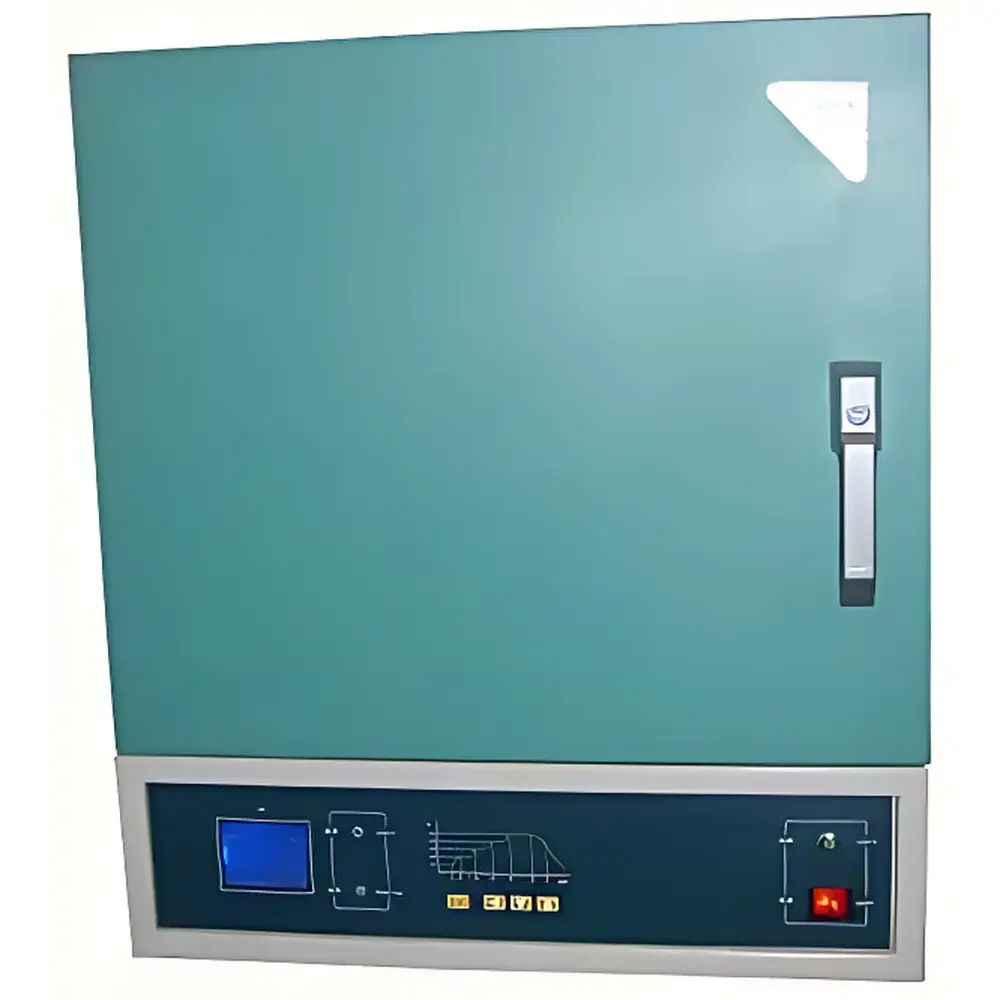
PULUODY PLD-508A Petroleum Products Ash Content Analyzer
| Brand | PULUODY |
|---|---|
| Origin | Shaanxi, China |
| Manufacturer Type | Direct Manufacturer |
| Product Origin | Domestic (China) |
| Model | PLD-508A |
| Heating Power | 4000 W |
| Rated Voltage | AC 220 V / 50 Hz |
| Furnace Chamber Dimensions | 300 × 200 × 120 mm |
| Filter Paper Diameter | 9 cm |
| Porcelain Crucible Capacity | 50 mL |
| Temperature Range | Ambient to 1000 °C |
| Control System | Analog Pointer-Based Temperature Controller with Integrated Ammeter |
Overview
The PULUODY PLD-508A Petroleum Products Ash Content Analyzer is a dedicated laboratory instrument engineered for the quantitative determination of inorganic residue—commonly referred to as ash content—in refined petroleum products, lubricating oils, fuel oils, and related hydrocarbon-based materials. It operates in strict accordance with the procedural requirements of GB/T 2433—China’s national standard equivalent to ASTM D482 and ISO 6245, which specify the gravimetric method for ash determination via controlled combustion followed by high-temperature calcination. The analytical principle involves two sequential thermal stages: first, ignition of the sample using an ash-free filter paper wick under atmospheric conditions to oxidize volatile organic components; second, transfer of the carbonaceous residue into a pre-weighed porcelain crucible and subsequent heating at 775 ± 25 °C in a calibrated muffle furnace to fully oxidize residual carbon and convert metallic impurities into stable, non-volatile oxides. The final ash mass is determined by precise gravimetric difference before and after calcination, expressed as a weight percentage relative to the original sample mass.
Key Features
- Integrated high-power muffle furnace with rated heating capacity of 4000 W, enabling rapid ramp-up to operational temperatures up to 1000 °C with thermal stability within ±5 °C at setpoint.
- Analog temperature controller featuring a mechanical pointer display and built-in ammeter for real-time monitoring of heating element current draw—providing immediate visual feedback on thermal load and system integrity.
- Robust furnace chamber constructed from high-density refractory ceramic insulation, dimensioned at 300 × 200 × 120 mm (L × W × H), accommodating standard 50 mL porcelain crucibles and supporting simultaneous processing of multiple samples under identical thermal profiles.
- Dedicated accessory set including ash-free quantitative filter paper (9 cm diameter), certified porcelain crucibles (Al₂O₃–SiO₂ composition, low alkali leachability), stainless-steel tongs, desiccator with silica gel indicator, and calibrated analytical balance interface protocols.
- Compliance-ready design: furnace temperature uniformity meets GB/T 2433 zone validation criteria across the working volume; thermal cut-off protection prevents uncontrolled overtemperature events during extended calcination cycles.
Sample Compatibility & Compliance
The PLD-508A is validated for use with liquid and semi-solid petroleum derivatives—including diesel fuel, jet fuel, marine distillates, base oils, and greases—provided samples are homogenized and introduced in quantities conforming to GB/T 2433 (typically 5–10 g per test). Solid residues or highly viscous feedstocks may require pre-dilution with low-ash solvent (e.g., naphtha) prior to ignition. All critical process steps—including crucible pre-firing, sample weighing, combustion duration, and post-calcination cooling in a desiccator—are documented to support GLP-compliant reporting. While not inherently 21 CFR Part 11–certified, the instrument’s analog control architecture facilitates audit-trail documentation through manual logbook entries synchronized with time-stamped balance readings and furnace temperature records.
Software & Data Management
As a standalone benchtop thermal analyzer without embedded digital controllers or data logging hardware, the PLD-508A relies on external laboratory information management systems (LIMS) or spreadsheet-based workflows for result compilation. Users are advised to integrate it with ISO/IEC 17025–accredited weighing stations and maintain traceable calibration records for both the analytical balance (Class I, readability ≤ 0.1 mg) and furnace thermocouple (calibrated annually against NIST-traceable reference standards). Optional accessories include a digital pyrometer adapter kit for periodic verification of furnace temperature uniformity per ASTM E220 methodology.
Applications
- Quality assurance testing of finished lubricants for additive package integrity and catalyst carryover detection.
- Refinery process monitoring of crude distillation unit (CDU) and fluid catalytic cracking (FCC) feedstocks to assess inorganic contaminant loading (e.g., Na, Ca, Mg, V, Ni).
- Regulatory compliance verification for marine fuel sulfur cap enforcement (IMO 2020), where ash content correlates with catalytic fines and abrasive wear potential.
- R&D evaluation of alternative fuels (e.g., bio-diesel blends, synthetic hydrocarbons) for inorganic residue formation under accelerated oxidation conditions.
- Contract laboratory services supporting third-party certification under CNAS (China National Accreditation Service) or ILAC-MRA signatory frameworks.
FAQ
What standards does the PLD-508A comply with?
It is designed and verified for full conformance with GB/T 2433, and its operational methodology aligns with ASTM D482 and ISO 6245.
Is the furnace temperature programmable?
No—the PLD-508A employs a manually adjustable analog controller; temperature stabilization requires operator observation and fine-tuning via the front-panel rheostat.
Can the instrument be used for coal or biomass ash analysis?
Not recommended—GB/T 2433 explicitly excludes solid fuels; alternate instrumentation complying with GB/T 212 or ASTM D3174 is required for such matrices.
What maintenance is required for long-term accuracy?
Annual thermocouple calibration, quarterly inspection of furnace door gasket integrity, and biannual cleaning of heating element surfaces with non-abrasive ceramic brushes are essential.
Does the system include a built-in balance or data export capability?
No—gravimetric measurements must be performed externally using a certified analytical balance; raw data entry is manual or LIMS-integrated.



