
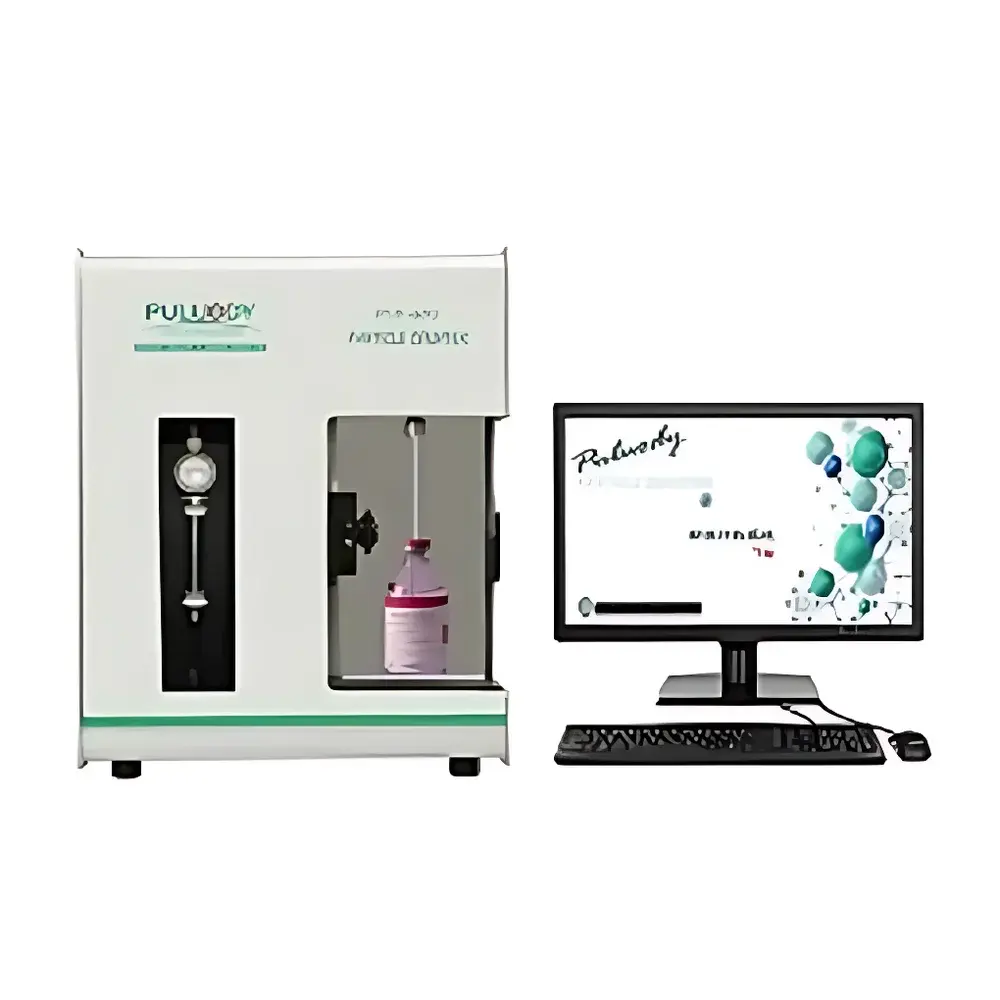
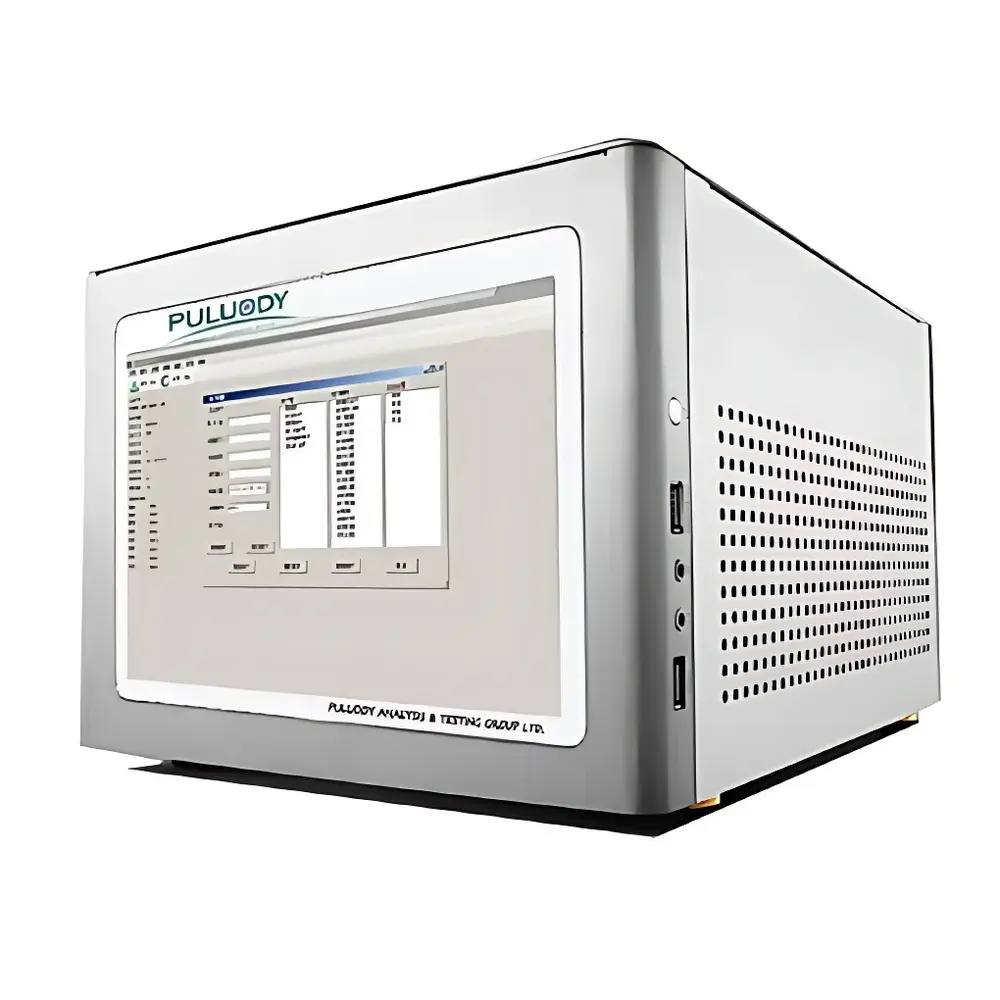
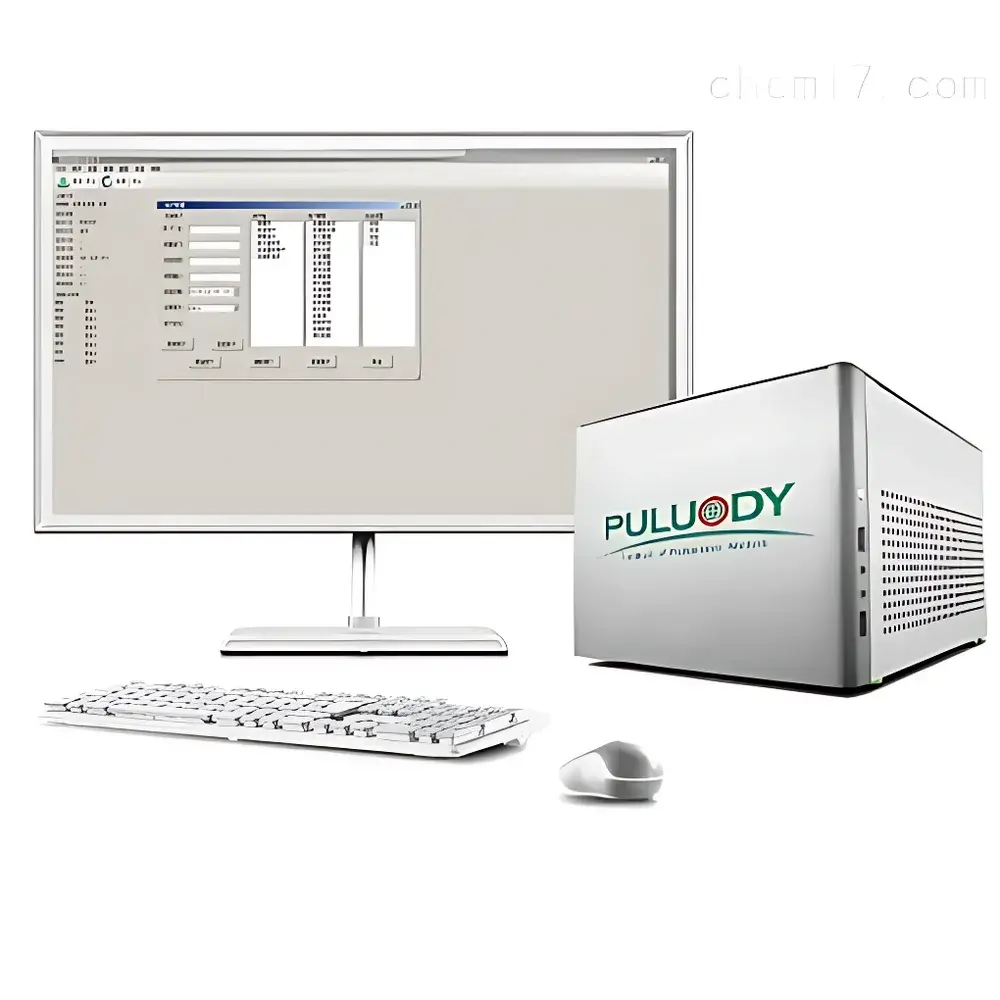
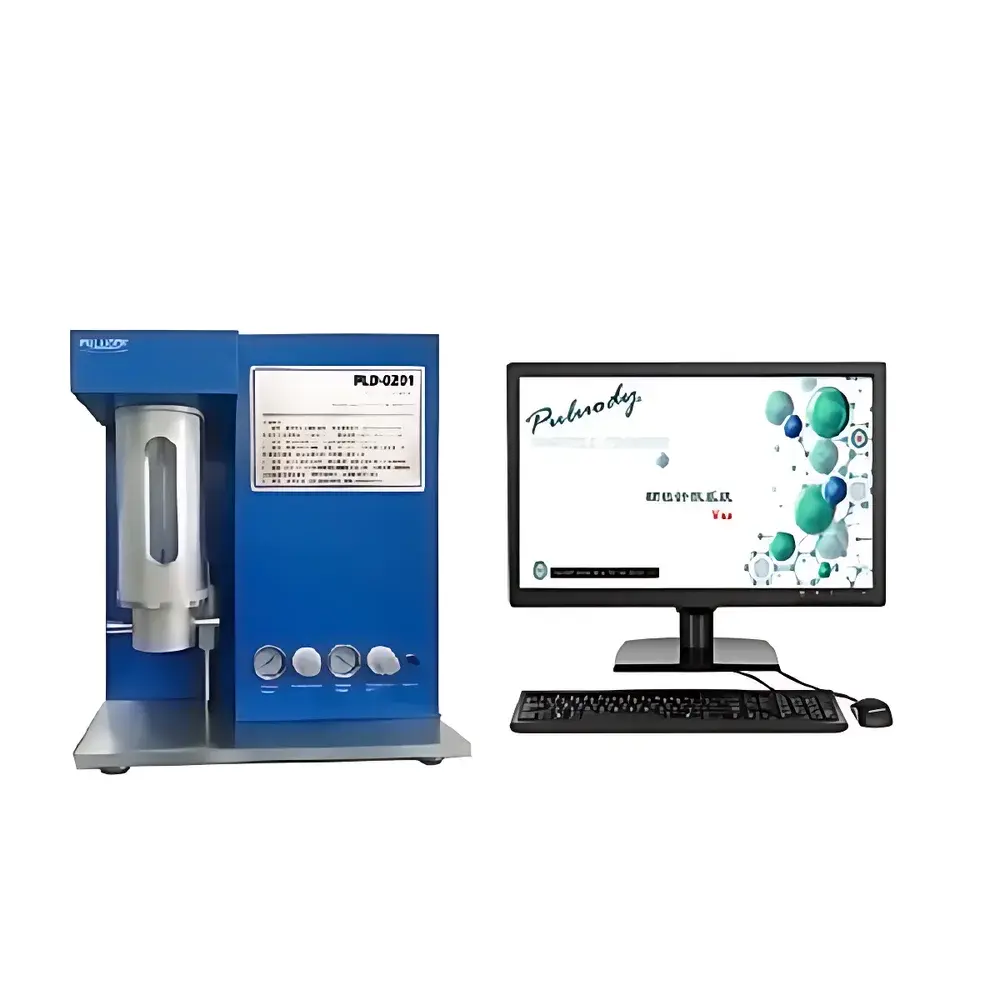
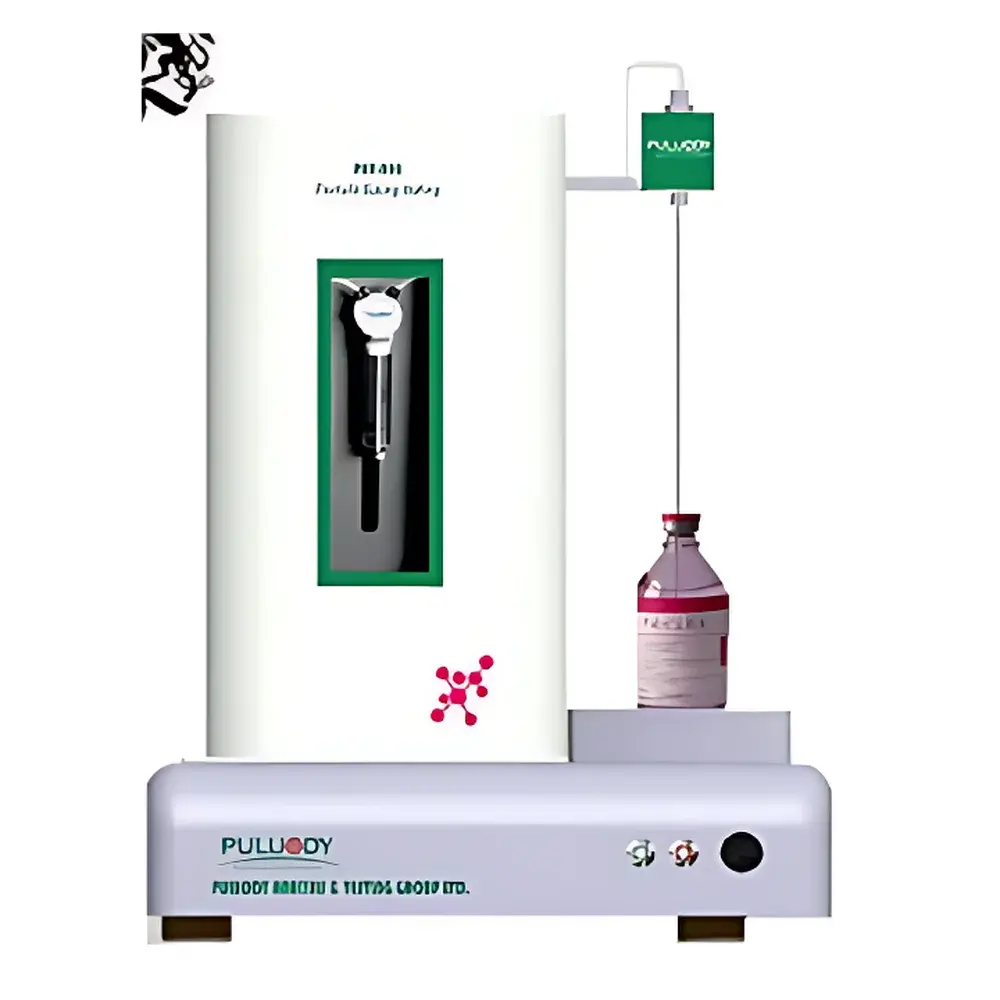
PULUODY PLD-601 Intelligent Human Serum Albumin Particle Analyzer for Insoluble Particulate Matter
| Brand | PULUODY |
|---|---|
| Origin | Shaanxi, China |
| Model | PLD-601* |
| Sensor | 8th-generation dual-laser narrow-beam particle sensor |
| Detection Principle | Light Blockage (Optical Obstruction) |
| Measurement Range | 1–500 µm (optional 0.03–3000 µm) |
| Channel Count | 1000 adjustable channels (down to 0.01 µm resolution) |
| Sampling Flow Rate | 5–150 mL/min |
| Rinse Flow Rate | 5–500 mL/min |
| Sample Temperature Range | 0–80 °C |
| Accuracy | ±3% typical (per ChP 2020 & USP <788>) |
| Coincidence Limit | ≤2.5% at 1000 particles/mL |
| Resolution | >95% (ChP-calibrated), <10% (USP/ISO 21501-calibrated) |
| Compliance | ChP 2020 <0903>, USP <788>/<789>/<797>, EP 10.0, BP 2019, JP 17, ISO 21501-4, ISO 11171, GB/T 11446.9-2013, GB 8368, YBB 00272004-2015 |
| Software | V8.9 Regulatory Edition with 5-level user permissions, audit trail, electronic signature, 21 CFR Part 11 compliance, data backup/recovery, and power-fail protection |
| Interface | Touchscreen + optional wireless keyboard/mouse |
| Calibration Standards | JJG 1061, NIST-traceable latex spheres, or ISO 21501-4 reference materials |
Overview
The PULUODY PLD-601 Intelligent Human Serum Albumin Particle Analyzer is a regulatory-grade optical obstruction (light blockage) instrument engineered for quantitative detection and size-resolved enumeration of insoluble particulate matter in parenteral pharmaceuticals and high-purity liquids. Designed explicitly to meet the stringent requirements of Chinese Pharmacopoeia (ChP) 2020 Edition <0903>, USP <788>, <789>, and <797>, as well as EP 10.0, BP 2019, and JP 17, the PLD-601 employs an 8th-generation dual-laser narrow-beam sensor architecture to deliver high-fidelity particle counting across a dynamic range of 1–500 µm—with optional extended ranges down to 0.03 µm or up to 3000 µm based on application-specific configuration. Its core measurement principle relies on transient light intensity attenuation caused by individual particles passing through a precisely collimated laser beam within a flow cell—enabling direct correlation between pulse amplitude and equivalent spherical diameter (ESD). This method ensures traceable, reproducible results aligned with ISO 21501-4 calibration protocols and supports both routine QC release testing and root-cause investigation of particulate contamination in biologics, including human serum albumin formulations.
Key Features
- 8th-generation dual-laser narrow-beam optical sensor with enhanced signal-to-noise ratio and minimized refractive index dependency
- Dual-precision fluidic control system: high-accuracy metering piston pump combined with ultra-stable electromagnetic flow regulation (±1% volumetric precision)
- 1000 fully customizable particle sizing channels, supporting sub-micron resolution (0.01 µm bin width) and flexible threshold definition per pharmacopoeial standard
- V8.9 Regulatory Software Suite compliant with FDA 21 CFR Part 11: five-tier user access control, immutable audit trail, electronic signatures, automated report generation, and encrypted data backup/recovery
- Integrated thermal management for sample stream conditioning (0–80 °C), ensuring viscosity-stable flow dynamics during analysis of viscous biologics or temperature-sensitive formulations
- Modular calibration support for multiple reference standards—including JJG 1061-certified verification, NIST-traceable polystyrene latex spheres, and ISO 21501-4-compliant calibration kits
- Touchscreen HMI with bilingual (English/Chinese) interface, configurable workflow templates, and real-time statistical process monitoring (SPC) overlays
Sample Compatibility & Compliance
The PLD-601 is validated for use across a broad spectrum of liquid pharmaceutical matrices requiring particulate assessment under GMP/GLP conditions. It supports direct analysis of solution-type injectables, sterile powders for reconstitution, concentrated injection solutions, intravenous active pharmaceutical ingredients (APIs), ophthalmic solutions, vaccines, Water for Injection (WFI), pharmaceutical packaging materials (e.g., stoppers, IV bags), and infusion devices—including terminal filter efficiency evaluation and particulate shedding characterization. The system conforms to global regulatory frameworks including ChP <0903>, USP <788> (for injectables), <789> (for ophthalmics), and <797> (for compounding), as well as EP 10.0 Annex 8, BP 2019 Appendix XVI, JP 17 General Test 6.07, WHO International Pharmacopoeia IV, and YBB 00272004-2015 for container-closure systems. All firmware, software logic, and data handling workflows are designed to satisfy ALCOA+ principles and support inspection-readiness for FDA, EMA, PMDA, and NMPA audits.
Software & Data Management
The V8.9 Regulatory Edition software provides full lifecycle data governance for regulated environments. It features time-stamped, tamper-evident audit trails recording every user action—including parameter changes, calibration events, result modifications, and report exports. Electronic signatures are implemented per 21 CFR Part 11 Subpart B requirements, with role-based authentication and certificate-based signing authority. Data integrity safeguards include automatic checksum validation, periodic database health checks, and scheduled encrypted backups to network drives or external media. Raw pulse data, histogram distributions, cumulative counts, and pass/fail determinations against configurable pharmacopoeial limits are stored in vendor-neutral formats (CSV, PDF/A-2, XML) compatible with LIMS integration. Optional IQ/OQ/PQ documentation packages and UAT support are available to facilitate qualification in cGMP facilities.
Applications
Beyond primary compliance testing for injectables, the PLD-601 serves critical roles in upstream and downstream quality assurance: evaluating filter integrity and retention performance; quantifying wear debris from manufacturing equipment (e.g., pumps, mixers, filling lines); assessing cleaning validation endpoints in purified water and WFI distribution systems; characterizing CMP slurries and nano-dispersions in semiconductor fabrication; monitoring contamination in ultrapure water used in photolithography; and verifying particulate cleanliness of medical device components per ISO 11171 and NAS 1638. In R&D settings, it enables comparative studies of formulation stability, container-closure interaction, and lyophilization-induced particle generation—providing statistically robust datasets for ICH Q5C and Q5D assessments.
FAQ
Does the PLD-601 comply with FDA 21 CFR Part 11 for electronic records and signatures?
Yes—the V8.9 software implements full technical and procedural controls required by Subpart B, including audit trail archiving, role-based access, electronic signature validation, and data immutability.
Can the instrument be calibrated using USP <788>-specified reference standards?
Absolutely. Calibration is supported via NIST-traceable latex sphere suspensions, ISO 21501-4 reference materials, or certified JJG 1061 verification procedures—all traceable to national metrology institutes.
Is the system suitable for analyzing highly viscous protein solutions such as 25% human serum albumin?
Yes. With programmable flow rate adjustment (5–150 mL/min), integrated temperature control (up to 80 °C), and low-shear sampling path design, the PLD-601 maintains laminar flow and minimizes aggregation artifacts in viscous biologics.
How does the dual-laser sensor improve measurement reliability compared to single-beam systems?
Dual-laser geometry enables simultaneous detection of particle transit time and obscuration magnitude—reducing false positives from air bubbles or refractive artifacts while improving sizing linearity across wide concentration ranges.
What validation documentation is provided for installation and operation qualification?
Comprehensive IQ/OQ documentation kits—including test protocols, acceptance criteria, raw data worksheets, and summary reports—are available upon request and align with ASTM E2500 and ISPE GAMP5 guidance.
Related Products





