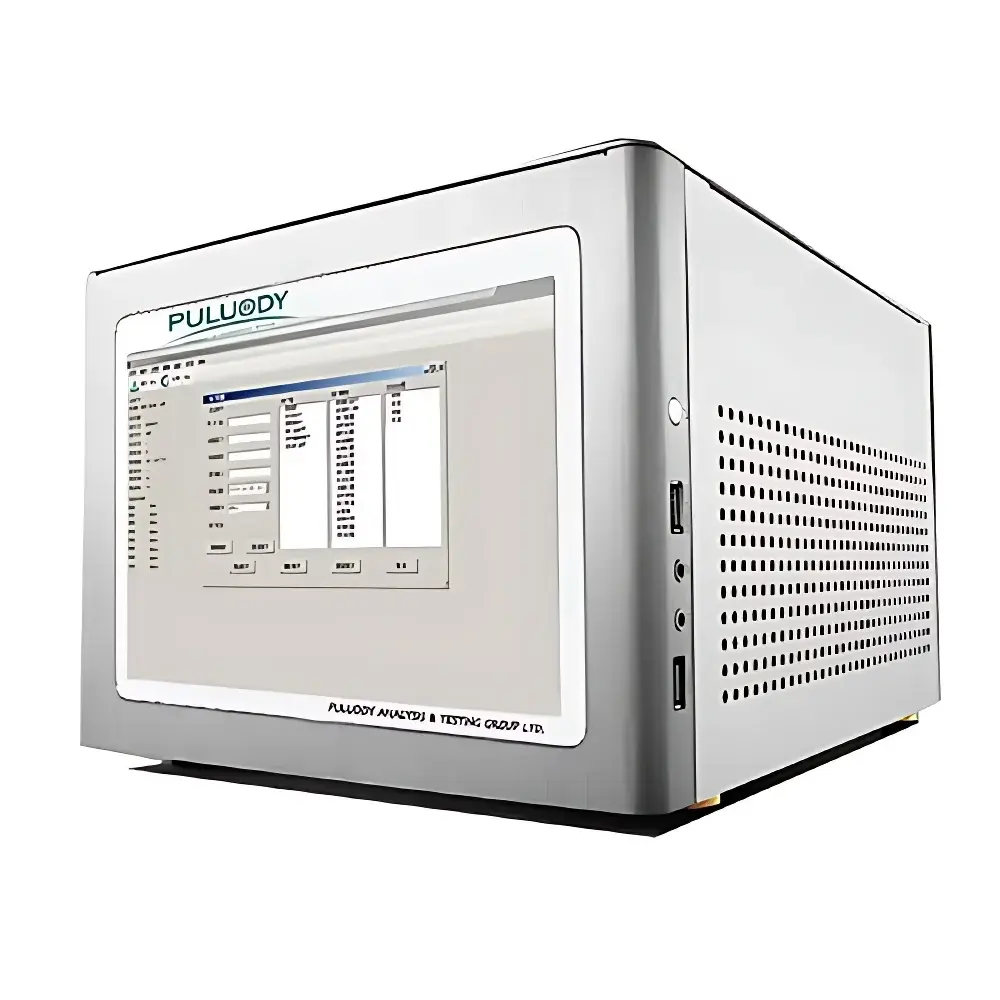
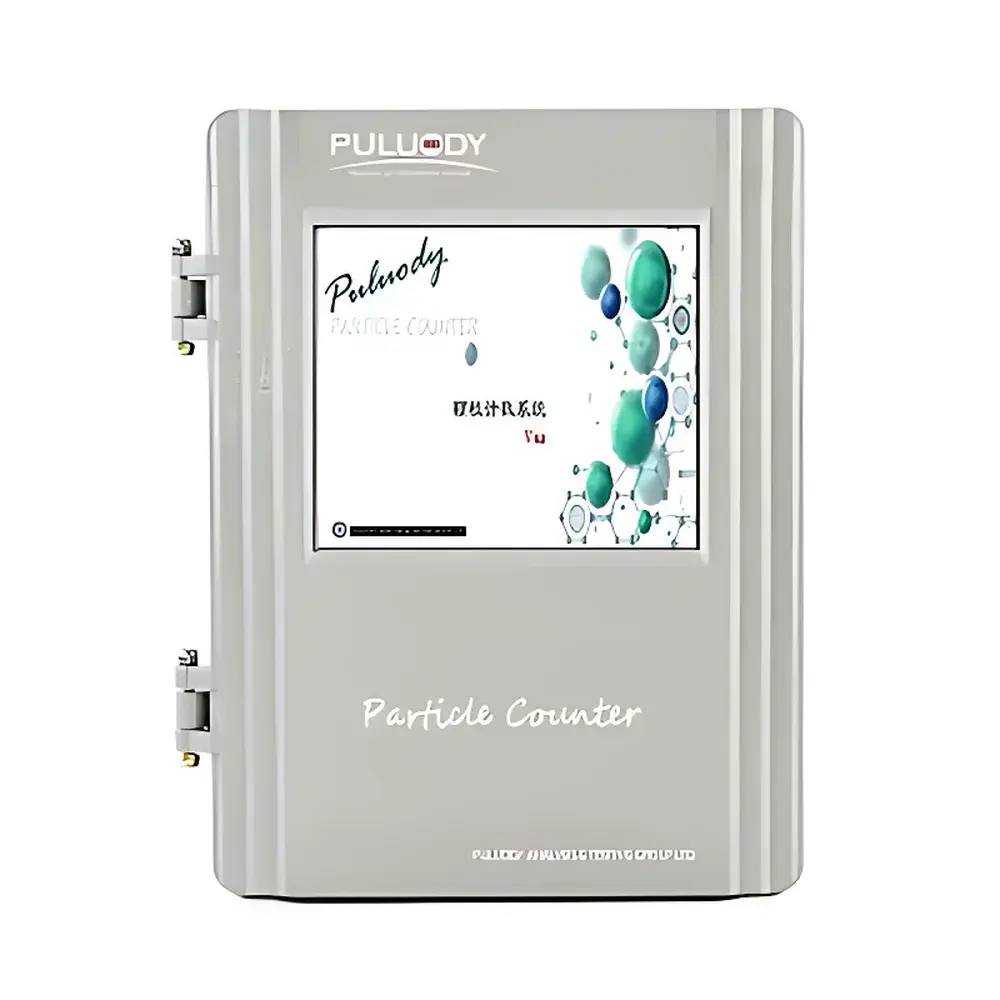
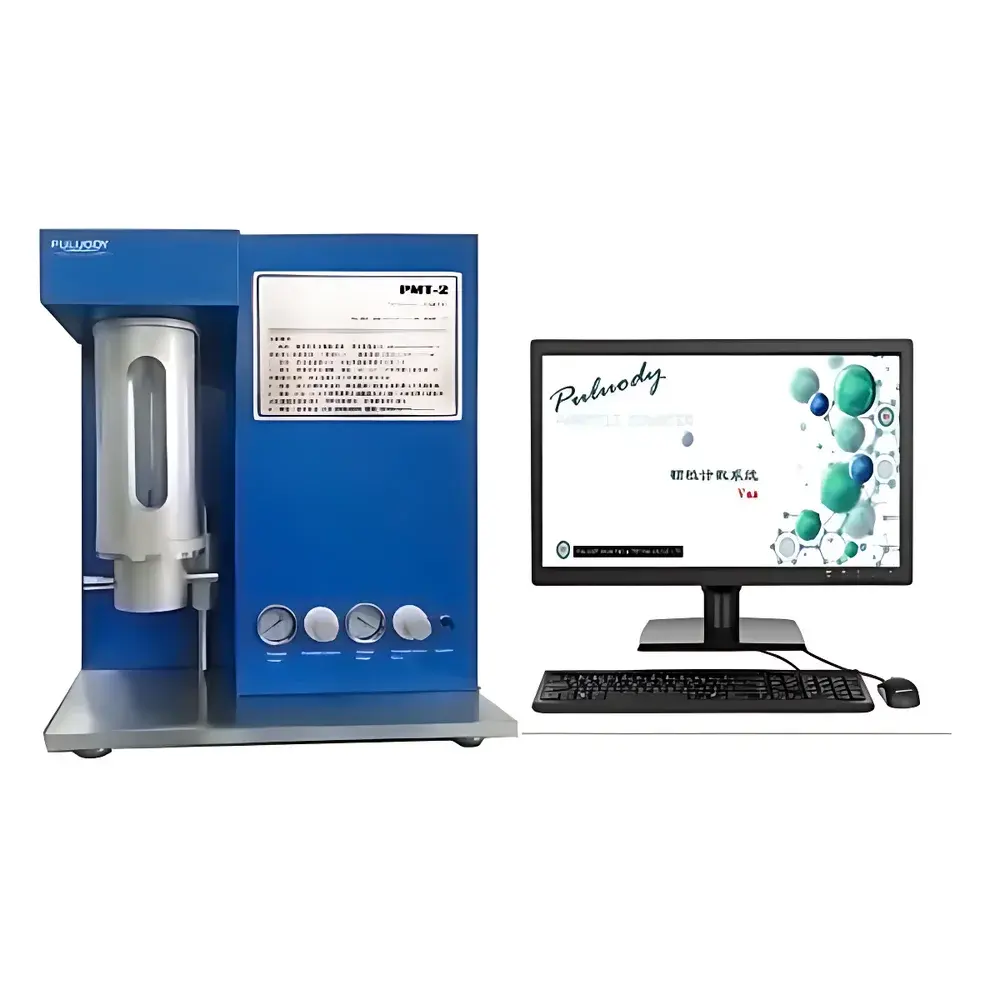
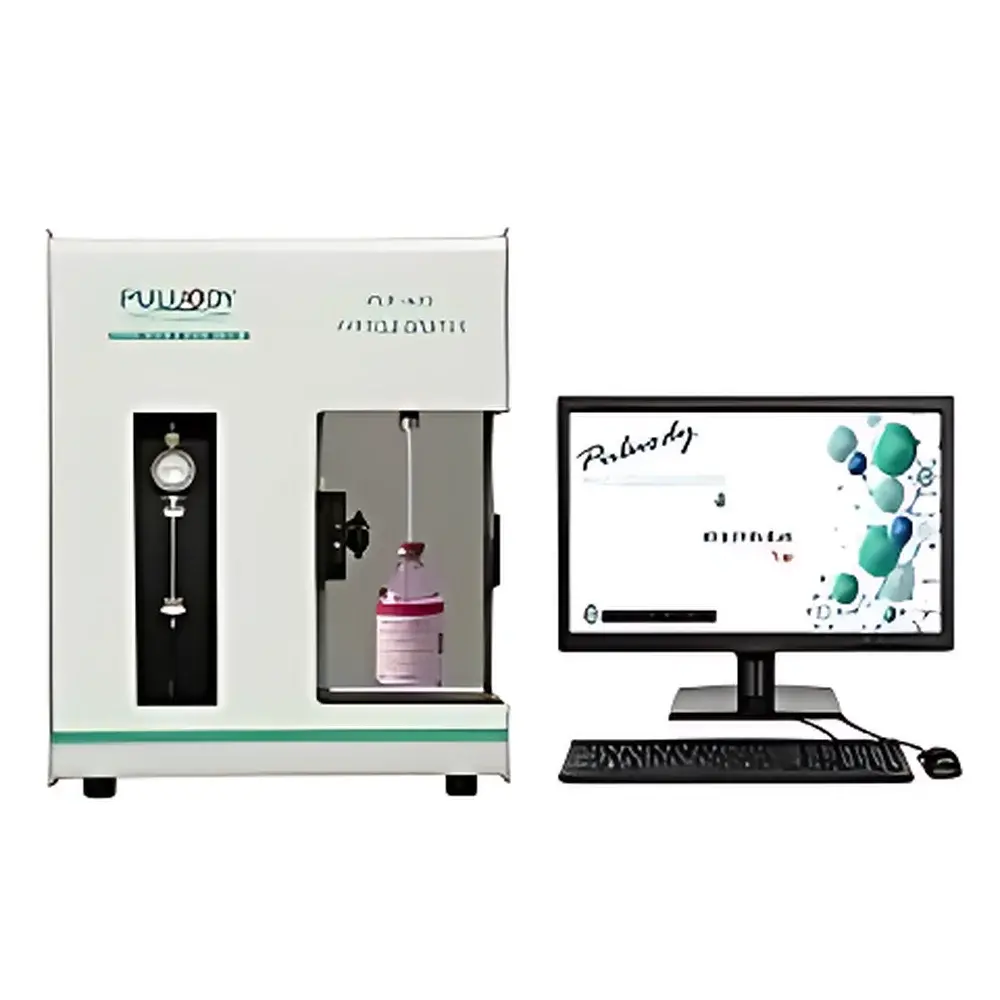
PULUODY PMT-2 Semiconductor-Grade Liquid Particle Counter
| Brand | PULUODY |
|---|---|
| Model | PMT-2 |
| Sensor Technology | 8th-Generation Dual-Laser Narrow-Beam Detection |
| Detection Range | 0.03–3000 µm (configurable sub-ranges: 1–100 µm, 4–70 µm(c), or 0.1 µm(c)) |
| Accuracy | ±3% typical |
| Sampling Precision | <±1% |
| Coincidence Limit | ≤2.5% at 1000 particles/mL |
| Calibration Standards | JJG 1061, ISO 21501-2, NIST-traceable latex spheres |
| Output | 4–20 mA analog interface with customizable alarm thresholds |
| Data Reporting | Particles per mL & ISO 4406 / NAS 1638 contamination codes |
| Power Input | 100–265 VAC, 50–60 Hz |
| Software | PULUODY V8.3 Analysis & Calibration Suite (PC + integrated touchscreen UI) |
| Compliance | Designed for GLP/GMP-aligned environments |
Overview
The PULUODY PMT-2 Semiconductor-Grade Liquid Particle Counter is an engineered solution for real-time, high-sensitivity particulate contamination monitoring in ultra-clean fluid processes critical to semiconductor manufacturing, flat-panel display fabrication, and advanced electronics assembly. Built upon the 8th-generation dual-laser narrow-beam optical sensing architecture licensed from the UK-based PULUODY Analytical Testing Group, the PMT-2 employs light extinction and scattering principles to detect and size non-volatile suspended particles in liquids with sub-micron resolution. Its measurement principle conforms to ISO 21501-2 (Determination of particle size distribution — Single particle optical sensing) and supports traceable calibration using NIST-certified polystyrene latex standards. Unlike generic liquid particle counters, the PMT-2 is purpose-configured for low-conductivity, low-viscosity media such as ultrapure water (UPW), semiconductor process chemicals (e.g., SC1, SC2, HF blends), photoresist solvents, and CMP slurries—environments where electrostatic interference, refractive index mismatch, and sensor fouling demand robust optical and hydraulic design.
Key Features
- Dual-laser narrow-beam optical detection system with independent wavelength channels for enhanced signal discrimination across 0.03–3000 µm dynamic range
- High-stability precision metering piston pump combined with electromagnetic flow control, delivering volumetric accuracy better than ±1% and enabling repeatable, pulse-free sampling
- Configurable detection thresholds: user-selectable sizing windows including 0.1 µm(c), 1–100 µm, and 4–70 µm(c) modes optimized for semiconductor cleanliness specifications (e.g., SEMI F63, JIS B 9921)
- Integrated color LCD touchscreen interface with optional wireless keyboard/mouse support for cleanroom-compatible operation
- 4–20 mA analog output with programmable alarm thresholds for integration into PLC-based facility monitoring systems
- Real-time coincidence error correction algorithm validated up to 1000 particles/mL (≤2.5% error), ensuring statistical reliability during high-concentration transient events
- Modular hardware architecture allowing field-upgradable firmware and sensor recalibration without disassembly
Sample Compatibility & Compliance
The PMT-2 is validated for use with deionized water (resistivity ≥18.2 MΩ·cm), organic solvents (e.g., PGMEA, DMSO), aqueous etchants, and colloidal dispersions common in front-end-of-line (FEOL) and back-end-of-line (BEOL) processes. It meets material compatibility requirements for Class 100 (ISO 5) and cleaner cleanroom environments when installed with stainless-steel wetted parts and EPDM/FFKM seals. Regulatory alignment includes support for FDA 21 CFR Part 11-compliant data integrity workflows via optional electronic signature modules in V8.3 software. Calibration records adhere to ISO/IEC 17025 documentation protocols, and test reports may be generated in formats compatible with internal quality audits per IATF 16949 and SEMI E10 standards.
Software & Data Management
PULUODY V8.3 Analysis & Calibration Suite separates measurement acquisition from metrological calibration—a deliberate architectural choice to eliminate software-induced bias during routine testing. The platform provides dual-mode operation: standalone embedded GUI for rapid diagnostics and full-featured PC client for advanced trend analysis, SPC charting (X̄-R, CUSUM), and batch reporting compliant with ISO 4406:2017 and NAS 1638. All raw scatter/extinction waveforms are archived with timestamp, temperature, pressure, and operator ID metadata. Audit trail functionality logs every parameter change, calibration event, and report export, satisfying GLP and GMP documentation requirements. Data export supports CSV, PDF, and XML formats for integration with LIMS and MES platforms.
Applications
- In-line monitoring of UPW recirculation loops in fab tool hookups
- Offline verification of filter integrity for point-of-use (POU) sub-10 nm filtration systems
- Contamination trending during wafer cleaning validation (e.g., post-RCA, post-dry etch rinse)
- Particulate release testing of photomask storage cassettes and FOUPs
- Quality control of CMP slurry stability and agglomerate formation kinetics
- Verification of cleaning agent purity prior to dispensing in lithography track tools
- Support for SEMI F32 (Particle Counting Standard Practice) and ASTM F3217 (Standard Guide for Monitoring Particulate Contamination in Ultrapure Water)
FAQ
Does the PMT-2 comply with SEMI standards for semiconductor process liquids?
Yes—the instrument’s detection sensitivity, calibration traceability, and reporting format align with SEMI F63 (Specification for Ultrapure Water) and SEMI F32 (Practice for Particle Counting in Liquids).
Can it measure particles below 0.1 µm in ultrapure water?
The base configuration achieves reliable detection down to 0.03 µm under controlled laminar flow and optimal refractive index conditions; sub-0.1 µm performance requires application-specific validation per ASTM F3217 Annex A2.
Is remote software update supported?
Firmware and V8.3 software updates are delivered via encrypted USB key or authenticated HTTPS download; no cloud connectivity is embedded to maintain air-gapped network security.
What maintenance intervals are recommended for continuous in-line operation?
Optical window cleaning every 72 operational hours; full sensor recalibration every 6 months or after 500 hours of cumulative runtime—documented in accordance with ISO/IEC 17025 Clause 7.7.
Does the system support multi-point sampling networks?
Yes—via optional 4–20 mA multiplexer modules and Modbus RTU expansion cards, enabling centralized monitoring of up to 16 independent fluid streams.