
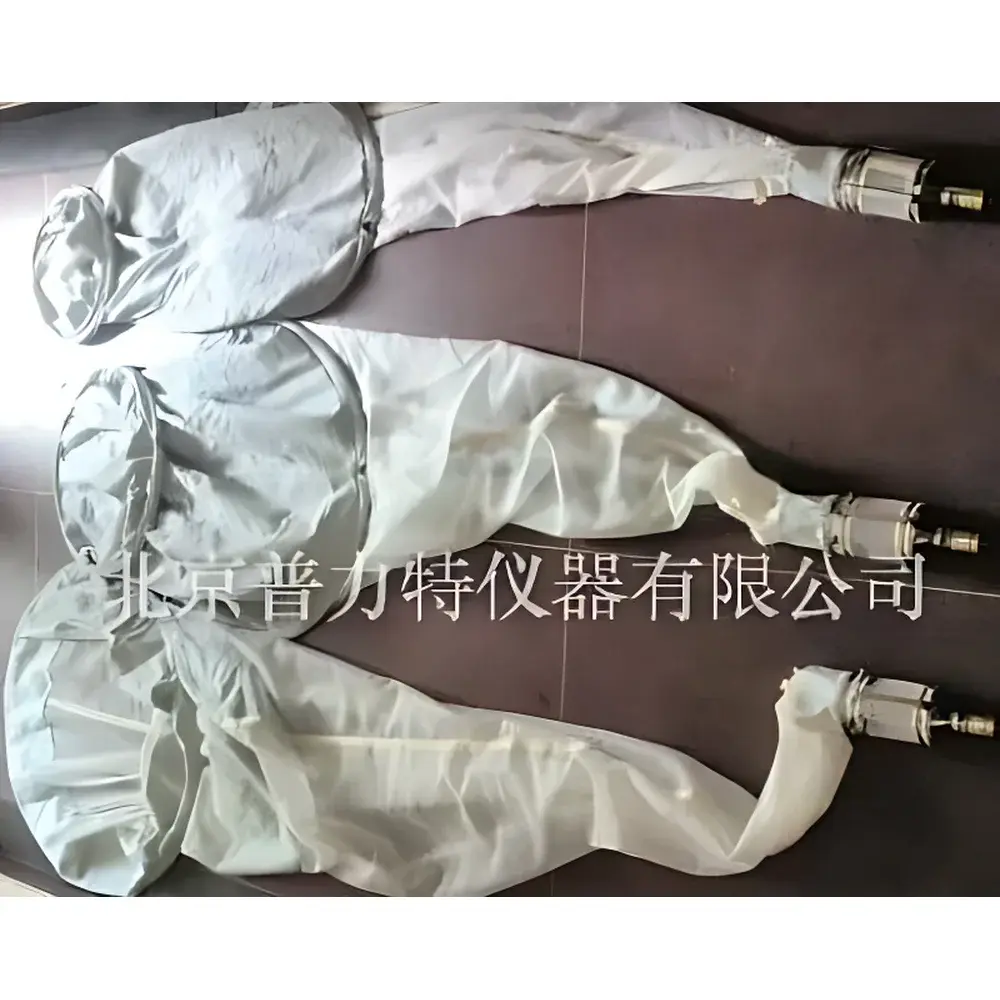
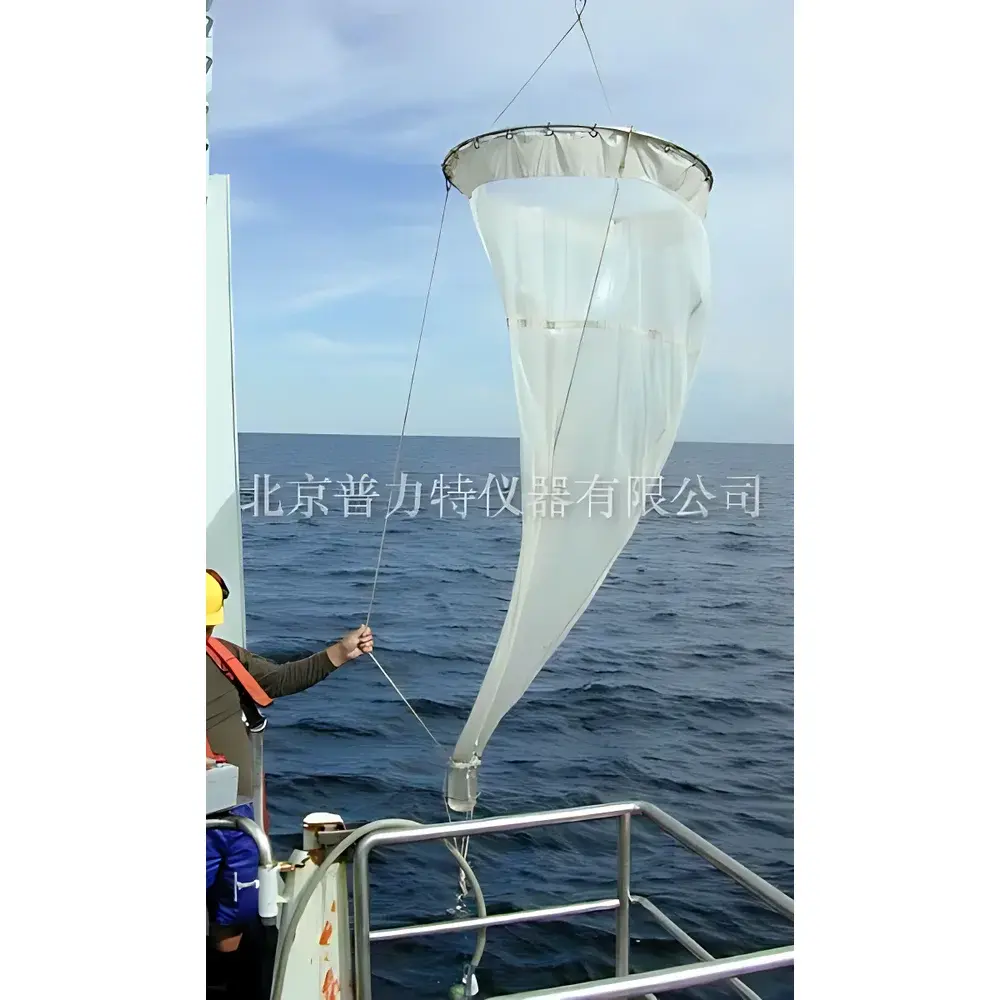
Purity PTN-DW Series Deep-Water Plankton Nets
| Brand | Purity |
|---|---|
| Origin | Beijing, China |
| Model | PTN-DW / PTN-DW1 / PTN-DW2 / PTN-DW3 |
| Net Length | 280 cm |
| Mouth Diameter (PTN-DW) | 80 cm |
| Mouth Diameter (PTN-DW1) | 80 cm |
| Mouth Diameter (PTN-DW2) | 50 cm |
| Mouth Diameter (PTN-DW3) | 37 cm |
| Mesh Aperture (PTN-DW) | 0.505 mm |
| Mesh Aperture (PTN-DW1) | 0.505 mm |
| Mesh Aperture (PTN-DW2) | 0.160 mm |
| Mesh Aperture (PTN-DW3) | 0.077 mm |
| Hoop Material | Stainless Steel |
| Cod-end Tube | Stainless Steel with Copper Valve |
| Head Cone (DW2/DW3) | Canvas |
| Upper/Lower Cone Diameters (DW2) | 50 cm / 72 cm |
| Upper/Lower Cone Diameters (DW3) | 37 cm / 50 cm |
Overview
The Purity PTN-DW Series Deep-Water Plankton Nets are precision-engineered sampling tools designed for quantitative vertical and discrete-depth plankton collection in marine, lacustrine, and reservoir environments where water depth exceeds 30 meters. These nets operate on the principle of passive filtration under controlled towing or free-fall deployment, enabling reproducible capture of planktonic organisms across size classes—from large zooplankton and fish eggs to microphytoplankton—without mechanical disruption. Each variant (PTN-DW, PTN-DW1, PTN-DW2, PTN-DW3) is differentiated by mouth diameter and mesh aperture to match target organism size ranges and hydrodynamic conditions. Constructed for long-term submersion and repeated use, the series features corrosion-resistant stainless-steel hoops and cod-end tubes, copper-sealed valves for leak-free sample retention, and optimized conical geometry to minimize flow distortion and maximize retention efficiency. The design conforms to standard methodologies outlined in ISO 20665:2021 (Water quality — Guidance on plankton sampling) and supports compliance with EPA Method 1623.2 and ASTM D5116 for environmental monitoring programs requiring traceable, field-deployable biological sampling.
Key Features
- Three-tiered mesh aperture selection (0.505 mm, 0.160 mm, 0.077 mm) calibrated to capture macro-, meso-, and micro-plankton fractions respectively
- Standardized 280 cm net length ensures consistent filtration volume and minimizes wall effects during vertical hauls
- Stainless-steel structural components resist pitting and galvanic corrosion in saline and freshwater environments
- Copper-sealed cod-end valves provide positive closure under hydrostatic pressure up to 300 kPa (equivalent to ~30 m depth), preventing sample loss during retrieval
- Modular head cone assemblies (canvas-reinforced for DW2/DW3) accommodate differential flow expansion while maintaining laminar entry profiles
- Integrated mounting interface compatible with standard oceanographic winch systems, CTD frames, and A-frame deployment rigs
- No internal stitching or adhesive seams in the netting zone—welded or crimped junctions ensure structural integrity and eliminate particulate entrapment points
Sample Compatibility & Compliance
The PTN-DW Series is validated for use in regulatory-grade ecological surveys requiring taxonomic identification, biomass estimation, and community structure analysis. PTN-DW and PTN-DW1 support collection of gelatinous zooplankton, copepodid stages, ichthyoplankton (including yolk-sac larvae), and benthic meroplankton. PTN-DW2 targets dinoflagellates (e.g., Noctiluca scintillans), cladocerans, and rotifers; PTN-DW3 enables quantitative harvesting of diatoms, cyanobacteria, and prymnesiophytes without cell lysis. All models meet ISO 5667-3:2018 requirements for sampling equipment cleanliness and material leachate limits. Nets are supplied with manufacturer-certified calibration certificates referencing mesh aperture verification via optical micrometry (ISO 27828:2019). For GLP-compliant studies, serial-numbered tags and optional NIST-traceable mesh validation reports are available upon request.
Software & Data Management
While the PTN-DW Series is a hardware-only passive sampling system, it integrates seamlessly into digital environmental data workflows. Each net is assigned a unique asset ID compatible with LIMS platforms such as LabVantage and Thermo Fisher SampleManager. Deployment metadata—including depth profile (via paired CTD), time-stamped GPS coordinates, temperature, salinity, and winch payout rate—can be imported directly into Ecological Data Management Systems (EDMS) using standardized Darwin Core Archive templates. Purity provides a free CSV-based Field Log Template aligned with OBIS (Ocean Biogeographic Information System) submission guidelines. For audit readiness, full chain-of-custody documentation—including pre-deployment inspection logs, post-retrieval rinse validation records, and mesh integrity verification forms—is included in the user manual per FDA 21 CFR Part 11 electronic record guidance.
Applications
- Long-term monitoring of phytoplankton bloom dynamics in stratified reservoirs and coastal upwelling zones
- Baseline assessment for Environmental Impact Assessments (EIAs) prior to offshore wind farm or aquaculture development
- Validation of in situ chlorophyll-a and pigment concentration measurements from fluorometric sensors
- Ichthyoplankton surveys supporting fisheries stock assessment under ICES Working Group frameworks
- Microplastic–plankton interaction studies, where size-fractionated nets enable co-collection and spatial correlation analysis
- Training and intercalibration exercises for national water quality laboratories participating in GEMS/Water or EMODnet Biology initiatives
FAQ
What depth rating is certified for the PTN-DW Series?
The nets are engineered and tested for reliable operation at depths up to 100 meters; however, routine deployment is recommended ≤30 m unless used with reinforced steel cable and dynamic load-rated winches.
Can the copper valve be replaced with a stainless-steel alternative?
Yes—Purity offers an optional AISI 316L cod-end valve kit for extended deployments in highly sulfidic or low-oxygen hypolimnia where copper passivation may occur.
Is mesh aperture certified per ISO 27828?
Each production batch undergoes optical micrometry verification; calibration reports listing mean aperture ± standard deviation (n ≥ 50 measurements per net) are provided with shipment.
How should the nets be cleaned and stored between uses?
Rinse thoroughly with deionized water after each deployment; air-dry in shaded, low-humidity conditions; store flat or loosely rolled in acid-washed polyethylene bags to prevent creasing-induced mesh deformation.
Are custom mesh sizes available?
Yes—Purity supports OEM mesh fabrication from 20 µm to 1 mm aperture, subject to minimum order quantity and lead-time confirmation.







