
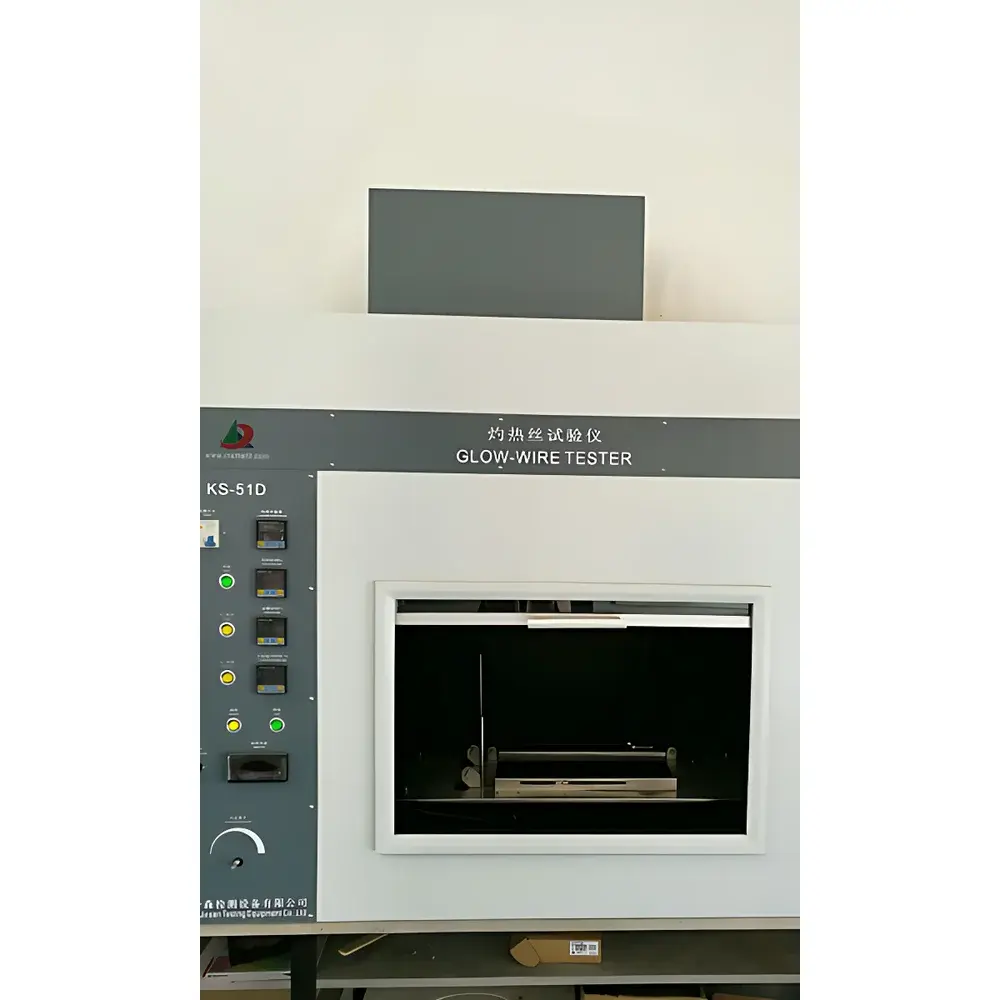
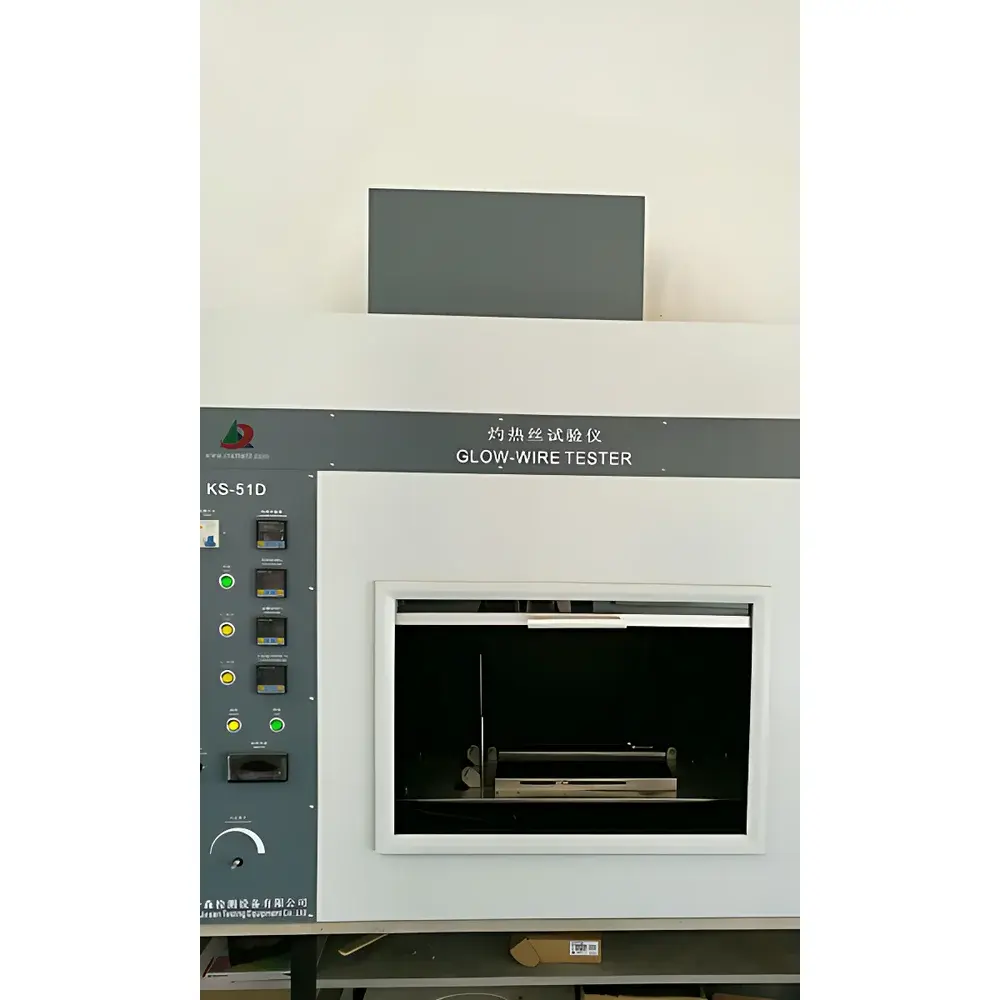
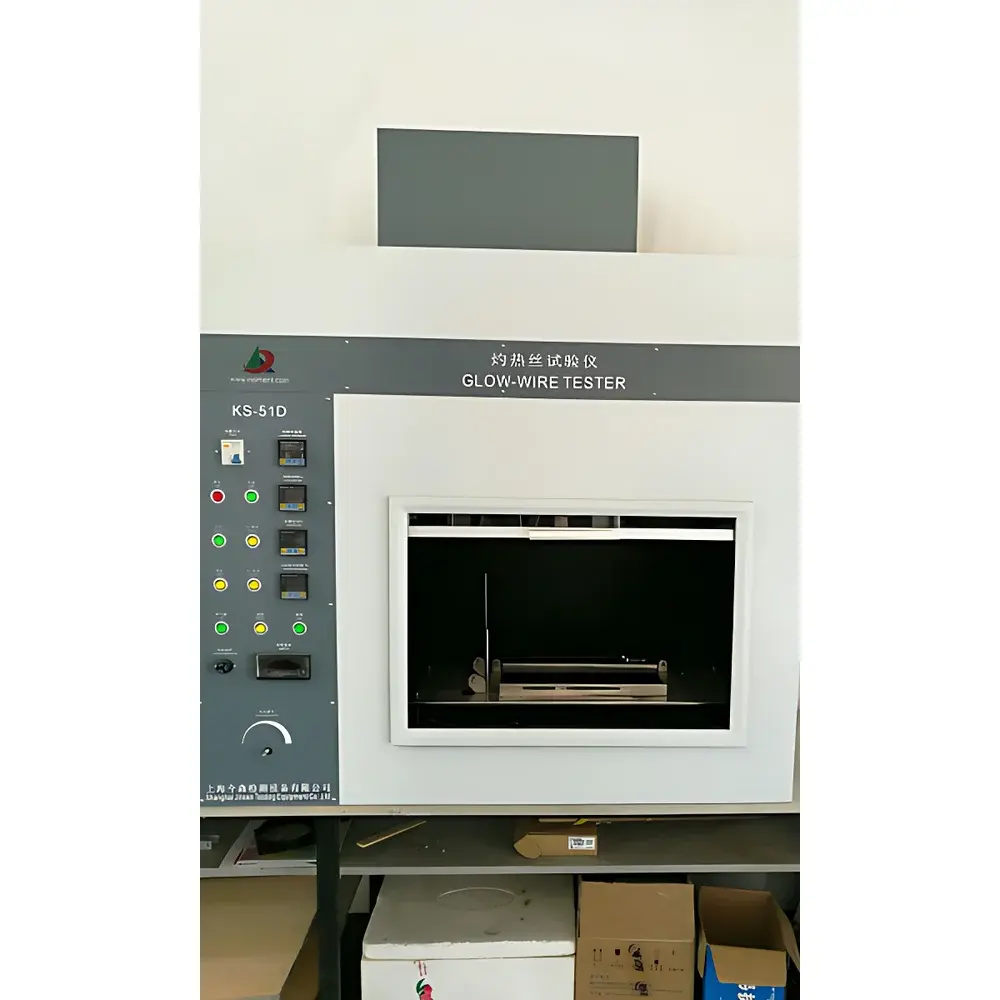
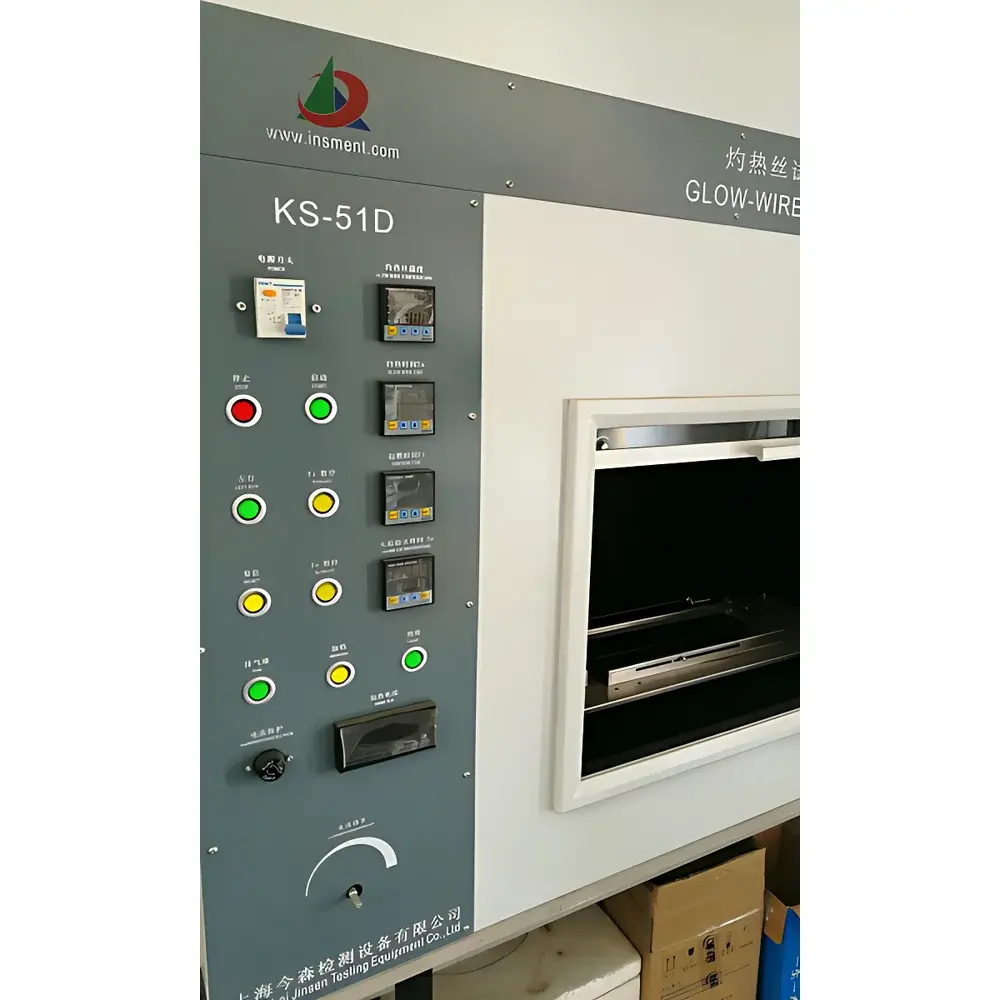
PY-ZRS10 Glow-Wire Test Apparatus (Flame Retardancy Series)
| Brand | Peiyi |
|---|---|
| Origin | Shanghai, China |
| Manufacturer Type | Authorized Distributor |
| Regional Classification | Domestic (China) |
| Model | PY-ZRS10 |
| Price | USD 2,250 (FOB Shanghai) |
| Input Voltage | AC 220 V ±10%, 50–60 Hz |
| Max Power Consumption | 1.5 kW |
| Temperature Range | 500–1000 °C (adjustable) |
| Temp. Accuracy | ±5 K |
| Temp. Display Resolution | 0.5-class precision |
| Timing Range | 0.001 s to 999.9 h (DIP-switch selectable) |
| Timing Accuracy | ±(0.05% + 50 ms) |
| Dimensions (H×W×D) | 1200 × 800 × 600 mm |
| Exhaust Port Diameter | Φ100 mm |
| Applied Force | 1.0 ± 0.2 N (motorized, near-zero acceleration contact) |
| Control Mode | Constant-current heating during test phase |
| Enclosure | Structural aluminum alloy frame with frameless tempered glass door |
Overview
The PY-ZRS10 Glow-Wire Test Apparatus is a precision-engineered instrument designed to evaluate the ignition resistance and flame propagation behavior of solid electrical insulating materials and other non-metallic components under controlled thermal stress. It operates in strict accordance with the fundamental principles of glow-wire testing as defined in IEC 60695-2-10:2013, GB/T 5169.10–5169.13, UL 746A, and related international standards. The apparatus simulates abnormal heat conditions—such as those caused by overheated components or fault currents—by applying a standardized nickel-chrome alloy wire heated to a precisely maintained temperature. A calibrated mechanical force is applied to bring the glowing wire into controlled contact with the test specimen for a defined duration. The resulting ignition behavior—including time to ignition, flame duration, afterglow time, and whether flaming or glowing particles detach—is objectively recorded and assessed per standardized pass/fail criteria. This method provides critical data for product safety certification, particularly for household appliances, IT equipment, lighting fixtures, and industrial control devices subject to IEC/EN 60335, IEC/EN 60950-1, and IEC/EN 62368-1 compliance requirements.
Key Features
- Robust structural frame fabricated from imported industrial-grade aluminum profiles, ensuring long-term dimensional stability and vibration resistance during repeated thermal cycling.
- Frameless tempered glass observation door with high-temperature sealing gasket, enabling real-time visual monitoring while maintaining operator safety and chamber integrity.
- High-fidelity temperature regulation system featuring closed-loop PID control and constant-current power delivery during the test phase—minimizing thermal drift and ensuring ±5 K accuracy across the full 500–1000 °C operating range.
- Motor-driven linear actuation mechanism delivering consistent 1.0 ± 0.2 N contact force with programmable approach velocity; engineered to achieve near-zero acceleration at point of contact, eliminating mechanical shock artifacts.
- Dual-mode timing architecture: microsecond-resolution digital timing for short-duration tests (e.g., 30 s glow-wire application), and extended-range DIP-switch configurable timing up to 999.9 hours for aging or auxiliary thermal exposure protocols.
- Integrated exhaust port (Φ100 mm) compatible with standard laboratory fume extraction systems, supporting safe venting of combustion byproducts in accordance with ISO 14040 environmental management guidelines.
Sample Compatibility & Compliance
The PY-ZRS10 accommodates flat, rigid, or semi-rigid specimens up to 10 mm thick and 100 mm × 100 mm in planar dimension. It supports both horizontal and vertical mounting configurations per IEC 60695-2-11 and GB/T 5169.11 requirements. Specimen holders are machined from high-purity alumina ceramic to prevent thermal interference and ensure repeatable positioning. All operational parameters—including temperature ramp rate, dwell time, contact force, and post-test cooling delay—are fully traceable and documented for audit readiness. The apparatus meets essential requirements for GLP-compliant laboratories and supports full traceability documentation required under ISO/IEC 17025 accreditation. Its design aligns with the mechanical and thermal performance benchmarks specified in IEC 60695-2-10 Annex B and UL 746A Section 20 for glow-wire apparatus verification.
Software & Data Management
While the PY-ZRS10 operates via hardware-based DIP-switch and analog front-panel controls—ensuring deterministic response and immunity to software-induced latency—it includes a standardized RS-232 serial interface for optional integration with external data acquisition systems. Users may log temperature setpoints, actual thermocouple readings (Type K), elapsed test time, and pass/fail status via third-party SCADA or LIMS platforms. All timing and temperature calibration records comply with ISO/IEC 17025 clause 6.5.2 for measurement traceability. For laboratories requiring electronic records under FDA 21 CFR Part 11, the apparatus can be paired with validated external controllers that provide audit trails, user access logs, and electronic signatures—though such functionality resides outside the base unit’s firmware.
Applications
- Evaluation of polymeric housings, terminal blocks, printed circuit board substrates, and connector insulators for end-use compliance with IEC 62368-1 Clause 6.3.2 (fire hazard assessment).
- Pre-certification screening of new flame-retardant formulations (e.g., halogen-free FR-PC, PBT-V0, or TPE compounds) against comparative GWFI (Glow-Wire Flammability Index) and GWIT (Glow-Wire Ignition Temperature) thresholds.
- Root-cause analysis of field failures involving thermal runaway in power supplies, motor windings, or relay assemblies.
- Supporting internal R&D validation per ASTM D635 (rate of burning) and ASTM D3801 (oxygen index), where glow-wire data informs material selection for UL 94 V-0/V-1/V-2 equivalence pathways.
- Quality assurance testing in production environments where batch-to-batch consistency of flame-retardant additives must be verified under standardized thermal stress conditions.
FAQ
What standards does the PY-ZRS10 explicitly support?
It is configured and verified for IEC 60695-2-10:2013, GB/T 5169.10–5169.13, UL 746A, DIN VDE 0471, and EN 60695-2-11/12/13. Calibration reports include traceability to national metrology institutes.
Is the glow-wire tip geometry and composition compliant with IEC 60695-2-10 Annex A?
Yes—the wire is manufactured from Ni/Cr (80/20) alloy, 4.0 mm diameter, with a hemispherical tip radius of 0.5 mm ±0.05 mm, and undergoes periodic dimensional verification using optical profilometry.
Can the PY-ZRS10 perform GWIT and GWFI determinations?
Yes—its stable temperature control, precise force application, and calibrated timing enable full execution of the incremental temperature methodology described in IEC 60695-2-12 and GB/T 5169.12 for GWIT, and the stepwise flammability screening per IEC 60695-2-13 for GWFI.
What maintenance is required to maintain calibration validity?
Annual verification of thermocouple linearity (per ASTM E230), mechanical force calibration (using NIST-traceable load cells), and glow-wire tip geometry inspection are recommended. A full calibration certificate is issued with each service.
Does the apparatus include flame detection or automatic pass/fail classification?
No—it is a manual observation platform per IEC 60695-2-10 requirements; operators visually assess ignition, flame spread, and particle emission per Clause 11.2. Automated image-based analysis modules are available as optional add-ons but are not part of the base configuration.



