
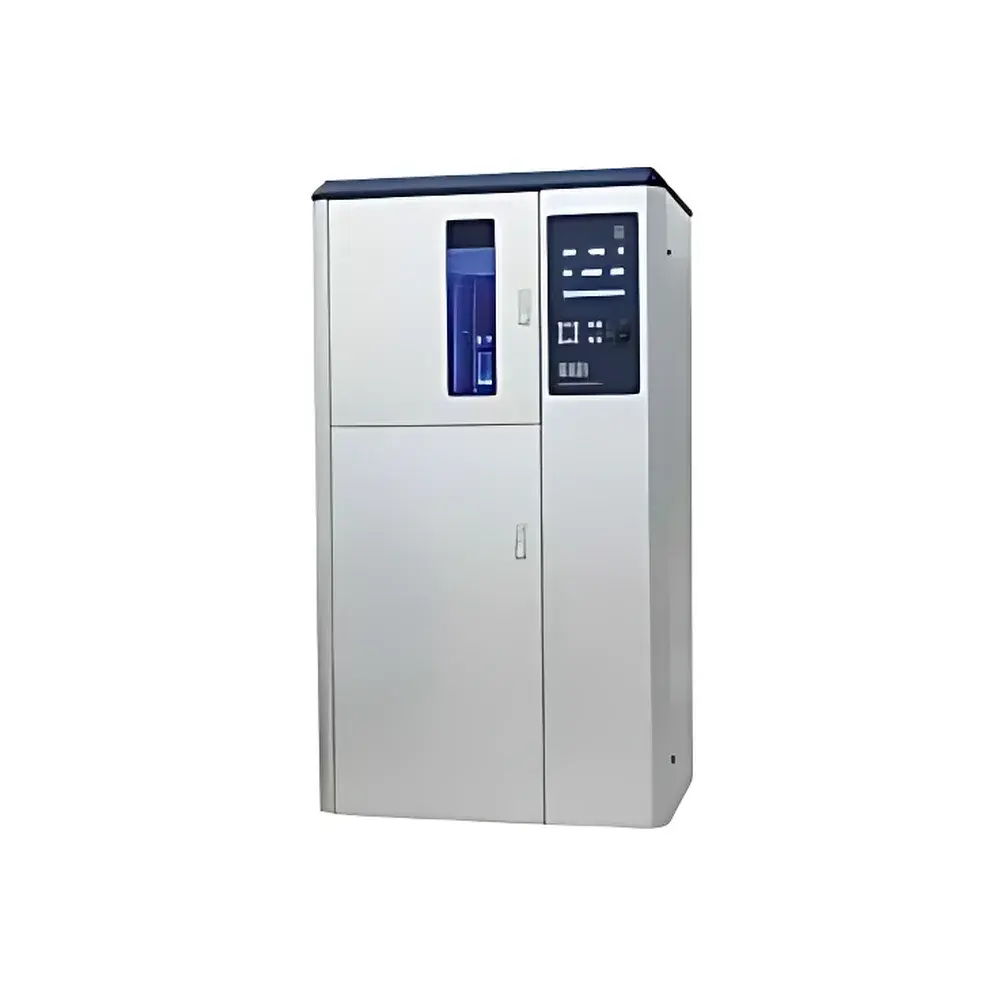
Q-LAB Q-SUN B02-S Xenon Arc Weathering Test Chamber for Colorfastness Testing
| Brand | Q-LAB |
|---|---|
| Origin | USA |
| Model | Q-SUN B02-S |
| Xenon Lamp Power | 1800 W |
| Compliance | ISO 105-B02, ISO 105-B04, AATCC TM 16 (Option 2 & 3), AATCC TM 169, M&S C9/C9A |
| Sample Capacity | 31 AATCC pre-cut specimens (1882 cm² total exposure area) |
| Lamp Type | Air-cooled xenon arc lamp |
| Lamp Life | ~1500 hours |
| Temperature Control | Blackboard temperature (35–103 °C), chamber air temperature |
| Humidity Control | Relative humidity (RH) with optional water spray |
| Filter System | Dual-filter assembly (outer borosilicate tube + inner 7-element filter set) for Window-IR (ISO/M&S) or Window-B/SL (AATCC) spectral profiles |
Overview
The Q-LAB Q-SUN B02-S Xenon Arc Weathering Test Chamber is an engineered solution for accelerated lightfastness and colorfastness evaluation of textiles, coatings, plastics, and other light-sensitive materials. It employs a single 1800 W air-cooled xenon arc lamp to reproduce the full solar spectrum—from 290 nm to 800 nm—with spectral power distribution closely matching natural daylight filtered through window glass. This spectral fidelity is critical for compliance with ISO 105-B02, the internationally recognized standard for textile resistance to artificial daylight exposure. Unlike UV-only or fluorescent-based testers, the Q-SUN B02-S replicates both photolytic and thermal degradation mechanisms simultaneously, enabling realistic simulation of outdoor aging under controlled, repeatable conditions. Its rotating drum design ensures uniform irradiance distribution across vertically mounted specimens, minimizing edge effects and enhancing inter-laboratory reproducibility.
Key Features
- Single-air-cooled 1800 W xenon arc lamp with ~1500-hour service life—reducing consumable cost and cooling infrastructure requirements compared to water-cooled systems.
- Precise control of blackboard temperature (35–103 °C), chamber air temperature, and relative humidity—parameters directly influencing photochemical reaction kinetics and moisture-mediated degradation pathways.
- Configurable optical filtration: Interchangeable dual-filter assemblies (borosilicate outer tube + seven-element inner filter sets) enable spectral tailoring per ISO 105-B02 (Window-IR), AATCC TM 16 Option 2/3 (Window-B/SL), or M&S C9/C9A specifications.
- High-capacity sample handling: 16 vertical specimen holders (46 × 264 mm each), accommodating up to 31 AATCC pre-cut specimens (1882 cm² total exposed area)—the largest capacity among benchtop xenon weatherometers in its class.
- Patented AUTOCAL system for rapid, traceable irradiance calibration without external sensors; integrated Ethernet interface supports automated data logging and remote monitoring.
- Optional water spray function enables cyclic wet/dry exposure protocols aligned with ISO 105-B04 and AATCC TM 169 for evaluating combined light/moisture resistance.
Sample Compatibility & Compliance
The Q-SUN B02-S accepts standard textile test specimens conforming to ISO 105-B02 (100 × 40 mm), AATCC TM 16 (100 × 150 mm), and M&S C9 formats. Optional ISO and AATCC textile masks ensure standardized exposure geometry and edge shielding. The chamber’s vertical mounting orientation minimizes dust accumulation and facilitates consistent sample positioning. All operational parameters—including irradiance (W/m² @ 340 nm), blackboard temperature, RH, and spray timing—are programmable and auditable, supporting GLP-compliant workflows and FDA 21 CFR Part 11 readiness when paired with validated LIMS integration. It meets the essential performance criteria of ISO 4892-2, ASTM G155, and IEC 60068-2-9 for xenon-arc exposure testing.
Software & Data Management
The instrument features an embedded touchscreen controller with intuitive icon-driven navigation and password-protected user levels (Operator, Technician, Administrator). Test programs store up to 99 multi-step cycles with independent setpoints for irradiance, temperature, humidity, and spray duration. Real-time graphs display monitored parameters alongside historical trends. Data export via USB or Ethernet supports CSV and PDF report generation. Calibration logs, maintenance alerts, and diagnostic codes are automatically timestamped and archived. When integrated into enterprise QA/QC networks, the system supports audit trails compliant with ISO/IEC 17025 and pharmaceutical stability testing guidelines.
Applications
- Textile colorfastness validation per ISO 105-B02, B04, and AATCC TM 16 (Options 2 & 3) for apparel, upholstery, and technical fabrics.
- Accelerated weathering assessment of automotive interior trim, architectural coatings, and polymer films under simulated window-glass-filtered sunlight.
- Comparative light stability screening of dyes, pigments, and UV stabilizers during R&D.
- Quality assurance of medical device packaging materials subjected to ambient indoor lighting conditions.
- Compliance verification for consumer goods regulated under EU REACH Annex XVII and CPSIA requirements related to photodegradation-induced hazardous substance release.
FAQ
What standards does the Q-SUN B02-S explicitly support?
It is designed and verified for ISO 105-B02, ISO 105-B04, AATCC TM 16 (Options 2 and 3), AATCC TM 169, and Marks & Spencer C9/C9A.
Does the system include irradiance calibration capability?
Yes—it incorporates Q-LAB’s patented AUTOCAL system for in-situ, sensorless irradiance calibration traceable to NIST standards.
Can humidity and water spray be used simultaneously with irradiation?
Yes—RH control and optional water spray operate independently and can be scheduled concurrently with light exposure to replicate real-world diurnal cycles.
What is the typical lifetime of the xenon lamp, and how is replacement performed?
Lamp life averages 1500 hours; replacement requires no tools and takes less than 10 minutes using the front-access lamp housing.
Is the Q-SUN B02-S suitable for GMP-regulated environments?
With appropriate configuration (e.g., electronic signature, audit trail, and change control protocols), it meets core requirements of FDA 21 CFR Part 11 and EU Annex 11 for computerized systems in regulated laboratories.



