
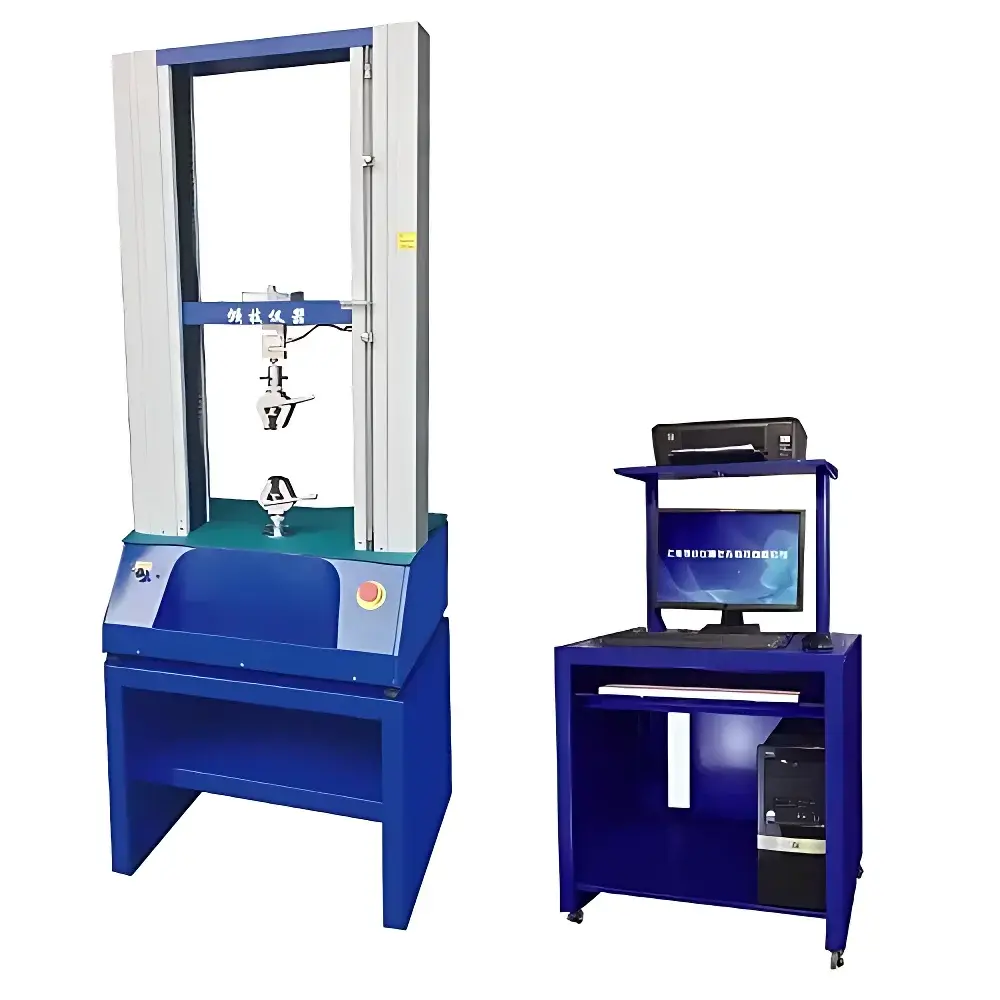
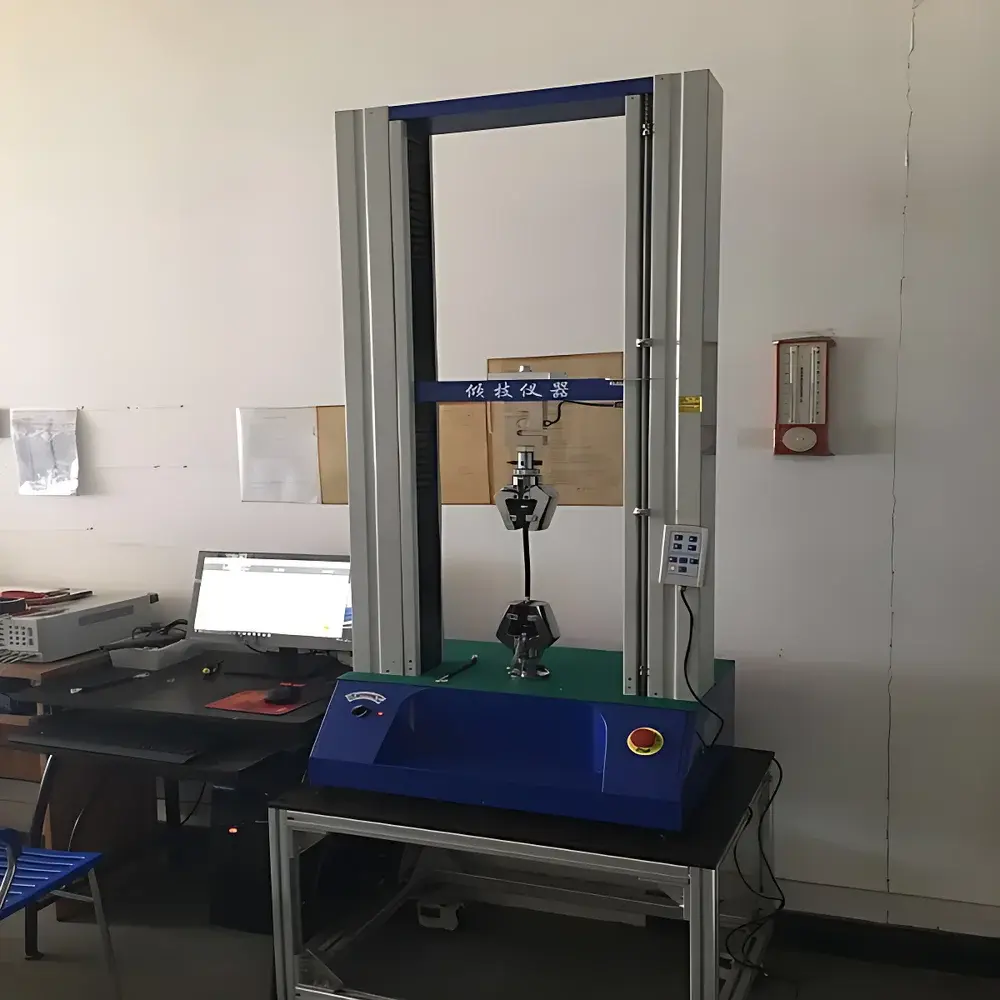
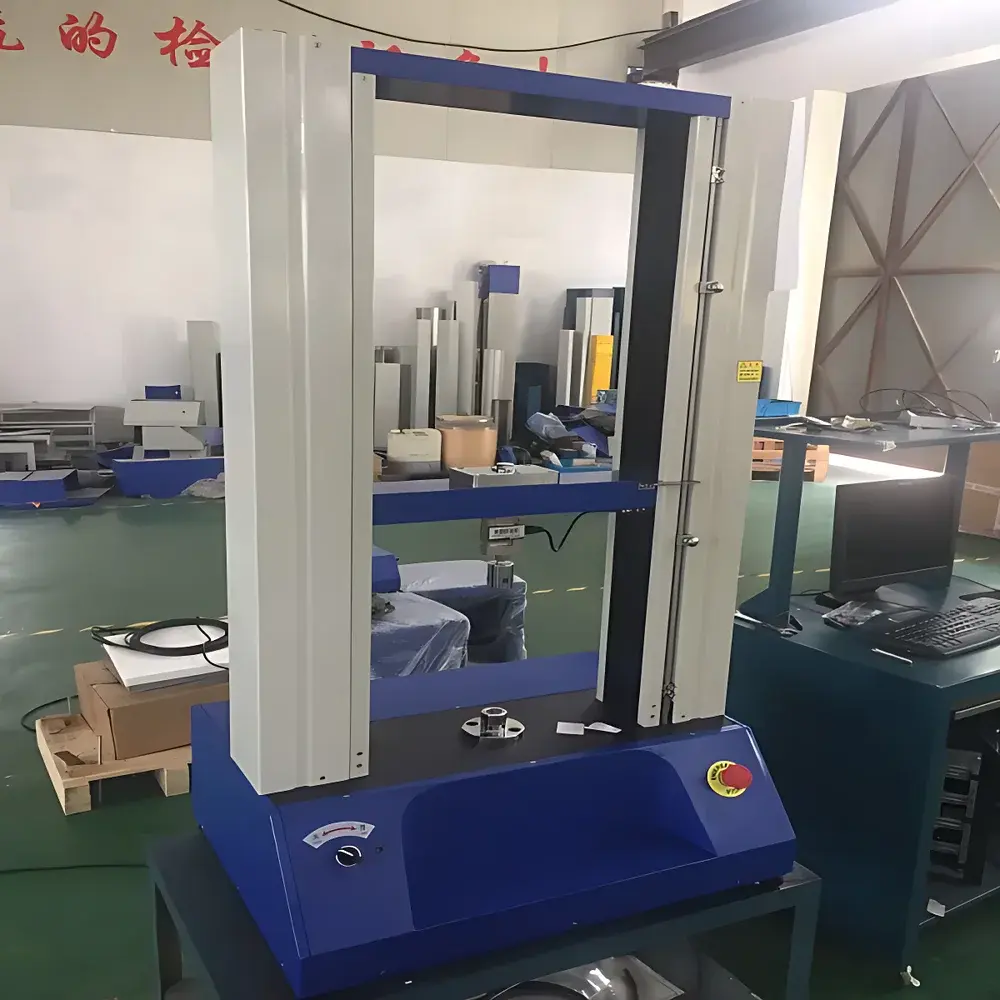
Qinji QJ211S Biomedical Materials Universal Testing Machine
| Brand | Qinji |
|---|---|
| Origin | Shanghai, China |
| Manufacturer Type | Authorized Distributor |
| Product Category | Domestic |
| Model | QJ211S |
| Price Range | USD 4,900 – 7,000 |
| Instrument Type | Electromechanical Universal Testing Machine |
| Load Capacity | 0.02 N to 30 kN |
| Load Accuracy | ±0.5% |
| Accuracy Class | 0.5 |
| Effective Force Measurement Range | 0.4%–100% of Full Scale |
| Force Control Rate Range | 0.4–100% FS/s |
| Force Control Rate Error | ±0.5% of set value |
| Force Resolution | 500,000 counts (no internal range switching, constant resolution across full scale) |
| Effective Test Width | 400 mm |
| Effective Tensile Stroke | 500 mm |
| Test Speed Range | 0.01–500 mm/min (adjustable in real time) |
| Speed Accuracy | ±0.5% of indicated value |
| Displacement Control Accuracy | ±0.5% of set value |
| Displacement Measurement Accuracy | ±0.5% of indicated value |
| Displacement Resolution | 0.025 µm |
| Strain/Deformation Measurement Accuracy | ±0.5% of indicated value |
| Encoder Resolution | 1000 pulses/rev, positional accuracy: 0.001 mm |
| Crosshead Movement | Dual-speed (fast/slow) motorized control with jog function |
| Safety Protection | Electronic travel limit switches |
| Return Function | Manual or programmable automatic return to initial position |
| Overload Protection | Automatic shutdown at >110% of rated load |
| Motor | 400 W, 220 V AC |
| Dimensions (L×W×H) | 500 × 450 × 1650 mm |
| Net Weight | 165 kg |
Overview
The Qinji QJ211S Biomedical Materials Universal Testing Machine is an electromechanical force-testing system engineered for high-fidelity mechanical characterization of soft and hard biomaterials under controlled uniaxial loading conditions. Based on closed-loop servo-controlled displacement actuation and precision load-cell feedback, the system implements standardized quasi-static testing protocols per ISO 5832, ASTM F2129, ISO 13314, and ISO 11491—enabling reproducible determination of tensile strength, compressive yield, flexural modulus (3-point bending), shear resistance, elongation at break, and stress–strain hysteresis in hydrated and dry states. Its modular architecture supports interchangeable fixtures—including pneumatic grips, wedge-action clamps, compression platens, and custom-designed tissue holders—making it suitable for evaluating both bulk implant-grade metals (e.g., Ti-6Al-4V, CoCr alloys) and delicate biological constructs (e.g., decellularized scaffolds, hydrogels, vascular grafts, and collagen-based membranes).
Key Features
- High-resolution dual-circuit measurement: Simultaneous acquisition of load (±0.5% accuracy), displacement (0.025 µm resolution), and strain (via extensometer or video-based DIC integration support) with synchronized sampling up to 1 kHz.
- Full-scale linearity preservation: 500,000-count A/D conversion without auto-ranging ensures consistent resolution from 0.02 N to 30 kN—critical for capturing low-force viscoelastic transitions in soft tissues.
- Programmable test sequencing: Predefined or user-defined multi-step profiles (e.g., preconditioning → ramp-to-load → hold → relaxation → cyclic loading) compliant with ISO 10993-12 and ASTM D3574 for biomaterial fatigue assessment.
- Robust mechanical design: Reinforced steel frame with precision-ground ball screws, preloaded linear guides, and anti-backlash gearmotor drive deliver long-term dimensional stability and minimal thermal drift (<0.01 mm/h).
- Dual-mode control architecture: Independent force-rate and displacement-rate regulation with real-time PID tuning—essential for creep compliance tests and rate-dependent modulus evaluation per ISO 527-1.
- Integrated safety redundancy: Hardware-level electronic limit switches, software-configurable overload cutoff (>110% FS), emergency stop circuitry, and crosshead position monitoring meet IEC 61000-6-2 EMC and ISO 12100 functional safety requirements.
Sample Compatibility & Compliance
The QJ211S accommodates specimens ranging from sub-millimeter suture threads and electrospun nanofibers to 400 mm-wide orthopedic composite plates. Standardized fixtures comply with ASTM E8/E8M (tension), ASTM D695 (compression), ASTM D790 (flexure), and ISO 6892-1 (metallic biomaterials). All firmware and calibration traceability align with ISO/IEC 17025:2017 requirements. Data acquisition and reporting modules support audit-ready output for GLP/GMP environments, including full metadata stamping (operator ID, environmental conditions, calibration certificate IDs), digital signatures, and optional 21 CFR Part 11-compliant electronic records when paired with validated LIMS integration.
Software & Data Management
Built-in Windows-based control software provides real-time visualization of force–displacement, stress–strain, and modulus–time curves. Automated parameter extraction includes ReH (upper yield strength), ReL (lower yield strength), Rp0.2 (0.2% offset yield), Rm (ultimate tensile strength), Rt0.5–Rt0.7 (proof strengths), E (Young’s modulus), and A% (elongation at break)—all calculated per ISO 6892-1 Annex B and ASTM E111 procedures. Raw data exports in CSV, XML, and universal HDF5 formats ensure compatibility with MATLAB, Python (SciPy/Pandas), and third-party statistical platforms. Optional cloud synchronization enables secure remote access to test libraries, version-controlled method templates, and cross-laboratory benchmarking dashboards.
Applications
- Mechanical validation of FDA-submitted orthopedic and dental implants per ISO 14801 and ASTM F2503.
- Viscoelastic profiling of hydrogel-based wound dressings under physiological hydration (ASTM F2214).
- Tensile fatigue life assessment of biodegradable sutures (ISO 10993-12, USP ).
- Compression testing of porous bioactive glass scaffolds (ASTM F2150).
- Shear adhesion quantification of tissue-engineered cardiac patches on myocardial substrates.
- Standardized mechanical screening of extracellular matrix mimetics for regulatory dossier preparation.
FAQ
Does the QJ211S support ASTM F2129 pitting corrosion–mechanical coupling tests?
Yes—when integrated with an external electrochemical workstation and environmental chamber, the system enables synchronized potentiodynamic polarization and in-situ tensile straining for ASTM F2129-compliant corrosion-mechanical failure analysis.
Can the system be calibrated to ISO/IEC 17025-accredited standards?
Yes—factory calibration certificates include uncertainty budgets traceable to NIM (China National Institute of Metrology); third-party accredited recalibration services are available globally.
Is video extensometry supported for non-contact strain measurement?
Yes—the system features a GigE Vision port and SDK for seamless integration with machine vision systems (e.g., Keyence CV-X series, Basler ace USB3) supporting ROI-based digital image correlation (DIC) per ISO/TS 11491.
What is the warranty coverage and service response time?
Standard coverage includes 12 months parts-and-labor warranty; extended service plans offer 24-hour remote diagnostics and 72-hour on-site engineer dispatch in APAC, EU, and North America regions.
Are test methods pre-loaded for ISO 5832-3 (wrought titanium alloy implants)?
Yes—preconfigured method templates include specimen geometry definitions, rate profiles, acceptance criteria, and report formatting aligned with ISO 5832-3 Annex A.



