
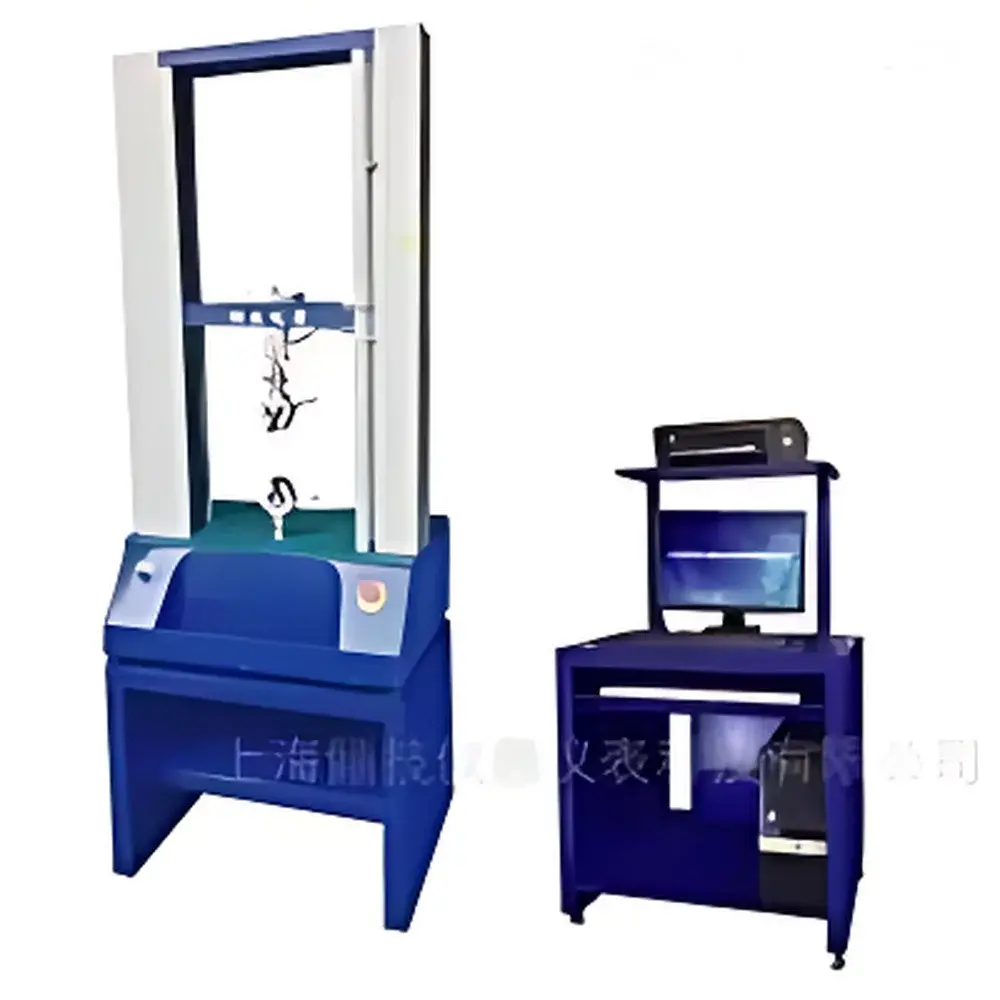
Qinsun QJ211S Three-Point Bending Testing Machine
| Brand | Qinsun |
|---|---|
| Origin | Shanghai, China |
| Model | QJ211S |
| Load Capacity | 0–30 kN |
| Load Accuracy | ±0.5% of reading |
| Force Resolution | 300,000 counts (full-scale, no range switching) |
| Effective Test Width | 420 mm |
| Effective Test Height (without fixtures) | 800 mm |
| Crosshead Speed Range | 0.001–500 mm/min |
| Speed Accuracy | ±0.5% of set value |
| Displacement Measurement Accuracy | ±0.5% of reading |
| Strain/Deformation Measurement Accuracy | ±0.5% of reading |
| Motor Power | 750 W |
| Dimensions (W×D×H) | 700 × 420 × 1600 mm |
| Weight | 145 kg |
Overview
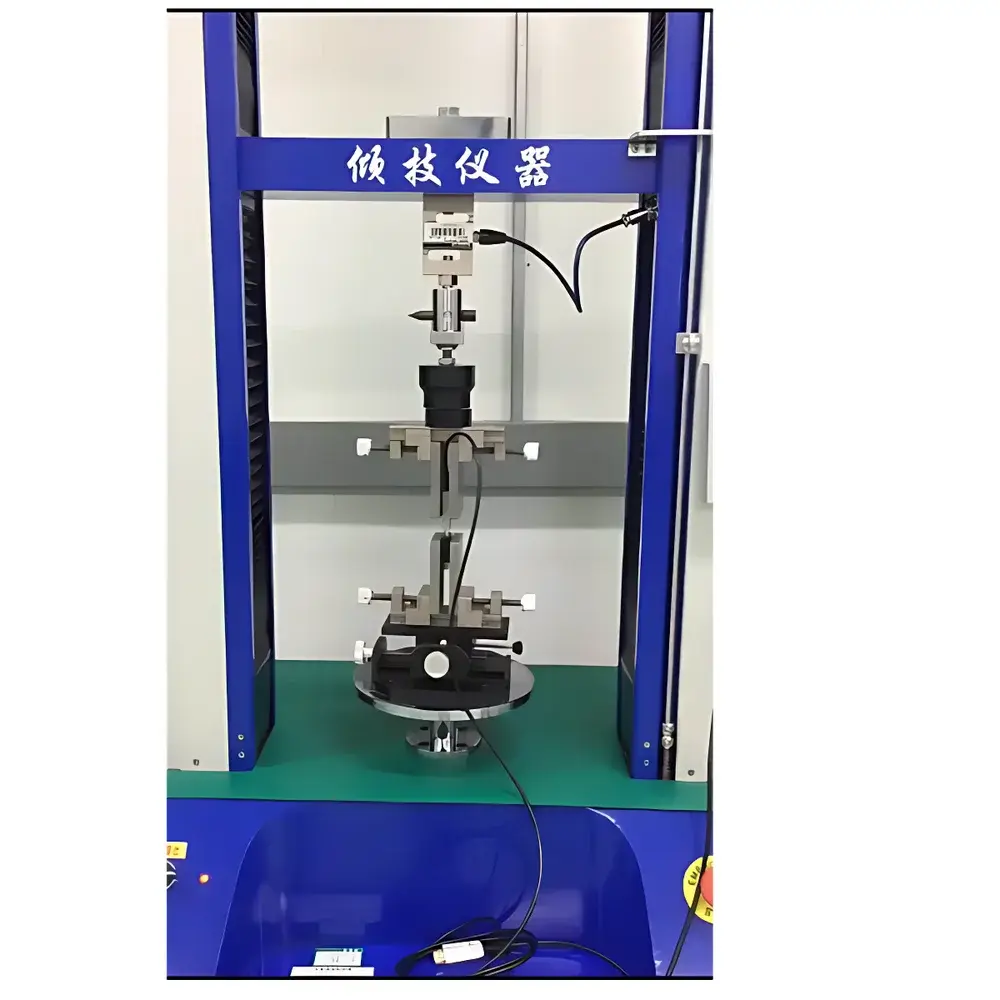
The Qinsun QJ211S Three-Point Bending Testing Machine is an electromechanical universal testing system engineered for high-reproducibility mechanical characterization of rigid and semi-rigid materials under flexural loading conditions. Based on the standardized three-point bending configuration per ASTM D790, ISO 178, and GB/T 9341, this machine applies a concentrated load at the midpoint of a horizontally supported specimen while reaction forces act at two symmetric support points. The resulting stress distribution enables precise determination of flexural modulus, flexural strength, and deflection behavior—critical parameters for quality control in polymer composites, ceramics, structural plastics, laminates, and biomedical device components. Its closed-loop servo-controlled drive system, combined with real-time data acquisition synchronized to Windows-based software, ensures traceable, auditable, and repeatable test execution across laboratory, R&D, and production environments.
Key Features
- High-precision load cell calibrated to ±0.5% of full-scale reading, with 300,000 internal resolution counts and no auto-ranging—ensuring consistent sensitivity across the entire 0–30 kN capacity.
- Adjustable crosshead speed from 0.001 to 500 mm/min, maintained within ±0.5% accuracy via digital encoder feedback and PID-controlled AC servo motor (750 W).
- Robust dual-speed manual/electric sample stage with jog control, electronic limit switches, and programmable return-to-start functionality for operational safety and workflow efficiency.
- Modular fixture interface supporting interchangeable bending jigs—including standard 10/20/50 mm support spans—and customizable solutions for non-standard geometries or industry-specific standards (e.g., ISO 14125 for fiber-reinforced composites).
- Integrated overload protection triggering at 110% of maximum rated load, preventing hardware damage during unexpected specimen failure or setup error.
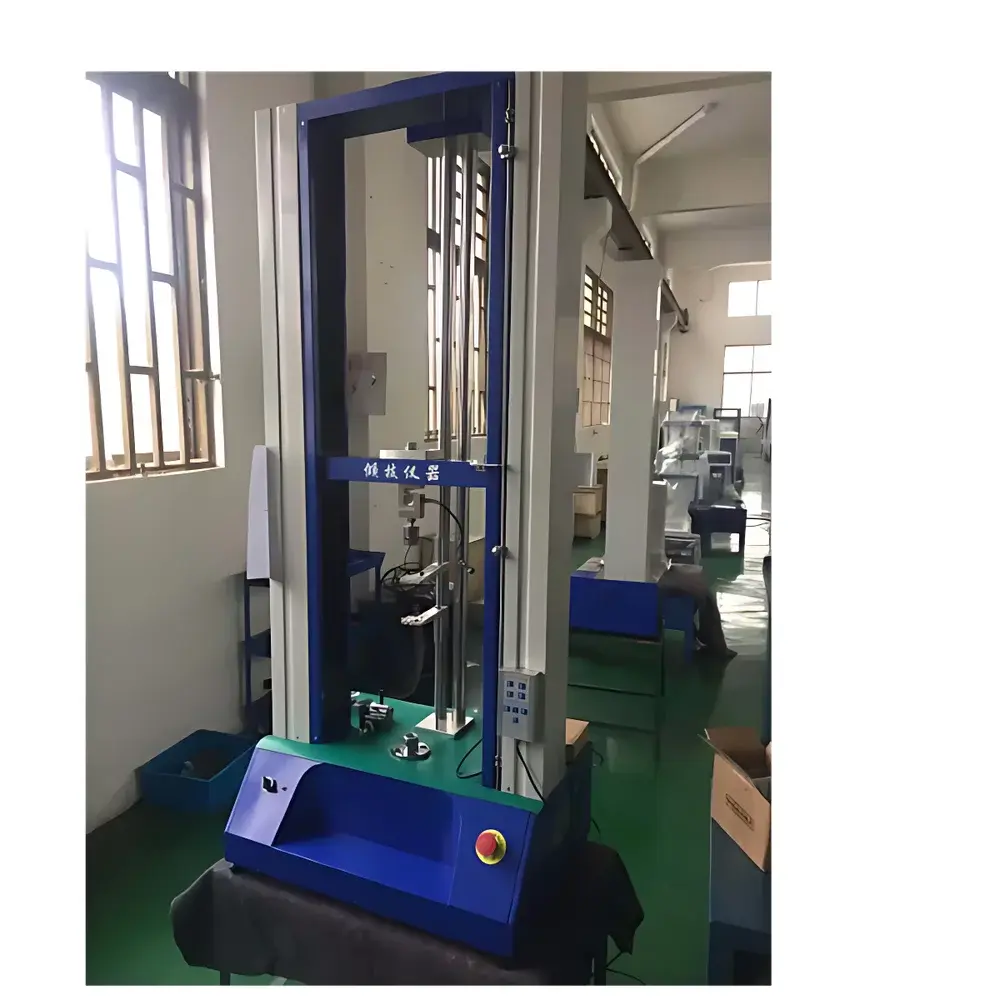
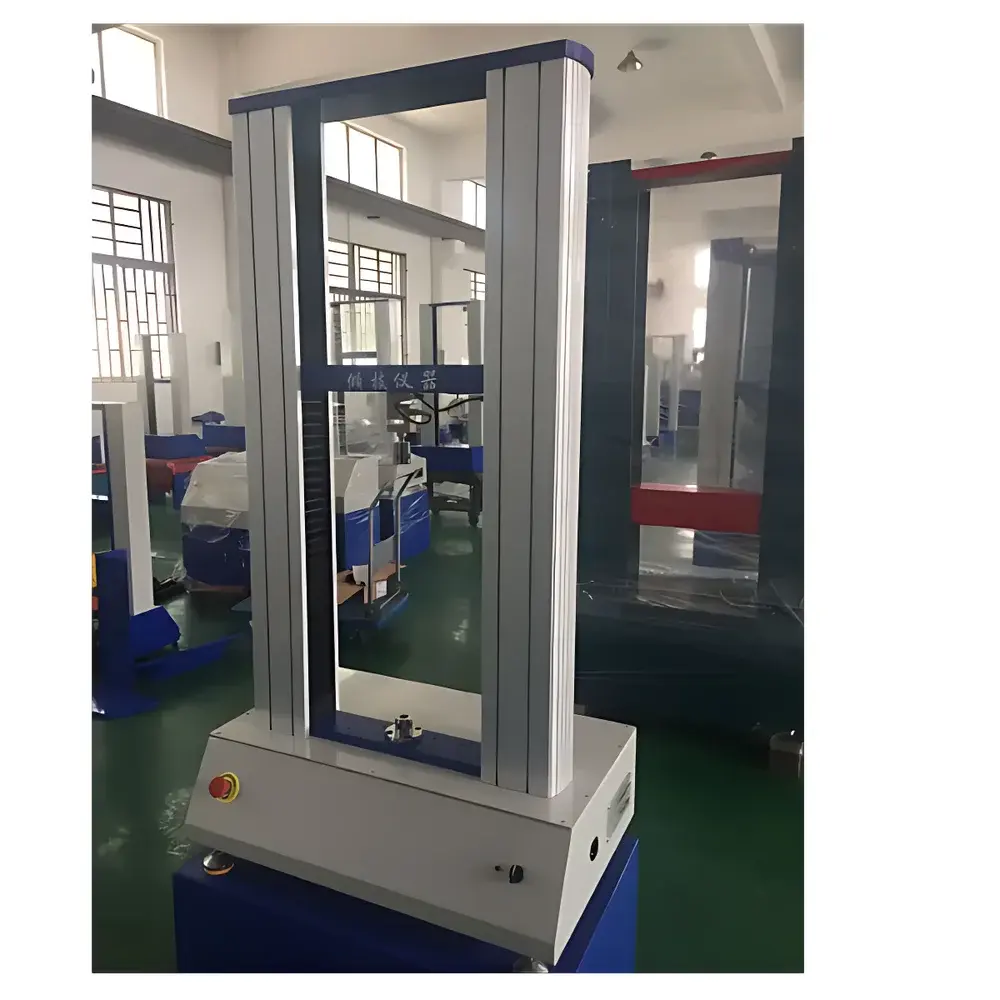
- Sturdy welded steel frame (700 × 420 × 1600 mm; 145 kg) with reinforced guide columns and precision-ground ball screws to minimize axial runout and ensure alignment stability over extended service life.
Sample Compatibility & Compliance
The QJ211S accommodates specimens up to 420 mm wide and 800 mm tall (excluding fixtures), making it suitable for flat bars, rectangular beams, molded plaques, extruded profiles, and thin-sheet laminates. It complies with major international flexure testing protocols including ASTM D790 (flexural properties of plastics), ISO 178 (determination of flexural properties), ISO 14125 (fiber-reinforced composites), and GB/T 9341 (Chinese national standard for plastics). All force, displacement, and strain measurements meet Class 0.5 accuracy requirements as defined in ISO 7500-1 and ASTM E4, enabling use in GLP-compliant laboratories and supplier qualification audits.
Software & Data Management
The system operates under a native Windows-based control and analysis platform featuring real-time graphical display of load–displacement, stress–strain, and time-series curves. Users may perform post-test operations including curve traversal, overlay comparison of multiple datasets, axis scaling, region-of-interest extraction, and direct export to CSV, Excel, or PDF formats. Audit-trail functionality logs operator ID, timestamp, parameter settings, and calibration events—supporting compliance with FDA 21 CFR Part 11 when configured with user authentication and electronic signature modules. Raw data files are stored with metadata tags (test method, specimen ID, environmental notes) to facilitate traceability in regulated manufacturing environments.
Applications
- Flexural property validation of thermoplastics (e.g., ABS, PC, PEEK) and thermosets (epoxy, phenolic) per automotive or aerospace material specifications.
- Mechanical screening of additive-manufactured parts to assess layer adhesion integrity and anisotropic bending response.
- Quality assurance testing of medical device substrates (e.g., orthopedic plates, dental base materials) where stiffness and fracture onset must conform to ISO 13485 requirements.
- Research-grade evaluation of bio-based composites, recycled polymer blends, and nanofilled matrices under controlled humidity and temperature conditions (when integrated with environmental chambers).
- Comparative fatigue assessment using low-frequency cyclic bending protocols (with optional waveform generator add-on) for durability benchmarking.
FAQ
What standards does the QJ211S support for three-point bending tests?
ASTM D790, ISO 178, ISO 14125, GB/T 9341, and EN 25270 are fully supported through pre-configured test templates and report formatting.
Can the system be upgraded for four-point bending or compression testing?
Yes—via optional accessory kits including four-point bending fixtures, compression platens, and tensile grips, all mechanically compatible with the existing load frame and software architecture.
Is calibration documentation provided with the instrument?
Each unit ships with a factory calibration certificate traceable to NIM (National Institute of Metrology, China), accompanied by uncertainty budgets and verification procedures aligned with ISO/IEC 17025 guidelines.
What maintenance intervals are recommended for long-term accuracy?
Annual recalibration of the load cell and position encoder is advised; routine inspection of guide rails, drive belts, and limit switch functionality should occur every 6 months or after 500 test cycles.
Does the software support automated pass/fail decision logic based on specification limits?
Yes—the analysis module allows users to define upper/lower tolerance bands for flexural strength and modulus; results are color-coded and flagged in summary reports when out-of-spec conditions are detected.
Related Products



