
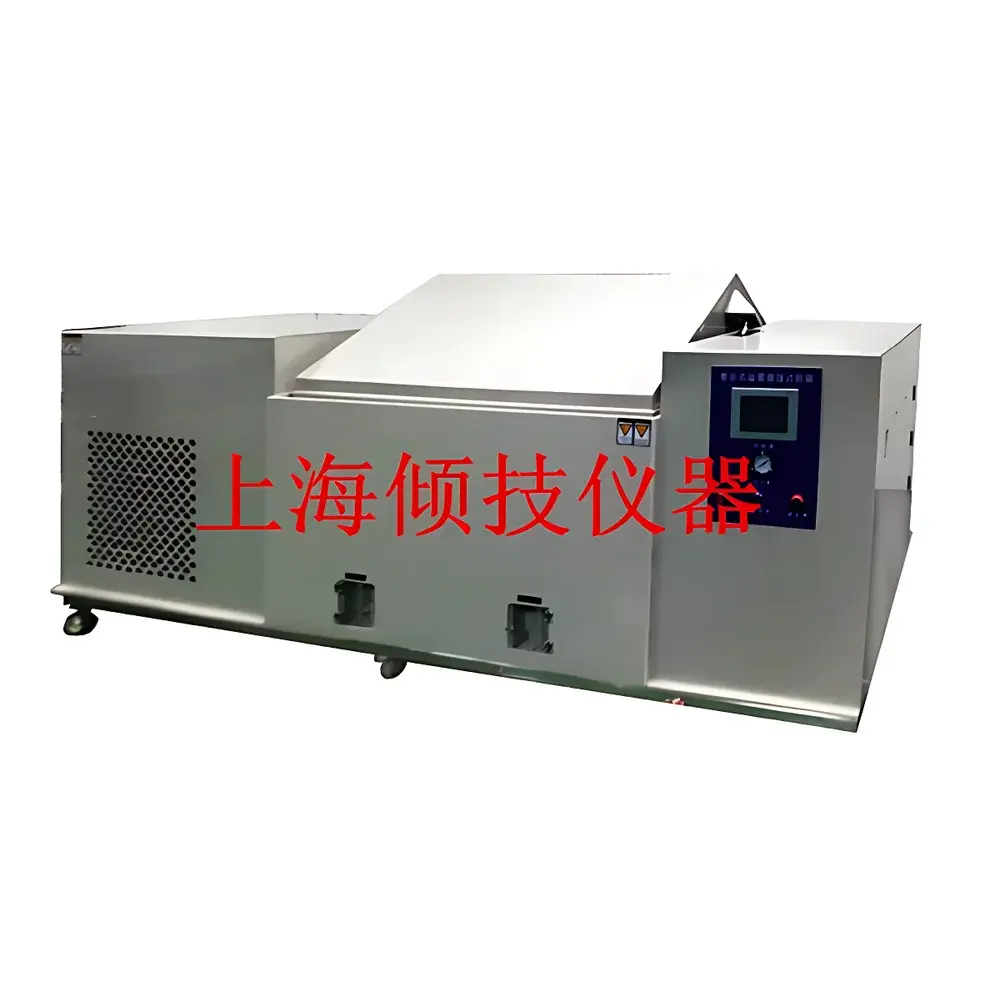
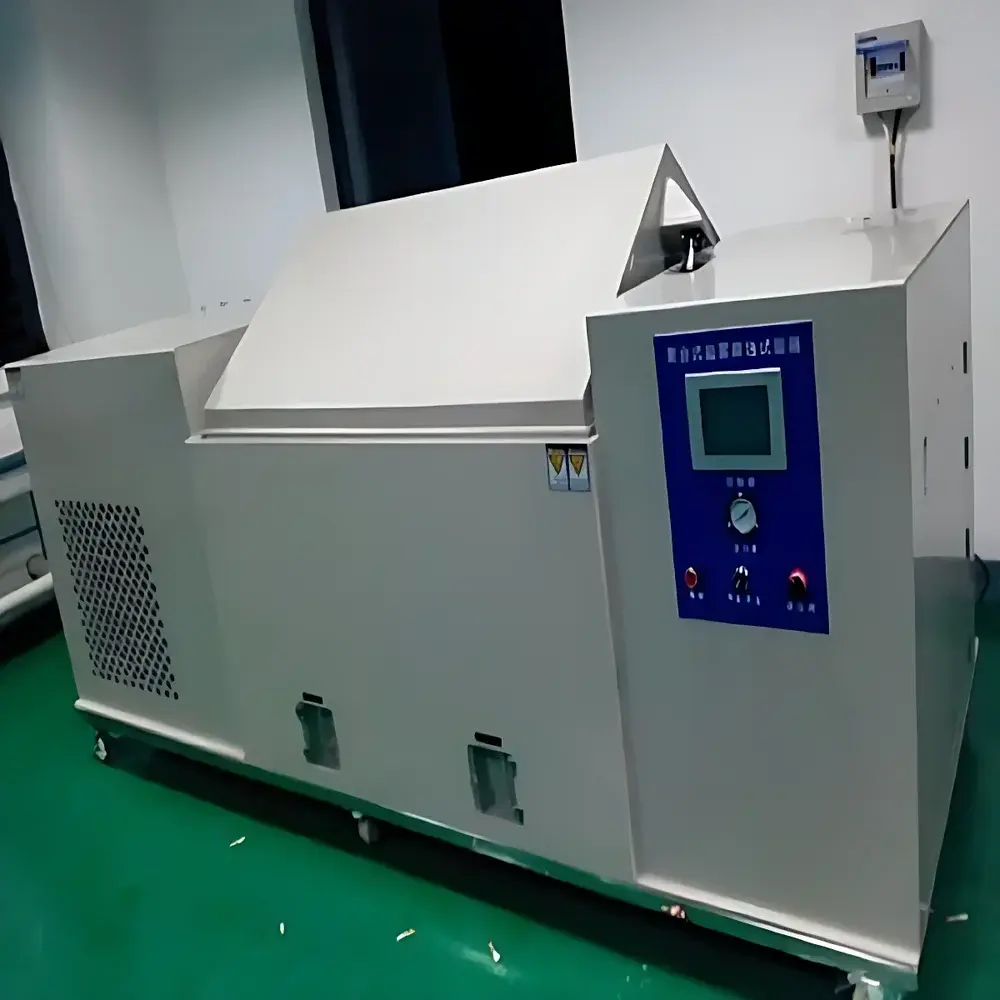
QJ YS Salt Spray Test Chamber
| Brand | QJ |
|---|---|
| Origin | Shanghai, China |
| Manufacturer Type | Manufacturer |
| Model | QJ YS |
| Price Range | USD 1,050 – 4,200 |
| Internal Chamber Dimensions (Min–Max) | 600 × 450 × 400 mm to 1600 × 1000 × 500 mm |
| External Dimensions (Min–Max) | 1075 × 630 × 1185 mm to 2300 × 1200 × 1485 mm |
| Chamber Volume (Min–Max) | 108 L to 800 L |
| Brine Reservoir Capacity (Min–Max) | 15 L to 40 L |
| Test Temperature Range | Ambient to ≥65 °C |
| Compliant Standards | GB/T 2423.17 (Neutral Salt Spray), ASTM B117, ISO 9227, JIS Z2241 |
Overview
The QJ YS Salt Spray Test Chamber is a precision-engineered environmental test system designed to simulate aggressive corrosive atmospheres for accelerated evaluation of material and coating durability. It operates on the principle of continuous or cyclic atomization of a standardized saline solution—typically 5% NaCl by weight—into a controlled, temperature-regulated test chamber. This creates a highly reproducible chloride-laden fog environment that accelerates electrochemical corrosion mechanisms observed in real-world marine, industrial, and coastal service conditions. As one of the core instruments in the “Three-Defense” (humidity-heat, salt spray, mold) suite of environmental simulation equipment, the QJ YS chamber supports rigorous validation of protective finishes—including electroplated layers, conversion coatings, organic paints, and polymer-based barriers—across aerospace, automotive, electronics, and defense sectors. Its design adheres to fundamental metrological requirements for test repeatability, including stable chamber temperature control, uniform fog distribution, and precise pH and concentration monitoring of the brine solution.
Key Features
- Robust stainless steel 316L inner chamber construction with seamless welding and acid-resistant insulation, ensuring long-term resistance to chloride-induced pitting and stress corrosion cracking.
- Adjustable saturated air heater and pre-heating chamber to maintain consistent test temperature (ambient to ≥65 °C) and minimize thermal gradients across specimen surfaces.
- High-efficiency glass nozzle atomization system with adjustable spray pressure and flow rate, compliant with ASTM B117 and ISO 9227 fog density specifications (1.0–2.0 mL/80 cm²/h).
- Dual-stage brine filtration and level-sensing reservoir (15–40 L capacity) with overflow protection and low-level alarm to prevent dry operation and ensure uninterrupted testing.
- Integrated digital controller with programmable test cycles, real-time logging of chamber temperature, humidity (if equipped), and elapsed time; supports neutral salt spray (NSS), acetic acid salt spray (AASS), and copper-accelerated acetic acid salt spray (CASS) protocols.
- Front-access observation window with anti-fog heating element and integrated LED lighting for non-intrusive visual inspection without compromising chamber integrity.
Sample Compatibility & Compliance
The QJ YS chamber accommodates flat, angular, or three-dimensional specimens up to 1600 mm in length, with flexible rack and fixture options for standardized sample orientation per ISO 9227 (15°–30° from vertical). It supports test specimen materials including ferrous and non-ferrous metals, coated substrates, fasteners, printed circuit boards, and surface-treated polymers. The system is fully compatible with internationally recognized corrosion testing standards: GB/T 2423.17 (China), ASTM B117 (USA), ISO 9227 (International), JIS Z2241 (Japan), and DIN 50021 (Germany). When operated under documented procedures and calibrated using traceable reference standards, data generated meets GLP and GMP audit requirements for quality assurance documentation. Optional accessories include pH meters, conductivity probes, and automated brine dosing modules for enhanced process control.
Software & Data Management
The embedded controller provides local data logging with timestamped records of chamber temperature, spray duration, and cycle count. For extended traceability, optional RS-485 or Ethernet interfaces enable integration with laboratory information management systems (LIMS) or SCADA platforms. Exportable CSV logs support post-test statistical analysis—including corrosion rating per ISO 10289 or ASTM D610—and facilitate compliance with FDA 21 CFR Part 11 when paired with user-access controls, electronic signatures, and audit trail configuration. Firmware updates are delivered via secure USB interface, and all calibration parameters remain password-protected to preserve measurement integrity.
Applications
- Accelerated corrosion screening of automotive body panels, brake calipers, and under-hood components prior to field deployment.
- Validation of electroplated zinc-nickel, tin-zinc, and trivalent chromium coatings used in aerospace fasteners and avionics housings.
- Quality conformance testing of PCB surface finishes (ENIG, immersion silver, OSP) per IPC-STD-006 and JEDEC JESD22-B101.
- Comparative evaluation of primer/topcoat systems for offshore wind turbine towers and marine infrastructure.
- Supplier qualification audits for OEMs requiring documented evidence of coating adhesion, blistering resistance, and white/red rust formation timelines.
FAQ
What standards does the QJ YS chamber support out of the box?
It natively supports neutral salt spray (NSS) per GB/T 2423.17 and ASTM B117. AASS and CASS modes require optional acid dosing hardware and controller firmware upgrade.
Is temperature uniformity validated across the working volume?
Yes—chamber uniformity is maintained within ±2 °C at setpoint across the entire test zone, verified during factory calibration using NIST-traceable thermocouples.
Can the system be integrated into an automated test lab network?
Absolutely. Standard RS-485 Modbus RTU and optional Ethernet TCP/IP interfaces allow bidirectional communication with central test management software.
What maintenance intervals are recommended for long-term reliability?
Brine tank cleaning every 72 hours of cumulative operation; nozzle inspection weekly; full system calibration annually or after any major component replacement.
Does the warranty cover both parts and labor?
Yes—the standard 12-month comprehensive warranty includes on-site technician support for diagnostics, repair, and recalibration within mainland China; global customers receive remote assistance and spare parts logistics support.



