
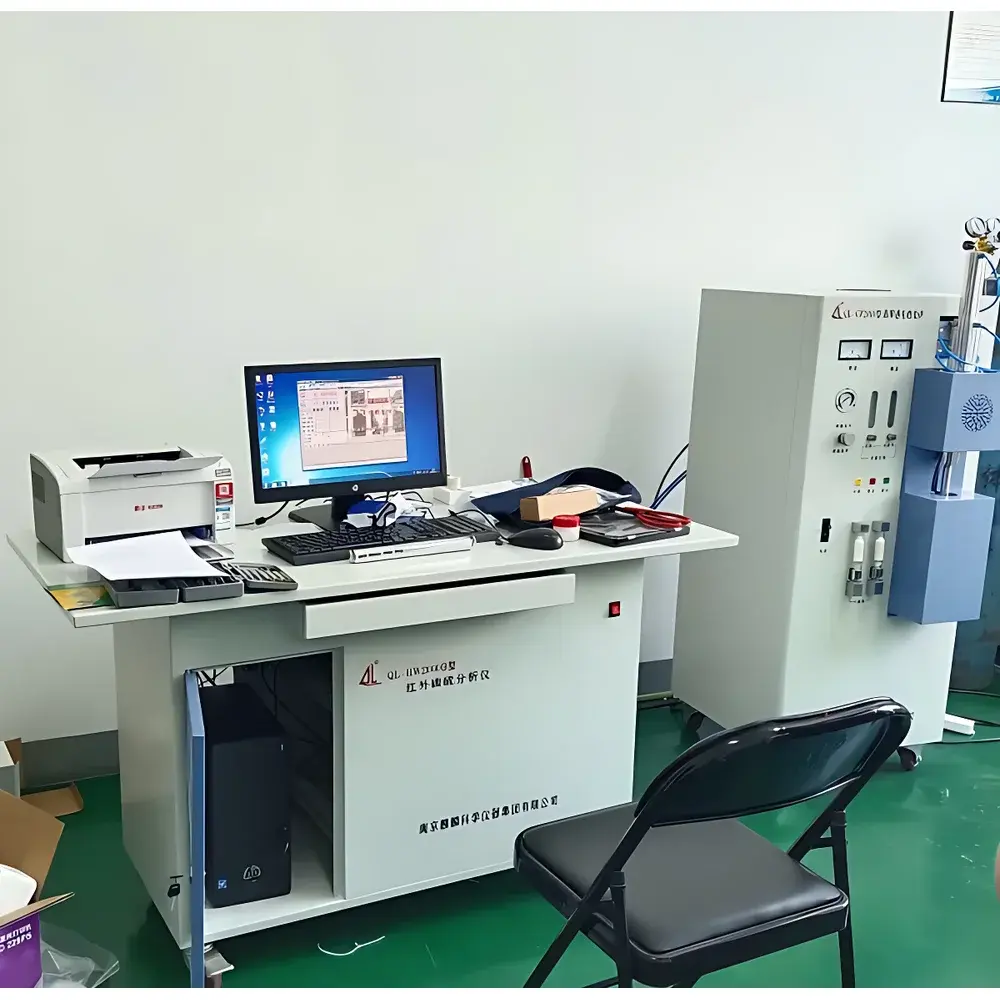
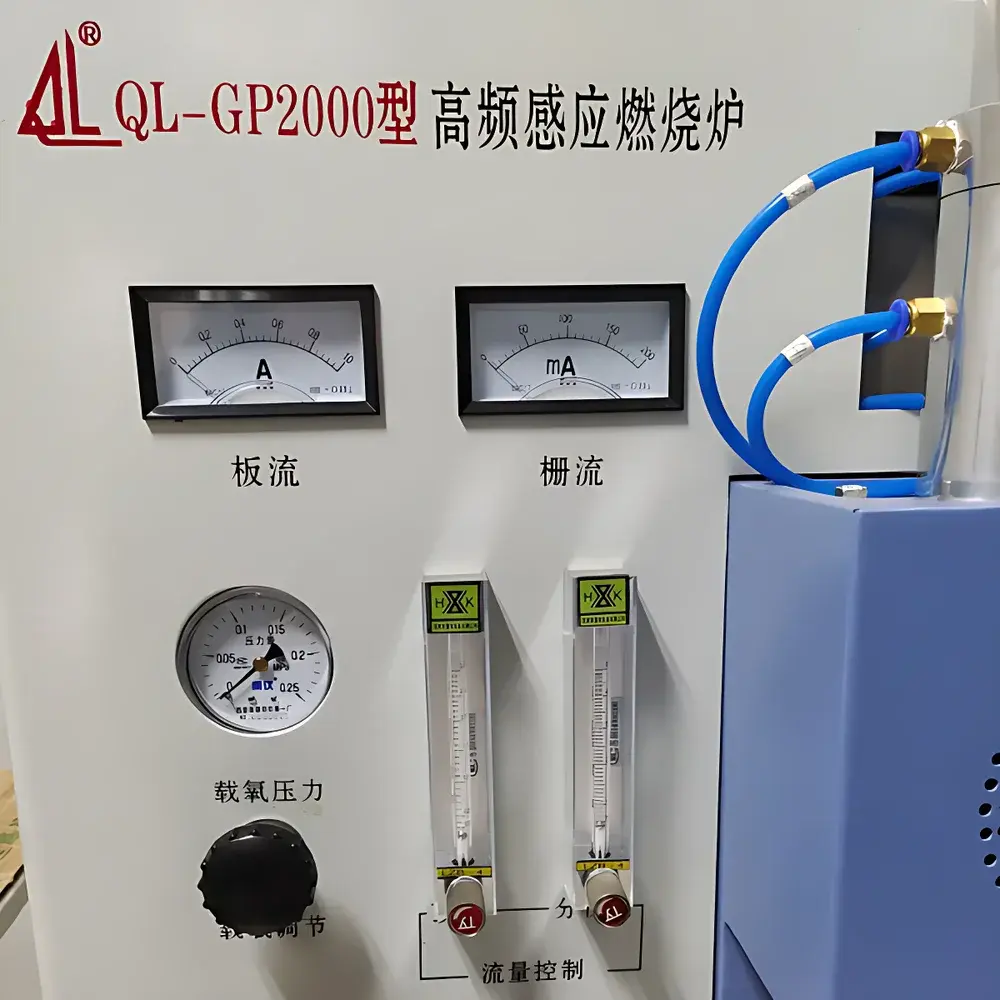
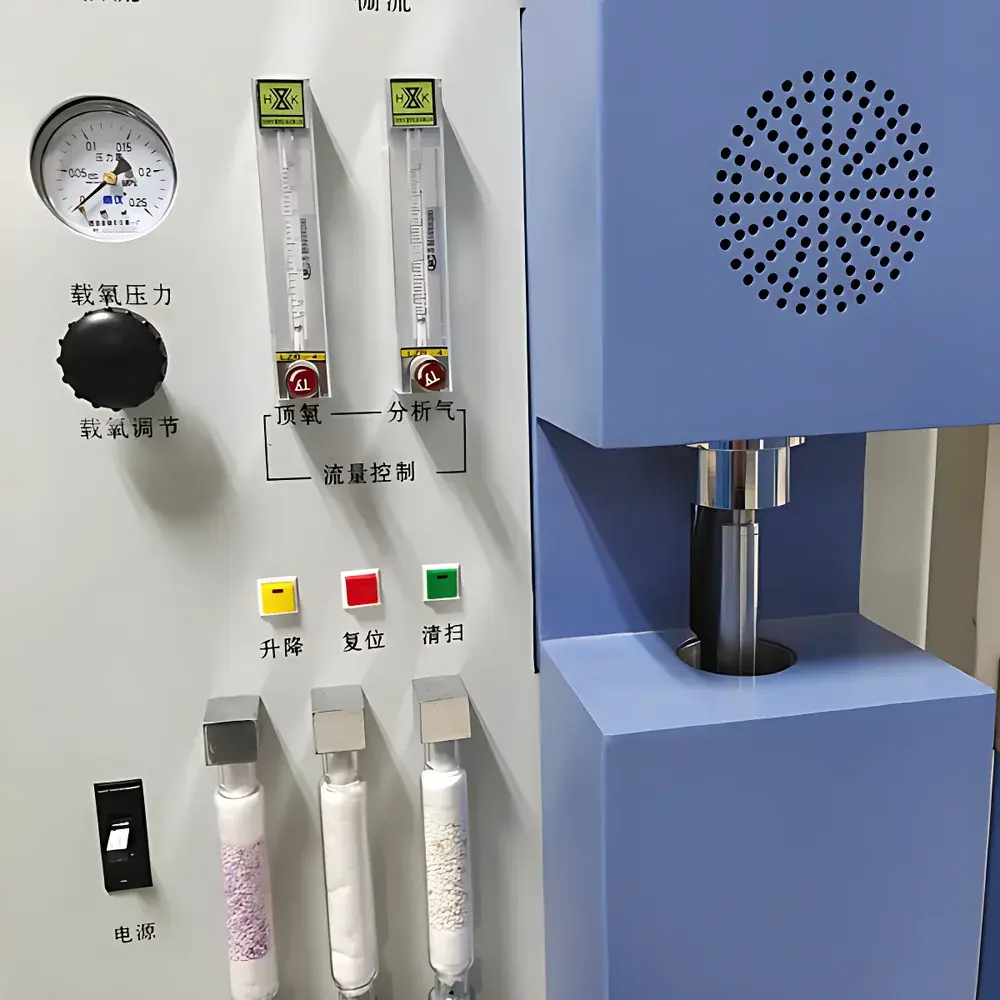
QL Qilin 2000B High-Frequency Infrared Carbon-Sulfur Analyzer
| Brand | QL Qilin |
|---|---|
| Origin | Jiangsu, China |
| Model | Qilin 2000B |
| Measurement Principle | Non-Dispersive Infrared (NDIR) Absorption |
| Heating System | 18–20 MHz High-Frequency Induction Furnace |
| Power Output | 2.5 kVA |
| Carbon Range | 0.00001–10.0000 wt% (extendable to 99.999 wt%) |
| Sulfur Range | 0.00001–0.5000 wt% (extendable to 99.999 wt%) |
| Sensitivity | 0.1 ppm (minimum display resolution) |
| Precision | Carbon RSD ≤ 0.5%, Sulfur RSD ≤ 1.0% |
| Analysis Time | 25–60 s (user-adjustable) |
| Sample Weighing Accuracy | 0.0001 g |
| Compliance | GB/T 20123–2006, ISO 15350:2000 |
Overview
The QL Qilin 2000B High-Frequency Infrared Carbon-Sulfur Analyzer is a dedicated combustion-based elemental analyzer engineered for precise quantification of total carbon (C) and sulfur (S) in solid inorganic and organic matrices. It operates on the principle of high-frequency induction combustion followed by non-dispersive infrared (NDIR) spectroscopic detection. Solid samples are combusted quantitatively in a purified oxygen atmosphere within a 18–20 MHz high-frequency induction furnace, converting carbon and sulfur into CO₂ and SO₂ gases, respectively. These gaseous oxides are then swept through optimized gas-handling modules—comprising pressure-regulated flow control, catalytic conversion (for SO₂ stabilization), and moisture removal—before entering dual-channel NDIR cells. Each cell employs narrow-band interference filters and high-stability pyroelectric detectors to isolate and quantify characteristic absorption bands at 4.26 µm (CO₂) and 7.35 µm (SO₂), enabling simultaneous, independent measurement with trace-level sensitivity.
Key Features
- High-frequency induction furnace (2.5 kVA output, 18–20 MHz) with RF-controlled thermal ramping ensures reproducible combustion kinetics across heterogeneous sample types—including refractory alloys, carbides, and low-conductivity ceramics—minimizing incomplete oxidation and memory effects.
- Dual-channel NDIR detection system featuring aviation-grade synchronous stepper motors driving optical choppers (rated for >100,000 hours MTBF) and thermally stabilized pyroelectric detectors for long-term baseline stability and sub-ppm resolution.
- Optimized optical path design incorporating high-transmittance, temperature-compensated narrow-band interference filters (FWHM < 15 nm) to eliminate spectral overlap between CO₂ and SO₂ bands—critical for accurate sulfur determination in high-carbon steels and ferroalloys.
- Modular electronic architecture with integrated temperature, pressure, and mass-flow compensation algorithms—applied in real time to raw detector signals—to correct for ambient drift and pneumatic variability, ensuring inter-day repeatability.
- Gas circuitry built around industrial-grade solenoid valves (Airtac series, rated for ≥100,000 actuation cycles) and precision laminar flow controllers (±0.5% full-scale accuracy), guaranteeing robust, maintenance-resistant operation under continuous QC laboratory conditions.
Sample Compatibility & Compliance
The Qilin 2000B accommodates a broad spectrum of solid materials requiring C/S certification per metallurgical, geological, and regulatory workflows. Validated sample types include ferrous alloys (carbon steel, stainless steel, cast iron, ductile iron), non-ferrous metals (copper, aluminum, nickel, titanium, rare earth metals), mineralogical matrices (iron ore, limestone, slag, coal, coke, catalysts), and advanced ceramics or refractories. All measurements adhere to internationally recognized standard methods: carbon and sulfur determinations comply fully with GB/T 20123–2006 and ISO 15350:2000, which specify calibration protocols, blank correction procedures, and uncertainty estimation frameworks aligned with ISO/IEC 17025 requirements. The system supports GLP-compliant data integrity when paired with validated LIMS integration and audit-trail-enabled software (see Software & Data Management).
Software & Data Management
The embedded firmware and PC-based analysis suite provide full method management, calibration curve generation (linear and quadratic), multi-point standardization, and automated blank subtraction. Raw absorbance data, peak integration parameters, and real-time gas flow/temperature logs are stored with timestamped metadata. Export formats include CSV, XML, and PDF reports compliant with internal QA documentation standards. Optional 21 CFR Part 11 readiness includes user-role access control, electronic signature capture, and immutable audit trails for all analytical events—including method edits, calibration updates, and result approvals—facilitating FDA- or EMA-aligned validation protocols.
Applications
This analyzer serves core quality control and R&D functions in foundries, steel mills, third-party testing laboratories, and materials research institutes. Typical use cases include: verification of carbon equivalency (CE) in weldability assessments; sulfur segregation analysis in hot-rolled coil production; certification of ultra-low carbon (<0.005 wt%) stainless grades for nuclear or pharmaceutical applications; quantification of residual sulfur in desulfurized coal ash for environmental reporting; and rapid screening of catalyst coke content during petrochemical process optimization. Its extended dynamic range (up to 99.999 wt%) also enables direct analysis of carbides (e.g., SiC, WC) and synthetic graphite without dilution.
FAQ
What sample mass is required for optimal precision?
Typical sample weights range from 0.2 to 1.0 g, depending on expected C/S concentration and matrix volatility. The system integrates with 0.1 mg readability analytical balances (e.g., METTLER TOLEDO XP series) via RS232/USB, and auto-imports mass values to eliminate manual entry error.
Is helium carrier gas required?
No—oxygen is the sole combustion and carrier gas; helium is not used. High-purity O₂ (≥99.995%) is supplied via regulated cylinder or on-site generator, with optional inline purification for hydrocarbon and moisture removal.
Can the instrument analyze liquid or powder suspensions?
No—it is designed exclusively for solid, non-volatile, non-explosive samples. Powders must be homogeneous and free of volatile binders; liquids require prior drying and pelletization under controlled conditions.
How often is recalibration needed?
Initial calibration uses certified reference materials (CRMs) traceable to NIST or IRMM. Routine recalibration is recommended every 24–48 hours of continuous operation or after major maintenance; drift monitoring is supported via daily check standards.
Does the system support remote diagnostics or service connectivity?
Yes—optional Ethernet-enabled firmware allows secure remote access for firmware updates, log review, and guided troubleshooting by authorized service engineers, subject to customer-configured firewall policies.





