
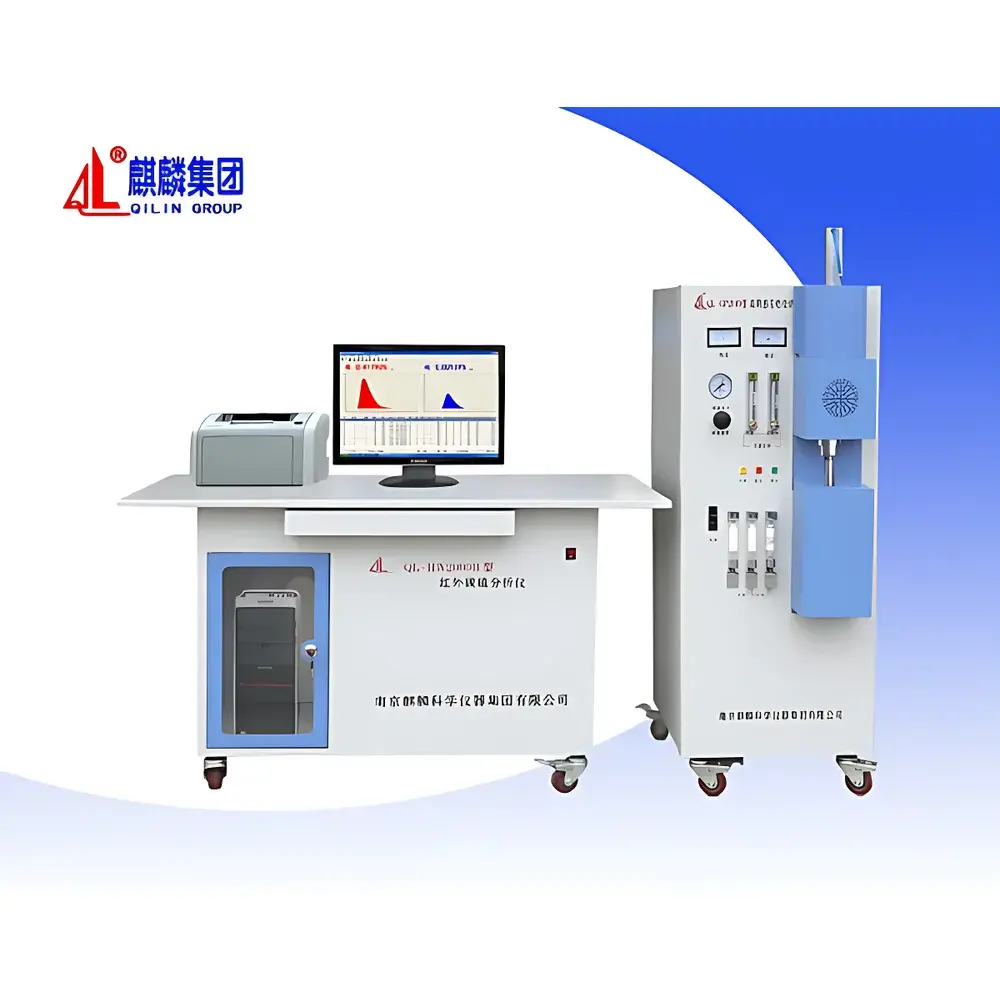
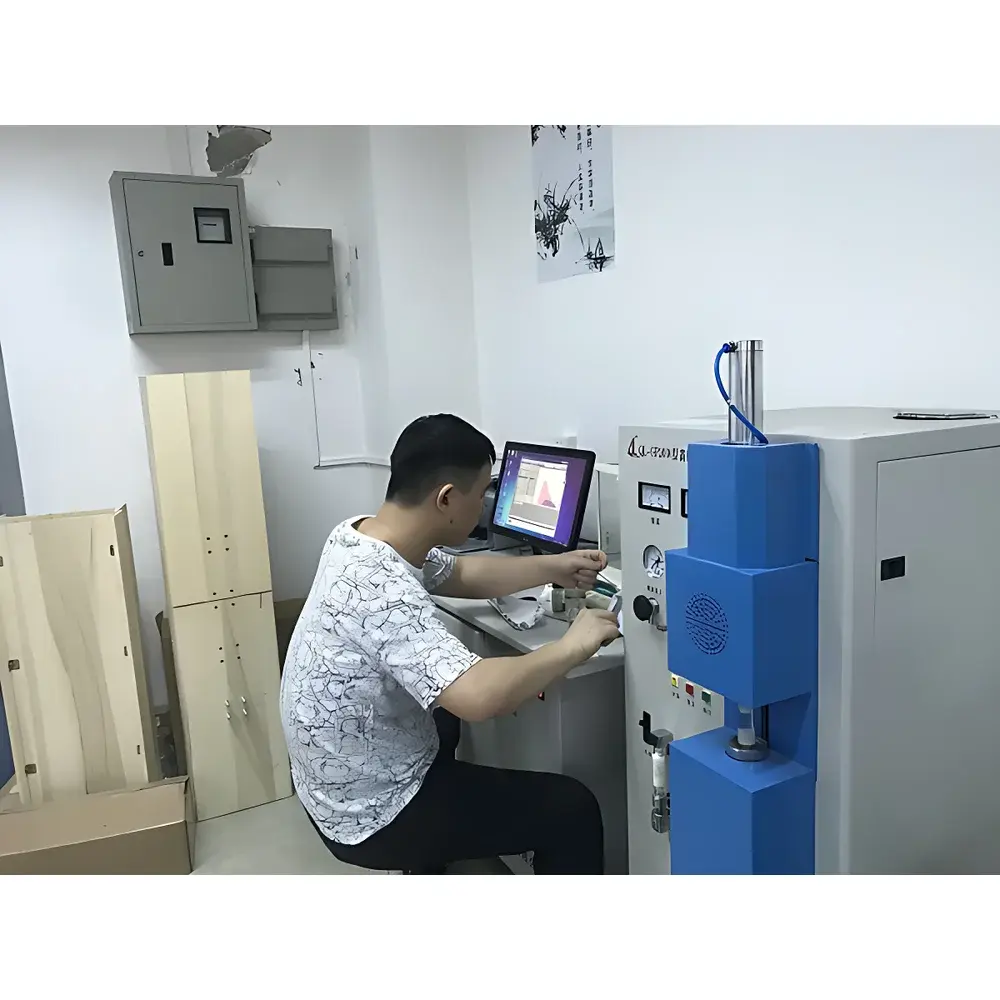
QL HW2000B High-Frequency Infrared Carbon-Sulfur Analyzer
| Brand | QL |
|---|---|
| Origin | Jiangsu, China |
| Model | HW2000B |
| Measurement Principle | Non-Dispersive Infrared (NDIR) Absorption |
| Heating System | High-Frequency Induction Furnace (18 MHz, 2.5 kVA) |
| Measurement Range | C: 0.00001–99.999 wt% |
| S | 0.00001–99.999 wt% |
| Sensitivity | C: 1.0 ppm or RSD ≤ 0.5% |
| S | 1.0 ppm or RSD ≤ 1.0% |
| Accuracy Compliance | GB/T 20123–2006 & ISO 15350:2000 |
| Analysis Time | Adjustable 25–60 s (typical: 35 s) |
| Balance Integration | Automatic linkage with 0–120 g capacity, 0.1 mg readability |
Overview
The QL HW2000B High-Frequency Infrared Carbon-Sulfur Analyzer is a precision elemental combustion analyzer engineered for quantitative determination of total carbon (C) and total sulfur (S) in solid metallic and non-metallic materials. It operates on the principle of high-frequency induction combustion followed by non-dispersive infrared (NDIR) spectroscopic detection. In this process, a precisely weighed sample is combusted quantitatively in a pure oxygen atmosphere within a high-frequency induction furnace (18 MHz, 2.5 kVA), converting all carbon and sulfur into CO₂ and SO₂ gases, respectively. These gaseous oxides are then carried through optimized gas-handling modules—including dust filtration, water removal, and CO-to-CO₂ catalytic conversion—before entering dual NDIR cells calibrated for CO₂ (carbon channel) and SO₂ (sulfur channel). The instrument’s optical path design minimizes cross-talk and drift, ensuring high reproducibility across wide dynamic ranges. Designed for routine QC/QA laboratories in metallurgy, mining, cement, and advanced materials R&D, the HW2000B meets the metrological requirements of GB/T 20123–2006 and ISO 15350:2000 for combustion-based C/S analysis.
Key Features
- High-frequency induction furnace with adjustable power output (2.5 kVA nominal, 18 MHz frequency) enabling complete oxidation of refractory alloys, carbides, and high-sulfur matrices.
- Dual-channel NDIR detection system utilizing low-noise, thermoelectrically cooled detectors with long-term baseline stability and minimal zero drift.
- Integrated automatic balance interface supporting variable sample mass (0.1–1.0 g typical), eliminating fixed-weight constraints and improving throughput for heterogeneous samples.
- Modular hardware architecture with plug-in gas purification units (desiccant, alkali trap, catalyst), facilitating rapid maintenance and minimizing downtime.
- Self-cleaning furnace head with programmable mechanical brushing and auxiliary heating to maintain consistent SO₂ recovery (>98.5%) and suppress sulfate formation artifacts.
- Real-time graphical display of combustion profiles, including CO₂ and SO₂ release kinetics, enabling diagnostic assessment of sample homogeneity and combustion efficiency.
Sample Compatibility & Compliance
The HW2000B is validated for analysis of ferrous and non-ferrous metals (e.g., carbon steels, stainless steels, cast irons, Ni/Co superalloys), ores (iron ore, manganese ore), minerals (limestone, dolomite), ceramics, catalysts, coal, coke, slag, and certified reference materials (CRMs) traceable to NIST, BCS, or IRMM standards. Sample forms include chips, turnings, powders, and pressed pellets. All analytical procedures adhere to ISO/IEC 17025:2017 general requirements for competence of testing laboratories. Data integrity is maintained per ALCOA+ principles; audit trails, user access controls, and electronic signatures are configurable to support GLP and GMP environments. While not pre-certified for FDA 21 CFR Part 11, the system’s software architecture supports validation protocols required for regulated pharmaceutical or medical device manufacturing settings.
Software & Data Management
The analyzer runs on a dedicated Windows-based application with full Unicode support and localized GUI (English language pack included). Software functions include method-driven workflow automation, multi-point calibration curve generation (linear, quadratic, or spline-fitted), statistical reporting (mean, SD, RSD, confidence intervals), CRM-based bias correction, and batch result export to CSV, Excel, or LIMS-compatible XML formats. Internal diagnostics monitor furnace temperature stability, gas flow consistency, detector signal-to-noise ratio, and cell pressure—logging all parameters with timestamps. Data files are stored with immutable metadata (operator ID, sample ID, date/time, calibration status), satisfying traceability requirements under ISO 17025 Clause 7.7 and ASTM E2655.
Applications
Typical use cases include quality control of incoming raw materials (e.g., scrap metal feedstock, limestone flux), final product certification (ASTM A751, ISO 4941), process optimization in steelmaking (ladle analysis, desulfurization monitoring), geological surveying (total organic carbon in shale, sulfur speciation in pyritic ores), and catalyst formulation (sulfur poisoning threshold studies). The extended dynamic range (0.00001–99.999 wt%) enables both ultra-trace analysis of high-purity metals and bulk quantification of carbides or sulfide-rich slags without dilution or reconfiguration.
FAQ
What types of samples require pre-treatment prior to analysis?
Metallic samples should be cleaned of surface oxides or oils via ultrasonic degreasing; non-conductive materials (e.g., coal, polymers) may require mixing with tungsten or tin accelerator to ensure complete combustion.
Can the instrument measure carbon and sulfur simultaneously in a single run?
Yes—both elements are quantified in real time from the same combustion event using independent NDIR channels, eliminating sequential analysis delays.
Is external calibration gas required for daily operation?
No; calibration is performed using solid CRMs. Periodic verification with certified gas mixtures (e.g., 1% CO₂ in N₂, 100 ppm SO₂ in air) is recommended quarterly for regulatory audits.
How does the furnace head heating function improve sulfur recovery?
By maintaining the ceramic combustion tube at ~850 °C, it prevents condensation of SO₃ and promotes quantitative conversion of metal sulfates to SO₂, particularly critical for samples containing Ca, Mg, or Fe sulfates.
What maintenance intervals are recommended for optimal performance?
Daily: ash removal from furnace chamber and filter replacement. Weekly: desiccant regeneration and catalyst activity check. Annually: NDIR cell alignment verification and detector responsivity calibration.





