
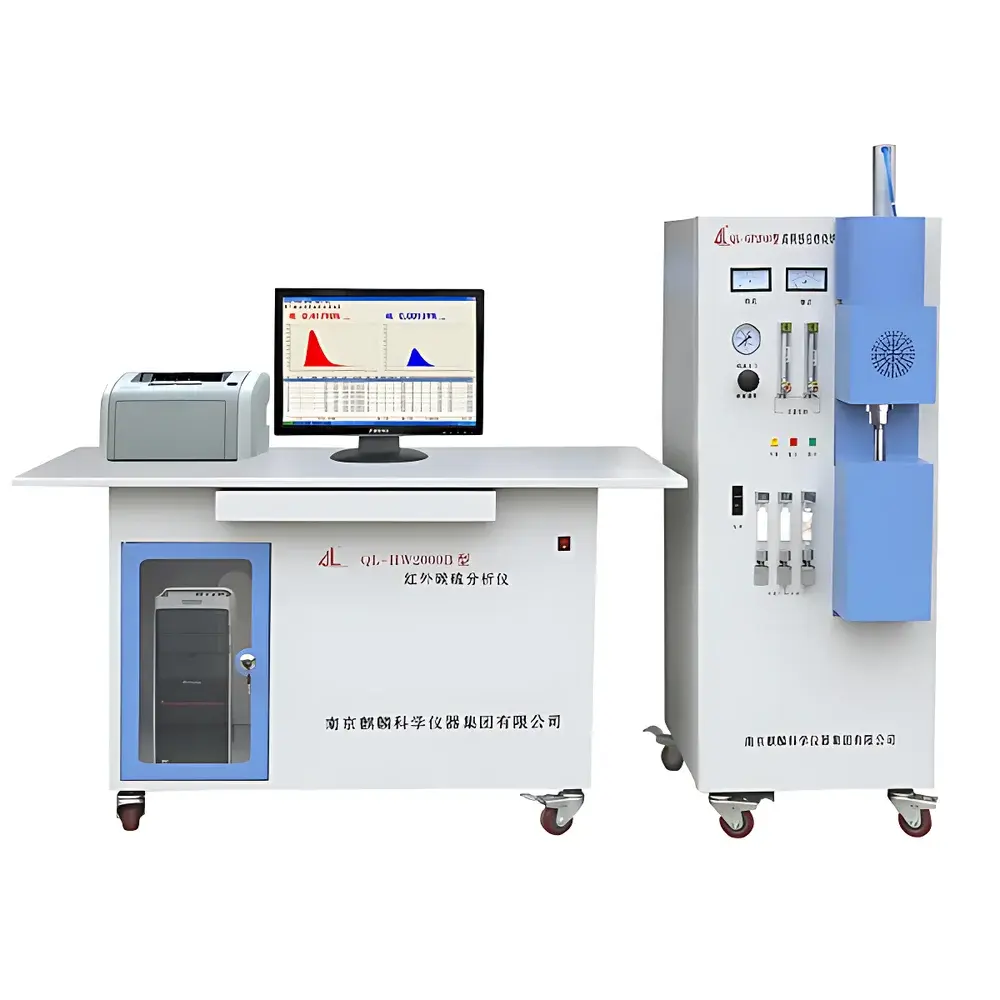
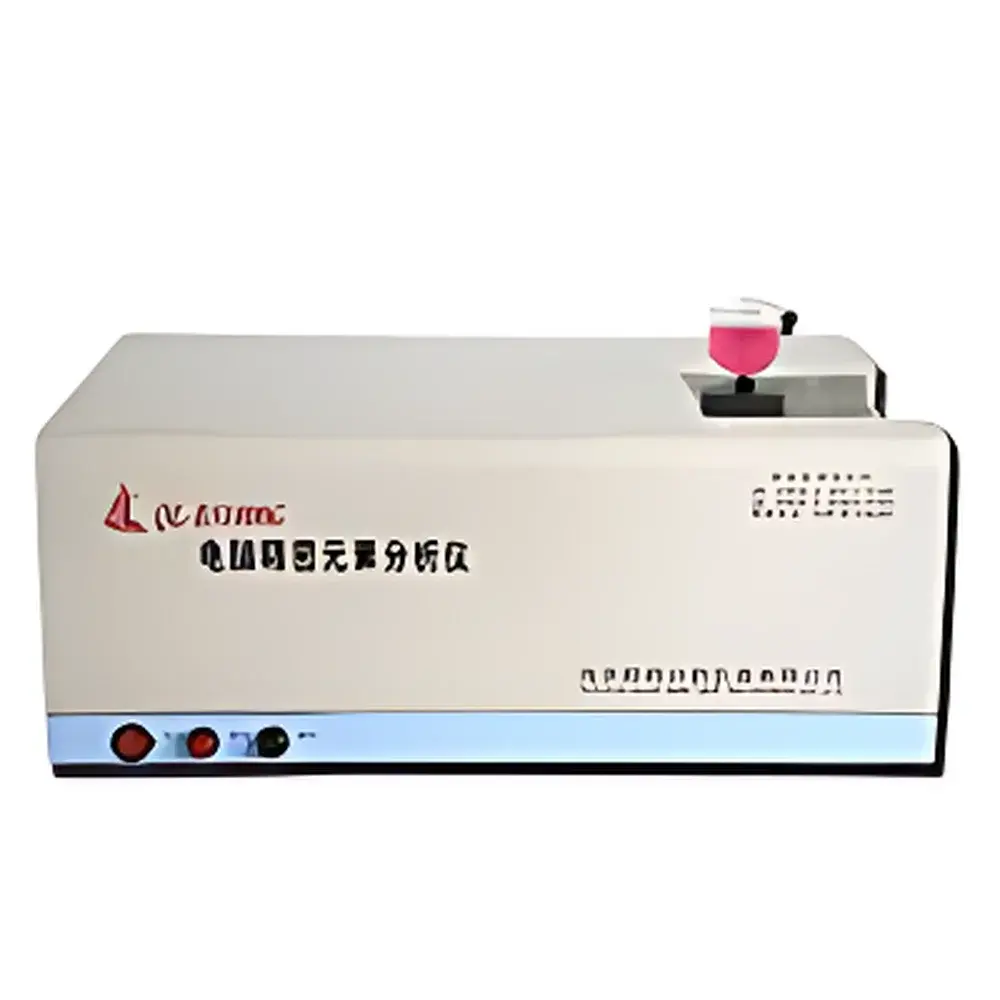
QL-Qilin HW2000BA High-Frequency Infrared Carbon-Sulfur and Multi-Element Analyzer
| [Brand | QL-Qilin |
|---|---|
| Model | HW2000BA |
| Origin | Jiangsu, China |
| Type | Integrated HF-IR C/S + Optical Emission Multi-Element Analyzer |
| Measuring Range (C) | 0.0001–99.999 wt% |
| Measuring Range (S) | 0.0001–99.999 wt% |
| RSD (C) | ≤0.5% |
| RSD (S) | ≤1.0% |
| Detection Limit | 0.1 ppm |
| Analysis Time | 25–60 s (adjustable, typical 35 s) |
| HF Generator | 2.5 kVA, 18–20 MHz |
| Weighing Precision | 0.1 mg (0–120 g capacity) |
| Compliance | GB/T 20123–2006, ISO 15350:2000] |
Overview
The QL-Qilin HW2000BA is a fully integrated high-frequency infrared carbon-sulfur and multi-element analyzer engineered for precision quantitative analysis of solid metallic and inorganic materials. It combines two core analytical modules—QL-HW2000B high-frequency infrared (HF-IR) carbon-sulfur determination and QL-BS1000G optical emission spectrometric multi-element analysis—into a single platform with unified software control and data handling. The system operates on the principle of high-frequency induction combustion followed by non-dispersive infrared (NDIR) absorption spectroscopy for carbon and sulfur quantification. CO₂ and SO₂ gases generated from sample combustion are swept through temperature- and pressure-stabilized absorption cells; their concentrations are determined via selective infrared absorption at precisely defined wavelengths (4.26 µm for CO₂, 7.4 µm for SO₂), detected by thermoelectrically cooled pyroelectric detectors. Simultaneously, the QL-BS1000G module employs a grating-based optical system with digitally controlled stepper-motor wavelength scanning (resolution <1 nm) to perform simultaneous or sequential measurement of Mn, P, Si, Cr, Ni, Mo, Mg, and rare earth elements via colorimetric reaction kinetics in acid-digested solutions.
Key Features
- Dual-CPU architecture with real-time signal acquisition at up to 4 Hz sampling rate for enhanced baseline stability and noise suppression
- High-stability platinum-coated infrared source operating at 800 °C, coupled with aviation-grade synchronous modulation motor (rated for >100,000 hours MTBF)
- Gold-plated infrared absorption cell minimizing photon adsorption and thermal drift
- Optional dual-carbon IR cell configuration with automatic path switching for extended dynamic range (ultra-trace to high-concentration C analysis)
- Integrated high-frequency furnace (2.5 kVA, 18–20 MHz) with RF-controlled heating profile ensuring reproducible combustion efficiency across diverse matrices
- Pressure-, temperature-, and flow-compensated gas-handling system featuring Taiwan-made Airtac solenoid valves rated for ≥100,000 cycles
- Industrial-grade modular power supply with EMI/RFI shielding for operation in electrically noisy foundry or QC lab environments
- Automated liquid dispensing system with gravimetric feedback for precise reagent delivery during wet-chemistry multi-element analysis
Sample Compatibility & Compliance
The HW2000BA supports direct analysis of ferrous and non-ferrous alloys—including carbon steels, stainless steels, cast irons, ductile irons, aluminum alloys, copper alloys, nickel-based superalloys, and rare-earth metals—as well as inorganic solids such as cement, ores, coke, coal, catalysts, ceramics, and geological samples. Sample preparation follows standardized digestion or combustion protocols aligned with ISO 15350:2000 and GB/T 20123–2006 for carbon and sulfur. For multi-element wet chemistry, procedures comply with ISO 6432 (steel analysis), ASTM E350 (non-ferrous metals), and relevant portions of USP for reagent traceability. The instrument’s firmware supports audit trail logging per GLP/GMP requirements, and optional 21 CFR Part 11-compliant user authentication and electronic signature modules are available upon request.
Software & Data Management
Control and data processing are executed via a Windows-based application developed in C++ with embedded SQL database backend. The interface supports method-driven workflow management: users select pre-validated methods (e.g., “Low-Alloy Steel C/S”, “Stainless Steel Mn/Si/Cr/Ni”) or define custom calibration curves using NIST-traceable standards. All raw detector signals, gas flow rates, furnace temperature profiles, and balance readings are time-stamped and stored with metadata (operator ID, sample ID, date/time, method version). Export formats include CSV, XML, and PDF reports compliant with LIMS integration protocols (ASTM E1482, ASTM E2051). Calibration verification checks, drift correction algorithms, and outlier detection based on Grubbs’ test are embedded in routine analysis sequences.
Applications
This analyzer is routinely deployed in metallurgical QC laboratories, third-party testing facilities, and R&D centers for incoming raw material verification, melt-process control, heat-treatment validation, and final product certification. Typical use cases include: monitoring carbon segregation in continuous-cast billets; verifying sulfur content in bearing steels to prevent hot shortness; quantifying residual chromium and nickel in recycled stainless scrap; assessing phosphorus levels in low-alloy structural steels per EN 10025; determining rare-earth additions in Mg-alloy die-casting alloys; and certifying total carbon in catalyst supports per ASTM D5291. Its dual-mode capability eliminates the need for separate dedicated instruments for C/S and major/minor alloying elements—reducing footprint, cross-training burden, and long-term maintenance overhead.
FAQ
What sample forms are compatible with the HW2000BA?
Solid metallic chips, turnings, or drillings (typically 0.2–1.0 g); powdered ores or cements (pressed into pellets); and pre-digested aqueous solutions for multi-element analysis.
Does the system support automated calibration verification?
Yes—built-in daily calibration check routines compare current gain factors against reference values stored during initial setup; deviations exceeding ±2% trigger operator alerts and optional recalibration prompts.
Can the instrument be integrated into an existing LIMS?
Yes—via ODBC-compliant database export or HL7/ASTM E1384 message formatting; API documentation and driver packages are provided with enterprise license tiers.
Is high-purity oxygen required for combustion?
Standard operation uses ≥99.995% O₂ at regulated flow (1–3 L/min); optional helium carrier gas mode is supported for sulfur-rich matrices prone to SO₃ formation.
What maintenance intervals are recommended?
Daily: desiccant replacement, filter inspection; Quarterly: IR cell purge, furnace crucible cleaning; Annually: detector sensitivity verification, gas line leak testing, and full system performance qualification per ISO/IEC 17025 Annex A.3 guidelines.




