
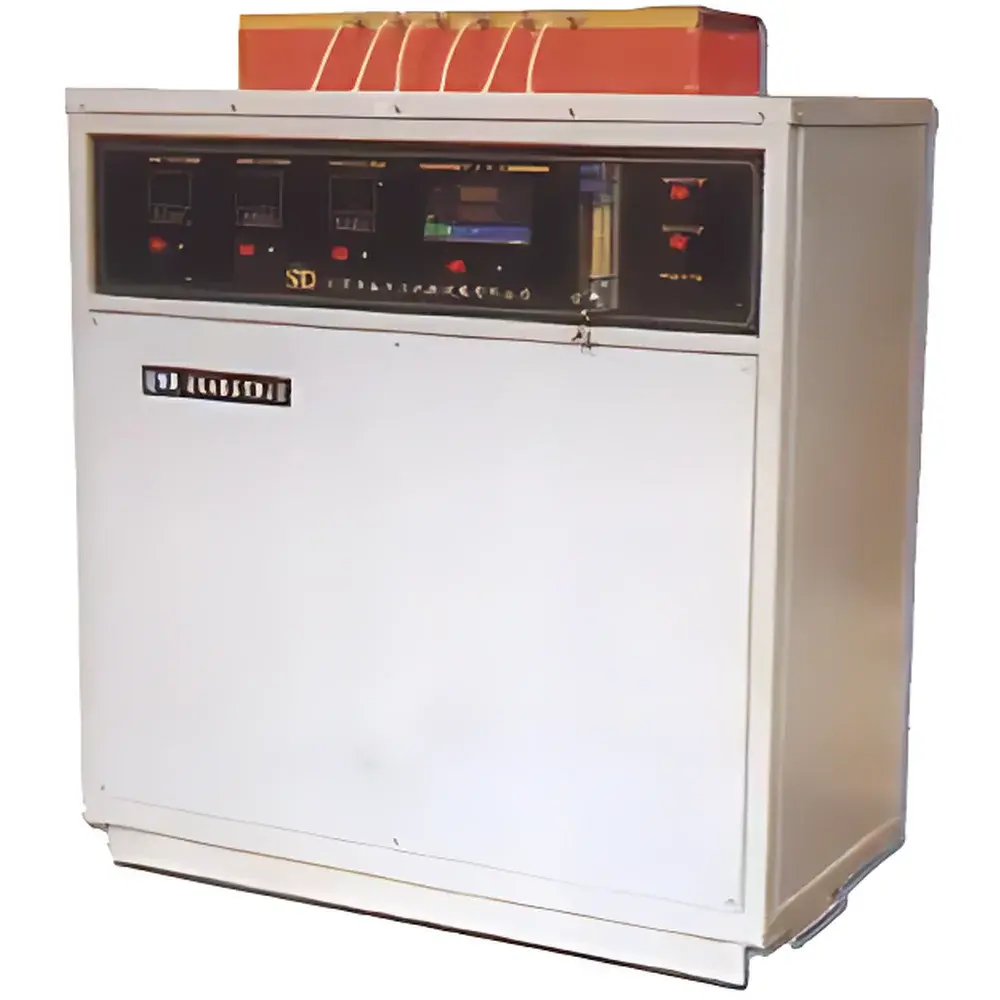
QMB Digital Minimum Film Formation Temperature (MFFT) Tester
| Origin | Shanghai, China |
|---|---|
| Manufacturer Type | Authorized Distributor |
| Origin Category | Domestic (China-made) |
| Model | QMB |
| Pricing | Available Upon Request |
| Gradient Plate Temperature Range | 0 °C to +45 °C |
| Number of Temperature Measurement Points | 10 |
| Temperature Measurement Accuracy | ±0.2 °C |
| Gradient Interval | 5 °C ±1 °C |
| Temperature Readout | Digital Display |
| Compliant Standards | GB/T 9267, ISO 2115:1976 |
Overview
The QMB Digital Minimum Film Formation Temperature (MFFT) Tester is a precision laboratory instrument engineered for the quantitative determination of the lowest temperature at which an aqueous polymer dispersion forms a continuous, coalesced film upon drying. Based on the standardized gradient-plate principle, the instrument utilizes a thermally conductive metal plate with a controlled linear temperature gradient spanning 0 °C to +45 °C. As a polymer emulsion sample is applied across the plate and allowed to dry under ambient humidity conditions, differential film formation is visually assessed along the thermal gradient. The MFFT is defined as the lowest temperature at which a uniform, non-cracked, and cohesive film is observed—providing critical formulation insight for architectural coatings, adhesives, textile binders, and functional polymer dispersions.
Key Features
- High-stability gradient heating plate with active thermal regulation and passive heat-sink design to ensure long-term gradient linearity and repeatability.
- 10 independent, calibrated platinum resistance temperature sensors (PT100) embedded at fixed intervals—enabling real-time, traceable verification of temperature distribution across the entire gradient surface.
- Digital microprocessor-based controller with ±0.2 °C measurement accuracy and 0.1 °C resolution, meeting metrological requirements for GLP-compliant testing environments.
- Graduated stainless-steel test plate with engraved reference markers for precise sample application and consistent film width (typically 15–20 mm), minimizing operator-induced variability.
- Compliance with internationally recognized test methodologies: GB/T 9267–2007 (Chinese National Standard) and ISO 2115:1976 (Plastics — Determination of minimum film-formation temperature of aqueous polymer dispersions).
- Compact benchtop footprint and low power consumption (≤150 W), suitable for routine QC laboratories and R&D facilities without dedicated HVAC support.
Sample Compatibility & Compliance
The QMB tester accommodates a broad range of waterborne polymer systems including acrylics, styrene-acrylics, vinyl acetate copolymers, polyvinyl chloride (PVC) dispersions, and fluorinated emulsions. Sample viscosity and solids content must fall within typical emulsion ranges (e.g., 30–60% w/w solids; Brookfield viscosity < 500 mPa·s at 25 °C) to ensure uniform film deposition and unambiguous visual evaluation. All test procedures follow strict adherence to ISO 2115:1976 protocols—including specified drying time (≥4 h at 23 ± 2 °C and 50 ± 5% RH), standardized draw-down blade geometry (ISO 2808 compliant), and documented environmental monitoring. Instrument calibration certificates are provided with NIST-traceable references for each sensor point, supporting audit readiness for ISO/IEC 17025-accredited laboratories.
Software & Data Management
While the QMB operates as a standalone analog-digital hybrid system, its controller supports optional RS-232 or USB-to-serial interface for integration into centralized lab data management platforms. Temperature profiles from all 10 sensors can be logged at user-defined intervals (1–60 s) and exported in CSV format for post-test analysis. The system records timestamped calibration history, operator ID (via manual entry), and test parameters—enabling full traceability per FDA 21 CFR Part 11 guidelines when paired with validated electronic record software. Audit trails include sensor drift compensation logs and gradient deviation alerts, ensuring data integrity during extended qualification cycles.
Applications
- Formulation development of low-VOC architectural paints and interior wall coatings.
- Quality control of polymer emulsions supplied to adhesive and sealant manufacturers.
- Regulatory submission support for REACH and EPA Safer Choice certification, where MFFT correlates directly with coalescing agent efficiency and energy demand during film curing.
- Accelerated stability assessment of freeze-thaw resistant dispersions—comparing pre- and post-cycling MFFT shifts as an indicator of colloidal integrity loss.
- Educational use in polymer science laboratories to demonstrate the relationship between glass transition temperature (Tg), minimum film formation, and surfactant architecture.
FAQ
What is the recommended sample preparation protocol prior to MFFT testing?
Apply a uniform wet film (typically 100–150 µm thickness) using a calibrated ISO 2808 draw-down bar. Allow immediate placement onto the gradient plate; avoid pre-drying or airflow exposure.
Can the QMB be used for solvent-borne systems?
No. The instrument is validated exclusively for aqueous polymer dispersions per ISO 2115. Solvent evaporation kinetics and flammability risks preclude safe or meaningful application with organic media.
How frequently should the gradient plate be recalibrated?
Annual calibration is recommended, or after any mechanical impact or thermal shock event. Each sensor point must be verified against a certified reference thermometer traceable to national standards.
Is humidity control required during testing?
Yes. Testing must occur in an environment maintained at 23 ± 2 °C and 50 ± 5% relative humidity, as specified in ISO 2115. Deviations beyond these limits invalidate comparative results.
Does the QMB support automated image capture or AI-based film evaluation?
Not natively. Visual assessment remains the standard per ISO 2115; however, third-party digital microscopy systems with calibrated lighting may be integrated for enhanced documentation consistency.



