
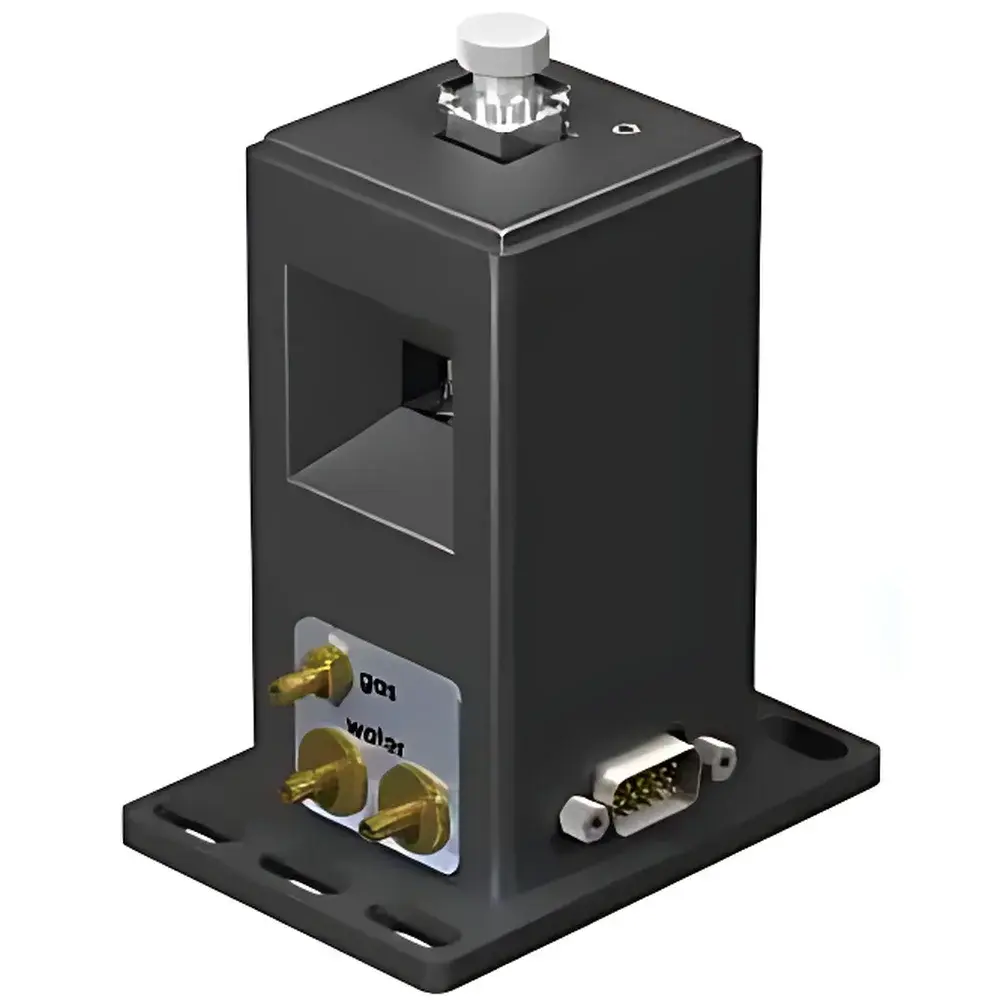
Quantum Northwest t40/TLC40 Single-Cell Temperature-Controlled Optical Sample Holder
| Brand | Quantum Northwest |
|---|---|
| Origin | South Korea |
| Model | t40 / TLC40 Single-Cell Optical Sample Holder |
| Temperature Range (t40) | −40.00 to +110.00 °C |
| Temperature Range (TLC40, standard) | −40.00 to +105.00 °C |
| Temperature Range (TLC40, extended) | −55.00 to +150.00 °C |
| Temperature Accuracy | ±0.01 °C (t40), ±0.02 °C (TLC40) |
Overview
The Quantum Northwest t40 and TLC40 single-cell optical sample holders are precision-engineered thermal platforms designed for spectroscopic applications requiring high-fidelity temperature control of liquid or solid samples in standard cuvettes (e.g., 10 mm pathlength quartz or UV-grade cells). Both models operate on solid-state Peltier thermoelectric technology, enabling bidirectional, programmable temperature regulation without cryogenic fluids or external chillers. The t40 is optimized for absorption spectroscopy with a calibrated operating range of −40.00 °C to +110.00 °C and a stability of ±0.01 °C at setpoint; the TLC40 extends low-temperature capability and includes enhanced thermal shielding design, supporting standard operation from −40.00 °C to +105.00 °C (±0.02 °C accuracy) and optionally −55.00 °C to +150.00 °C upon factory configuration. Each unit integrates a high-resolution thermistor or Pt100 sensor embedded near the cell cavity for direct, real-time sample temperature feedback—critical for kinetic studies, thermodynamic parameter extraction, and temperature-dependent spectral calibration.
Key Features
- Peltier-driven thermal actuation enables rapid heating and cooling rates (typical ramp: 1–3 °C/s depending on load and ambient conditions), with fine-grained setpoint resolution down to 0.01 °C
- Adjustable-speed magnetic stirrer ensures convective homogeneity across viscous or layered samples—minimizing thermal gradients and improving measurement reproducibility
- Dual collinear optical ports (standard 10 mm clear aperture) maintain unobstructed beam transmission for UV-Vis, fluorescence, CD, transient absorption, Raman, and NIR spectrometers
- Optional dry-air purge interface mitigates condensation during sub-ambient operation; optional vacuum-compatible or insulated shield kits available for extreme-range configurations
- Compact, modular footprint (compatible with standard optical tables and spectrometer sample compartments); mounting interfaces support Thorlabs SM1, RMS, or custom flange adapters
- Firmware supports TTL-triggered temperature sequencing and RS-232/USB communication for integration into automated workflows (e.g., LabVIEW, Python, MATLAB)
Sample Compatibility & Compliance
The t40 and TLC40 accommodate standard 12.5 × 12.5 mm or 15 × 15 mm square cuvettes, as well as cylindrical cells up to 15 mm diameter, with precise centering and pressure-free clamping to avoid stress-induced birefringence. Cell alignment is maintained within ±0.1 mm axial tolerance across the full temperature range. Units comply with IEC 61000-6-3 (EMC emission standards) and carry CE marking for laboratory use. Thermal performance validation data—including ISO/IEC 17025-traceable calibration reports—can be supplied upon request. For regulated environments (e.g., pharmaceutical QC labs), optional audit-trail-enabled firmware supports 21 CFR Part 11-compliant temperature logging when paired with QNW’s SpectraSoft™ acquisition suite.
Software & Data Management
Both models are fully supported by Quantum Northwest’s SpectraSoft™ v4.x platform, which provides synchronized temperature ramp scripting, real-time PID parameter tuning, and time-stamped thermal history export in CSV or HDF5 format. The software logs sensor readings at ≥10 Hz, records system status flags (e.g., stirrer active, heater saturation, fault codes), and supports multi-step protocols (e.g., isothermal hold → linear ramp → plateau → quench). Raw thermal data can be exported with metadata (instrument ID, firmware version, calibration date) for traceability in GLP/GMP documentation packages. Third-party control via SCPI commands over USB-VCOM or RS-232 is implemented per IEEE 488.2 standards.
Applications
- Temperature-dependent UV-Vis absorption edge analysis for semiconductor bandgap determination
- Thermal unfolding studies of proteins and nucleic acids via circular dichroism (CD)
- Time-resolved transient absorption spectroscopy under controlled thermal initiation
- Quantitative fluorescence quantum yield measurements across physiological and cryogenic ranges
- In situ monitoring of polymer phase transitions (e.g., LCST/UCST) using fiber-coupled NIR
- Calibration of radiometric standards requiring NIST-traceable blackbody-equivalent temperature references
- Low-temperature Raman spectroscopy of phonon modes in 2D materials and superconductors
FAQ
Can the t40/TLC40 be used with non-standard cuvette geometries?
Yes—custom cell wells, tapered apertures, and side-port configurations are available as OEM options. Mechanical drawings must be provided for feasibility review.
Is remote temperature programming supported over Ethernet or Wi-Fi?
No—only USB-CDC and RS-232 interfaces are natively supported. Ethernet connectivity requires an external serial-to-Ethernet converter compliant with RFC 2217.
What is the maximum allowable thermal load for stable ±0.02 °C control?
For optimal stability, sample volume should not exceed 3.5 mL in standard quartz cuvettes. Larger volumes require extended equilibration and may reduce achievable accuracy by ≤0.005 °C per additional 1 mL.
Are calibration certificates included with shipment?
A factory-as-tested report (including at least three-point verification at −20 °C, 25 °C, and +80 °C) is standard. ISO/IEC 17025-accredited calibration is available as a value-added service.
Does the magnetic stirrer function below 0 °C without icing?
Yes—when used with dry-air purge and appropriate solvent selection (e.g., ethylene glycol/water mixtures), stirring remains effective down to −40 °C. Ice formation is prevented by maintaining dew point < −60 °C in the purge stream.




