
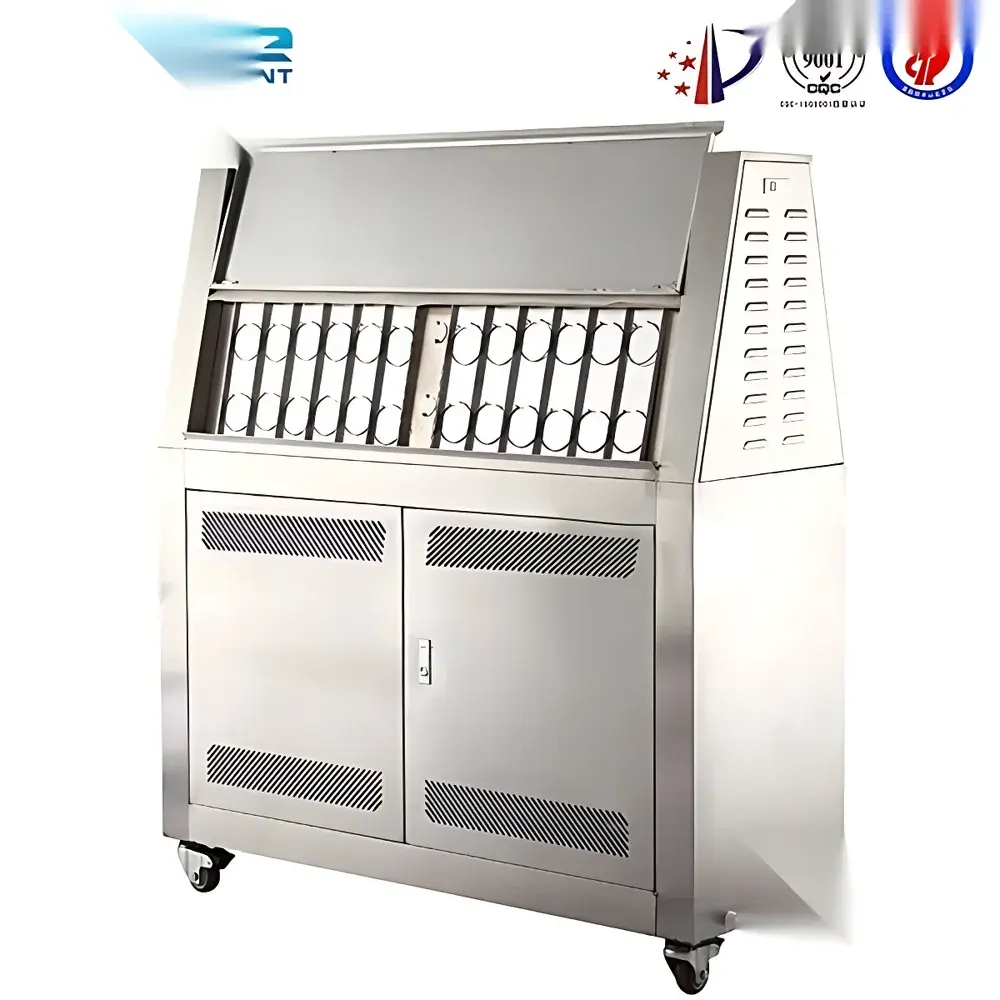
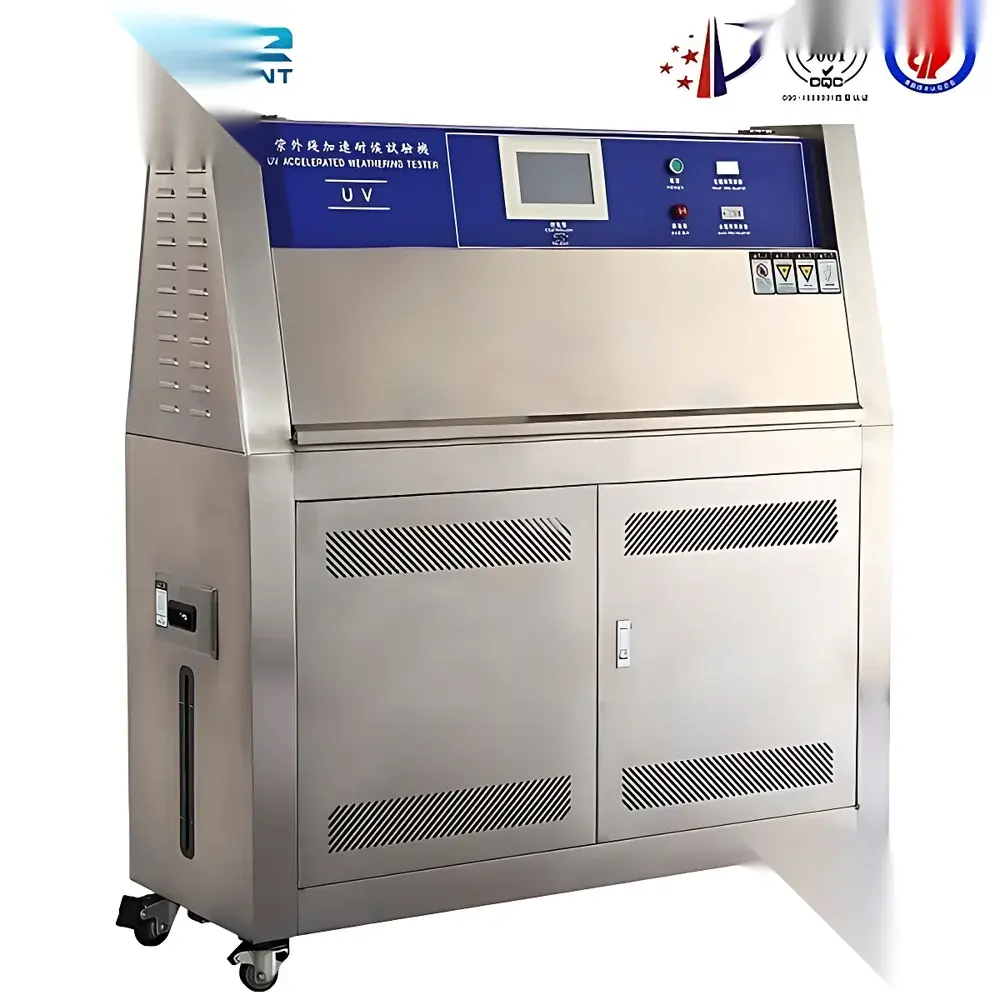
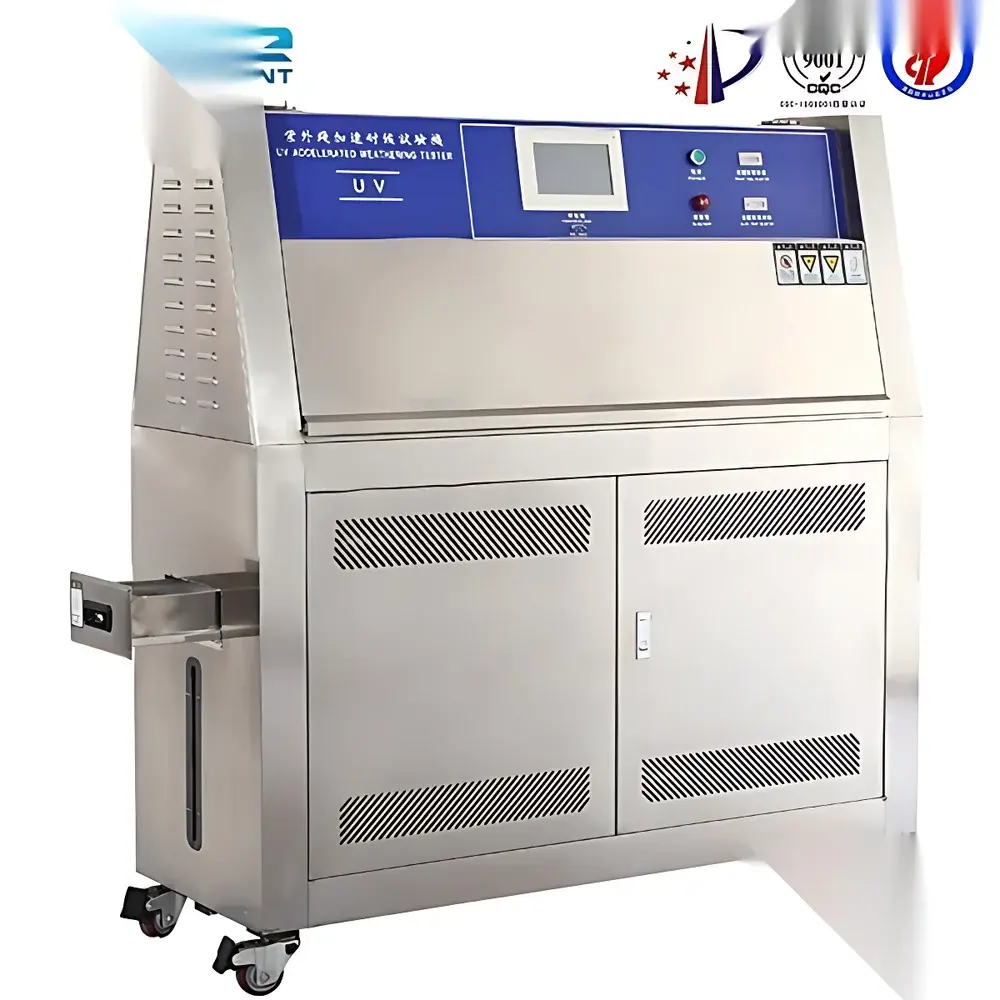
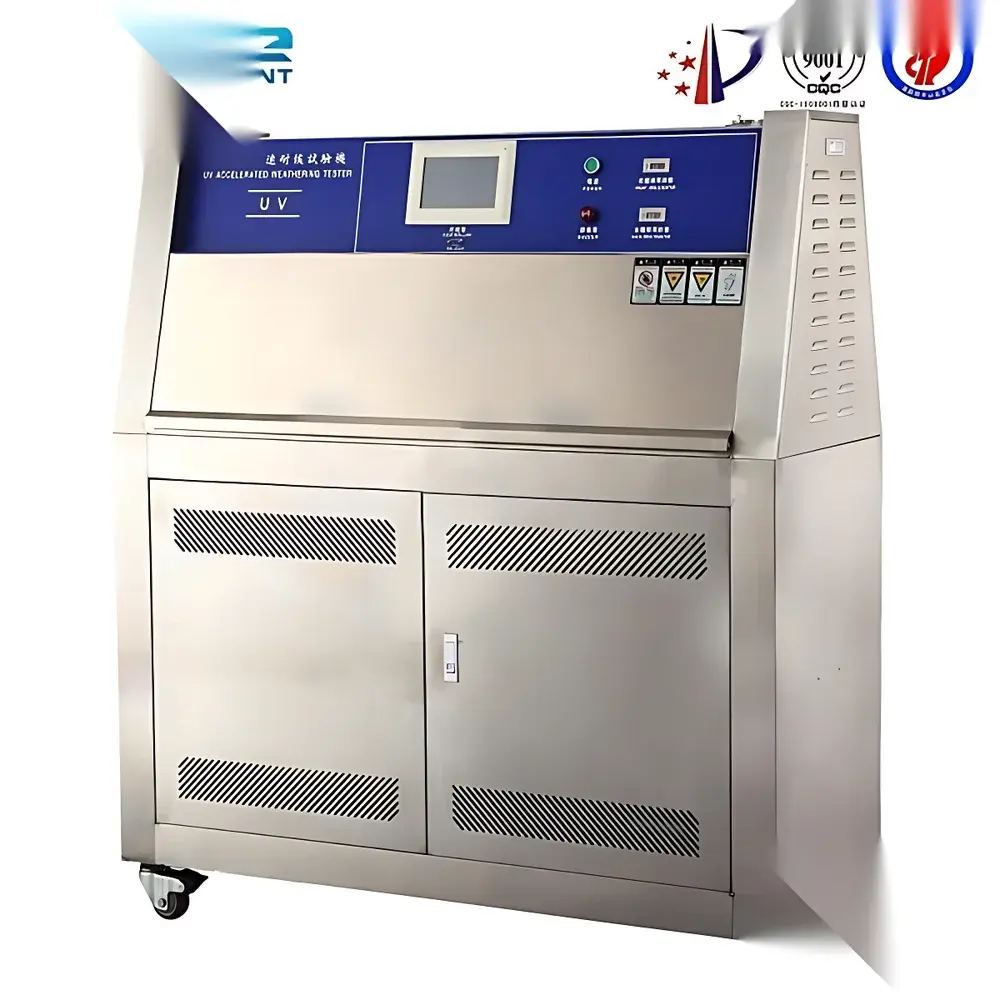
QUV UV Accelerated Weathering Tester
| Brand | Other Brands |
|---|---|
| Origin | Imported |
| Manufacturer Type | General Distributor |
| Price | USD 2,600 (Reference Only) |
Overview
The QUV UV Accelerated Weathering Tester is an industry-standard benchtop environmental test chamber engineered for rapid simulation of solar ultraviolet (UV) radiation and condensation-driven moisture exposure. It operates on the principle of controlled UV photodegradation combined with cyclic condensation—mimicking key outdoor weathering stressors including UV-B and UV-A spectral bands (290–400 nm), thermal cycling, and dew formation. Unlike xenon-arc or carbon-arc systems, the QUV employs fluorescent UV lamps (e.g., UVA-340 or UVB-313) calibrated to replicate specific portions of terrestrial sunlight spectra. This enables accelerated evaluation of polymer degradation mechanisms such as chain scission, photooxidation, and surface embrittlement—typically achieving in days or weeks what would require months or years under natural exposure. The system integrates a precision temperature-controlled black panel thermometer, programmable irradiance control, and automatic condensation cycles via water reservoir heating—ensuring high reproducibility across laboratories compliant with ASTM G154, ISO 4892-3, and JIS D0205.
Key Features
- Fully programmable UV irradiance control (0.35–1.55 W/m² @ 340 nm) with real-time monitoring and auto-compensation for lamp aging
- Condensation cycle generation via heated water reservoir and saturated air chamber—no external plumbing required
- Integrated spray function for wet/dry cycling per ASTM D4329 and ISO 4892-3 Annex B
- Black panel temperature control range: 35–75 °C with ±0.5 °C stability; chamber air temperature range: 25–60 °C
- Stainless steel 316L interior chamber with removable sample trays and non-reflective matte finish to minimize stray UV reflection
- Dual safety interlocks: UV lamp cutoff upon door opening and overtemperature shutdown at 85 °C
- Compliant with IEC 61000-4 electromagnetic compatibility standards and UL 61010-1 electrical safety requirements
Sample Compatibility & Compliance
The QUV accommodates flat-panel specimens up to 150 mm × 75 mm × 25 mm (W × H × D) per rack position, supporting standard ASTM G151 specimen holders and ISO 4892-3 mounting fixtures. Compatible substrates include thermoplastics (PP, ABS, PC), coatings (acrylic, polyurethane), elastomers, textiles, and automotive interior materials. All test protocols align with internationally recognized durability assessment frameworks—including ASTM D4329 (plastics), ASTM D4587 (coatings), ISO 4892-3 (general plastics), and SAE J2020 (automotive exterior). Data traceability supports GLP/GMP environments when paired with validated software; audit trails meet FDA 21 CFR Part 11 requirements for electronic records and signatures.
Software & Data Management
Control and data acquisition are managed through Q-Lab’s Windows-based QUV Control Software v5.x, enabling full protocol definition (irradiance setpoints, temperature ramps, spray duration, condensation dwell time), real-time graphing of irradiance and temperature profiles, and automated report generation in PDF/CSV formats. The software includes built-in calibration verification routines, lamp hour tracking with predictive replacement alerts, and password-protected user roles (Operator, Technician, Administrator). Exported datasets are compatible with LIMS integration via ODBC drivers and support statistical analysis in JMP or Minitab. All raw sensor logs—including UV sensor voltage, thermocouple readings, and relay status—are timestamped with microsecond resolution and stored locally with optional network backup.
Applications
- Evaluation of UV stabilizer efficacy in polyolefin compounds and masterbatches
- Correlation studies between accelerated QUV exposure and real-world field performance of architectural sealants
- Qualification testing of aerospace-grade composites per Boeing BMS 8-162 and Airbus AITM 1-0004
- Validation of UV resistance in medical device packaging films (ISO 11607-1)
- Comparative ranking of pigment fade resistance in automotive OEM paint systems
- Development of UV-curable adhesives and optical coatings requiring precise spectral aging profiles
FAQ
What UV lamp types are supported, and how do they differ?
The QUV accepts UVA-340 lamps (best match to solar UV below 365 nm) and UVB-313 lamps (enhanced short-wave output for aggressive stress testing). Lamp selection must be specified during configuration and cannot be interchanged without recalibration.
Is external cooling water required for operation?
No—condensation is generated internally via resistive heating of deionized water; ambient air cooling suffices for standard lab environments (15–30 °C, <80% RH).
How often must UV sensors be recalibrated?
Annual NIST-traceable recalibration is recommended; field verification using the included reference sensor kit should be performed every 30 days.
Can the QUV be integrated into a centralized lab automation system?
Yes—RS-232 and Ethernet interfaces support Modbus TCP and ASCII command protocols for SCADA and MES integration.
Does the unit comply with ozone emission limits?
All fluorescent UV lamps used in QUV systems emit negligible ozone (<0.005 ppm), well below OSHA PEL and EU Directive 2004/108/EC thresholds.



