
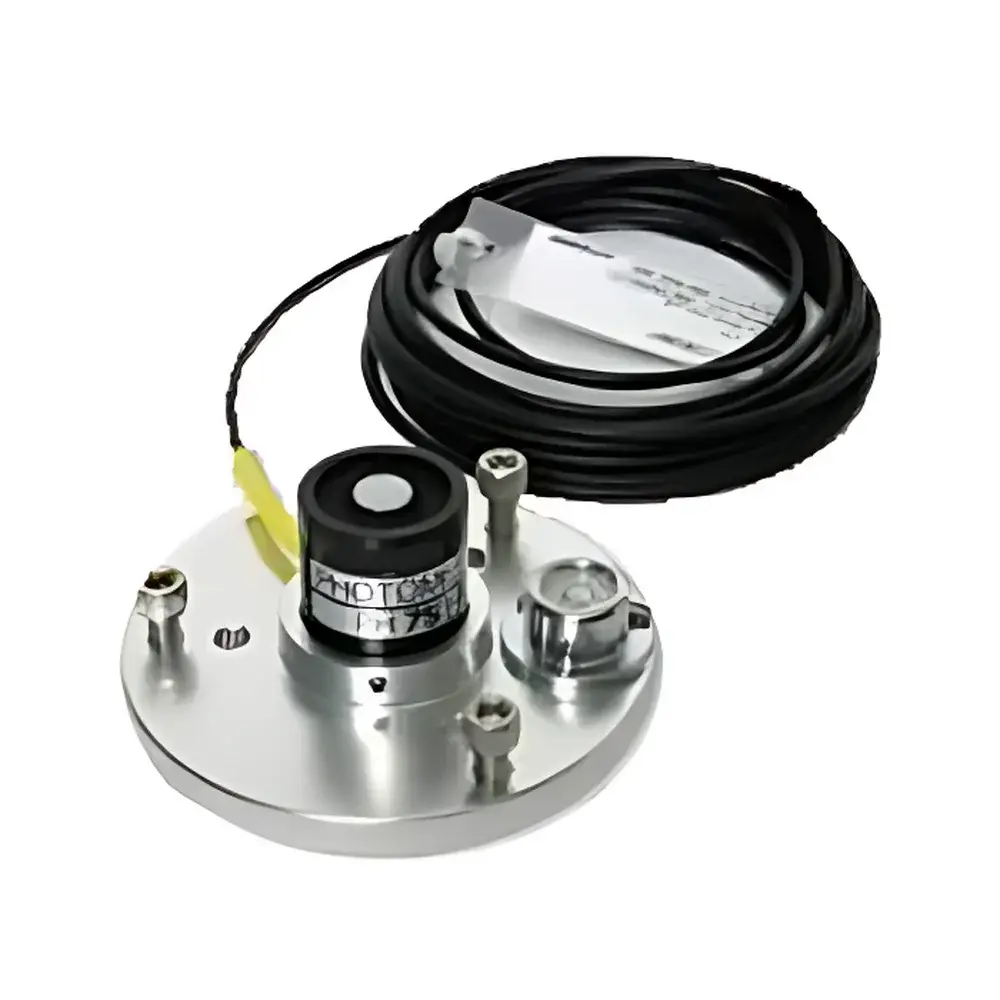
RainWise SOL-LUM Luminance Sensor
| Brand | RainWise |
|---|---|
| Origin | USA |
| Model | SOL-LUM |
| Spectral Range | 400–700 nm |
| Accuracy | ±5% (vs. CIE photopic luminosity function) |
| Sensitivity | ~30 µA per 100 klx |
| Linearity Error | ≤1% |
| Long-term Stability | <±2% over 12 months |
| Response Time | 10 µs |
| Temperature Coefficient | ≤0.15% / °C |
| Cosine Correction Error | ≤±5% up to 80° incidence angle |
| Azimuthal Uniformity | <±1% |
| Operating Temperature | −20 °C to +65 °C |
| Operating Humidity | 0–100% RH |
| Housing Materials | Anodized aluminum, stainless steel, PVC, and high-stability silicon photodiode |
Overview
The RainWise SOL-LUM Luminance Sensor is a precision-calibrated, field-deployable optical instrument engineered for continuous measurement of photopic luminance (luminous flux per unit area) in outdoor and semi-outdoor environmental monitoring applications. It operates on the principle of spectral-weighted photometry, utilizing a filtered silicon photodiode whose spectral responsivity is rigorously matched to the CIE 1931 photopic luminosity function (V(λ)) across the visible spectrum (400–700 nm). This alignment ensures traceable, standardized luminance quantification—critical for compliance with lighting assessment protocols in meteorological networks, solar irradiance validation studies, urban light pollution monitoring, and daylight harvesting system calibration. The sensor’s fully cosine-corrected diffuser head guarantees angular response uniformity up to ±80° incidence, minimizing directional bias under diffuse sky conditions or oblique illumination typical of dawn/dusk or low-sun-angle scenarios.
Key Features
- High-fidelity CIE V(λ)-matched spectral response with ±5% deviation—certified against NIST-traceable reference standards.
- Optically integrated cosine diffuser fabricated from UV-stable, matte-finish polymer; validated to ISO/CIE angular response guidelines for photometric sensors.
- Robust mechanical architecture: anodized aluminum housing, stainless steel mounting hardware, and PVC cable jacketing for long-term exposure resilience in coastal, industrial, and agricultural environments.
- Ultrafast 10 µs electrical response time enables capture of rapid luminance transients—including cloud-edge passage, lightning-induced ambient changes, or pulsed LED source modulation.
- Thermal stability engineered to <±2% drift over 12 months at constant operating conditions; temperature coefficient of sensitivity ≤0.15% / °C supports reliable operation across −20 °C to +65 °C.
- Modular mounting interface compatible with RainWise Quadpod and Monopod structural systems—enabling rapid deployment, leveling adjustment, and vibration-damped orientation control.
Sample Compatibility & Compliance
The SOL-LUM is designed for direct measurement of ambient luminance (cd/m² or fc) from natural and artificial sources—including clear and overcast daylight, twilight, street lighting, architectural façade illumination, and horticultural LED arrays. Its spectral bandpass excludes near-UV and NIR contributions, eliminating non-photopic radiant energy interference. The sensor conforms to foundational photometric standards including CIE S 014-2/E:2006 (Photometry — Part 2: Photometric Properties of Materials), IEC 60879 (Luminance Meters), and ASTM E1376 (Standard Test Method for Determining Luminance of Light Sources). While not intrinsically certified for regulatory reporting, its metrological traceability and documented uncertainty budget support use in GLP-compliant environmental data acquisition systems when paired with calibrated data loggers meeting ANSI/ISA-71.04 or IEC 61000-4-30 Class A requirements.
Software & Data Management
The SOL-LUM outputs a linear analog current signal (typically 4–20 mA or 0–5 V, configurable via external signal conditioner) proportional to incident luminance. It integrates natively with RainWise’s EnviroMonitor platform and third-party DAQ systems including Campbell Scientific CR-series loggers, Onset HOBO UX120, and National Instruments CompactDAQ. When deployed in FDA-regulated or ISO 17025-accredited facilities, the sensor may be incorporated into 21 CFR Part 11–compliant workflows through audit-trail-enabled logging software (e.g., LoggerNet with electronic signature modules or LabVIEW-based acquisition suites with ALCOA+ data integrity frameworks). Raw output requires no firmware updates or embedded processing—ensuring deterministic behavior and long-term data comparability across instrument generations.
Applications
- Real-time daylight availability monitoring for smart building automation and dynamic façade control systems.
- Validation of pyranometer-derived global horizontal irradiance (GHI) models using luminance-to-irradiance conversion algorithms.
- Long-term light pollution trend analysis in national park service night-sky preservation programs.
- Calibration reference for UAV-mounted multispectral imaging systems performing photometric normalization.
- Field verification of roadway and tunnel lighting compliance with CIE 115 and EN 13201-2 luminance uniformity thresholds.
- Ecological photoperiod studies measuring circadian stimulus intensity for avian and insect behavioral research.
FAQ
Is the SOL-LUM sensor calibrated to NIST-traceable standards?
Yes—each unit ships with a manufacturer’s calibration certificate referencing CIE-standard illuminants (A, D65) and traceable to NIST SRM 2252a (luminance standard).
Can it be used underwater or in high-condensation environments?
No—the housing is rated IP65 (dust-tight and protected against low-pressure water jets), but submersion or sustained condensation inside the optical dome will compromise cosine correction and long-term stability.
Does it require periodic recalibration?
RainWise recommends recalibration every 24 months under continuous outdoor deployment; annual verification against a stable reference lamp is advised for critical applications.
What is the minimum measurable luminance level?
The practical lower limit is governed by connected DAQ resolution and noise floor—not the sensor itself. With a 16-bit logger and 0–5 V scaling, detection extends below 0.1 cd/m² under controlled conditions.
Is spectral mismatch error corrected in software?
No—spectral matching is achieved optically at the detector level. Post-processing correction is neither required nor recommended, as it would introduce uncertainty beyond the stated ±5% CIE conformity.







