
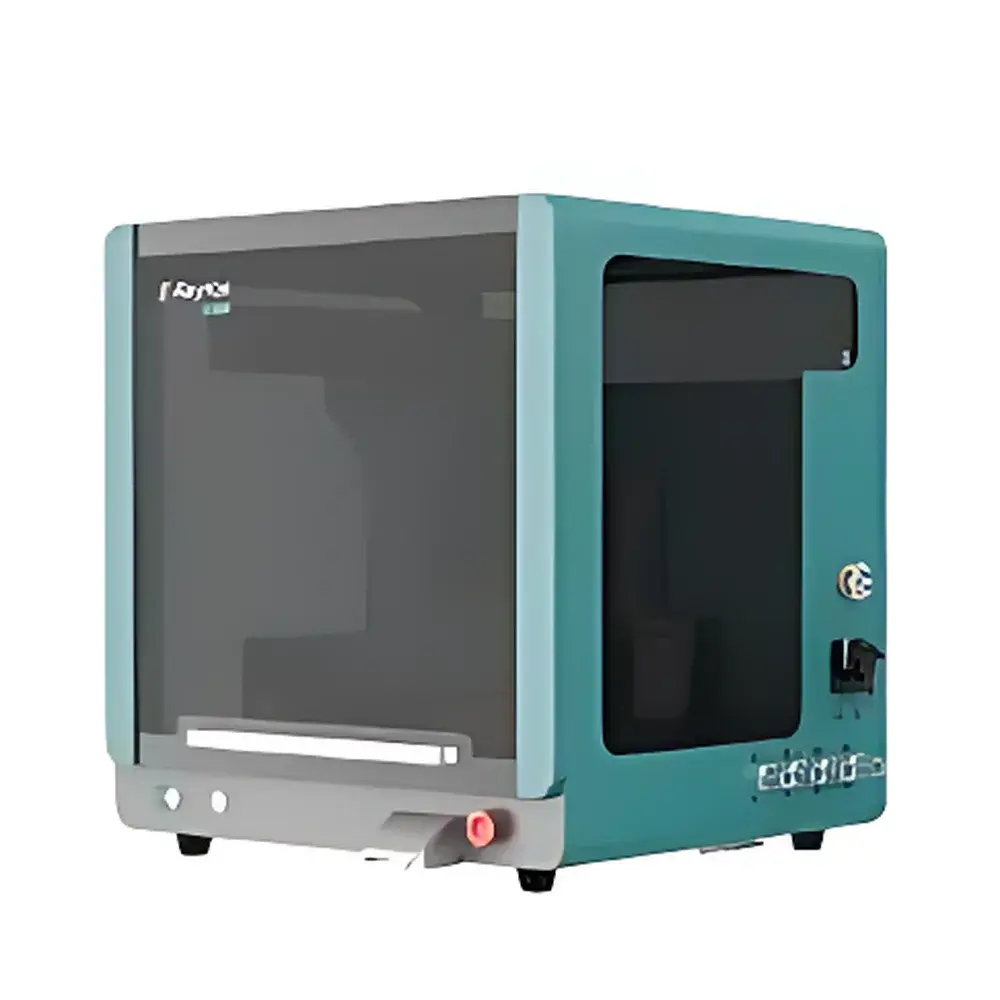
Raykol AP-300 Automated Liquid Sample Preparation Workstation
| Brand | Raykol |
|---|---|
| Origin | Fujian, China |
| Manufacturer Type | Direct Manufacturer |
| Region of Origin | Domestic (China) |
| Model | AP-300 |
| Price Range | USD 42,000 – 70,000 |
| Deck Positions | 4 |
| Pipetting Accuracy | ±1.0% |
| Pipetting Volume Range | 5 µL – 100 mL |
| Sample Throughput | 288 samples per run |
| Dimensions (W×D×H) | 710 × 670 × 740 mm |
Overview
The Raykol AP-300 Automated Liquid Sample Preparation Workstation is an integrated, programmable platform engineered for precision liquid handling in analytical laboratories. Designed around a dual-mode dispensing architecture—comprising interchangeable pipette-tip + dispensing needle and septum-piercing needle modules—the system enables robust, contamination-minimized handling of volatile, viscous, or temperature-sensitive samples. Its core operation relies on high-accuracy syringe-driven liquid transfer, supporting dilution factors up to 10,000-fold with trace-level reproducibility. The workstation supports end-to-end sample preparation workflows including standard curve generation, multi-level dilution series, internal standard addition, solvent allocation, and mixed standard formulation—all executed under fully automated, audit-ready conditions. It serves as a critical front-end automation solution for laboratories performing routine quantitative analysis by HPLC, GC, LC-MS, ICP-MS, and other regulated analytical techniques.
Key Features
- Dual operational modes: Tip-based aspiration/dispensing with rapid tip ejection and septum-piercing needle module for headspace vials—eliminating carryover and enabling precise sampling of volatile solvents.
- High-fidelity syringe pump system delivering ±1.0% volumetric accuracy across the full 5 µL–100 mL range, validated per ISO 8655-5 and ASTM E2758 standards.
- Temperature-controlled sample deck with Peltier-based heating/cooling (4–40 °C adjustable), maintaining sample integrity during extended runs.
- Integrated orbital shaking module (200–1,200 rpm) for homogenization of intermediate dilutions prior to downstream transfer—reducing manual intervention and improving mixing consistency.
- Universal deck compatibility accommodating standard labware: 2 mL HPLC vials, 10/20 mL headspace vials, and 15/50 mL centrifuge tubes—no custom adapters required.
- Modular deck layout with four independent workstations, allowing concurrent execution of heterogeneous protocols (e.g., calibration curve prep + QC spike addition).
Sample Compatibility & Compliance
The AP-300 accommodates aqueous, organic, and mixed-solvent systems—including acetonitrile, methanol, ethyl acetate, and DMSO—without degradation of sealing integrity or syringe performance. All wetted components are chemically resistant (e.g., PTFE, stainless steel 316, and chemically inert elastomers), ensuring long-term stability with aggressive solvents. The system meets fundamental requirements for GLP and GMP environments: full electronic logging of all user actions, protocol version control, and timestamped audit trails. While not pre-certified for FDA 21 CFR Part 11, its software architecture supports implementation of electronic signature workflows, role-based access control, and data immutability features necessary for regulatory validation.
Software & Data Management
The workstation operates via Raykol’s proprietary MethodStudio™ software—a Windows-based interface supporting drag-and-drop protocol builder, real-time run monitoring, and export of structured CSV/Excel logs. Each method includes embedded metadata (operator ID, date/time, instrument serial number, calibration status), enabling traceability from raw data to final report. Software supports batch editing of calibration curves (linear, quadratic, weighted), automatic dilution path optimization, and error detection (e.g., insufficient stock volume, out-of-range concentration). Audit logs record every command execution, parameter change, and hardware event—retained locally for ≥18 months and exportable for third-party LIMS integration.
Applications
- Preparation of multi-point calibration standards for environmental testing (e.g., EPA Methods 525.3, 8270), food safety (AOAC 2012.01), and clinical toxicology.
- Automated spiking of internal standards into biological matrices (plasma, urine, tissue homogenates) prior to extraction and quantification.
- High-throughput dilution of stock solutions for QC reference materials and proficiency testing samples.
- Parallel preparation of mixed standards for multi-analyte methods in pesticide residue, pharmaceutical impurity, and elemental analysis workflows.
- Support for ISO/IEC 17025-accredited labs requiring documented evidence of measurement uncertainty propagation through sample preparation steps.
FAQ
What types of laboratory vessels does the AP-300 support without modification?
Standard 2 mL HPLC vials, 10 mL and 20 mL headspace vials, and 15 mL and 50 mL conical centrifuge tubes—no adapter kits required.
Can the system be validated for use in regulated pharmaceutical environments?
Yes; the hardware design, software logging architecture, and documentation package enable IQ/OQ/PQ execution per ASTM E2500 and Annex 11 guidelines.
Is remote monitoring supported during unattended operation?
The workstation provides real-time status updates via Ethernet-connected dashboard, email alerts for completion or fault conditions, and secure HTTPS-based web interface for off-site supervision.
How is carryover minimized when processing high-concentration standards followed by low-level samples?
The system executes configurable post-aspiration wash cycles using compatible solvents, with needle/tip purge routines validated to achieve <0.01% carryover per ISO 15197:2013 Annex C.
Does the AP-300 require external compressed air or vacuum sources?
No; all fluidic actuation is self-contained via integrated syringe pumps and stepper-motor-driven mechanics—only standard 100–240 V AC power is required.



