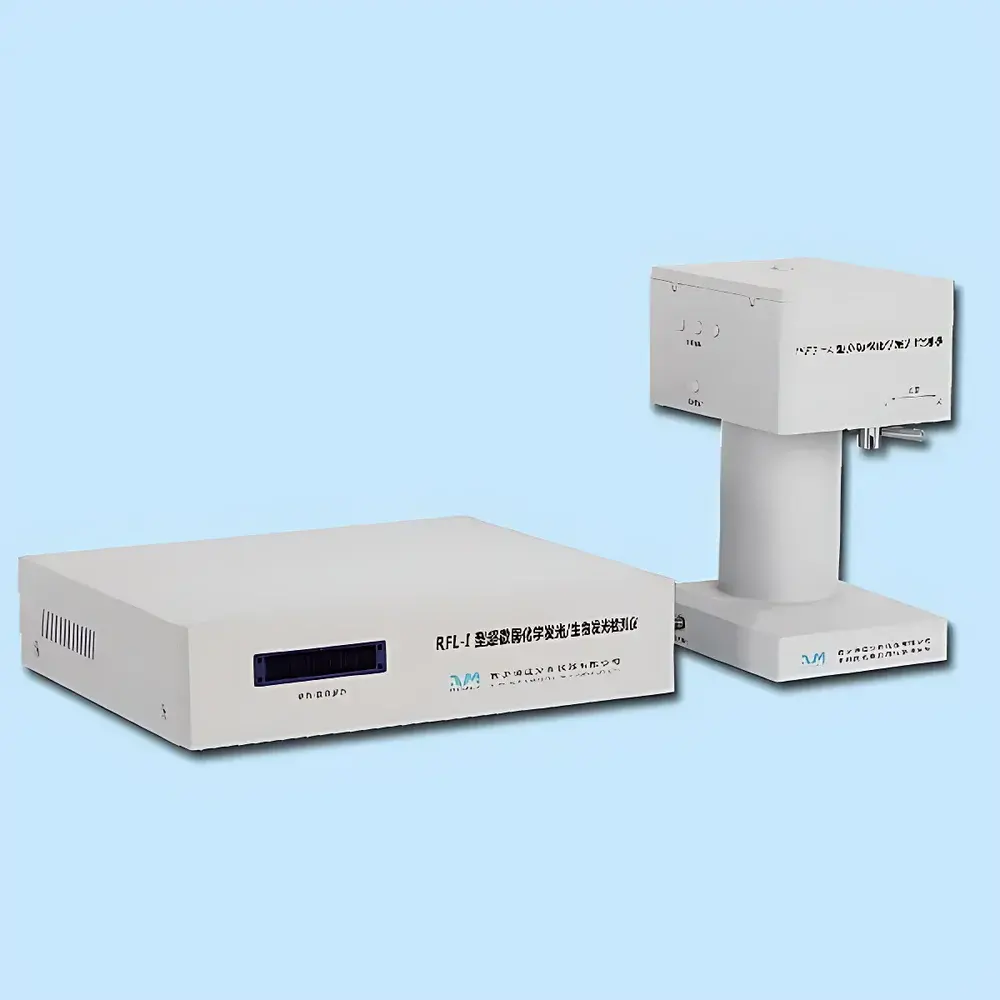
REMEX RFL-1 Ultra-Weak Chemiluminescence and Bioluminescence Detection System
| Brand | REMEX (Xi’an Remex Instrument Co., Ltd.) |
|---|---|
| Origin | Shaanxi, China |
| Model | RFL-1 |
| Dynamic Range | >6 orders of magnitude |
| PMT High-Voltage Supply | −100 V to −1000 V (stability ≤0.05%, current ≥5 mA) |
| Amplifier Gains | 1×, 10×, 100×, 1000× |
| Filter Frequencies | 10 Hz, 20 Hz, 50 Hz, 100 Hz |
| Signal Noise | ≤0.5 mV (p-p, 1× gain) |
| Input Impedance | ≥10 MΩ |
| Integration Time | 0.01–1000 s |
| Sampling Rate | 1–1000 Hz |
| Spectral Response | 300–650 nm (λₘₐₓ = 420 nm) |
| Radiant Sensitivity | >1000 A/lm |
| Software Features | Real-time zero calibration, auto-gain control, peak/area quantitation, ASCII data export, serial communication interface |
Overview
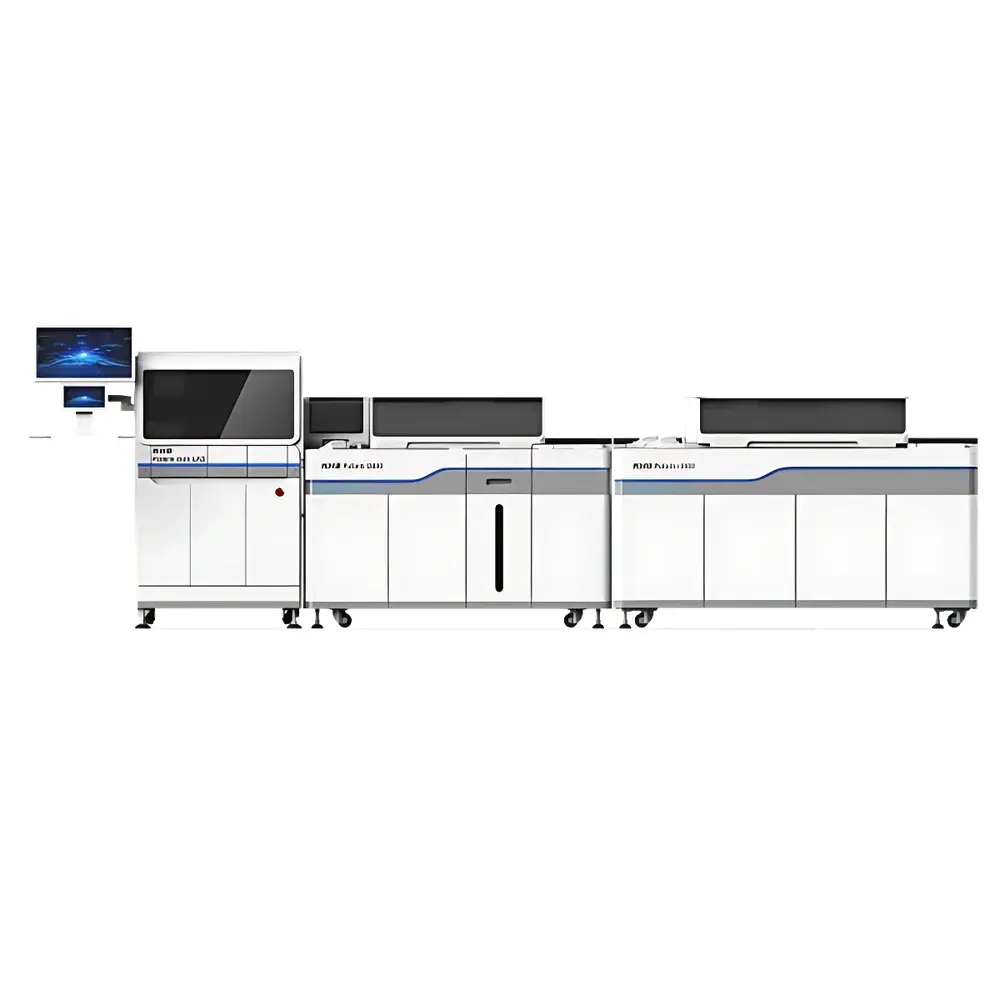
The REMEX RFL-1 Ultra-Weak Chemiluminescence and Bioluminescence Detection System is a precision photometric instrument engineered for quantitative measurement of extremely low-intensity luminescent emissions—spanning chemiluminescence, bioluminescence, and weak fluorescence signals—in clinical, pharmaceutical, and life science laboratories. It operates on the principle of single-photon counting via high-gain photomultiplier tube (PMT) detection, coupled with charge-integration and energy-integration signal acquisition modes. The system’s core architecture integrates a stabilized negative high-voltage power supply, low-noise analog signal conditioning, real-time digital signal processing, and a vacuum fluorescent display (VFD) for local parameter monitoring. Designed for compatibility with standard optical interfaces—including flow cells, cuvette holders, and microplate adaptors—the RFL-1 delivers reproducible, background-compensated measurements across a dynamic range exceeding six orders of magnitude (from sub-femtowatt to nanowatt-level radiant flux), making it suitable for kinetic assays, enzyme activity profiling, reactive oxygen species (ROS) quantification, and luciferase-based reporter gene analysis.
Key Features
- Stabilized PMT high-voltage supply (−100 V to −1000 V) with ≤0.05% long-term stability and ≥5 mA output capacity, ensuring consistent quantum efficiency across extended acquisition periods.
- Four-stage programmable amplifier with selectable gains (1×, 10×, 100×, 1000×) and configurable analog filtering (10 Hz, 20 Hz, 50 Hz, 100 Hz) to suppress line-frequency interference and thermal noise.
- Dual-mode signal acquisition: energy-integrated mode for total photon flux quantification and charge-integrated mode optimized for transient or pulsed luminescent events.
- Integrated IFFS-A multifunctional chemiluminescence detector featuring spectral responsivity from 300 nm to 650 nm (peak at 420 nm) and radiant sensitivity >1000 A/lm—calibrated per CIE photopic response standards.
- Onboard signal processing engine supporting automatic zero-offset compensation, adaptive gain control, and real-time baseline correction—reducing operator-dependent variability in low-signal regimes.
- VFD-based local interface displaying real-time voltage, gain setting, integration time, filter status, and raw signal amplitude—enabling rapid system verification without host PC dependency.
Sample Compatibility & Compliance
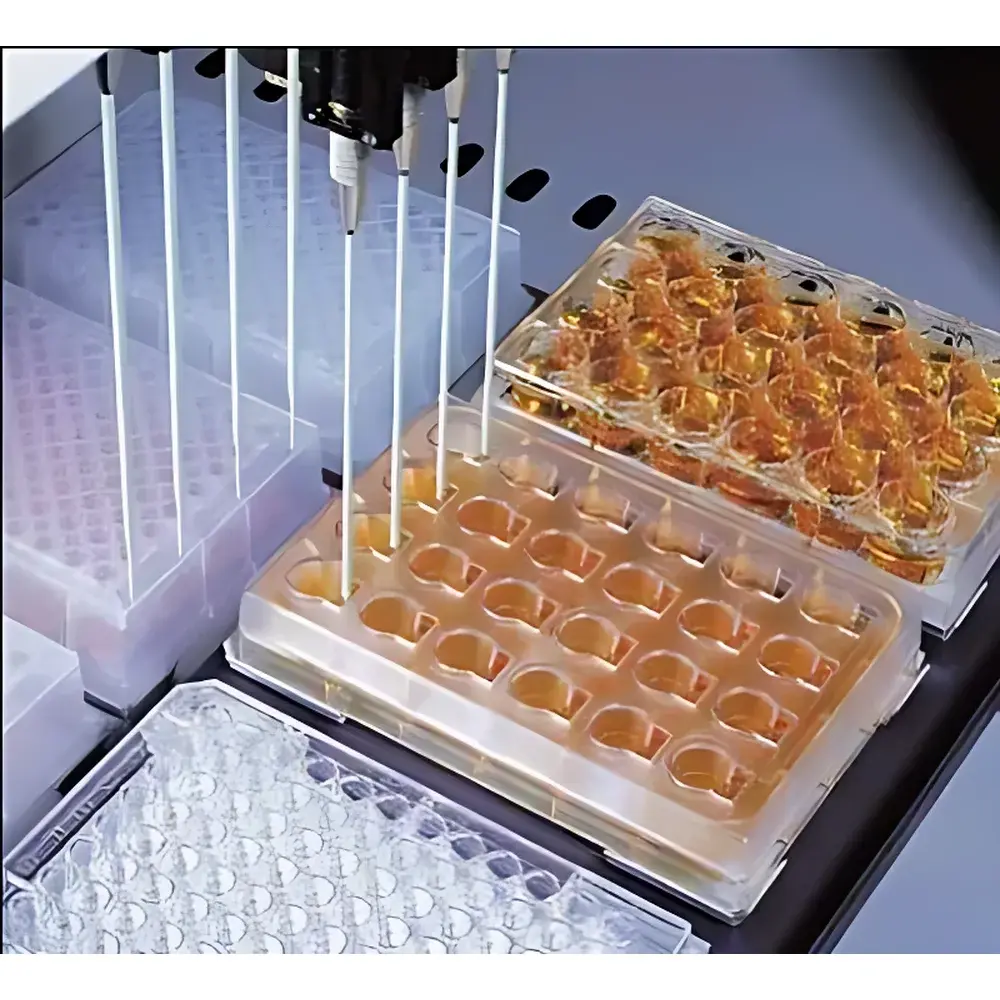
The RFL-1 accommodates standard sample formats including 1-cm quartz cuvettes, 96-well microplates (with optional plate adapter), and flow-through cells compatible with HPLC or enzymatic reaction manifolds. Its optical design minimizes stray light ingress through internal baffling and PMT shielding, achieving dark-current levels <0.1 pA under ambient-light-isolated conditions. The system meets electromagnetic compatibility requirements per IEC 61326-1:2013 (industrial environment) and conforms to electrical safety standards IEC 61010-1:2010. While not pre-certified for FDA 21 CFR Part 11, its software architecture supports audit-trail-enabling configurations (e.g., user login logs, parameter change timestamps, and immutable data export) when deployed in GLP/GMP-aligned workflows. All firmware and software operations are traceable and exportable in plain-text (ASCII) format for third-party validation.
Software & Data Management
The RFL-1 is controlled via a dedicated Windows-compatible application offering full instrument parameterization: integration time (0.01–1000 s), PMT voltage, amplifier gain, and filter frequency selection. Measurement files are saved in structured ASCII format (.txt), enabling direct import into MATLAB, Python (NumPy/Pandas), or statistical packages (e.g., GraphPad Prism). The software implements manual peak detection, area-under-curve (AUC) integration, spectral overlay, and batch-printing functionality. Raw time-series data includes timestamped intensity values at user-defined sampling intervals (1–1000 Hz), facilitating kinetic modeling and deconvolution of multi-phase luminescent decay profiles. No proprietary binary formats or locked databases are used—ensuring long-term data accessibility and regulatory transparency.
Applications
- Quantitative analysis of luminol- and isoluminol-based chemiluminescent immunoassays (CLIA) for cardiac troponin, thyroid hormones, and infectious disease markers.
- Bioluminescent ATP assays for microbial load estimation in pharmaceutical water systems and cleanroom environmental monitoring.
- Luciferase reporter assays in drug discovery—monitoring NF-κB, CREB, or p53 transcriptional activity under compound stimulation.
- ROS detection using luminol/peroxidase or coelenterazine-based probes in neutrophil activation and oxidative stress studies.
- Validation of low-light optical sensors and calibration of secondary standards traceable to NIST SRM 2241 (luminous intensity).
FAQ
What types of photodetectors are supported by the RFL-1?
The system is optimized for photomultiplier tubes (PMTs) with side-on or head-on configurations; it also supports high-impedance photodiodes and vacuum phototubes via configurable input coupling.
Is the IFFS-A detector interchangeable with other PMT housings?
Yes—the IFFS-A module features standardized 1-inch diameter flange mounting and BNC signal output, allowing mechanical and electrical integration with third-party PMT assemblies meeting −1000 V bias and >10⁶ gain specifications.
Can the RFL-1 perform time-resolved measurements?
While not a gated photon-counting system, its 1–1000 Hz sampling rate and sub-10 ms integration resolution support kinetic profiling of luminescent decays with half-lives >20 ms.
Does the software support automated calibration curve generation?
The application does not include built-in curve-fitting algorithms; however, exported ASCII data is fully compatible with external regression tools for four-parameter logistic (4PL) or linear calibration modeling.
What maintenance is required for long-term PMT stability?
Annual verification of high-voltage supply drift and dark-current baseline is recommended; PMT replacement intervals depend on cumulative exposure dose but typically exceed 5,000 operating hours under standard laboratory conditions.