
RETSCH MM 400 Mixer Mill
| Brand | RETSCH |
|---|---|
| Origin | Germany |
| Model | MM 400 |
| Instrument Type | Mixer Mill |
| Sample Type | Soft to medium-hard materials |
| Feed Size | ≤ 8 mm |
| Final Particle Size | ~5 µm |
| Batch Capacity | max. 2 × 20 mL |
| Operating Frequency | 30 Hz |
| Processing Time Range | 0.01–99 h |
| Grinding Principle | High-energy impact and shear via oscillating grinding jars |
Overview
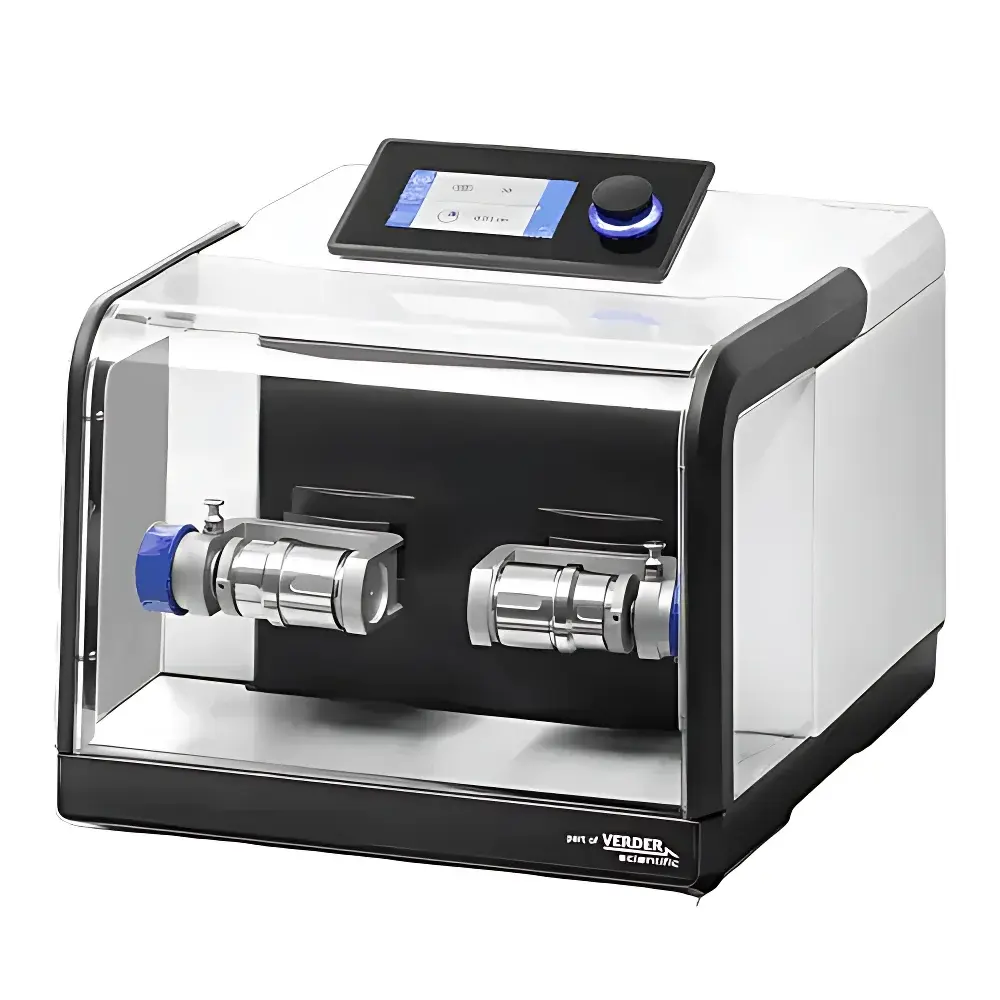
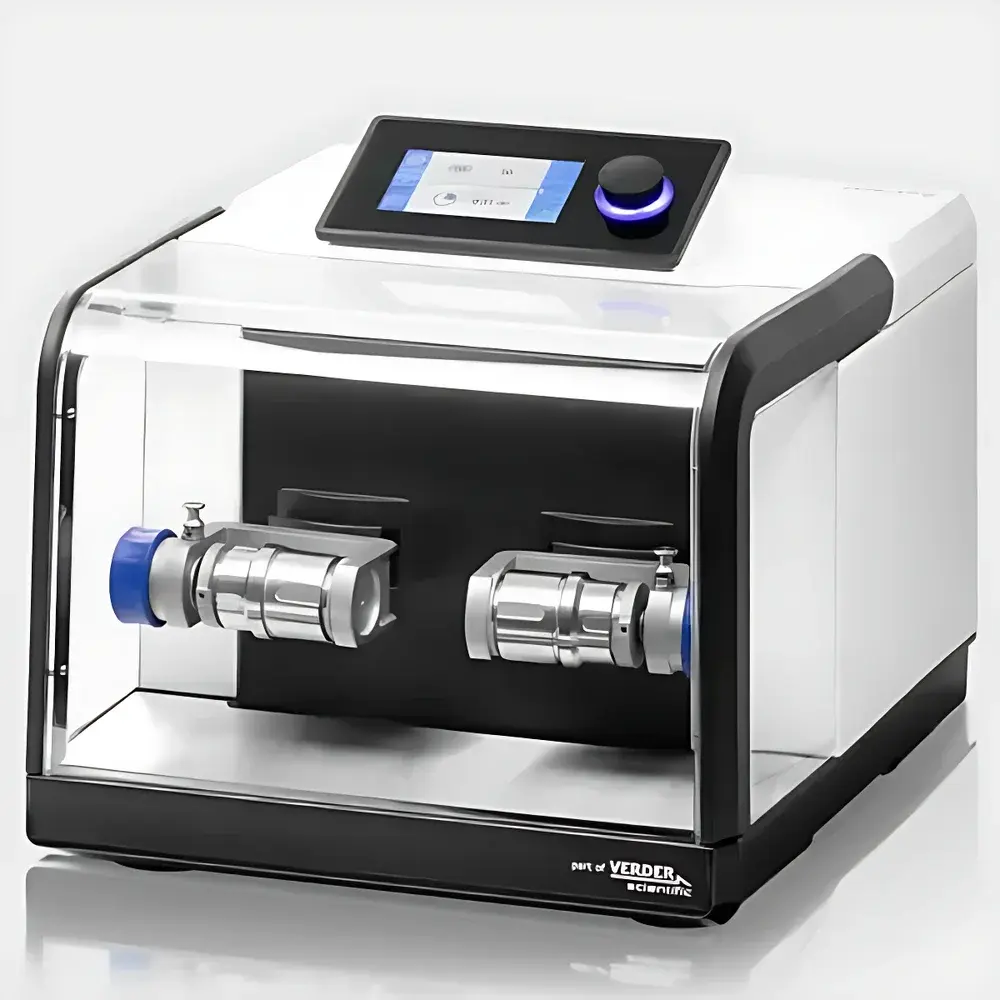
The RETSCH MM 400 Mixer Mill is a high-performance, benchtop laboratory mixer mill engineered for reproducible, high-energy comminution of small-volume samples. It operates on the principle of high-frequency oscillation (30 Hz), generating intense impact and shear forces between grinding balls and sample material inside sealed, vibration-resistant jars. This mechanism enables rapid size reduction, homogenization, and mechanical activation—critical for applications ranging from analytical sample preparation to mechanochemical synthesis. Unlike planetary ball mills or rotor-beater grinders, the MM 400 delivers consistent energy input without rotational complexity, making it especially suitable for sensitive biological matrices, temperature-sensitive compounds, and heterogeneous solid mixtures requiring minimal thermal load.
Key Features
- High-frequency oscillation at precisely controlled 30 Hz, ensuring uniform energy transfer across all jar positions;
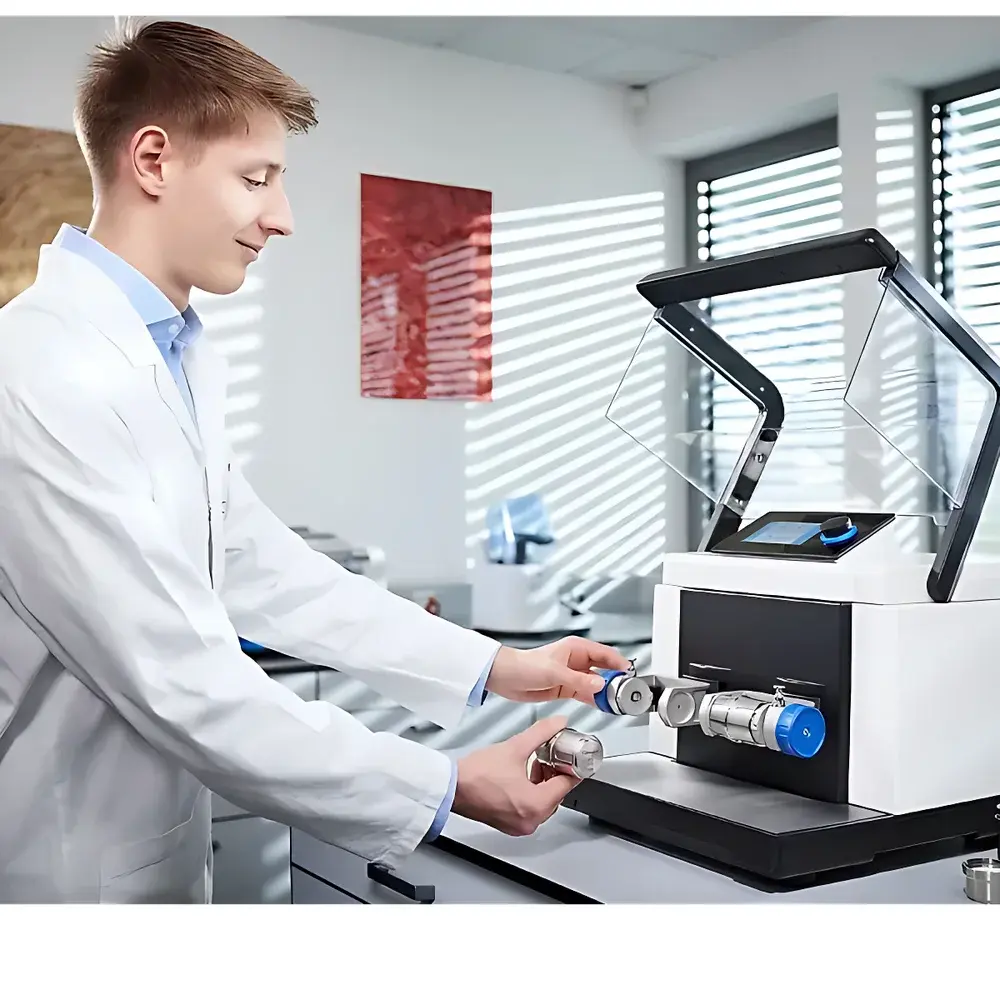
- Two independent grinding stations accommodating up to two 20 mL stainless steel, tungsten carbide, or zirconia jars simultaneously;
- Programmable processing time from 0.01 minutes to 99 hours in 0.01-minute increments, supporting both rapid screening and extended mechanochemical reactions;
- Integrated safety lock system with automatic shutdown upon jar removal or lid opening, compliant with EN 61000-6-2/6-4 electromagnetic compatibility standards;
- Optional cryogenic operation using liquid nitrogen-cooled jars for thermolabile samples (e.g., RNA extraction, polymer degradation studies);
- Modular jar material selection—including hardened steel, stainless steel, tungsten carbide, agate, and PTFE-lined variants—to prevent cross-contamination and chemical reactivity;
- Low-noise enclosure design meeting ISO 7779 acoustic emission requirements for routine lab integration.
Sample Compatibility & Compliance
The MM 400 accommodates a broad spectrum of sample types, including soft biological tissues (e.g., liver, muscle), plant matter, pharmaceutical tablets, polymers, soils, sludges, and brittle inorganic materials such as minerals and ceramics. Its ≤8 mm feed size limit and ability to achieve final particle sizes down to ~5 µm make it ideal for downstream analytical workflows requiring fine, homogeneous powders—such as X-ray diffraction (XRD), scanning electron microscopy (SEM) sample prep, or inductively coupled plasma mass spectrometry (ICP-MS) digestion. The instrument conforms to ISO 17025:2017 requirements for testing laboratories when operated under documented SOPs, and supports GLP-compliant data traceability when paired with optional RETSCH software modules. All jar materials are certified non-leaching per USP for pharmaceutical applications.
Software & Data Management
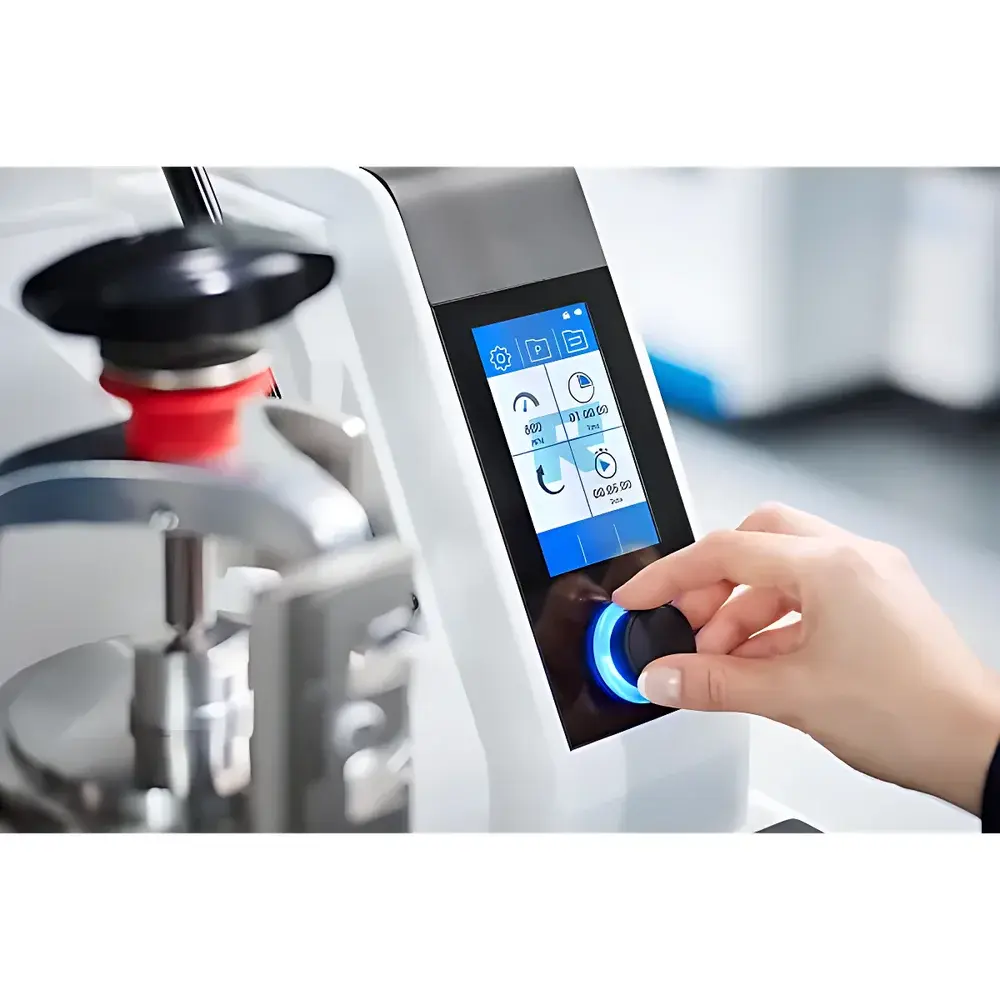
While the MM 400 operates via intuitive front-panel controls, it integrates seamlessly with RETSCH’s optional RETSCH Software Suite, enabling remote parameter configuration, real-time process monitoring, and electronic lab notebook (ELN) export. The software logs timestamped operational records—including frequency, duration, jar type, and cycle count—for audit-ready documentation aligned with FDA 21 CFR Part 11 requirements. Export formats include CSV and XML, facilitating integration into LIMS environments. No proprietary drivers or OS-specific dependencies are required; communication occurs via standard USB 2.0 or optional Ethernet interface.
Applications
- Life Sciences: Cell lysis for DNA/RNA/protein isolation from animal tissues, plants, and microbial pellets;
- Materials Science: Mechanical alloying, solid-state reaction initiation, and nanomaterial synthesis via mechanochemistry;
- Pharmaceutical QA/QC: Homogenization of active pharmaceutical ingredients (APIs) and excipients prior to dissolution testing or content uniformity analysis;
- Environmental Analysis: Preparation of soil, sediment, and sludge samples for heavy metal leaching tests (e.g., TCLP, EN 12457);
- Food & Agriculture: Grinding of cereals, feedstuffs, and botanicals for nutritional profiling and contaminant screening;
- Forensics & Waste Characterization: Pulverization of electronic waste, textiles, and composite debris for elemental fingerprinting.
FAQ
Can the MM 400 be used for wet grinding?
Yes—the instrument supports wet grinding using solvent-compatible jars (e.g., stainless steel or PTFE-lined) and appropriate grinding media. Solvent volume must remain below 70% of jar capacity to ensure effective impact dynamics.
Is cryogenic grinding supported out of the box?
Cryogenic operation requires optional liquid nitrogen cooling accessories (e.g., cryo-jars and insulated holders), which are available separately and validated for use with the MM 400 platform.
What maintenance is required for long-term reliability?
The MM 400 features a maintenance-free electromagnetic drive system. Routine checks include jar thread integrity, gasket condition, and periodic verification of oscillation amplitude using supplied calibration tools—no scheduled lubrication or belt replacement is necessary.
How does the MM 400 compare to planetary ball mills for small-batch processing?
The MM 400 offers superior reproducibility for sub-20 mL batches due to its fixed-axis oscillation geometry, eliminating centrifugal force variability inherent in planetary motion. It also achieves faster equilibration times and lower heat generation per unit energy input.
Does the device comply with EU Machinery Directive 2006/42/EC?
Yes—each MM 400 unit carries CE marking and fulfills essential health and safety requirements under Annex I of the Machinery Directive, including emergency stop functionality, vibration damping, and structural stability certification.



