
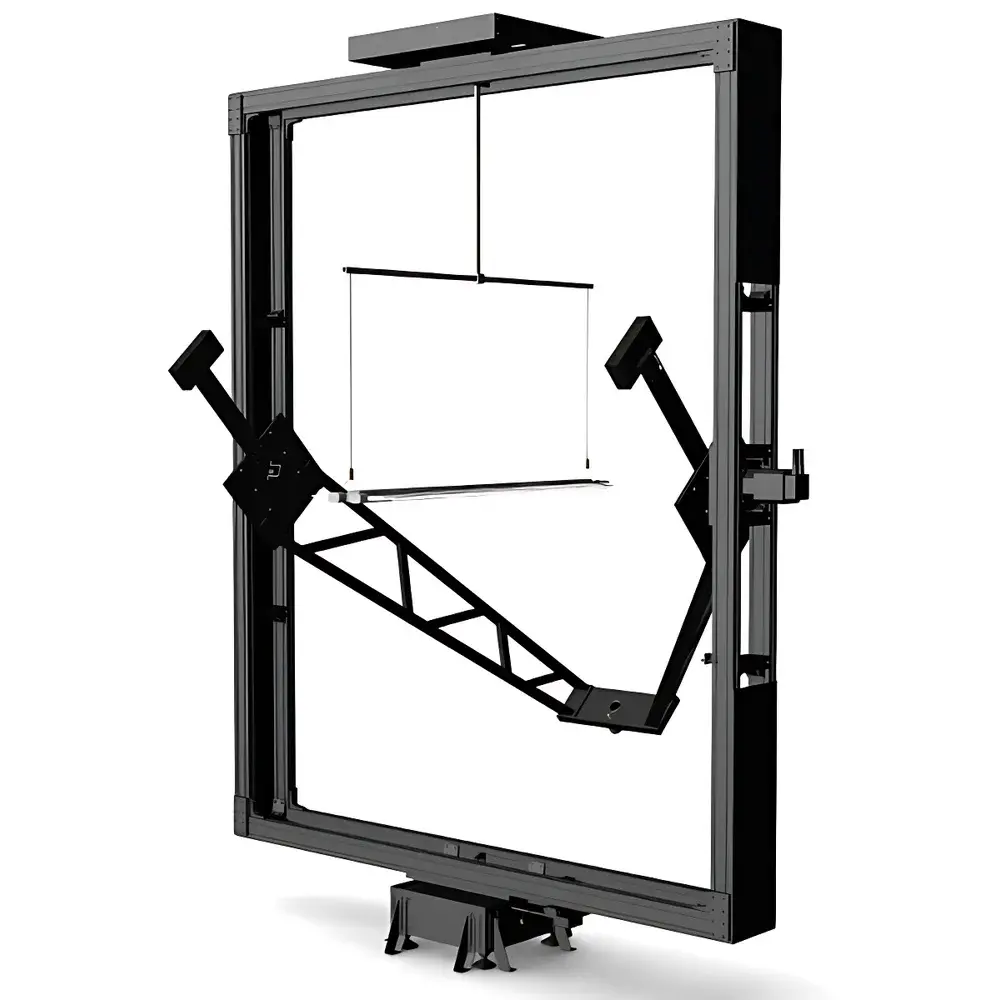
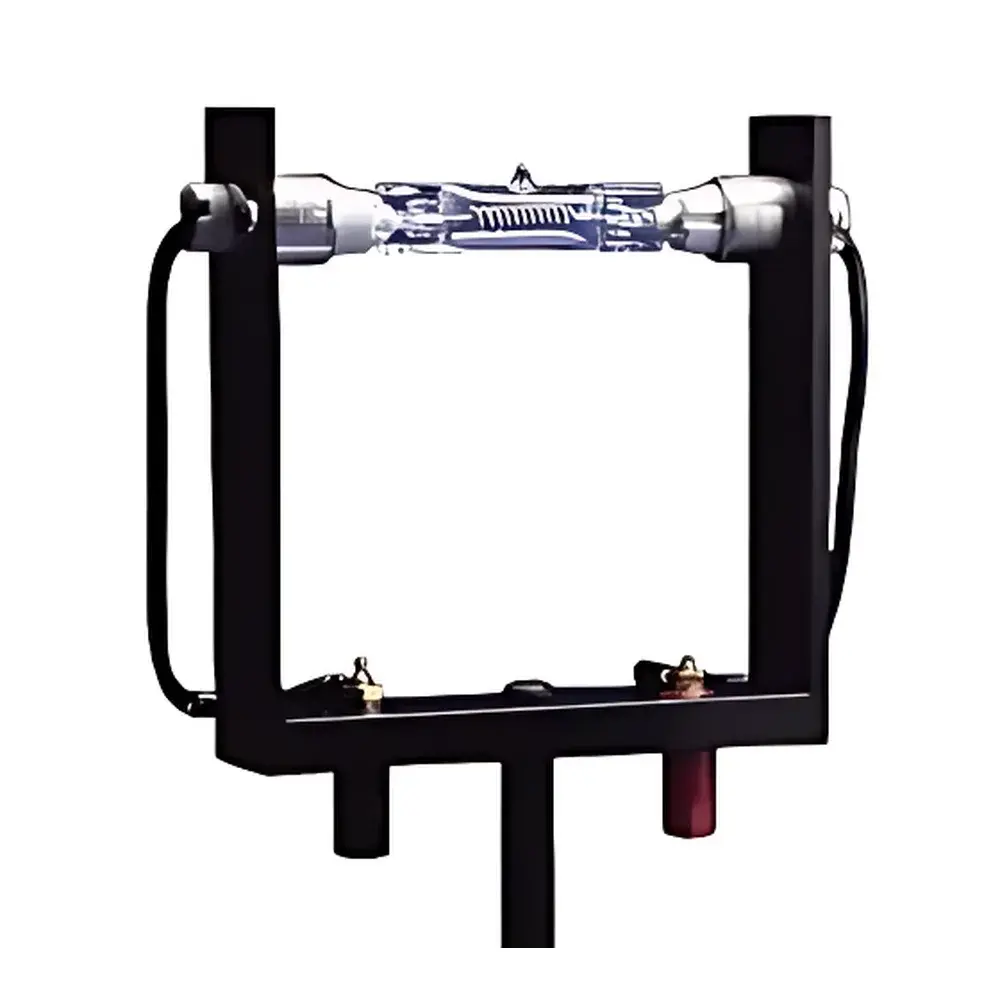
RIGO 801 C Distributed Photometer
| Brand | TechnoTeam |
|---|---|
| Origin | Germany |
| Model | 801 C |
| Photometric Type | C-Goniometer |
| Compliance | LM-79, CIE 87, EN 13032-1/4, Zhaga Book 18 |
| Measurement Modes | Near-field (Ray Data), Far-field (Luminous Intensity Distribution), Surface Luminance & Chromaticity Mapping |
| Output Formats | IESNA (.ies), EULUMDAT (.ldt), TM-14, Calculux, ASAP, Optis, LightTools, Zemax, TracePro, LucidShape, Photopia, SimuLux |
| Software | LumCAT (included), Ray Data Export & Format Conversion Tools |
| Typical Measurement Time | 15 min @ 2.5° resolution |
Overview
The RIGO 801 C Distributed Photometer is a precision-engineered C-type goniophotometer designed and manufactured in Germany by TechnoTeam. It implements a stationary-luminaire measurement architecture—fully compliant with IES LM-79-19—where the light source remains fixed in its operational orientation throughout testing. Unlike traditional rotating-arm or rotating-detector systems, the 801 C employs a high-resolution digital camera for real-time, sub-pixel positional alignment of the luminaire, eliminating reliance on mechanical laser alignment jigs. This design enables highly repeatable near-field photometric data acquisition (Ray Data), which serves as the foundational input for both far-field luminous intensity distribution (LID) calculation and advanced optical simulation workflows. The system supports full spectral radiometric integration via integrated spectroradiometric sensors, enabling simultaneous acquisition of photometric, colorimetric (CCT, CRI, chromaticity coordinates), and thermal parameters under stabilized electrical and thermal conditions.
Key Features
- Stationary-luminaire C-goniometer architecture meeting LM-79-19 structural and procedural requirements
- Camera-based optical alignment system for rapid, non-contact positioning—no manual laser calibration required
- Simultaneous acquisition of near-field Ray Data and far-field luminous intensity distribution (LID)
- Integrated spectroradiometer for spatially resolved chromaticity mapping (CCT, CRI, u’v’, Δu’v’), compliant with EN 13032-4 and LM-79 Annex B
- Illuminance integration method for total luminous flux determination, traceable to CIE 87 and EN 13032-1
- Surface luminance and color uniformity analysis, supporting Zhaga Book 18 compliance verification
- Compact, modular mechanical design with optimized footprint—ideal for constrained lab environments
- Flight-mode continuous scanning for accelerated data capture: ~15 minutes at 2.5° angular resolution; ~60 minutes at 0.5°
Sample Compatibility & Compliance
The 801 C accommodates LED modules, COBs, downlights, streetlights, and other directional or omnidirectional solid-state lighting (SSL) sources up to 300 mm in diameter and 5 kg in mass. Its fixed-mount configuration preserves thermal and mechanical boundary conditions representative of real-world installation—critical for accurate lumen maintenance and thermal derating analysis. All photometric outputs adhere to international standardization frameworks: LM-79-19 (electrical and photometric measurements of SSL products), CIE S 025/E:2015 (LED measurement methodology), EN 13032-1 (photometry), EN 13032-4 (colorimetry), and Zhaga Book 18 (luminaire interface specifications). Data integrity is maintained through hardware-synchronized trigger logic and timestamped metadata embedding, facilitating GLP-compliant audit trails.
Software & Data Management
The included LumCAT software provides end-to-end workflow management—from instrument control and real-time preview to automated report generation and format export. Ray Data is exported in native binary format with full metadata (geometry, sensor calibration, integration time, ambient temperature) and convertible to industry-standard optical simulation inputs (ASAP, LightTools, Zemax, TracePro, LucidShape, Optis, Photopia, SimuLux). Photometric reports comply with IESNA TM-14-12 and EULUMDAT v2.2 schema definitions. Export options include IES (.ies), LDT (.ldt), TM-14 (.xml), and Calculux-compatible formats. All spectral and photometric datasets support CSV and XML serialization for LIMS integration. Audit-ready logs record operator ID, session timestamp, firmware version, calibration certificate ID, and environmental monitoring values—enabling partial compliance with FDA 21 CFR Part 11 when deployed in regulated quality assurance environments.
Applications
- LM-79 certification testing for LED luminaires and modules in third-party test labs and OEM R&D centers
- Generation of Ray Data for optical design validation and tolerance sensitivity analysis in illumination engineering
- Verification of Zhaga-compliant beam shaping and surface brightness uniformity for smart lighting nodes
- Spatial chromaticity analysis for human-centric lighting (HCL) product development
- Lumen depreciation modeling using synchronized thermal and photometric aging sequences
- Comparative evaluation of driver-induced flicker, dimming linearity, and color shift under varying input conditions
- Pre-compliance screening prior to formal IEC/EN type testing for CE marking or DLC qualification
FAQ
Does the 801 C support automatic thermal stabilization monitoring during photometric measurement?
Yes—the system integrates PT100-class temperature sensors at critical thermal nodes (heat sink base, LED board, driver enclosure) and synchronizes readings with photometric acquisition at user-defined intervals.
Can Ray Data from the 801 C be imported directly into Zemax OpticStudio without format conversion?
Yes—native .ray files include full geometric, spectral, and radiometric metadata and are natively readable by Zemax OpticStudio 22.2+ via the “Import Ray Data” wizard.
Is the illuminance integration method traceable to national metrology institutes?
The integrated reference-grade illuminance sensor is calibrated annually against PTB-traceable standards, with calibration certificates provided per ISO/IEC 17025-accredited procedures.
What is the maximum angular resolution achievable in near-field mode?
The system achieves 0.1° spatial sampling density in near-field acquisition mode, limited only by detector pixel pitch and optical magnification configuration.
Does the 801 C support dynamic power supply synchronization for pulsed or PWM-driven LEDs?
Yes—external trigger input accepts TTL-sync signals from programmable DC sources (e.g., Keysight N6705B, Chroma 63200A) to align measurement windows with current waveform periods.






