
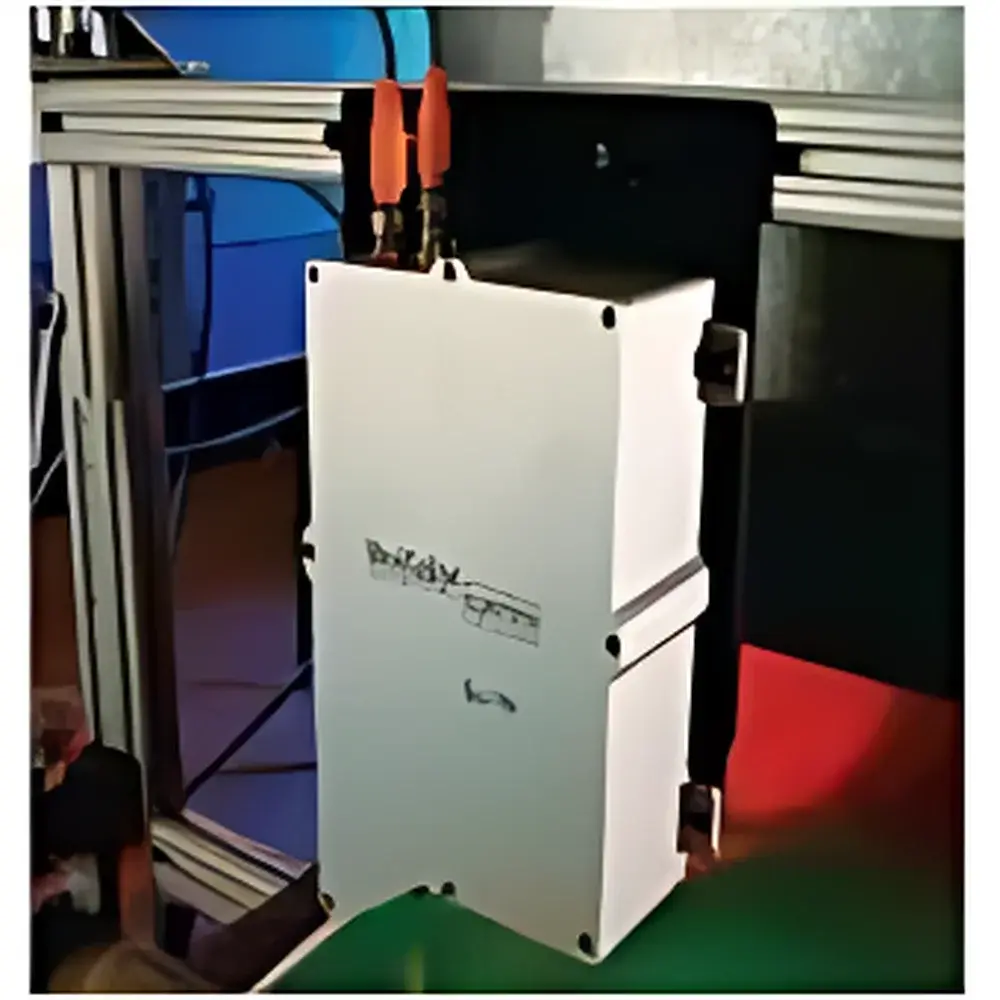
X-Rite VeriColor® Spectro Non-Contact Spectrophotometer
| Brand | X-Rite |
|---|---|
| Origin | USA |
| Model | VeriColor® Spectro |
| Type | Automatic |
| IP Rating | NEMA-4 / IP67 |
| Operating Temperature | 0–50°C (32–122°F) |
| Measurement Distance | 4 inches (102 mm) |
| Spectral Resolution | 31-channel, 10 nm bandwidth across visible spectrum (400–700 nm) |
| Output | Absolute CIE L*a*b* values |
| Interface | RS-232, RS-485, PLC-compatible discrete I/O |
| Compliance | Designed for GLP/GMP environments with audit-ready data logging capability |
Overview
The X-Rite VeriColor® Spectro Non-Contact Spectrophotometer is an industrial-grade, real-time color measurement system engineered for continuous in-line process monitoring in manufacturing environments. Based on dual-beam spectrophotometric principles, it captures absolute spectral reflectance data across 31 discrete channels—each spaced at 10 nm intervals from 400 nm to 700 nm—enabling high-fidelity CIE L*a*b* computation without physical contact or sample perturbation. Unlike contact-based instruments, the VeriColor® Spectro operates at a fixed 4-inch working distance, allowing safe integration upstream of moving production lines—including web, sheet, and molded part applications—while maintaining metrological stability across variable surface topographies (±0.25 inch depth variation). Its optical architecture is inherently insensitive to ambient illumination sources such as incandescent, fluorescent, or sodium-vapor lighting, eliminating the need for environmental light shielding or factory lighting modification.
Key Features
- Dual-beam optical design ensures long-term photometric stability and minimizes drift during extended operation.
- 31-channel spectral acquisition delivers laboratory-grade spectral resolution (10 nm bandwidth), supporting precise inter-instrument agreement and traceable color data.
- NEMA-4/IP67-rated enclosure provides robust protection against dust, liquid ingress, mechanical shock, and vibration—validated for deployment in harsh industrial settings without additional enclosures.
- Real-time L*a*b* output enables immediate pass/fail evaluation against user-defined tolerances (ΔE₀₀, ΔEab, or custom metrics) directly on the production floor.
- Zero-contact measurement eliminates surface damage risk, wear-related calibration drift, or contamination concerns—critical for coated, textured, or thermally sensitive substrates.
- Integrated temperature compensation maintains accuracy across operational range (0–50°C), permitting installation in proximity to ovens, chillers, or extrusion zones without thermal shielding.
Sample Compatibility & Compliance
The VeriColor® Spectro accommodates diverse material forms—including flexible webs, rigid panels, injection-molded parts, and powder-coated surfaces—without requiring stabilization rollers or conveyor synchronization. Its depth tolerance supports curvature and minor dimensional variance typical of thermoformed plastics or stamped metal components. From a regulatory standpoint, the system supports audit-ready data integrity: all measurements are timestamped, instrument-identified, and stored in tamper-evident log files compatible with FDA 21 CFR Part 11 requirements when deployed with compliant host software. It aligns with ISO 13655 (spectral measurement standards), ASTM E308 (conversion of spectral data to tristimulus values), and ISO/CIE 11664 series for colorimetric definitions—making it suitable for quality systems operating under ISO 9001, IATF 16949, or pharmaceutical GMP frameworks.
Software & Data Management
The VeriColor® Spectro interfaces natively with Windows-based configuration and monitoring software, enabling real-time visualization of color trends, statistical process control (SPC) charting, and deviation alerts. Data export supports CSV, XML, and OPC UA protocols for seamless integration into MES, SCADA, or PLC-controlled automation architectures. All measurement logs include metadata (instrument ID, timestamp, operator tag, reference standard ID, environmental temperature), facilitating root-cause analysis and trend reporting. Calibration history is retained with full traceability to NIST-traceable ceramic tile standards; monthly verification is recommended, with cleaning of the optical window constituting the only routine maintenance activity.
Applications
This spectrophotometer is routinely deployed in automotive interior trim manufacturing for real-time verification of paint, leather, and textile batches; in packaging film production to monitor pigment dispersion consistency across multi-layer coextrusions; in plastic compounding lines to detect masterbatch dosage errors before pelletization; and in printed electronics fabrication where conductive ink hue shifts indicate formulation instability. It also serves as a primary color verification node in pharmaceutical blister packaging lines—ensuring label and foil color compliance per USP analytical instrument qualification guidelines.
FAQ
What spectral range and resolution does the VeriColor® Spectro provide?
It measures reflectance across 400–700 nm in 31 fixed bands, each with 10 nm full-width-at-half-maximum (FWHM) resolution.
Can it operate under varying ambient lighting conditions?
Yes—the dual-beam architecture and proprietary ambient-light rejection algorithm ensure stable L*a*b* output under uncontrolled factory lighting, including fluorescent, LED, and high-intensity discharge sources.
Is the system compliant with FDA 21 CFR Part 11?
When paired with validated host software supporting electronic signatures, audit trails, and role-based access control, the VeriColor® Spectro meets foundational data integrity requirements for regulated industries.
What is the recommended calibration frequency?
A full calibration using X-Rite-certified ceramic standards is performed at shipment; users are advised to conduct verification checks monthly using the included verification tile.
Does it require air purge or cooling systems?
No—its sealed, convection-cooled design operates reliably from 0–50°C without external utilities or forced-air support.



