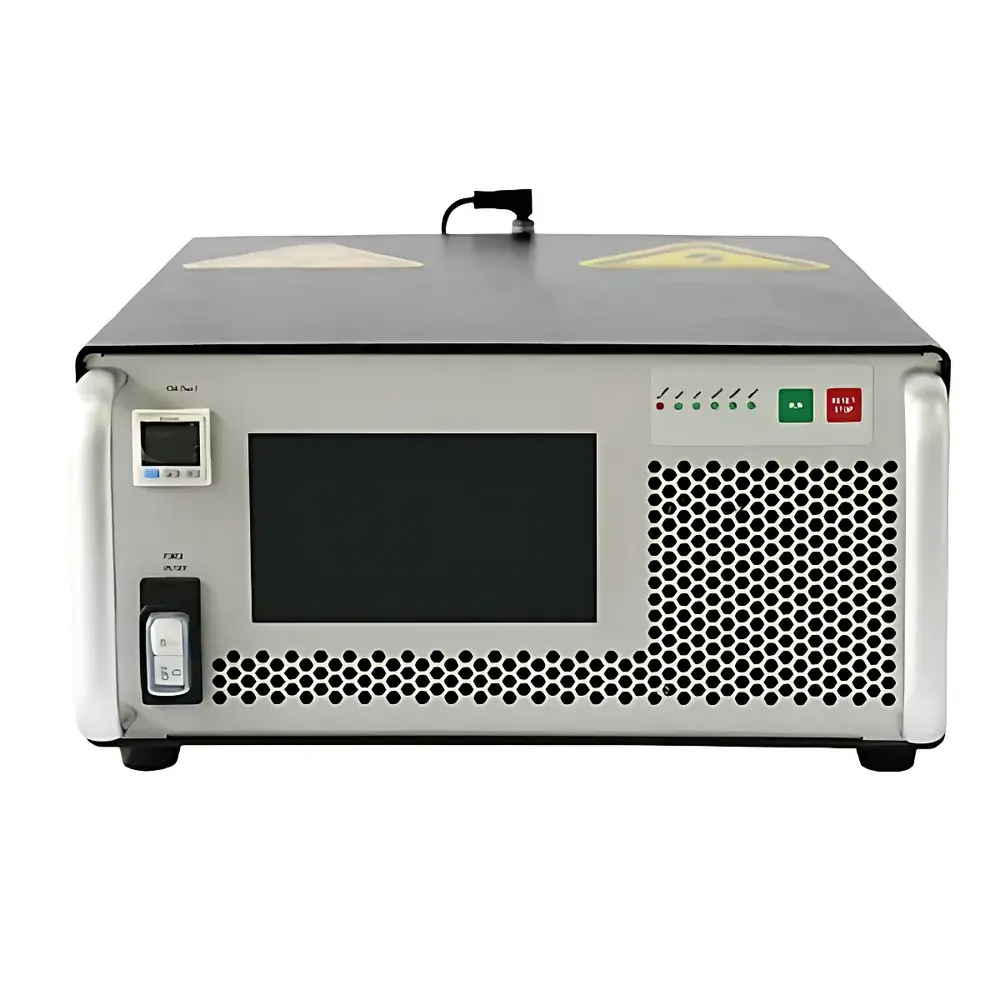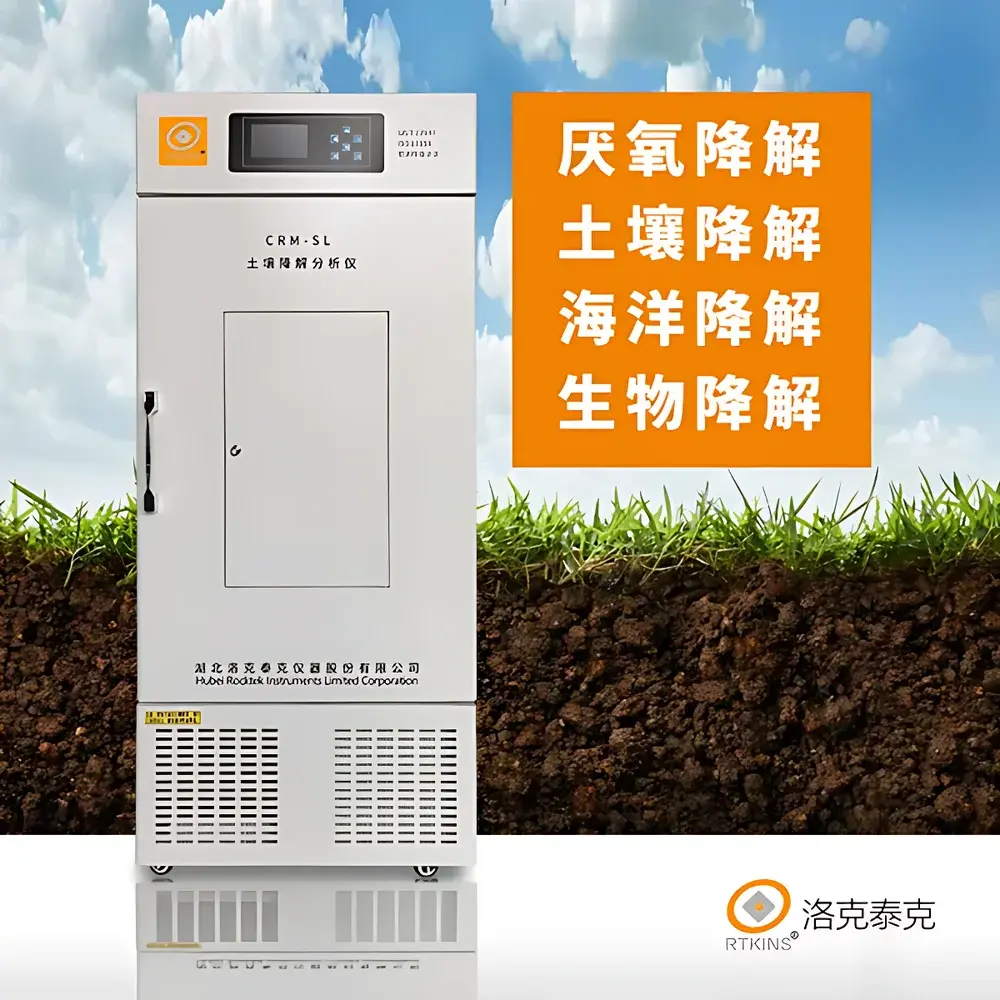
Rocktek RTK CRM-18 Closed-Respirometer System for Aerobic and Anaerobic Biodegradation Testing in Marine, Freshwater, and Soil Environments
| Brand | Rocktek |
|---|---|
| Origin | Hubei, China |
| Manufacturer Type | Authorized Distributor |
| Country of Origin | China |
| Model | RTK CRM-18 |
| Pricing | Available Upon Request |
| Gas Measurement Principle | Gravimetric Micro-Calorimetric (GMC) Technology |
| Channels | 18 parallel reactors |
| Reactor Volume | 500 mL |
| Reactor Material | Borosilicate Glass |
| Stirring Options | Magnetic or Mechanical |
| CO₂ Absorption | Integrated or External 3 mol/L NaOH/KOH with pH indicator |
| Measurement Accuracy | ±1.0 mL per channel |
| Temperature & Pressure Compensation | Yes (converted to STP: 273.15 K, 101.325 kPa) |
| N₂ Compensation Function | Yes |
| Data Logging | Embedded Web Server with Auto-Save & Resume on Power Recovery |
| Compliance Standards | ASTM D5988-18, ISO 14851-2019, ISO 23977-2-2020, ISO 17556-2019, ISO 14853-2016, ISO 15985-2014, GB/T 40611-2021, GB/T 19276.1-2003, OECD 311, OECD 301C/F |
Overview
The Rocktek RTK CRM-18 is a fully integrated, 18-channel closed-respirometer system engineered for standardized determination of aerobic and anaerobic biodegradation potential of plastics and organic materials under controlled environmental conditions. It operates on the gravimetric micro-calorimetric (GMC) gas measurement principle — a patented, high-reproducibility method that quantifies oxygen consumption (aerobic) or biogas production (anaerobic) by direct volumetric tracking of gas exchange in sealed reactors. Unlike conventional manometric or pressure-based systems, GMC delivers stable, drift-free measurements without calibration drift over extended test durations (up to 180 days), making it suitable for regulatory-grade testing aligned with ISO, ASTM, GB/T, and OECD guidelines. The system supports three primary biodegradation matrices: marine sediment–water interface (ISO 23977-2, GB/T 40611), freshwater aquatic media (ISO 14851, GB/T 19276.1), and soil or sludge environments (ISO 17556, ASTM D5988, ISO 14853). Its modular architecture enables seamless adaptation across aerobic respiration, methane-yield anaerobic digestion, and high-solids anaerobic biodegradation protocols.
Key Features
- 18 independent, parallel reaction channels — enabling statistically robust multi-condition screening (e.g., temperature gradients, inoculum sources, polymer variants) within a single run.
- High-precision GMC gas measurement with ±1.0 mL resolution per channel, compensated in real time for ambient temperature and pressure to report volumes normalized to STP (273.15 K, 101.325 kPa).
- Dual stirring configuration — selectable magnetic or mechanical agitation per reactor — ensures homogeneous suspension of particulate substrates (e.g., microplastics, composted fragments) without shear-induced degradation artifacts.
- Integrated CO₂ absorption module with dual-path option: internal absorbent vials (3 mol/L NaOH/KOH + phenolphthalein indicator) or external scrubber trains compatible with EPA Method TO-15 validation requirements.
- Embedded Linux-based web server — accessible via any modern browser across Windows, macOS, and Linux; supports role-based user accounts, TLS-secured remote access, and audit-trail-enabled session logging.
- Uninterruptible operation logic — all experimental metadata, gas volume timestamps, and rate derivatives are saved to non-volatile flash memory during power loss; system auto-resumes measurement upon restoration without data gap.
- Modular hardware design — reactor plates, gas manifolds, and absorption units are field-replaceable; firmware updates support future protocol expansion (e.g., ISO/IEC 17025-compliant calibration traceability modules).
Sample Compatibility & Compliance
The RTK CRM-18 accommodates solid, semi-solid, and liquid test specimens — including granulated bioplastics (PLA, PHA, PBAT), microfiber textiles, agricultural mulch films, and organic contaminants (surfactants, pharmaceuticals, pesticides). Each 500 mL borosilicate glass reactor maintains chemical inertness and optical clarity for visual monitoring. The system complies with internationally recognized biodegradation test standards requiring closed-system respirometry, including but not limited to: ISO 14851 (freshwater aerobic), ISO 23977-2 (marine aerobic), ISO 17556 (soil aerobic), ISO 14853 (freshwater anaerobic), ISO 15985 (high-solids anaerobic), ASTM D5988-18 (soil aerobic), and OECD 311 (sludge anaerobic). All software operations adhere to ALCOA+ principles (Attributable, Legible, Contemporaneous, Original, Accurate, Complete, Consistent, Enduring, Available) and support 21 CFR Part 11-compliant electronic signatures when deployed in GLP-certified laboratories.
Software & Data Management
The embedded web application provides real-time visualization of cumulative gas production (mL STP), first-derivative gas evolution rates (mL STP/day), and normalized biodegradation percentages relative to theoretical maximums (ThOD or ThCO₂). Raw data exports are available in CSV and Excel-compatible formats with timestamped metadata (reactor ID, temperature setpoint, stir speed, absorbent batch ID). Automated report generation includes summary statistics (lag phase, degradation rate, plateau attainment), curve-fitting using modified Gompertz or logistic models, and compliance-specific pass/fail flags per standard clause (e.g., ≥90% mineralization in 180 days per ISO 14851). Audit trails record every parameter change, user login/logout, and system reboot event — retained for ≥10 years and exportable for regulatory inspection.
Applications
- Regulatory submission testing for EN 13432-compliant compostability claims and TÜV Austria OK Biodegradable MARINE certification.
- Comparative assessment of polymer backbone susceptibility across saline, freshwater, and terrestrial microbiomes.
- Screening of pro-degradant additives, nanofillers, and surface modifications on biodegradation kinetics.
- Validation of anaerobic digestion efficiency for plastic-contaminated digestate streams in wastewater treatment plants.
- Research into microbial community succession during long-term incubation using coupled metagenomic sampling ports (optional add-on).
- Teaching laboratories for environmental microbiology and polymer science curricula requiring hands-on respirometric methodology.
FAQ
Does the RTK CRM-18 support both aerobic and anaerobic test modes within the same hardware platform?
Yes — switching between oxygen consumption (aerobic) and biogas production (anaerobic) modes requires only reconfiguration of the gas absorption chemistry (NaOH for CO₂ capture vs. acid-trapped CH₄ collection) and software protocol selection.
Is the system validated for use in accredited testing laboratories?
The RTK CRM-18 has been deployed in CNAS-accredited labs in China and EU-based ISO/IEC 17025 facilities; full validation documentation (IQ/OQ/PQ templates, uncertainty budgets per ISO/IEC 17025:2017 Clause 7.6.3) is provided upon request.
Can third-party sensors (e.g., dissolved O₂, pH, redox) be integrated?
Yes — the system features 8 analog input channels (0–5 V, 16-bit resolution) and Modbus RTU support for synchronized acquisition from external probes.
What maintenance is required for long-term operational stability?
Annual recalibration of pressure/temperature sensors and verification of GMC flow cell integrity are recommended; absorbent solutions must be replaced every 7–14 days depending on substrate reactivity.
Is technical support available outside mainland China?
Rocktek provides remote diagnostics, firmware updates, and English-language application engineering support via secure VPN; local service partners are established in Germany, South Korea, and Brazil.