Rocktek RTK Rapid Thermal Flash Sintering Furnace
| Brand | Rocktek |
|---|---|
| Origin | Hubei, China |
| Manufacturer Type | Authorized Distributor |
| Country of Origin | China |
| Model | RTK Rapid Thermal Flash Sintering System |
| Heating Element | Silicon Molybdenum (MoSi₂) Rods |
| Maximum Temperature | ≤1600 °C (1 h rating) |
| Operating Temperature Range | Up to 1550 °C |
| Temperature Uniformity Zone | 150 mm (within ±1 °C) |
| Heating Zone Length | 300 mm |
| Tube Dimensions | Alumina (99.7% Al₂O₃), Ø100 mm |
| Vacuum Performance | Ultimate Pressure ≤2×10⁻³ mbar, Pumping Speed 16.5 m³/h |
| Insulation | High-Purity Alumina Fiber Blanket |
| External Casing | Dual-Layer Water-Cooled Stainless Steel Shell (Surface Temp. <60 °C) |
| Viewing Port | Integrated Quartz Observation Window on Inlet Flange |
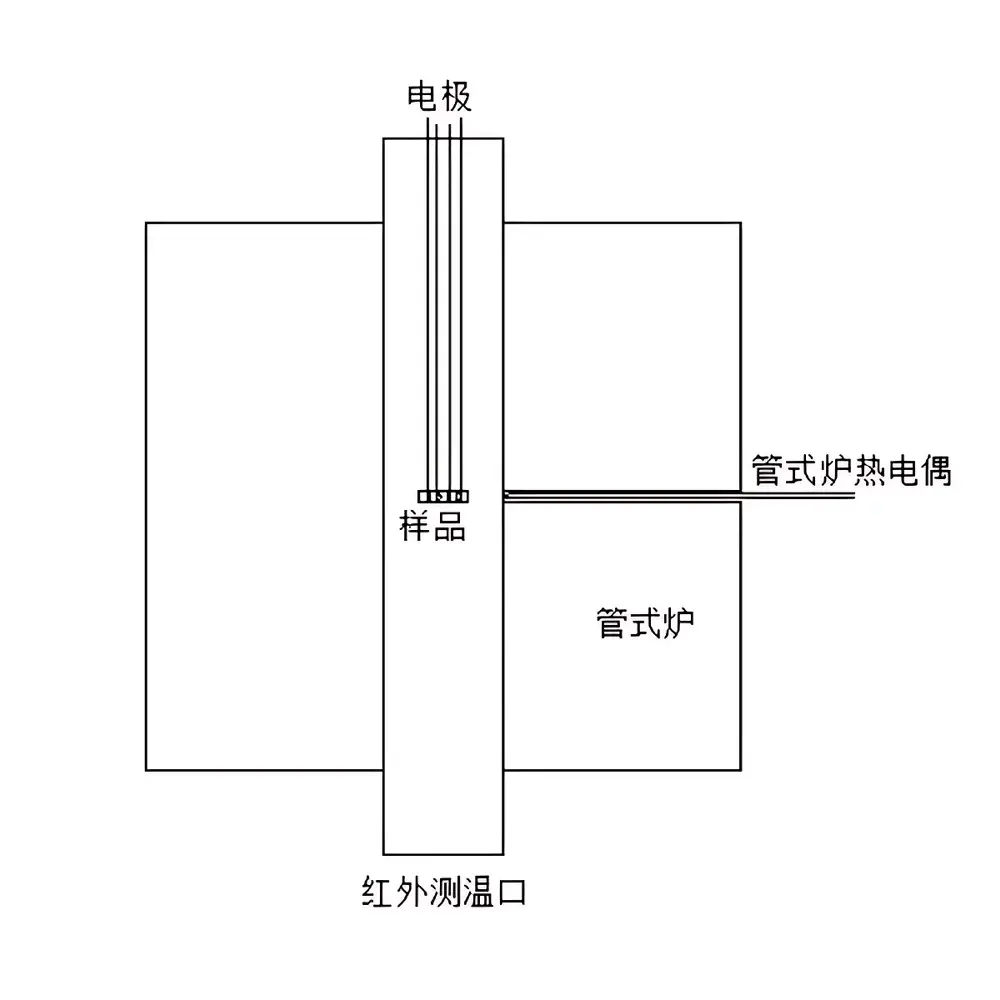
| Temperature Monitoring | Dual-Channel IR Pyrometer (Sample Surface) + Thermocouple (Furnace Ambient) |
| Power Supply Interface | Programmable DC Source (Voltage/Current Setpoint, Ramp Control) |
| Data Acquisition | 50 ms Sampling Interval, Real-Time V–t / I–t Plotting, Excel Export (CSV-compatible) |
| Control Architecture | PID + Programmable Ramp-Soak Profiles |
| Software Compliance | Audit Trail Ready, Timestamped Event Logging, Configurable Communication Protocols (RS485/Modbus TCP) |
Overview
The Rocktek RTK Rapid Thermal Flash Sintering Furnace is an integrated high-temperature materials processing system engineered for controlled, ultra-fast densification of advanced ceramics, metal powders, and functional composites. Unlike conventional sintering furnaces relying solely on conductive/convective heating, the RTK system combines a high-vacuum or inert-gas compatible tube furnace with synchronized direct-current (DC) joule heating applied across the sample itself—enabling flash sintering phenomena under precisely regulated thermal and electrical boundary conditions. This hybrid architecture allows researchers and process engineers to investigate non-equilibrium sintering kinetics, grain growth suppression, and metastable phase stabilization at ramp rates exceeding 1000 °C/s. The system operates within a fully sealed alumina tube environment capable of sustaining pressures from high vacuum (≤2×10⁻³ mbar) to positive-pressure inert atmospheres (Ar, N₂), making it suitable for both oxidation-sensitive and reactive material systems.
Key Features
- MoSi₂ heating elements rated for continuous operation up to 1550 °C and peak exposure to 1600 °C for one hour, ensuring long-term thermal stability and resistance to thermal shock.
- Dual-layer water-cooled stainless steel enclosure with high-purity alumina fiber insulation—maintaining external surface temperature below 60 °C even during extended high-temperature operation.
- Optimized thermal gradient design: 300 mm heating zone with a certified 150 mm isothermal region (±1 °C), verified per ASTM E220 calibration protocol using NIST-traceable thermocouples.
- Integrated quartz observation window on the inlet flange enables real-time optical monitoring of sample deformation, cracking, or phase transition events via external high-speed camera or digital microscope integration.
- Programmable DC power supply interface supports voltage and current setpoints, slew rate limiting, and emergency current cutoff—critical for reproducible flash onset detection and energy-controlled densification.
- Embedded dual-sensor temperature acquisition: non-contact infrared pyrometry (0.8–1.1 µm spectral range) for direct sample surface measurement, and calibrated Type S thermocouple for ambient furnace temperature reference.
Sample Compatibility & Compliance
The RTK system accommodates cylindrical or disc-shaped specimens up to Ø90 mm × 30 mm in dimension, compatible with standard graphite, tungsten, or molybdenum susceptors for indirect heating configurations. It meets mechanical and electrical safety requirements per IEC 61000-6-2 (immunity) and IEC 61000-6-4 (emission), and conforms to vacuum equipment standards ISO 2789 and EN 13445-3 for pressure vessel integrity. All control software logs include time-stamped operator actions, parameter changes, and alarm states—supporting GLP/GMP-aligned documentation practices. While not pre-certified for FDA 21 CFR Part 11, the audit trail architecture (user authentication, electronic signature placeholder, immutable log export) facilitates internal validation for regulated R&D environments.
Software & Data Management
The proprietary RTK Control Suite runs on Windows-based industrial PCs and provides full local control without cloud dependency. Core functionalities include: programmable DC source configuration (voltage, current, ramp rate), manual start/stop triggers with hardware interlock confirmation, synchronized dual-channel temperature plotting (sample vs. furnace), real-time V–t and I–t curve visualization, and timestamped CSV export at user-defined intervals down to 50 ms resolution. All data files are structured with embedded metadata (experiment ID, operator name, date/time, version stamp) and support post-processing in MATLAB, Python (pandas), or OriginLab. Communication protocols include Modbus TCP and RS485, enabling integration into SCADA or MES platforms for centralized process monitoring.
Applications
- Flash sintering studies of ZrO₂, YSZ, BaTiO₃, and Li-ion battery cathode precursors under controlled pO₂ and electric field gradients.
- Thermal shock resistance evaluation of ceramic matrix composites (CMCs) via rapid thermal cycling between 25 °C and 1400 °C.
- In situ observation of solid-state reaction fronts during reactive sintering of TiC–Ni cermets or MAX-phase precursors.
- Development of low-energy densification routes for additive manufacturing feedstocks (e.g., binder-jetted or SLS-derived green bodies).
- Fundamental investigation of electromigration effects and defect dynamics in polycrystalline oxides under simultaneous thermal–electrical stress.
FAQ
What vacuum level is required for oxide-ceramic flash sintering experiments?
A base pressure ≤5×10⁻³ mbar is recommended prior to backfilling with forming gas (e.g., 5% H₂/95% Ar) or pure Ar; the included two-stage rotary vane pump achieves ≤2×10⁻³ mbar with optional cold trap.
Can the system operate under positive pressure?
Yes—the alumina tube and flange assembly are rated for up to 0.5 bar(g) inert gas overpressure; optional pressure relief valve and burst disk kits are available for enhanced safety compliance.
Is the infrared pyrometer calibrated for emissivity variation across different sample materials?
The system includes emissivity compensation tables for common ceramics (Al₂O₃, SiC, ZrO₂) and metals (Ni, Cu, W); users may input custom values or perform two-point blackbody calibration using the provided reference sources.
Does the software support automated experiment sequencing?
Batch mode scripting is supported via Lua-based macro engine—enabling unattended execution of multi-step profiles including vacuum pump-down, gas purge cycles, temperature ramps, DC pulse application, and cooldown sequences.
What maintenance intervals are recommended for the MoSi₂ heating elements?
Under typical usage (≤1500 °C, 15% from baseline.