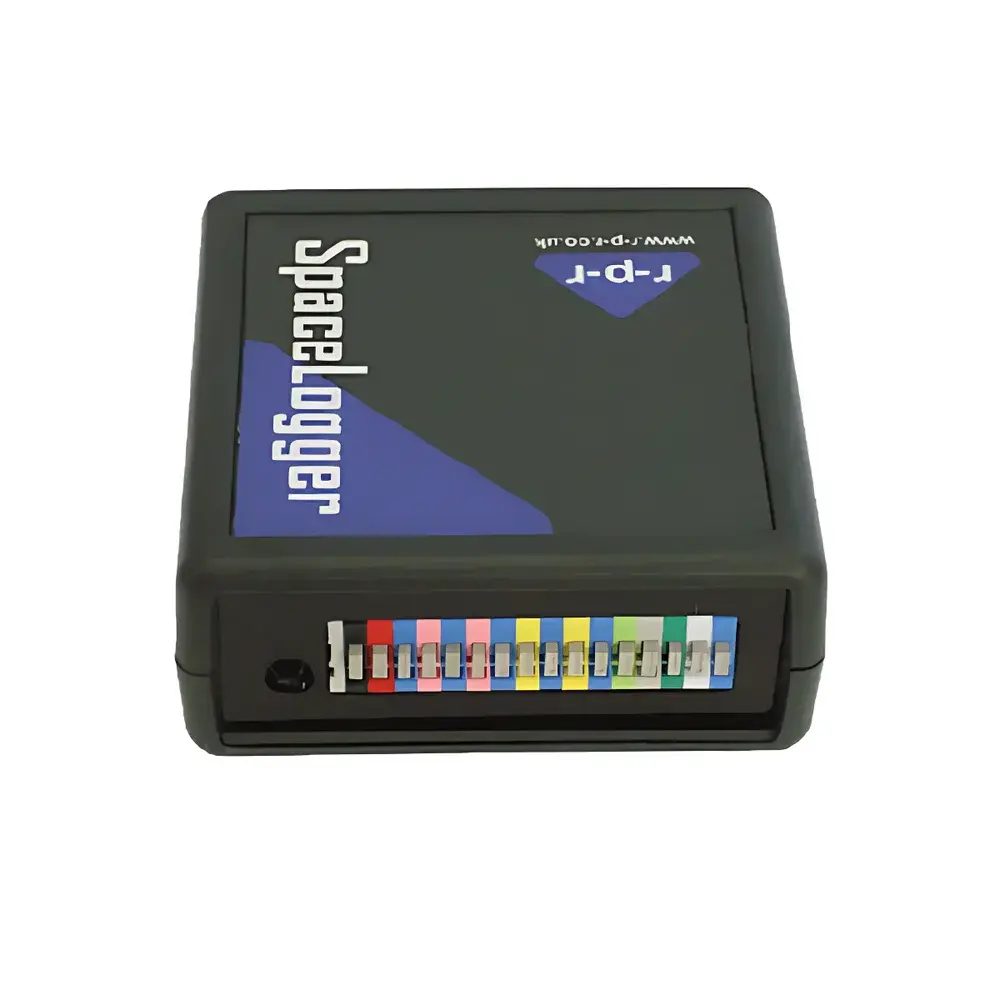
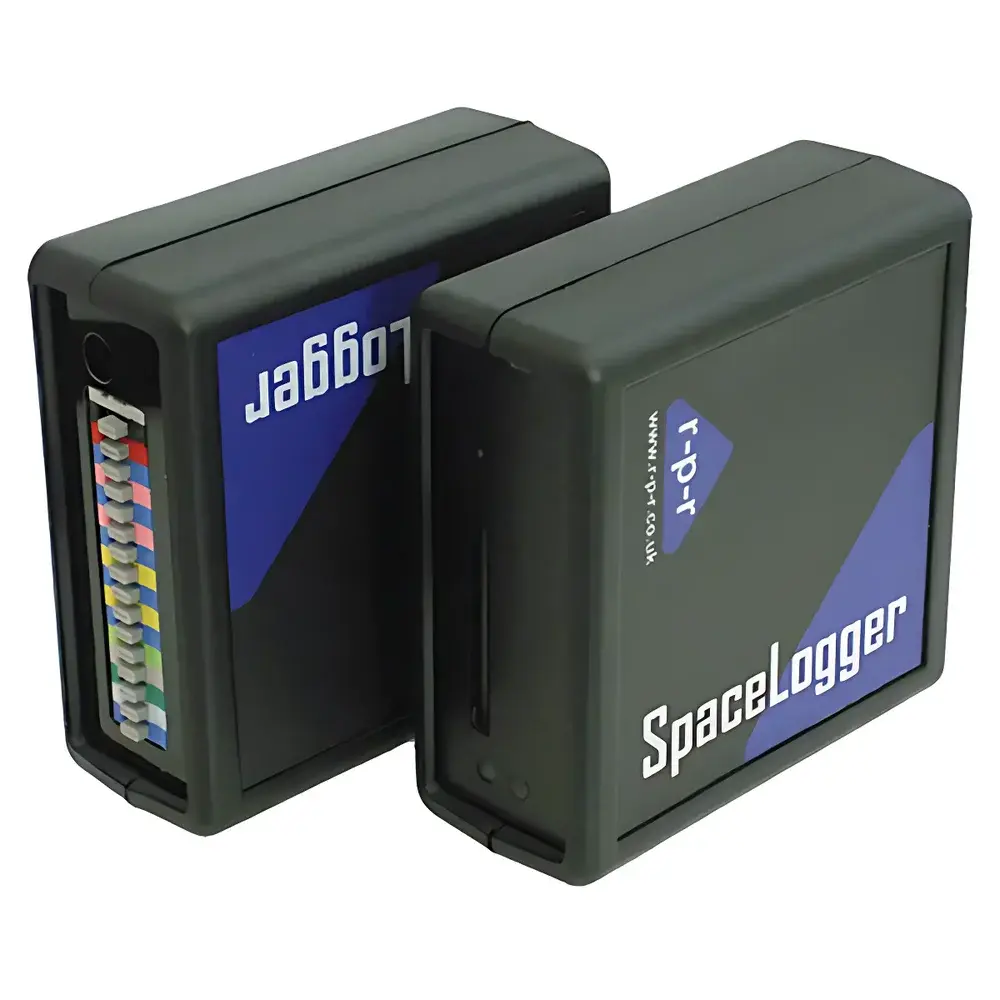
RPR SpaceLogger Data Acquisition Unit
| Brand | RPR |
|---|---|
| Origin | United Kingdom |
| Manufacturer Type | Authorized Distributor |
| Origin Category | Imported |
| Model | SpaceLogger |
| Price | USD 720 (FOB UK) |
Overview
The RPR SpaceLogger is a rugged, low-power, field-deployable data acquisition unit engineered for continuous, unattended logging of serial-output environmental sensor data in remote or infrastructure-constrained locations. Based on a deterministic embedded architecture with real-time clock synchronization and non-volatile storage management, the SpaceLogger operates autonomously without external power or network connectivity. It implements protocol-agnostic serial parsing—supporting ASCII-based message framing (with user-configurable start/end delimiters) and MODBUS RTU slave mode—to interface directly with industry-standard meteorological sensors. Its core function is time-synchronized digitization and timestamped archival of analog-derived or digital sensor outputs, ensuring traceability, temporal integrity, and long-term data fidelity under variable ambient conditions (−20 °C to +60 °C operating range). Designed for compliance with field-deployment requirements in regulated and research-grade applications, the device adheres to IEC 61326-1 (EMC for measurement equipment) and meets IP65 ingress protection when installed in appropriate enclosures.
Key Features
- Ultra-low power consumption: <15 mA average current draw in active logging mode; supports solar-charged battery systems for multi-year deployments
- High-capacity local storage: SDHC card slot (up to 32 GB supported; shipped with 2 GB pre-formatted card) with cyclic overwrite protection and automatic daily file rotation
- Time-stamped CSV logging: Each record includes UTC-aligned timestamp (year/month/day/hour/minute/second), sensor ID, and raw/processed values in comma-separated format
- Configurable serial interface: RS-232/RS-485 selectable via jumper; baud rates from 1200 to 115200 bps; parity, stop bits, and framing fully programmable via terminal command set
- Built-in clock accuracy: ±2 ppm drift per month (temperature-compensated crystal oscillator); supports NTP synchronization via optional Ethernet gateway add-on
- Robust mechanical design: Aluminum alloy housing (120 × 90 × 45 mm), conformal-coated PCB, and industrial-grade connectors rated for >50,000 mating cycles
Sample Compatibility & Compliance
The SpaceLogger natively supports all Gill Instruments sensors utilizing ASCII or MODBUS RTU output protocols—including WindSonic, WindObserver, WindMaster, MetConnect, and MaxiMet GMX series—as well as third-party sensors from LCJ Capteurs and Calypso that comply with standard serial framing conventions (STX/ETX, CR/LF, or custom delimiters). It validates incoming frames using checksum verification (LRC for MODBUS, optional CRC-16 for ASCII) and discards malformed packets to preserve dataset integrity. The device conforms to ISO/IEC 17025–aligned data handling practices: all logged files include embedded metadata headers (sensor model, firmware version, configuration hash, and UTC boot timestamp), enabling full auditability. While not certified for SIL or ATEX environments, its electrical isolation (2.5 kV RMS channel-to-ground) and transient voltage suppression meet EN 61000-4-5 Level 3 surge immunity requirements.
Software & Data Management
Data export is performed via removable SDHC card, with one CSV file generated per calendar day (e.g., “20240521.csv”). Files are structured for direct ingestion into MATLAB, Python (pandas), or commercial analytics platforms—no proprietary software required. An Excel template (WindLog.xls) is provided for rapid column mapping, unit conversion, and basic statistical summarization (mean, min/max, standard deviation per channel). Configuration is managed through a lightweight terminal utility (SpaceLogger Config Tool v3.2, Windows/macOS/Linux compatible) supporting batch parameter upload, firmware updates, and diagnostic log retrieval. All configuration changes are logged with timestamps and user identifiers, satisfying GLP/GMP documentation requirements for change control. Raw data files retain immutable creation timestamps; modification timestamps are disabled at the firmware level to prevent accidental tampering.
Applications
- Renewable energy: Turbine site assessment, wake effect monitoring, and SCADA-independent backup logging for wind farms
- Civil infrastructure: Structural health monitoring of bridges, cranes, and tunnels—correlating wind load, temperature gradient, and vibration profiles
- Aviation meteorology: On-airfield microclimate logging for NOTAM support and runway condition reporting
- Marine & offshore: Moored buoy telemetry, coastal erosion studies, and offshore platform environmental compliance reporting
- Academic research: Boundary-layer turbulence characterization, urban heat island analysis, and agricultural evapotranspiration modeling
- HVAC optimization: Building envelope performance validation and demand-response readiness assessment across distributed sites
- Occupational health & safety: Real-time exposure logging for OSHA-compliant workplace air quality and wind hazard alerts
FAQ
Does the SpaceLogger support wireless telemetry or cellular upload?
No—the SpaceLogger is intentionally designed as an offline, edge-logging device. Remote data retrieval requires physical SD card extraction or optional Ethernet/WiFi gateway modules (sold separately and configured post-deployment).
Can I customize the CSV column order or add computed fields?
Yes—configuration files allow remapping of input channels to output columns, defining scaling factors, and enabling on-device arithmetic (e.g., wind vector magnitude, dew point calculation) prior to logging.
Is firmware update capability available in the field?
Yes—firmware updates are performed via SD card using signed binary images; the bootloader verifies cryptographic signatures before installation to ensure integrity and authenticity.
What is the maximum sustainable sampling interval for 32 GB storage?
At 1 Hz sampling across 8 channels with default timestamping, a 32 GB card supports ~18 months of continuous logging before manual retrieval is required.
Does it comply with FDA 21 CFR Part 11 for electronic records?
While the SpaceLogger itself does not implement electronic signatures or audit trail encryption, its immutable timestamping, configuration logging, and file-integrity controls align with foundational Part 11 principles; full compliance requires integration with validated LIMS or ELN systems.