RPR WS-15A Weather Display Unit
| Brand | RPR |
|---|---|
| Origin | United Kingdom |
| Model | WS-15A |
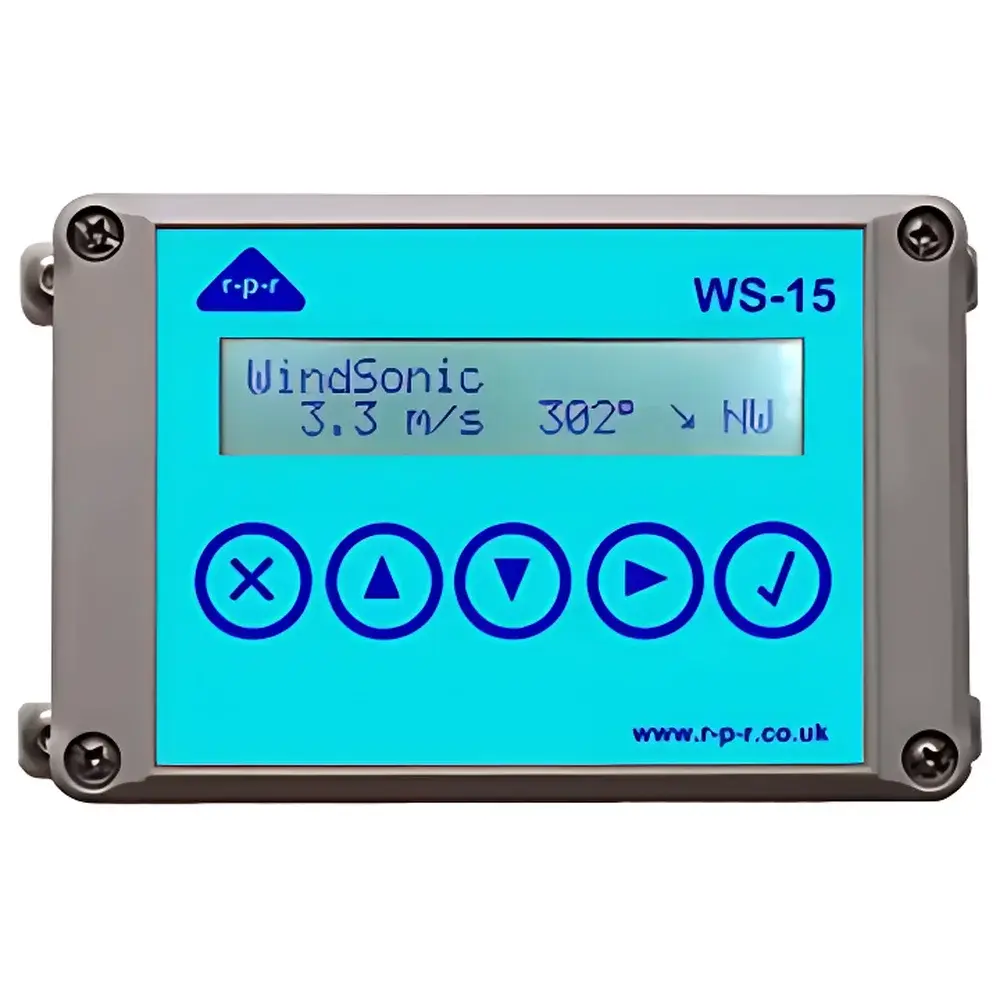
| Display Type | 2-line LCD with backlight |
| Dimensions (H×W×D) | 140 mm × 100 mm × 65 mm |
| Display Area | 120 mm × 80 mm |
| Enclosure Material | Grey polycarbonate |
| IP Rating | IP65 |
| Operating Temperature | −10 °C to +70 °C |
| Power Supply | 9–30 VDC |
| Current Consumption | 20–35 mA @ 12 VDC (backlight on) |
| Power Protection | Reverse polarity protection, internal fuse |
| Input Interfaces | RS232 / RS422 / RS485 (optically isolated) |
| Output Interface | RS232 serial output |
| Relay Output | SPDT, 24 VDC / 0.5 A max, contact resistance ≤ 0.15 Ω |
| Sensor Compatibility | Gill WindSonic ultrasonic anemometer, MetPak professional weather station, MaxiMet compact weather station |
| Wind Speed Units | m/s, knots, mph, km/h, fpm |
| Wind Direction Display | 3-digit numeric (0–359°) + directional arrow |
| Alarm Functionality | Configurable high/low wind speed thresholds with adjustable “Hold-off” and “Hold-on” delay timers for false alarm suppression |
| User Interface | 5-button membrane keypad with menu-driven navigation |
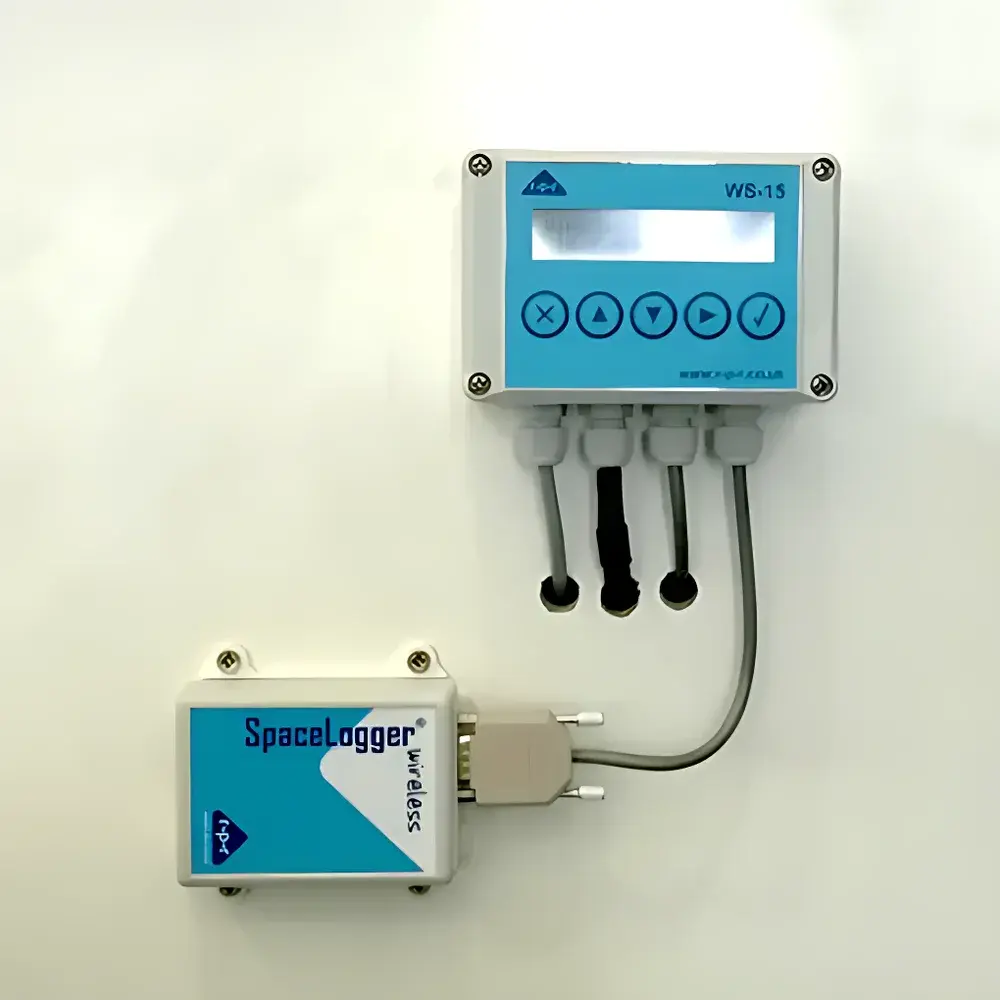
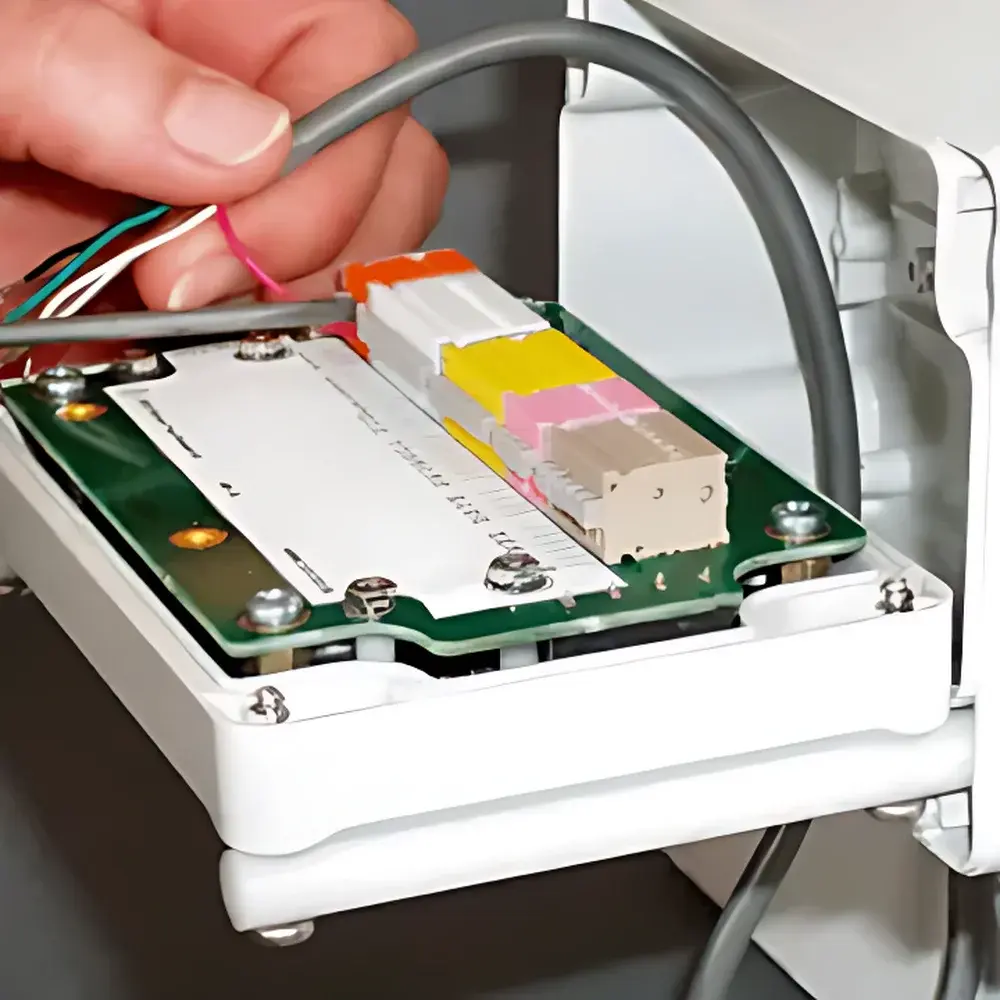
| Mounting | Surface-mountable with four waterproof cable glands |
| Weight | 0.35 kg |
| EMC Compliance | EN 61326:1997 (immunity), EN 60945:2002 (emissions) |
Overview
The RPR WS-15A Weather Display Unit is a dedicated, field-deployable interface designed for real-time visualization and local monitoring of meteorological parameters—primarily wind speed and direction—from compatible ultrasonic and integrated weather sensors. Engineered for operational robustness in outdoor industrial and environmental settings, the WS-15A functions as a standalone display terminal rather than a data logger or sensor itself. It receives serial digital output (RS232, RS422, or RS485) from Gill WindSonic anemometers, MetPak, or MaxiMet weather stations and renders calibrated wind metrics with high legibility and functional redundancy. Its measurement fidelity is entirely dependent on the upstream sensor’s calibration and protocol compliance—not internal transduction—making it a deterministic, low-latency display layer within a broader environmental monitoring architecture. The unit operates without internal signal processing or statistical averaging; all displayed values reflect raw or manufacturer-processed sensor outputs transmitted via standard ASCII or binary serial frames.
Key Features
- Two-line alphanumeric LCD with adjustable contrast and brightness-controlled backlight for daylight and low-light readability
- Optically isolated serial inputs (RS232/RS422/RS485) to eliminate ground-loop interference and enhance EMI resilience in electrically noisy environments
- Configurable high- and low-wind-speed alarms with programmable “Hold-off” (delay before alarm activation) and “Hold-on” (minimum duration for sustained alarm state) timers to suppress transient spikes and false triggers
- Five-button membrane keypad enabling intuitive, menu-guided configuration of sensor alignment offset, wind units, display contrast, backlight intensity, and communication settings
- IP65-rated polycarbonate enclosure ensuring dust-tightness and resistance to low-pressure water jets—suitable for permanent outdoor mounting on cranes, building façades, tunnel portals, or maritime infrastructure
- SPDT relay output rated at 24 VDC / 0.5 A for integration into external safety interlocks, HVAC shutdown circuits, or visual/audible warning systems
- Daisy-chain capability via RS232 output enables multi-display deployments from a single sensor source without repeaters or protocol converters
Sample Compatibility & Compliance
The WS-15A is validated for use with Gill Instruments’ WindSonic series (RS232/RS422/RS485 variants), MetPak Pro, and MaxiMet compact weather stations. It interprets standard NMEA-0183 or proprietary Gill ASCII frame formats, requiring no firmware customization. All configurations are retained in non-volatile memory during power cycling. Electromagnetic compatibility adheres to EN 61326:1997 (industrial immunity) and EN 60945:2002 (marine emissions), supporting deployment in regulated sectors including aviation ground support, port operations, and construction site health & safety monitoring. While the unit itself does not perform data acquisition or storage, its deterministic display behavior and hardware-level isolation align with GLP-aligned observational workflows where traceability of real-time operator-facing metrics is required.
Software & Data Management
The WS-15A operates autonomously without host software or driver installation. Configuration is performed exclusively via the front-panel keypad; no PC connection is necessary for routine operation. When connected via RS232 to a data acquisition system or SCADA HMI, the unit relays unmodified sensor data frames—including status codes, error flags, and timestamped readings—enabling synchronized logging downstream. It does not generate timestamps internally nor support Modbus or SDI-12 protocols. For audit-trail requirements under ISO/IEC 17025 or FDA 21 CFR Part 11, the device serves only as a human-readable verification layer; full compliance must be implemented at the data logger or supervisory control level.
Applications
- Construction site wind safety monitoring for crane operation limits and personnel evacuation protocols
- Aviation ground handling—wind shear alerts near aprons and taxiways per ICAO Annex 3 guidance
- Tunnel ventilation control systems requiring localized wind vector feedback for fan modulation
- Maritime port infrastructure monitoring for vessel mooring safety and cargo handling restrictions
- HVAC demand-response systems integrating real-time outdoor wind data for economizer control logic
- Environmental compliance reporting in industrial zones where ambient wind patterns influence dispersion modeling
- Mobile or roadside meteorological nodes deployed for temporary air quality or noise impact studies
FAQ
Does the WS-15A perform wind speed averaging or statistical calculations?
No. It displays instantaneous or sensor-reported averaged values as received over serial link; no onboard averaging, filtering, or derivation is performed.
Can the WS-15A log data internally?
No. It lacks non-volatile memory for historical storage. Data logging requires an external DAQ system connected via RS232.
Is firmware upgrade supported?
No. The unit ships with fixed firmware and does not support field updates or parameter reprogramming beyond user-configurable display and alarm settings.
What is the maximum cable length supported for RS485 daisy-chaining?
Up to 1,200 meters at 9.6 kbps, consistent with TIA/EIA-485-A specifications—subject to proper termination and twisted-pair cabling.
Does the unit meet SIL or functional safety standards?
No. It is not certified to IEC 61508 or IEC 62061. Relay outputs may be used in safety-related circuits only when integrated into a certified safety instrumented system (SIS) with appropriate validation.