
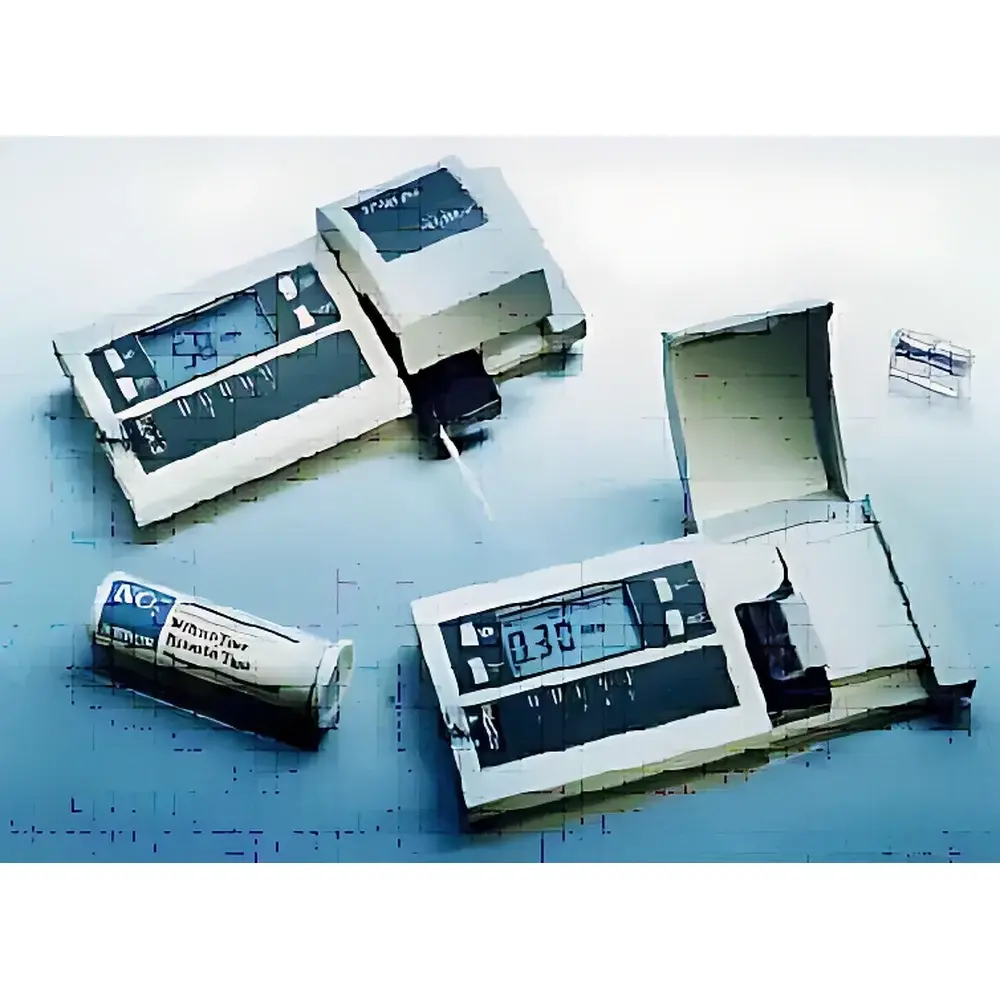
RQflex Reflectometer Series (Merck)
| Origin | Germany |
|---|---|
| Manufacturer Type | Authorized Distributor |
| Origin Category | Imported |
| Pricing | Upon Request |
Overview
The RQflex Reflectometer Series, engineered by Merck KGaA (Darmstadt, Germany), is a portable, optical reflectance-based analytical instrument designed for rapid, quantitative determination of analytes in liquid and semi-liquid samples using standardized test strips. It operates on the principle of diffuse reflectance photometry: a calibrated LED light source emits narrow-band visible light onto the reagent-impregnated zone of a test strip; the intensity of reflected light—modulated by chromogenic reaction products—is measured by a high-stability silicon photodiode detector. The degree of color development, proportional to analyte concentration, is converted into quantitative results via pre-programmed calibration curves stored in the device firmware. Unlike spectrophotometric or electrochemical platforms, the RQflex eliminates sample dilution, reagent addition, and complex calibration routines—enabling true point-of-use analysis under field conditions while maintaining traceable accuracy against Merck’s certified reference standards.
Key Features
- Optical dual-beam measurement architecture: Simultaneous reference and sample channel detection compensates for ambient light fluctuations and LED aging, ensuring long-term signal stability and inter-unit reproducibility.
- Integrated barcode recognition: Each RQflex test strip features a unique 2D barcode encoding lot-specific calibration data, assay range, expiration date, and measurement wavelength—automatically loaded upon insertion to eliminate manual parameter entry errors.
- No routine calibration required: Factory-calibrated with NIST-traceable reference materials; performance verification performed via built-in diagnostic routines and optional control strips (e.g., Order No. 1.16730.0001 blank strips).
- Rugged, handheld design: IP65-rated enclosure, rubberized grip, and shock-absorbing housing compliant with IEC 60529; operational temperature range: 5–40 °C; battery life: ≥2,000 measurements per charge (rechargeable Li-ion).
- Intuitive user interface: Backlit monochrome LCD with tactile keypad; multilingual menu support (English, Spanish, French, German, Chinese); result display includes numeric concentration, unit, pass/fail flag, and timestamp.
Sample Compatibility & Compliance
The RQflex platform supports over 40 validated test strip assays across environmental, food & beverage, clinical, and industrial hygiene applications—including pH, nitrate, phosphate, ammonia, chlorine (free/total), sulfate, iron, copper, calcium, potassium, glucose, ascorbic acid, peroxide, formaldehyde, and sulfite. All test strips are manufactured under ISO 13485-certified production processes and comply with relevant EN ISO standards for in vitro diagnostic medical devices where applicable. Data integrity meets GLP and GMP expectations through immutable result logging (date/time stamped), non-editable storage of 500+ measurements, and optional export via USB 2.0 to CSV-compatible software. While not FDA 21 CFR Part 11–certified out-of-the-box, audit trails and electronic signature protocols can be implemented via Merck’s optional RQflex Connect PC software suite.
Software & Data Management
The RQflex stores all measurement metadata internally—including strip barcode ID, operator code (user-definable), location tag (manual entry), and environmental sensor readings (ambient temperature/humidity when equipped). Results are exportable via USB mass-storage mode to standard spreadsheet formats for LIMS integration or regulatory reporting. Optional RQflex Connect software (Windows/macOS) enables centralized fleet management, custom report generation (PDF/Excel), statistical process control (SPC) charting, and firmware updates. All firmware versions undergo rigorous validation per IEC 62304 Class B requirements, with full revision history and change logs provided in Merck’s Technical Documentation Package.
Applications
- Agricultural nutrient management: On-site quantification of nitrate, phosphate, and potassium in soil extracts and irrigation water to optimize fertilizer application rates per ISO 11265 and ASTM D5128 protocols.
- Wine & beverage quality control: Rapid monitoring of sulfur dioxide, tartaric acid, and residual peroxide in must, wine, and cleaning solutions—aligned with OIV Method OIV-MA-AS313 and EU Regulation No. 606/2009.
- Environmental compliance: Field screening of ammonium, chloride, cyanide, and heavy metals (e.g., lead, aluminum, manganese) in wastewater effluents per EPA Method 350.1 and ISO 7890-2.
- Food safety verification: Detection of peroxidase (milk quality), urea (adulteration), lipase (rancidity), and total sugar in dairy and juice matrices per AOAC Official Methods 971.16 and 986.15.
- Industrial hygiene: Real-time assessment of pH, free chlorine, and fixer bath chemistry in photographic processing labs and metalworking fluid systems per ISO 9001 Clause 8.2.4.
FAQ
What is the measurement principle used in the RQflex Reflectometer?
It employs diffuse reflectance photometry at defined wavelengths (typically 525–660 nm), measuring the intensity of light reflected from chromogenic test zones after analyte-specific enzymatic or chemical reactions.
Are RQflex test strips compatible with other reflectometers?
No—each strip contains proprietary calibration data encoded in its 2D barcode; only RQflex instruments can decode and apply the correct algorithm and range.
How often does the instrument require maintenance or recalibration?
No scheduled recalibration is needed; periodic verification using control strips (e.g., blank or standard strips) is recommended every 30 days or per internal QA policy.
Can measurement data be integrated into a laboratory information management system (LIMS)?
Yes—via USB export of timestamped CSV files or through RQflex Connect software with configurable API endpoints for HL7 or ASTM E1384 message mapping.
Is the RQflex suitable for ISO/IEC 17025-accredited testing laboratories?
It serves as a validated screening tool; definitive quantification requires confirmation by reference methods per ISO/IEC 17025 Clause 7.2.2, but its documented uncertainty budgets and traceable calibrations support method validation workflows.





