
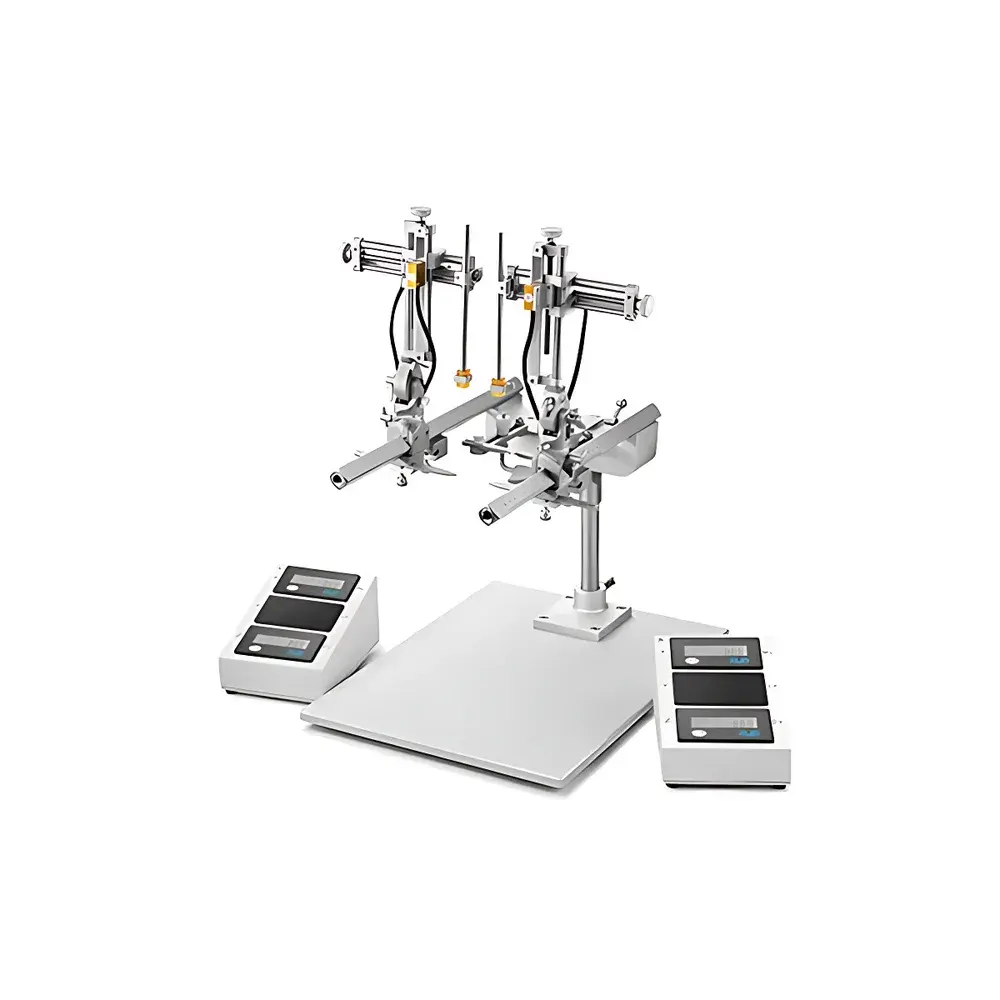
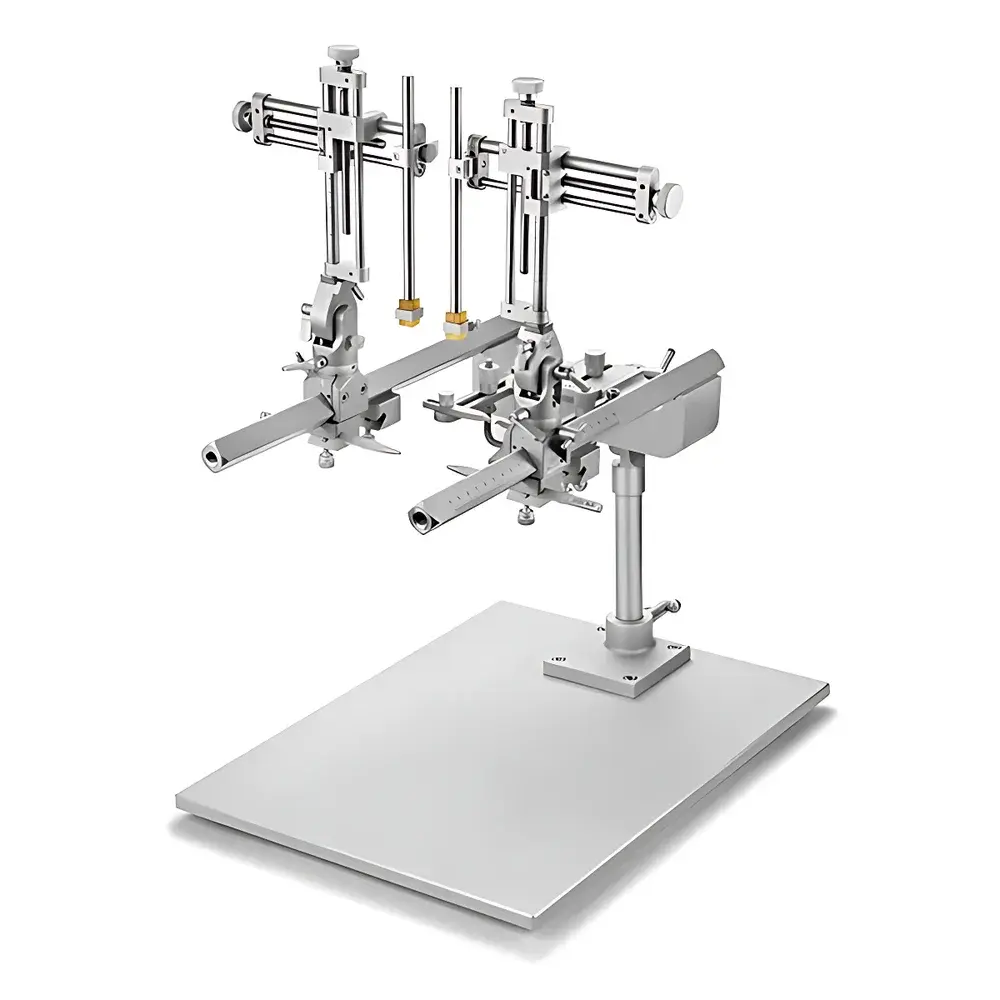
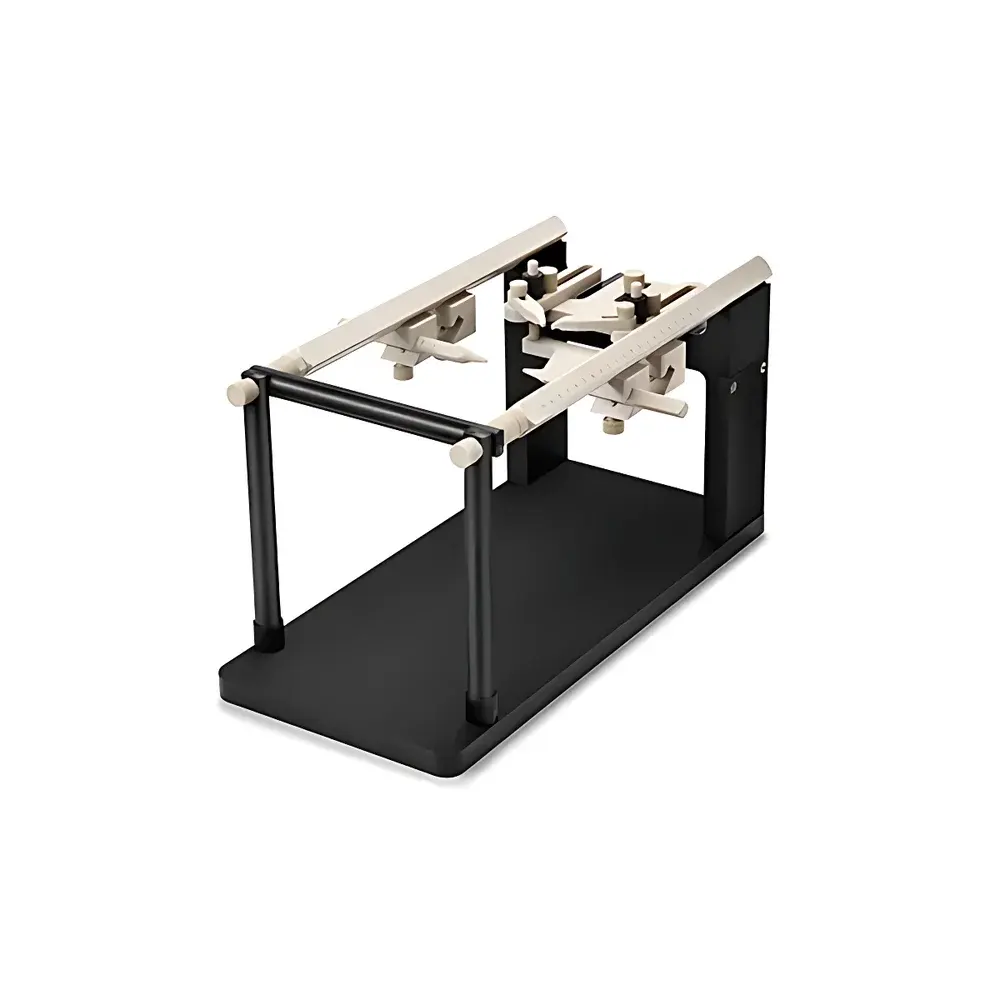
RWD 68901 Large-Animal Stereotaxic Instrument
| Brand | RWD |
|---|---|
| Origin | Shenzhen, China |
| Manufacturer Type | Original Equipment Manufacturer (OEM) |
| Country of Origin | China |
| Model | 68901 |
| Pricing | Available upon request |
Overview
The RWD 68901 Large-Animal Stereotaxic Instrument is an engineered precision platform designed for neurosurgical interventions in non-rodent species—including dogs, non-human primates (NHPs), and swine—where anatomical scale, cranial morphology, and physiological relevance to human neurology necessitate instrumentation beyond standard rodent-scale systems. Unlike conventional stereotaxic frames built for mice or rats, this instrument implements a dual-rail parallel-track architecture grounded in mechanical rigidity and geometric reproducibility, enabling stable, multi-axis positioning under high-resolution imaging modalities such as intraoperative MRI or CT-guided procedures. Its design adheres to core principles of stereotaxy: orthogonal coordinate referencing (anterior–posterior, medial–lateral, dorsal–ventral) calibrated against species-specific brain atlases, with positional accuracy traceable to ±0.1 mm across a 200 mm linear travel range. The system supports translational neuroscience workflows where fidelity to human neuroanatomy—particularly in prefrontal cortex, basal ganglia, and limbic structures—is essential for modeling Parkinson’s disease, epilepsy, psychiatric disorders, and deep brain stimulation (DBS) therapy development.
Key Features
- Dual parallel rail framework with 200 mm total travel range (±100 mm from central zero reference), constructed from corrosion-resistant anodized aluminum alloy for long-term dimensional stability and compatibility with sterilization protocols.
- 360° continuous rotation capability of the main rail assembly, facilitating oblique-angle electrode insertion, fiber-optic cannula placement, or multi-target microinjection without repositioning the animal.
- Modular animal adapter system—including adjustable rostral palate plates and mandibular clamps—engineered for secure head fixation across variable skull dimensions and weight classes (5–35 kg for canine; 3–12 kg for macaque; up to 40 kg for miniature swine).
- Compatibility with up to six independently mounted manipulators on a single frame, enabling simultaneous multi-site electrophysiology recording, optogenetic stimulation, or bilateral pharmacological delivery.
- Mechanical vernier scale readout integrated into all three axes (X/Y/Z), delivering consistent 100 µm resolution for manual positioning; optional digital encoder modules (models 68916–68921) provide real-time positional feedback with 10 µm step resolution when paired with motorized microdrives.
- Electromagnetic compatibility (EMC)-optimized base variant (model 68915) available for integration within 1.5T/3T MRI suites, featuring non-ferromagnetic construction and RF-shielded cabling pathways.
Sample Compatibility & Compliance
The RWD 68901 accommodates head-fixed preparations for Canis lupus familiaris (beagle, hound, and miniature breeds), Macaca fascicularis and Macaca mulatta, Sus scrofa domestica (miniature Yucatan and Göttingen pigs), and selected ovine models. All adapters conform to ASTM F2100-22 guidelines for biomedical device biocompatibility and are validated for repeated autoclaving (134°C, 3 bar, 18 min). Frame geometry aligns with stereotaxic coordinate frameworks published in the *Rhesus Monkey Brain Atlas* (Paxinos et al., 2008), *Canine Neuroanatomy Atlas* (Schwarz et al., 2017), and *Porcine Stereotaxic Reference System* (Kornum et al., 2021). The instrument supports GLP-compliant experimental documentation when used with RWD’s optional audit-trail-enabled digital control software (v3.2+), satisfying traceability requirements per FDA 21 CFR Part 11 for regulated preclinical studies.
Software & Data Management
While the base 68901 model operates manually, its digital variants (68916–68921) integrate with RWD Stereotaxic Control Suite (SCS) v3.2—a Windows-based application supporting coordinate import from MRI-derived segmentation files (DICOM, NIfTI), automated trajectory calculation, and synchronized logging of manipulator position, timestamp, and user ID. SCS complies with ALCOA+ data integrity principles and provides electronic signatures, change history, and exportable CSV/Excel reports suitable for regulatory submission. Raw positional data is stored locally in encrypted SQLite databases with SHA-256 hashing; cloud synchronization is disabled by default to preserve data sovereignty in multi-site academic or CRO environments.
Applications
- Chronic intracranial electrode implantation for local field potential (LFP) and single-unit recording in awake, behaving primates.
- Bilateral viral vector delivery (AAV, lentivirus) targeting homologous cortical or subcortical regions in large-animal models of neurodegeneration.
- Calibrated microinfusion of therapeutics or tracers into deep nuclei (e.g., substantia nigra pars compacta, nucleus accumbens) with volumetric precision ≤0.5 µL.
- Combined fMRI–electrophysiology experiments requiring MRI-compatible head fixation and minimal RF artifact generation.
- Validation of human DBS lead placement algorithms using anatomically accurate porcine or primate templates.
- Training platform for veterinary neurosurgery residents in stereotactic biopsy and lesioning techniques under image guidance.
FAQ
Is the 68901 compatible with MRI-guided procedures?
Yes—when configured with the optional EMC-optimized base (model 68915) and non-magnetic manipulators, the system meets ISO/IEC 61000-4-3 immunity standards for operation inside 3T MRI scanner rooms.
What atlas references does the instrument support?
Preloaded coordinate templates include the Paxinos & Huang rhesus atlas, the Schwarz canine stereotaxic grid, and the Kornum porcine brain map; custom atlas import via CSV is supported in digital variants.
Can I retrofit a manual 68901 with digital readouts post-purchase?
Yes—models 68024 (desktop digital module) and 68944/68945 (digital manipulators) are field-upgradeable using standard M4 mounting interfaces and require no frame modification.
Does RWD provide installation and training support for international customers?
Yes—on-site commissioning, SOP development, and hands-on operator certification are available through RWD’s global Field Applications Engineering team, with documentation provided in English, German, Japanese, and Spanish.
Are consumables and replacement parts available separately?
All adapters, clamps, rail components, and manipulator assemblies are stocked globally and supplied with serialized lot traceability and CoA documentation.
Related Products




