
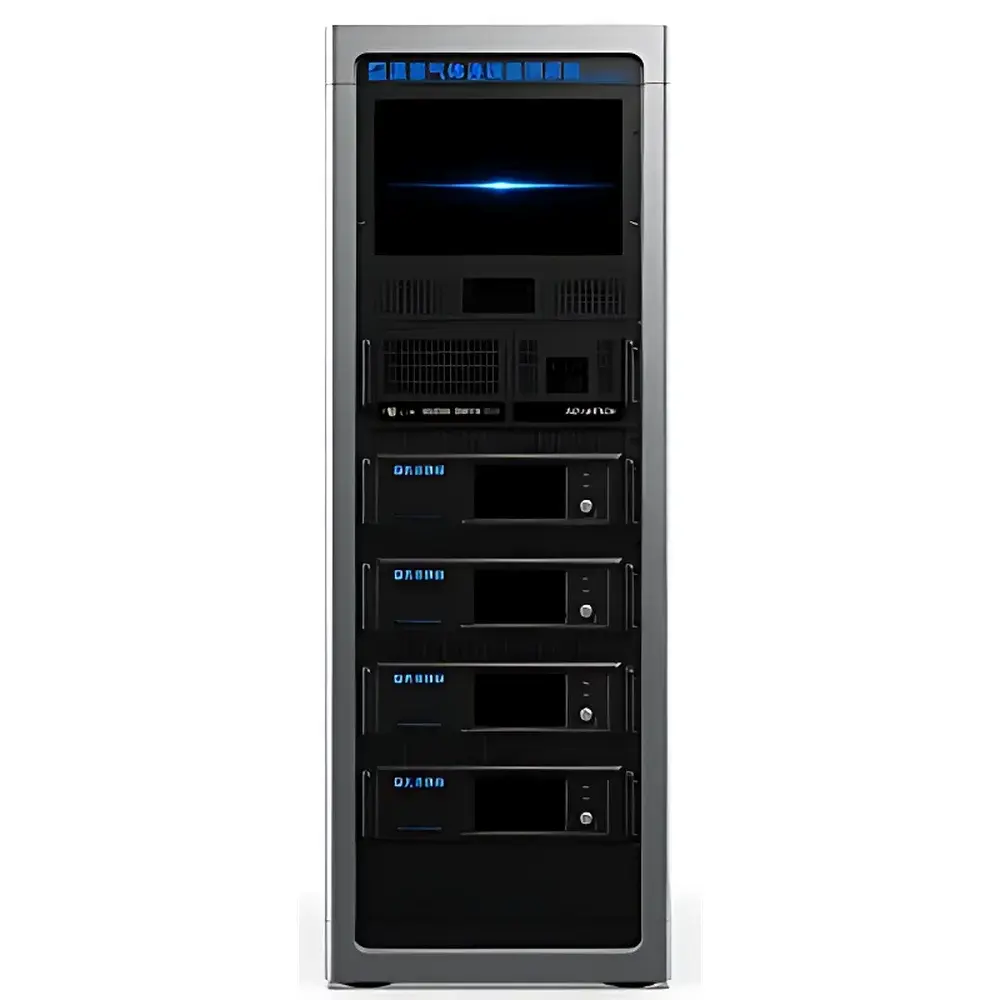
SAIL HERO XHGGMS4000 Greenhouse Gas Continuous Emission Monitoring System (CEMS)
| Brand | SAIL HERO |
|---|---|
| Origin | Hebei, China |
| Manufacturer Type | Original Equipment Manufacturer (OEM) |
| Country of Origin | China |
| Model | XHGGMS4000 |
| Detection Principle | Non-Dispersive Infrared (NDIR) Spectroscopy |
| Target Gases & Measurement Ranges | CO₂ (0–5000 ppm), CH₄ (0–100 ppm), N₂O (0–50 ppm) |
| Compliance | GB/T 38997–2020, HJ 1013–2018, ISO 14064-1, ASTM D6522 |
Overview
The SAIL HERO XHGGMS4000 Greenhouse Gas Continuous Emission Monitoring System is an integrated, field-deployable analytical platform engineered for high-reliability, long-term unattended measurement of key anthropogenic greenhouse gases—carbon dioxide (CO₂), methane (CH₄), and nitrous oxide (N₂O)—in ambient air or stack emissions. Built upon dual-beam non-dispersive infrared (NDIR) spectroscopy, the system leverages wavelength-specific absorption characteristics of each target gas to deliver selective, interference-resistant quantification. Each analyser module operates independently with dedicated optical paths, temperature-stabilized detectors, and pressure-compensated signal processing to ensure metrological traceability under variable environmental conditions. The system architecture conforms to the structural and functional requirements defined in Chinese national standard HJ 1013–2018 (Technical Specifications for Continuous Emission Monitoring Systems for Pollutants from Fixed Pollution Sources) and aligns with international reporting frameworks including ISO 14064-1 and GHG Protocol Tier 2 methodology.
Key Features
- Modular, 3U-rack-mountable design (482.6 mm W × 132.5 mm H × 400 mm D) optimized for space-constrained installations in monitoring stations, industrial rooftops, or mobile laboratories;
- Triple-gas simultaneous analysis capability with independent NDIR modules for CO₂, CH₄, and N₂O—each calibrated against certified reference gases traceable to NIM (National Institute of Metrology, China);
- Integrated meteorological sub-system (wind speed/direction, temperature, humidity, atmospheric pressure) co-located with sampling inlet to support source apportionment modeling and flux estimation;
- Automated quality control (QC) and calibration subsystem featuring zero/span gas delivery valves, multi-point calibration sequences, and scheduled drift verification per HJ 1013–2018 Annex B;
- Self-diagnostic firmware with real-time status logging, fault-code mapping, and remote alerting via SNMP v3 or MQTT over Ethernet/4G LTE;
- Embedded data acquisition unit supporting dual-mode operation: local SD card storage (≥12 months at 1-min resolution) and primary transmission via HJ 212–2017 protocol compliant with China’s national air quality monitoring network;
- Energy-efficient operation: <350 W average power draw; operating temperature range: −30 °C to +50 °C; IP55-rated enclosure for outdoor deployment.
Sample Compatibility & Compliance
The XHGGMS4000 is validated for continuous sampling of ambient air (EPA Method TO-15 equivalent), flue gas (post-SCR/FGD), and biogas streams with particulate filtration (≤0.3 µm) and moisture removal (chilled mirror dew point control). All gas path components—including stainless-steel sample lines, PTFE-coated solenoid valves, and heated Nafion dryers—are selected to minimize adsorption, catalytic conversion, or cross-sensitivity (e.g., CO interference on CH₄ channel). The system meets GB/T 38997–2020 (Greenhouse Gas Emission Monitoring Technical Guidelines for Key Emission Units) and supports audit-ready data integrity through time-stamped audit trails, electronic signatures, and configurable retention policies aligned with GLP principles. Optional 21 CFR Part 11-compliant software add-on available for regulated pharmaceutical or energy-sector deployments.
Software & Data Management
The embedded Linux-based controller runs proprietary SAIL HERO CEMS Manager v4.x firmware, providing web-accessible configuration, real-time waveform visualization, and automated report generation (daily/monthly/quarterly summary PDFs per HJ 1013–2018 Table 5). Raw and processed data are exported in CSV/NetCDF formats with metadata headers compliant with CF Convention 1.8. Remote access enables secure firmware updates, parameter reconfiguration, and diagnostic log retrieval via TLS 1.2-encrypted HTTPS. For enterprise integration, RESTful API endpoints support bidirectional communication with SCADA systems, cloud platforms (e.g., AWS IoT Core, Azure IoT Hub), and third-party analytics engines (Python/Pandas, MATLAB).
Applications
- Continuous monitoring at national/regional GHG monitoring superstations (e.g., China’s “Carbon Monitoring Network” pilot sites);
- Compliance verification for key emission units under China’s National Carbon Market (NCM) Phase II reporting obligations;
- Urban background and hotspot attribution studies in conjunction with mobile ground surveys and satellite validation campaigns (e.g., TROPOMI CO₂/CH₄ cross-calibration);
- Landfill gas collection efficiency assessment and biogas upgrading plant optimization;
- Research-grade flux measurements in eddy covariance towers when synchronized with sonic anemometers and fast-response gas analysers;
- Baseline establishment and trend analysis for corporate Scope 1 emissions reporting per GHG Protocol Corporate Standard.
FAQ
What regulatory standards does the XHGGMS4000 comply with for official emissions reporting?
It meets HJ 1013–2018, GB/T 38997–2020, and ISO 14064-1 requirements for data accuracy, calibration frequency, and uncertainty budgeting—making it eligible for use in China’s mandatory carbon accounting framework.
Can the system operate without internet connectivity?
Yes. Local data acquisition, QC execution, and internal storage function autonomously; network connection is required only for remote diagnostics and central database synchronization.
Is third-party certification (e.g., MCERTS, TÜV) available for this model?
While not pre-certified under EU MCERTS, the system’s modular NDIR architecture and documentation package support customer-led conformity assessment per EN 15267-3 and EN 14181 QAL1/QAL2 procedures.
How frequently must calibration gases be replaced?
Zero gas (N₂ ≥99.999%) and span gases (certified mixtures traceable to NIM) require replacement every 6 months under typical ambient conditions, with usage logs automatically tracked in the audit trail.
Does the system support dynamic range switching or auto-ranging?
No. Each NDIR module is configured for fixed-range operation per application profile (e.g., ambient CO₂: 0–5000 ppm; landfill CH₄: 0–100 ppm) to maximize signal-to-noise ratio and minimize nonlinearity error.







