
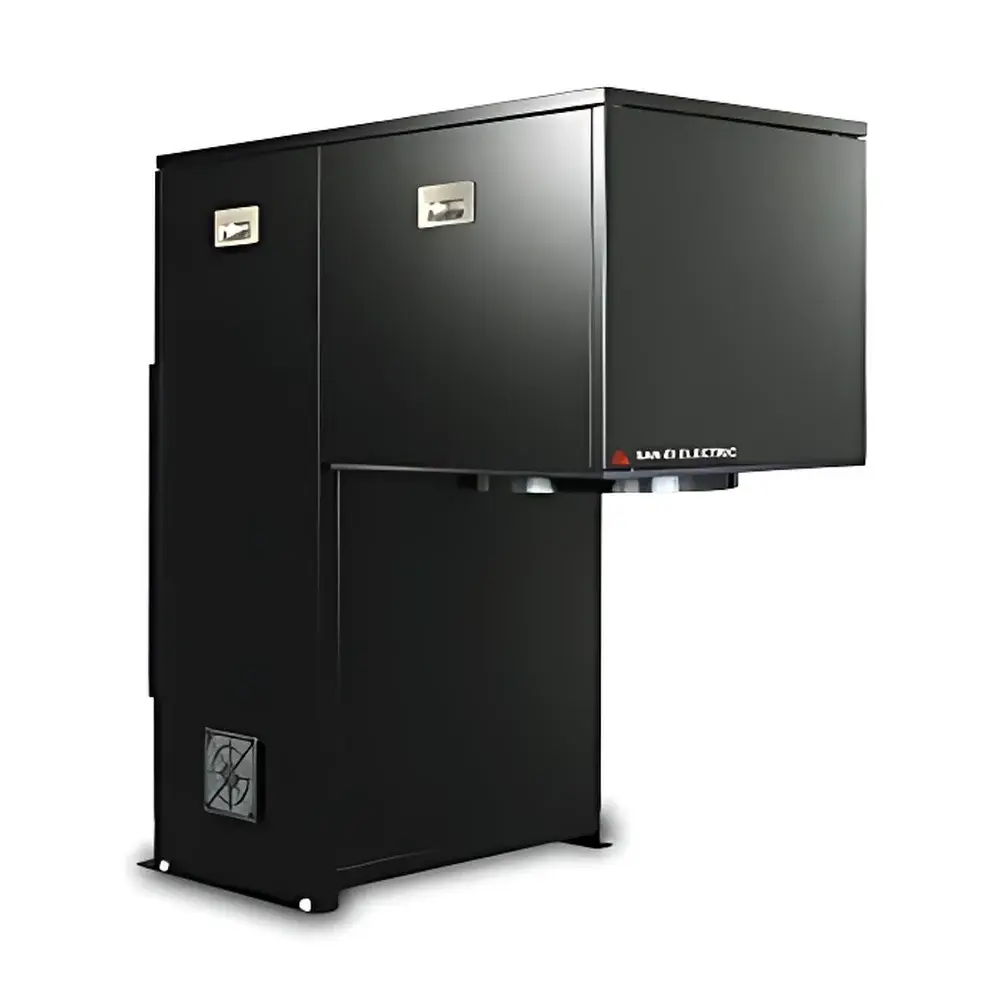
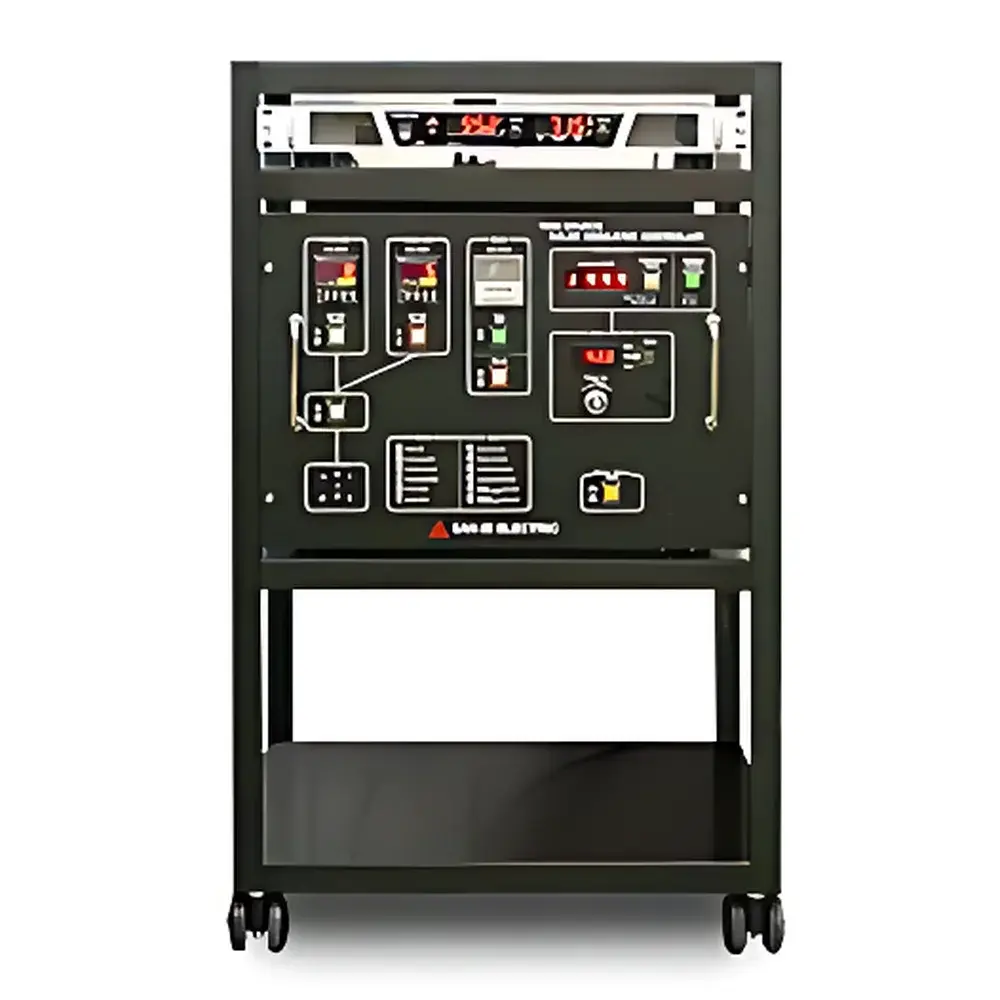
SAN-EI XHS-180/220S1 AM0 & AM1.5G Class A+A+A Dual-Lamp Solar Simulator
| Brand | SAN-EI |
|---|---|
| Origin | Japan |
| Model | XHS-180/220S1 |
| Illumination Mode | Steady-State |
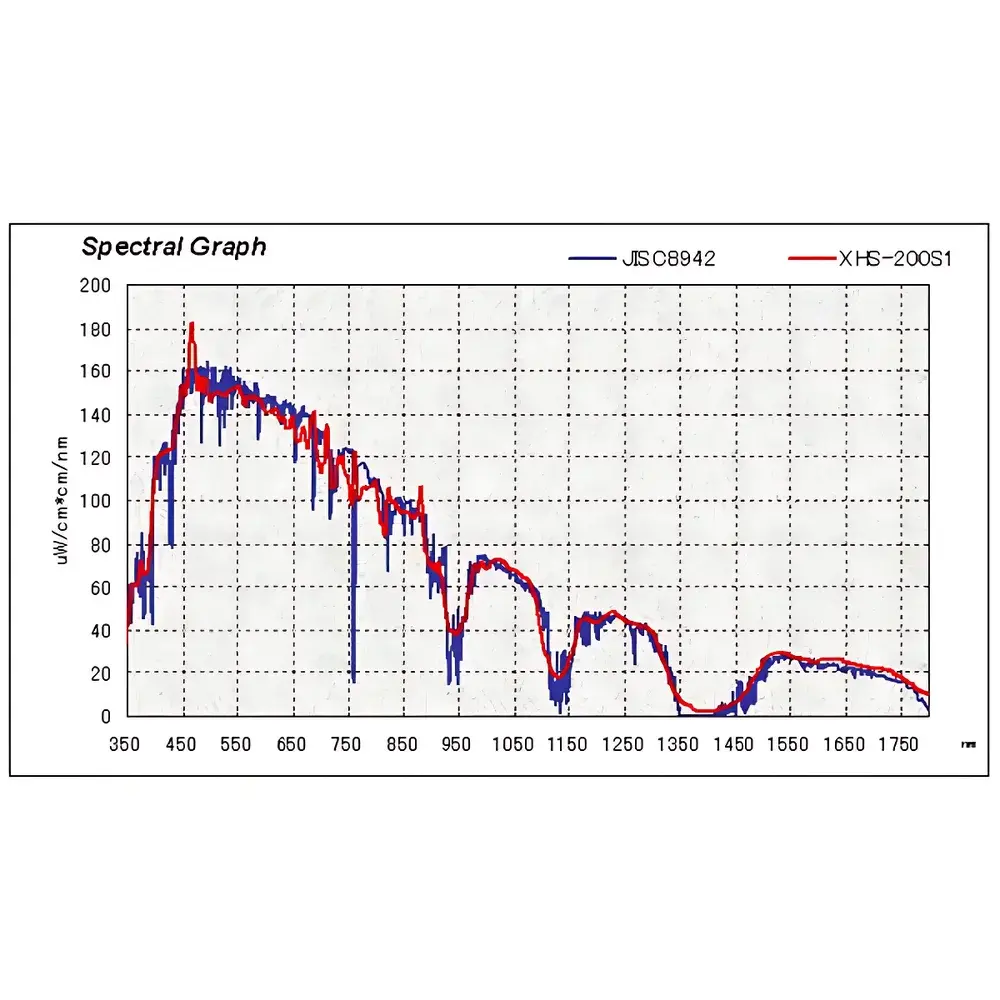
| Spectral Mismatch | < ±5% (AM0) or < ±10% (AM1.5G), A+ Class |
| Spectral Range | 300–1800 nm |
| Spatial Non-Uniformity | < 2%, Class A |
| Temporal Instability | < 1%, Class A+ |
| Adjustable Irradiance | 30–100% |
| Illuminated Area Options | 50×50 mm, 80×80 mm, 100×100 mm, 220×220 mm, 300×300 mm (customizable) |
| Spectral Tunability | Yes |
| Compliance | ASTM E927-22, IEC 60904-9 Ed. 3 (2020), JIS C 8912 |
Overview
The SAN-EI XHS-180/220S1 is a high-precision, dual-lamp solar simulator engineered for laboratory-grade photovoltaic (PV) device characterization under both extraterrestrial (AM0) and terrestrial (AM1.5G) reference spectra. It operates on the principle of spectrally matched broadband illumination, combining two independently controlled lamp sources—typically a xenon arc lamp and a supplementary halogen or metal-halide lamp—to achieve simultaneous spectral fidelity, spatial uniformity, and temporal stability across the full 300–1800 nm range. Designed to meet the most stringent classification requirements per IEC 60904-9 Ed. 3 (2020) and ASTM E927-22, the system delivers Class A+A+A performance: A+ for spectral match, A+ for spatial uniformity, and A+ for temporal stability—enabling traceable, reproducible IV measurements critical for R&D, calibration, and inter-laboratory comparison. Its primary engineering objective is to replicate standardized solar irradiance conditions with metrological rigor, supporting accurate determination of photovoltaic parameters including short-circuit current density (Jsc), open-circuit voltage (Voc), fill factor (FF), power conversion efficiency (PCE), series resistance (Rs), and shunt resistance (Rsh).
Key Features
- Dual-source optical architecture enabling independent spectral shaping for AM0 (1366 W/m²) and AM1.5G (1000 W/m²) irradiance profiles
- Spectral mismatch < ±5% for AM0 and < ±10% for AM1.5G—certified to A+ class per IEC 60904-9
- Measured spectral coverage from 300 nm (UV) to 1800 nm (NIR), fully encompassing the responsivity range of Si, GaAs, CIGS, perovskite, organic, and multi-junction PV devices
- Irradiance adjustable from 30% to 100% of nominal intensity via calibrated electronic dimming—no mechanical filters required
- Spatial non-uniformity < 2% over defined test areas (e.g., 220 × 220 mm), verified by NIST-traceable mapping procedures
- Temporal instability < 1% over 10 s (A+ class), ensuring stable bias during extended quantum efficiency (QE) or IPCE sweeps
- Integrated spectral tunability via motorized filter wheels and variable lamp power coupling—supports custom spectrum generation for advanced PV material studies
- Steady-state (continuous) illumination mode only—optimized for thermal equilibrium measurements and low-noise IV acquisition
Sample Compatibility & Compliance
The XHS-180/220S1 accommodates diverse PV architectures, including single-junction silicon (c-Si, a-Si, mc-Si), III–V compounds (GaAs, InP), chalcogenides (CdTe, CIGS), dye-sensitized (DSSC), organic/polymer cells, and tandem/multi-junction devices requiring precise sub-cell current matching. Its large-format illumination options (up to 300 × 300 mm) support module-level validation and mini-module testing under representative illumination geometry. The system complies with international standards governing solar simulator classification and PV measurement protocols: IEC 60904-9:2020 (Class A+A+A verification methodology), ASTM E927-22 (spectral match and uniformity test procedures), and JIS C 8912 (Japanese national standard for solar simulators). When paired with certified reference cells (e.g., KG5-encapsulated monocrystalline Si, 20 × 20 mm, NIST-calibrated), it supports GLP-compliant calibration workflows aligned with ISO/IEC 17025 requirements.
Software & Data Management
The bundled PV characterization software provides a modular, audit-ready environment for photovoltaic metrology. Core functionalities include full forward/reverse I–V sweep acquisition, P–V curve derivation, bias-stability assessment (e.g., maximum power point tracking over time), dark current analysis, and real-time I–t transient monitoring. All measurements support user-defined scan rates, voltage step resolution, and hold times—critical for minimizing capacitive artifacts in thin-film and perovskite devices. The software implements automated light-intensity calibration routines traceable to reference cell responsivity data, stores metadata (lamp hours, filter position, ambient temperature), and exports structured CSV/Excel files compliant with FAIR data principles. Optional integration with Keithley 2400/2600 Series Source Measure Units (SMUs) enables synchronized source-sense operation with 4-quadrant capability and 100 fA current resolution—suitable for low-light QE/IPCE mapping. Audit trails, user access control, and electronic signature support are available to meet FDA 21 CFR Part 11 and GMP/GLP documentation requirements.
Applications
- Primary calibration of reference cells and secondary standard modules at national metrology institutes (e.g., NIM China, AIST Japan)
- Performance validation of multi-junction solar cells under AM0 conditions for space applications
- Quantum efficiency (QE) and incident photon-to-electron conversion efficiency (IPCE) spectral response mapping
- Stability assessment of emerging PV technologies (perovskites, OPVs) under controlled illumination stress
- Development and qualification of anti-reflective coatings, transparent conductive oxides (TCOs), and passivation layers
- Intercomparison studies between laboratories participating in PV intercalibration programs (e.g., IEA-PVPS Task 12)
- Temperature-dependent IV characterization when integrated with environmental chambers or thermoelectric stages
FAQ
What standards does the XHS-180/220S1 comply with for solar simulator classification?
It meets IEC 60904-9 Ed. 3 (2020) and ASTM E927-22 for Class A+A+A rating—verified independently for spectral match, spatial uniformity, and temporal stability.
Can the system be used for both AM0 and AM1.5G measurements without hardware reconfiguration?
Yes. Dual-lamp architecture and motorized spectral tuning allow seamless switching between AM0 and AM1.5G modes via software control—no manual lamp or filter changes required.
Is the irradiance output calibrated and traceable to national standards?
Yes. Each unit ships with a factory calibration report referencing NIST-traceable reference cells; users may perform in-situ recalibration using supplied certified standards.
What sample sizes can be tested, and is custom illumination area support available?
Standard apertures include 50×50 mm, 80×80 mm, 100×100 mm, 220×220 mm, and 300×300 mm; bespoke field sizes and beam shaping optics are available upon request.
Does the system support automated data export for LIMS or ELN integration?
Yes. Raw and processed data export formats (CSV, XML, HDF5) are configurable; API access and SCPI command sets enable direct integration with laboratory information management systems (LIMS) and electronic lab notebooks (ELN).





