
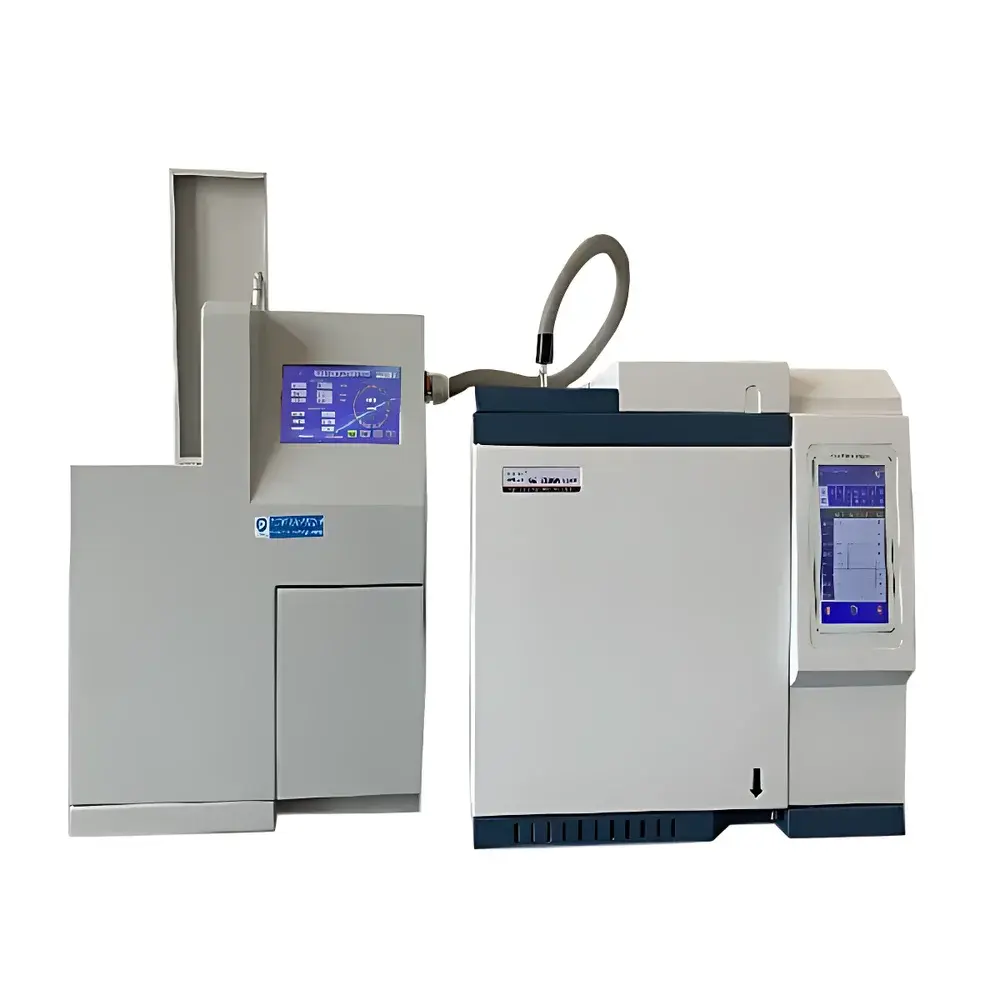
Sanpu AH4S-20A Plus Fully Automated Static Headspace Sampler
| Brand | Sanpu |
|---|---|
| Origin | Beijing, China |
| Manufacturer Type | OEM Manufacturer |
| Instrument Type | Static Headspace Sampler |
| Automation Level | Fully Automated |
| Sample Vial Capacity | 20 positions |
| Vial Size Compatibility | 10 mL or 20 mL |
| Vial Heating Range | Ambient to 200 °C (1 °C increment) |
| Valve & Transfer Line Temperature Range | 40–220 °C |
| Temperature Control Accuracy | ±1 °C |
| Quantitative Loop Volume | 1 mL |
| Pressure Control Range | 0–0.25 MPa (continuously adjustable) |
| Sampling Time | 0–30 min |
| Pressurization Time | 0–999 s |
| Injection Time | 0–999 s |
| Bake-out Time | 0–30 min |
| RSD | <1.0% (for 100 ppm ethanol in water) |
Overview
The Sanpu AH4S-20A Plus Fully Automated Static Headspace Sampler is an engineered solution for precise, reproducible, and unattended analysis of volatile organic compounds (VOCs) in solid and liquid matrices. It operates on the principle of static headspace equilibrium gas-phase extraction: samples sealed in heated vials reach thermodynamic equilibrium between the condensed phase (liquid or solid) and the overlying vapor phase; a representative aliquot of this equilibrated headspace gas is then pressurized, transferred via a thermostatted six-port valve and inert transfer line, and injected directly into a coupled gas chromatograph (GC). This technique eliminates matrix interference, minimizes carryover, and ensures high sensitivity for trace-level volatiles—particularly critical in regulated environments such as medical device sterilization validation, pharmaceutical residual solvent testing, and environmental compliance monitoring. Designed for integration with any standard GC system—including FID, ECD, TCD, or mass spectrometric detectors—the AH4S-20A Plus delivers robust performance in ISO 17025-accredited laboratories and GMP/GLP-compliant quality control settings.
Key Features
- Fully automated 20-position sample carousel with intelligent vial detection: automatically skips empty or misaligned positions to prevent mechanical collision and ensure operational continuity.
- Triple-zone independent temperature control: vial oven (ambient–200 °C), valve manifold (40–220 °C), and transfer line (40–220 °C), all maintained within ±1 °C stability and calibrated traceability.
- High-inertness fluidic path: all internal surfaces—including quantitative loop, valve rotor seal, and transfer tubing—are passivated using proprietary deactivation technology to eliminate adsorption, memory effects, and cross-contamination.
- Positive-pressure sampling architecture: enables reliable quantitation of low-volatility analytes without baseline drift; compatible with both 10 mL and 20 mL crimp-top headspace vials (custom sizes available).
- Real-time parameter monitoring and fault diagnostics: comprehensive self-check at power-on; automatic alerts for heater failure, motor stall, vial misplacement, or communication loss via USB interface.
- Flexible injection protocols: supports single-vial multi-injection, single-vial single-injection, and multi-vial sequential injection modes—programmable down to 1 ms time resolution.
- No external gas drive required: all actuation performed via precision stepper motors, enhancing safety, reducing infrastructure dependency, and simplifying lab setup.
Sample Compatibility & Compliance
The AH4S-20A Plus accommodates diverse sample types—including aqueous solutions, polymer films, lyophilized powders, medical packaging materials, soil slurries, and biological tissues—without derivatization or solvent extraction. Its thermal design and inert flow path preserve analyte integrity for compounds ranging from low-boiling solvents (e.g., methanol, acetone, ethylene oxide) to higher-molecular-weight VOCs (e.g., chloroform, dichloromethane, toluene). The instrument conforms to multiple international analytical standards, including ISO 11358 (plastics—determination of residual solvents), USP <467> (Residual Solvents), EP 2.4.24 (Residual Solvents in Pharmaceutical Substances), and ASTM D7699 (Standard Practice for Headspace Analysis of Volatile Organic Compounds). It supports full audit trail generation when operated under FDA 21 CFR Part 11-compliant chromatography data systems (CDS), enabling traceable method execution and electronic signature capability in regulated QC/QA workflows.
Software & Data Management
Control and method development are executed via intuitive USB-connected PC software supporting Windows OS. All parameters—including temperature ramps, pressurization profiles, timing sequences, and valve switching events—are fully configurable and stored as encrypted method files. The software logs complete system status (heater temperatures, valve actuation timestamps, pressure readings, error codes) with timestamped entries compliant with ALCOA+ principles (Attributable, Legible, Contemporaneous, Original, Accurate, Complete, Consistent, Enduring, Available). Export formats include CSV and XML for LIMS integration. Optional EPC (Electronic Pressure Control) module enables dynamic backpressure regulation during transfer, improving retention time reproducibility across extended batch runs. Remote monitoring and scheduled shutdown/startup functions further enhance unattended overnight operation.
Applications
Primary application domains include: residual ethylene oxide (EO) quantification in sterilized medical devices per ISO 10993-7 and GB/T 16886.7; residual solvent analysis in pharmaceutical excipients and active ingredients per ICH Q3C guidelines; VOC profiling in food contact materials (e.g., regenerated cellulose films, laminated packaging) per SN/T 4068; environmental screening of halogenated hydrocarbons in water, soil, and sediment per HJ 736, HJ 642, and HJ 643; and forensic toxicology screening for volatile intoxicants per GA/T 842. The system is routinely deployed in contract testing laboratories, biotech process development groups, and regulatory submission support units where method ruggedness, inter-laboratory transferability, and long-term calibration stability are mandatory.
FAQ
What sample vial sizes does the AH4S-20A Plus support?
It accepts standard 10 mL and 20 mL crimp-top headspace vials. Custom configurations for 50 mL and 100 mL vials are available upon request.
Is the instrument compatible with GC-MS systems?
Yes—its inert flow path, precise pressure control, and synchronized trigger output ensure seamless coupling with both single-quadrupole and triple-quadrupole mass spectrometers.
Does it meet FDA 21 CFR Part 11 requirements?
When operated with validated chromatography data software supporting electronic signatures, audit trails, and role-based access control, the system fulfills core Part 11 technical requirements for electronic records and signatures.
Can the quantitative loop volume be modified?
Standard configuration uses a 1 mL loop; optional 0.5 mL, 2 mL, and 5 mL loops are factory-installable to optimize sensitivity or dynamic range for specific applications.
What maintenance is required for long-term reliability?
Routine maintenance includes quarterly verification of temperature calibration (using NIST-traceable probes), semiannual replacement of septa and O-rings, and annual inspection of valve rotor seals—documented in the included maintenance log template.






