
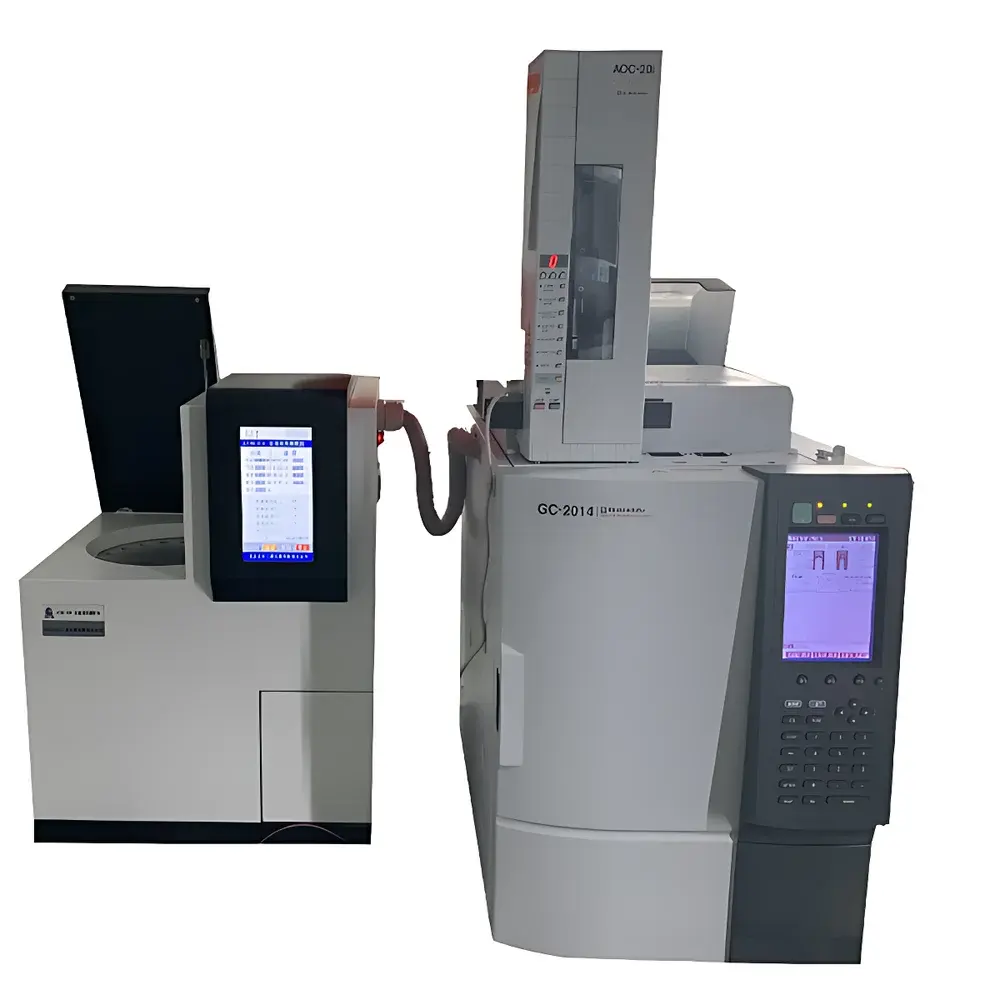
Sanpu ATDS-20A Fully Automated Two-Stage Thermal Desorber with Cryogenic Trap
| Brand | Sanpu |
|---|---|
| Origin | Beijing, China |
| Manufacturer Type | OEM Manufacturer |
| Instrument Type | Two-stage Thermal Desorber |
| Primary Desorption Temp Range | Ambient to 450 °C |
| Secondary Desorption Temp Range | 100–450 °C |
| Cryotrap Temp Range | −35 °C to Ambient |
| Desorption Recovery Rate | >99% (compound-dependent) |
| Sample Capacity | 20 positions |
| Cold Trap Cooling Method | Electronic Peltier Cooling |
| Temperature Control Accuracy | ±0.5 °C |
| RSD | ≤2.5% (for 0.05 μg benzene in methanol) |
| Sample Tube Format | 1/4″ OD × 3.5″ (ASTM D6196-compliant) |
Overview
The Sanpu ATDS-20A is a fully automated two-stage thermal desorber engineered for high-fidelity, quantitative analysis of volatile organic compounds (VOCs) and semi-volatile organic compounds (SVOCs) in environmental, industrial hygiene, and indoor air matrices. It operates on the principle of solid-phase adsorption followed by sequential thermal desorption—first stage desorption releases analytes from the sorbent tube into a cryogenically focused trap; second stage desorption rapidly injects the concentrated analyte band into the gas chromatograph (GC) or GC–MS inlet via a heated transfer line and six-port valve. This two-stage architecture, coupled with precise electronic cooling (down to −35 °C), ensures narrow bandwidth injection, minimized band broadening, and enhanced sensitivity—critical for trace-level VOC quantification per EPA TO-17, ISO 16017-1, and HJ 734–2014 compliance requirements.
Key Features
- Fully automated 20-position sample carousel with self-calibrating tray positioning and real-time status animation via 7-inch capacitive touchscreen interface.
- Independent four-zone temperature control: primary desorption furnace (ambient–450 °C), secondary desorption zone (100–450 °C), valve oven (ambient–300 °C), and transfer line (ambient–300 °C), all adjustable in 1 °C increments.
- Integrated Peltier-based cryogenic trap enabling precise low-temperature focusing (−35 °C to ambient) without liquid nitrogen or mechanical refrigeration.
- Programmable multi-step sequence: desorption → carrier gas purge → cold trap focusing → rapid thermal desorption → GC injection → post-injection valve and transfer line backflush (0–100 mL/min, continuously adjustable).
- Built-in tube activation protocol with programmable heating, purging, and cooling cycles to ensure consistent sorbent conditioning prior to sampling.
- Simulated sampling mode for direct calibration curve generation using standard vapor pulses, eliminating manual spiking steps.
- GC synchronization capability: triggers external GC start and data acquisition software (e.g., BF-2002, Chromeleon, OpenLab) via TTL or Ethernet command.
- Modular configuration support: field-upgradable to include ambient- or cryo-enhanced secondary desorption modules based on application-specific volatility profiles.
Sample Compatibility & Compliance
The ATDS-20A accepts standard 1/4″ OD × 3.5″ stainless steel or quartz sorbent tubes packed with Tenax TA, Carbopack B/C, or multi-bed sorbents (e.g., Tenax GR + Carboxen 1000 + Carbopack C), conforming to ASTM D6196 and ISO 16017-1 tube specifications. Its validated performance meets regulatory requirements for method-defined applications including HJ 644–2013 (ambient air VOCs via TD-GC/MS), HJ 583–2010 (benzene series in ambient air), HJ 734–2014 (VOCs from stationary source emissions), GB/T 18883–2002 (indoor air quality), and GB 50325–2020 (civil building indoor pollution control). System diagnostics, method audit trails, and parameter logging support GLP/GMP-aligned workflows and are compatible with 21 CFR Part 11-compliant data systems when integrated with validated chromatography data handling platforms.
Software & Data Management
The embedded firmware supports full method programming—including temperature ramp rates (>3000 °C/min for secondary desorption), timing sequences, flow control, and interlock logic—with non-volatile storage for ≥100 user-defined methods. All operational parameters, run logs, error codes, and calibration events are timestamped and exportable as CSV files. When interfaced with third-party chromatography data systems (CDS), the ATDS-20A transmits instrument status and trigger signals via RS-232, USB virtual COM, or Ethernet TCP/IP protocols. Raw desorption event metadata (e.g., trap temperature stability, valve actuation timing, pressure drop across tube) can be archived alongside GC peak data to support full analytical traceability and root-cause investigation during method validation or regulatory audits.
Applications
The ATDS-20A serves as a core front-end for trace VOC analysis across environmental monitoring (stack emissions, ambient air, soil vapor), occupational health (workplace air sampling per NIOSH 1501/1600), product safety testing (automotive cabin air, building materials per ISO 12219-3), and food packaging migration studies. Its robust architecture enables reliable analysis of C2–C16 hydrocarbons, oxygenates (e.g., aldehydes, ketones), halogenated compounds (e.g., chloromethanes, chloroform), and aromatic species (e.g., benzene, toluene, xylenes) at sub-pptr (ng/m³) levels. The system is routinely deployed in accredited laboratories performing testing under CNAS-CL01 (equivalent to ISO/IEC 17025) and supports method transfer between instruments due to standardized thermal profiling and pneumatic control algorithms.
FAQ
What sorbent tube formats are supported?
Standard 1/4″ OD × 3.5″ tubes compliant with ASTM D6196 and ISO 16017-1; custom-length or quartz-lined tubes may be accommodated with optional adapters.
Does the system meet U.S. EPA or EU regulatory requirements?
Yes—method performance aligns with EPA TO-17 for ambient air and ISO 16017-1 for indoor air; full compliance documentation available upon request for method validation packages.
Can the ATDS-20A be integrated with Agilent, Thermo, or Shimadzu GC systems?
Yes—dedicated hardware interfaces and TTL/Ethernet trigger protocols are provided for seamless synchronization with all major GC and GC–MS platforms.
Is remote monitoring or networked operation supported?
Ethernet connectivity enables remote method upload, real-time status viewing, and alarm notification via standard SNMP or HTTP-based APIs.
What maintenance intervals are recommended for routine operation?
Valve seal inspection every 500 runs; trap cleaning every 1,000 injections; annual calibration verification of all temperature zones and flow controllers per ISO/IEC 17025 guidelines.





