
Sanxin MP512-01 Precision Benchtop pH Meter
| Brand | Sanxin |
|---|---|
| Origin | Shanghai, China |
| Manufacturer Type | OEM Manufacturer |
| Product Category | Domestic |
| Model | MP512-01 |
| Instrument Type | Benchtop |
| Parameter Type | Single-Parameter (pH) |
| Measurement Accuracy | ±0.002 pH |
| Measurement Range | −2.000 to 19.999 pH |
| Resolution | 0.001 pH |
| Calibration Solution Compatibility | Chinese Standard Buffer Series |
| Input Impedance | ≥3×10¹² Ω |
| Input Current | ≤1×10⁻¹² A |
| Stability | ±0.002 pH / 3 h |
| Temperature Compensation Range | 0–100 °C (Auto/Manual) |
| mV/ORP Range | −1999.9 to +1999.9 mV |
| mV Resolution | 0.1 mV |
| mV Accuracy | ±0.1 mV |
| Temperature Measurement Range | −10 to 110 °C |
| Temp. Resolution | 0.1 °C |
| Temp. Accuracy | ±0.4 °C (5–60 °C), ±0.8 °C (elsewhere) |
| Data Storage | 600 sets (ID, pH/mV, temp., ATC/MTC status, date/time) |
| Power Supply | DC 9 V / 300 mA |
| Interface | RS232 |
| Dimensions & Weight | 160 × 190 × 70 mm / 880 g |
| Certifications | ISO 9001:2015, CE, CMC |
| IP Rating | IP54 |
| Operating Environment | 15–30 °C, ≤75% RH |
Overview
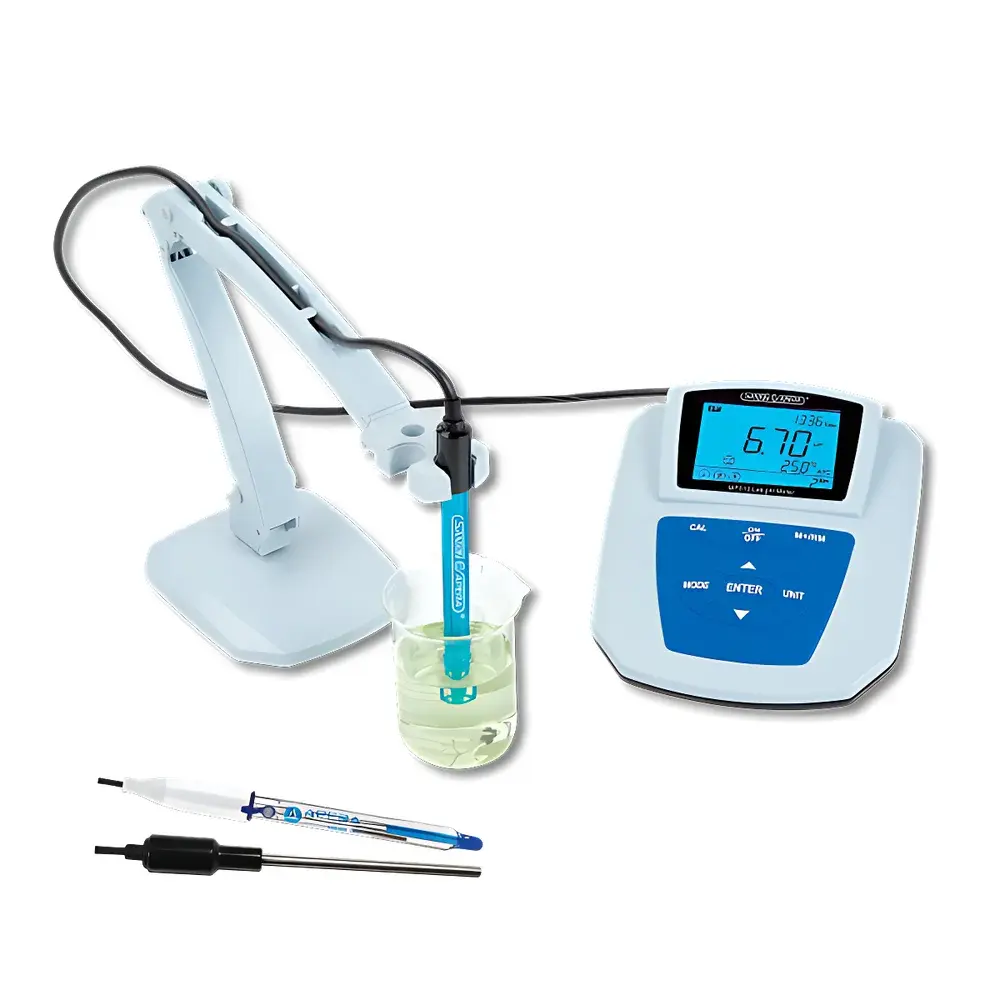
The Sanxin MP512-01 Precision Benchtop pH Meter is a laboratory-grade electrochemical instrument engineered for high-fidelity potentiometric measurement of hydrogen ion activity in aqueous media. It operates on the Nernst principle, utilizing a glass pH electrode and reference system to generate a voltage proportional to solution pH, which is then digitized and compensated using integrated temperature sensing. Designed for applications demanding metrological rigor—such as pharmaceutical QC, power plant feedwater monitoring, bioprocess development, and academic research—the MP512-01 delivers traceable accuracy at the 0.001-pH resolution level. Its extended range (−2.000 to 19.999 pH) accommodates strongly acidic or alkaline solutions, including those encountered in semiconductor cleaning baths or electroplating electrolytes. The instrument supports automatic temperature compensation (ATC) via built-in or external temperature probes, minimizing thermal drift in kinetic or non-ambient measurements.
Key Features
- Triple-mode operation: Stable-read (with visual “smiley” indicator upon equilibrium), timed-interval, and continuous real-time logging
- Intelligent calibration recognition: Auto-detection of buffer series (Chinese, NIST, or DIN/European) during 2-/3-point calibration
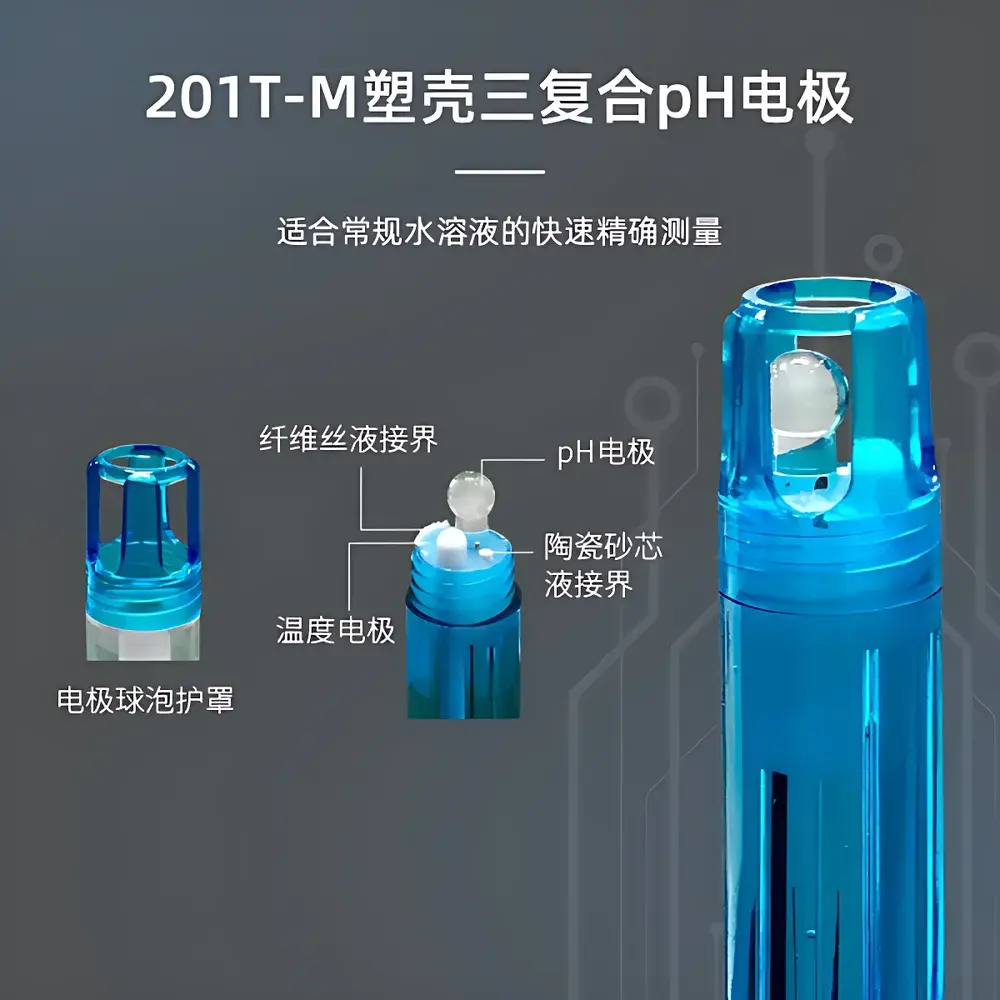
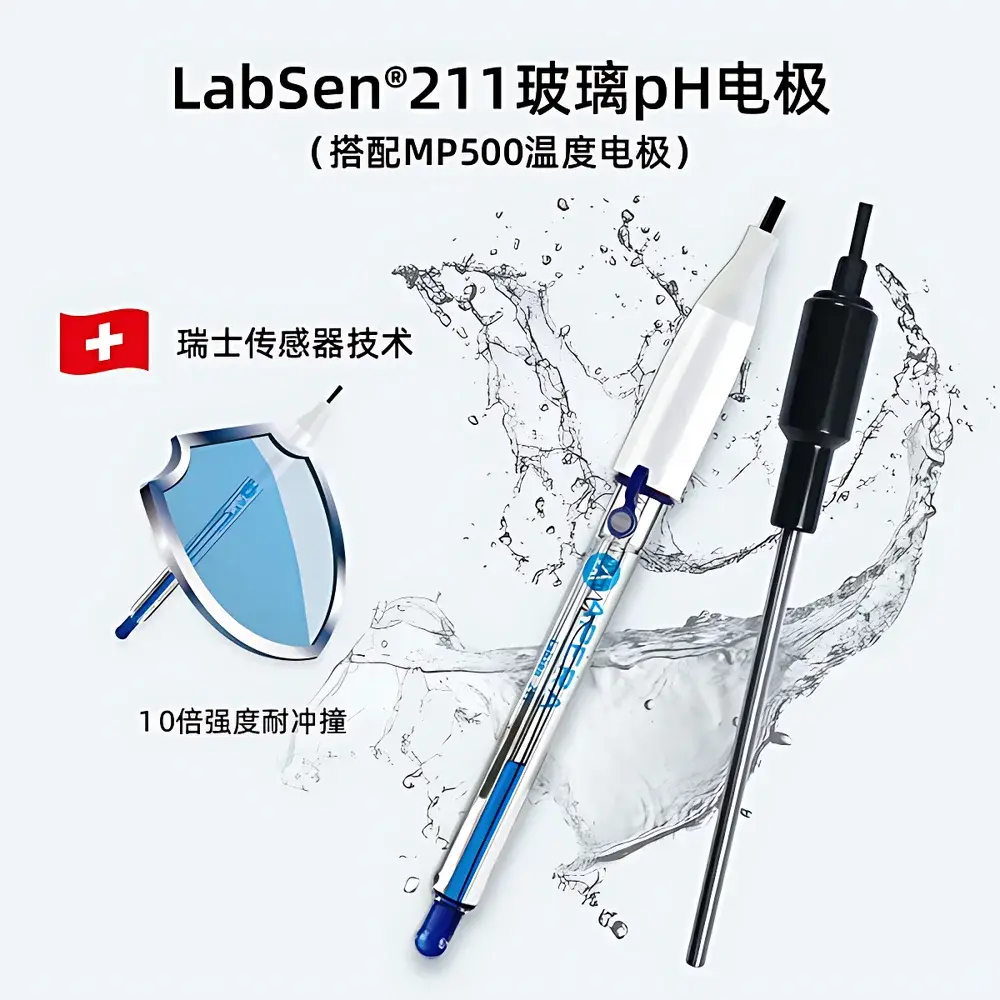
- Dual-electrode configuration: Includes both the 201T-M molded-body tri-combination electrode (pH + ATC + reference) and the LabSen 211 refillable glass electrode—engineered for 0.001-pH class performance with reinforced thick-film glass (≥10× mechanical durability vs. conventional electrodes)
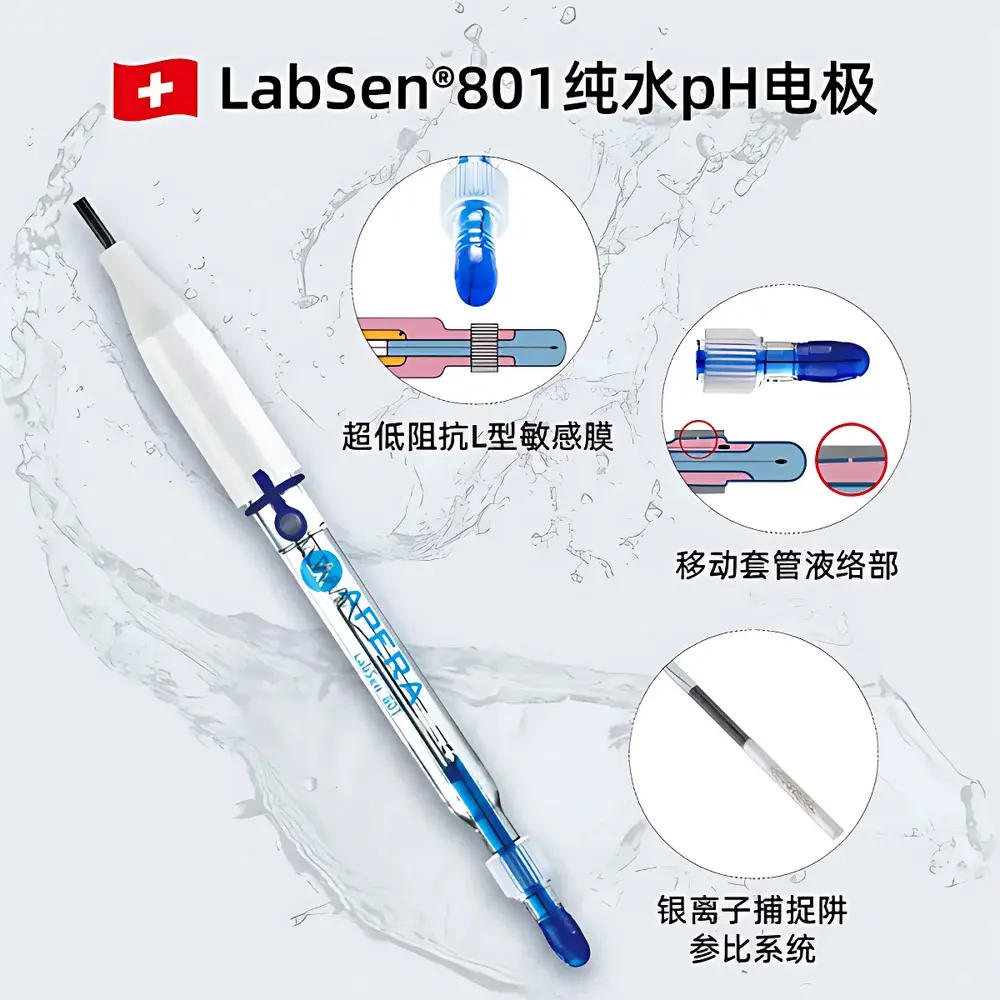
- Specialized measurement modes: Dedicated algorithms for high-purity water (including ammonia-doped steam condensate), incorporating dual-stage temperature compensation (Nernst slope + solution-specific thermal coefficient correction)
- Digital signal processing: Adaptive filtering and sliding-average algorithms suppress noise without compromising response time; input impedance ≥3×10¹² Ω ensures minimal loading error on high-resistance samples (e.g., deionized water, colloidal suspensions, emulsions)
- Comprehensive diagnostics: On-screen prompts identify electrode fouling, low fill solution, open-circuit conditions, or calibration deviation beyond user-defined thresholds
- Robust enclosure: IP54-rated housing with silicone-sealed connectors resists dust ingress and incidental splashes in shared lab environments
Sample Compatibility & Compliance
The MP512-01 is validated for use with low-ionic-strength aqueous solutions (conductivity <10 µS/cm), turbid suspensions, colloidal dispersions, and viscous biological matrices—provided appropriate electrode selection and cleaning protocols are followed. Its design conforms to core requirements of GLP (Good Laboratory Practice) and supports audit-ready data integrity through timestamped storage (600 entries), immutable measurement metadata (ATC/MTC flag, buffer ID, calibration history), and RS232 export for LIMS integration. While not pre-certified for FDA 21 CFR Part 11, the firmware architecture permits implementation of electronic signature workflows and audit trails when deployed within validated IT infrastructure. All electrical safety and EMC compliance align with CE Directive 2014/30/EU and IEC 61010-1:2010.
Software & Data Management
Bundled MP512 Communication Software enables bidirectional data transfer via RS232, supporting ASCII-formatted export (.csv or .txt) of full measurement records—including sample ID, pH/mV value, temperature, calibration coefficients (slope, offset, asymmetry potential), and acquisition timestamps. Raw data files retain embedded metadata required for ISO/IEC 17025 traceability. The software interface allows batch calibration verification, trend plotting over time, and comparative analysis across multiple electrodes or instruments. No cloud dependency: all processing occurs locally, preserving data sovereignty in regulated environments.
Applications
- Pharmaceutical manufacturing: Final rinse water pH validation per USP and EP 2.2.3
- Power generation: Ammoniated boiler feedwater and condensate monitoring per ASTM D1066 and IAPWS guidelines
- Biotechnology: Cell culture media titration, fermentation broth profiling, and buffer preparation QC
- Environmental testing: Acid mine drainage characterization and alkaline leachate analysis
- Academic research: Electrochemical kinetics studies requiring sub-millivolt stability and drift-controlled baselines
- Fine chemical synthesis: Reaction endpoint detection in acid/base-catalyzed esterification or hydrolysis
FAQ
Does the MP512-01 support automatic calibration verification after each measurement?
No—it does not perform post-measurement calibration checks. However, it logs all calibration parameters (slope, offset, Rref) and displays diagnostic flags if subsequent readings deviate significantly from expected Nernstian behavior.
Can the LabSen 211 electrode be used for non-aqueous solvents like ethanol or acetonitrile?
Not recommended. The electrode is optimized for aqueous systems. Non-aqueous media may cause junction clogging, membrane dehydration, or reference electrolyte precipitation, invalidating calibration.
Is the RS232 interface optically isolated?
No. The interface uses standard TTL-level signaling. For electrically noisy industrial settings, an externally powered RS232-to-USB isolator is advised.
What is the maximum allowable temperature for the 201T-M electrode?
The 201T-M is rated for continuous use up to 80 °C; brief exposure to 100 °C is permissible but accelerates aging of the polymer body and reference junction.
How often should the LabSen 211 electrode be refilled with 3 mol/L KCl?
Refill frequency depends on usage intensity and ambient temperature. Under typical lab conditions (5–10 measurements/day), replenishment every 4–6 weeks maintains optimal liquid junction potential stability.






