
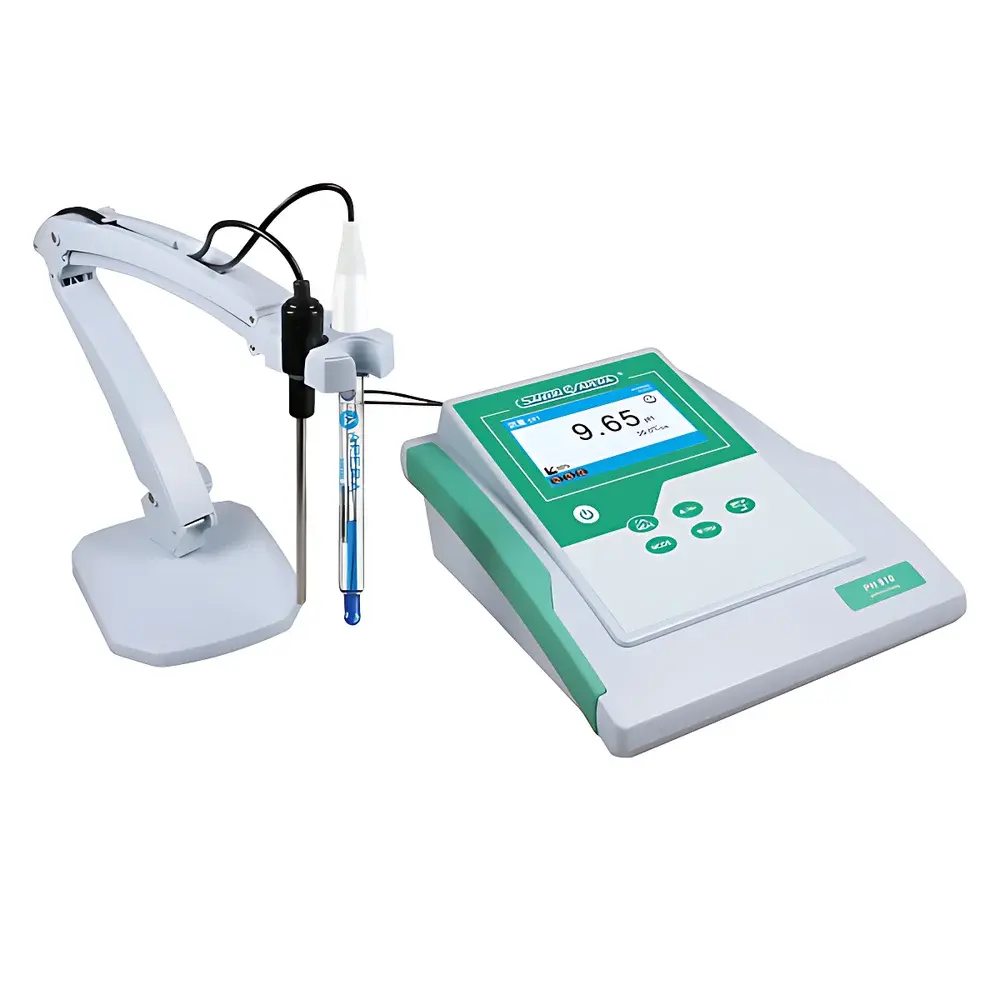
SANXIN PH910 Benchtop pH Meter
| Brand | SANXIN |
|---|---|
| Origin | Shanghai, China |
| Manufacturer Type | Direct Manufacturer |
| Instrument Type | Benchtop |
| Parameter Type | Single-Parameter (pH) |
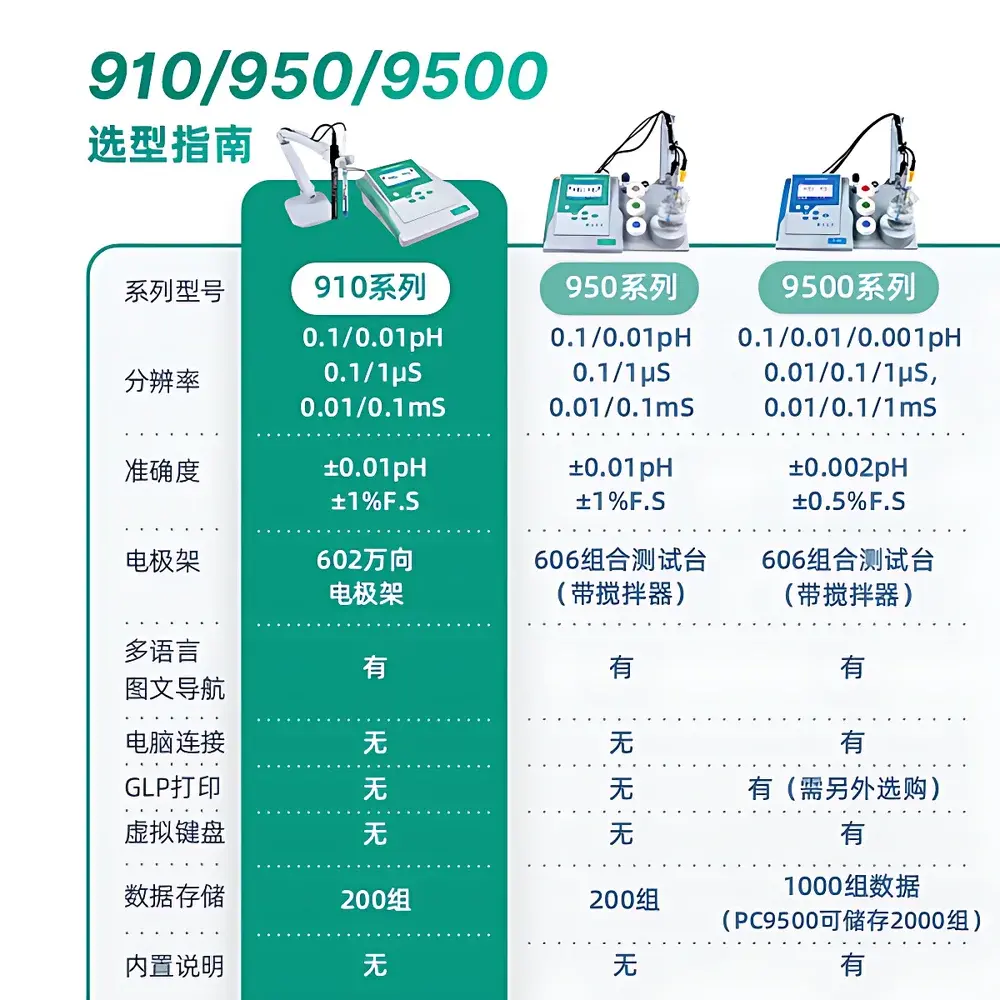
| Measurement Accuracy | ±0.01 pH |
| pH Range | 0.00–14.00 pH (extended range: –2.00–20.00 pH) |
| Resolution | 0.1 / 0.01 pH |
| mV Range | ±2000 mV |
| mV Resolution | 1 mV |
| mV Accuracy | ±0.1% FS ±1 digit |
| Temperature Range | 0–100 °C (32–212 °F) |
| Temp. Resolution | 0.1 °C |
| Temp. Accuracy | ±0.5 °C ±1 digit |
| Calibration | 1–3 point auto-calibration with auto-buffer recognition (USA, NIST, CH standards) |
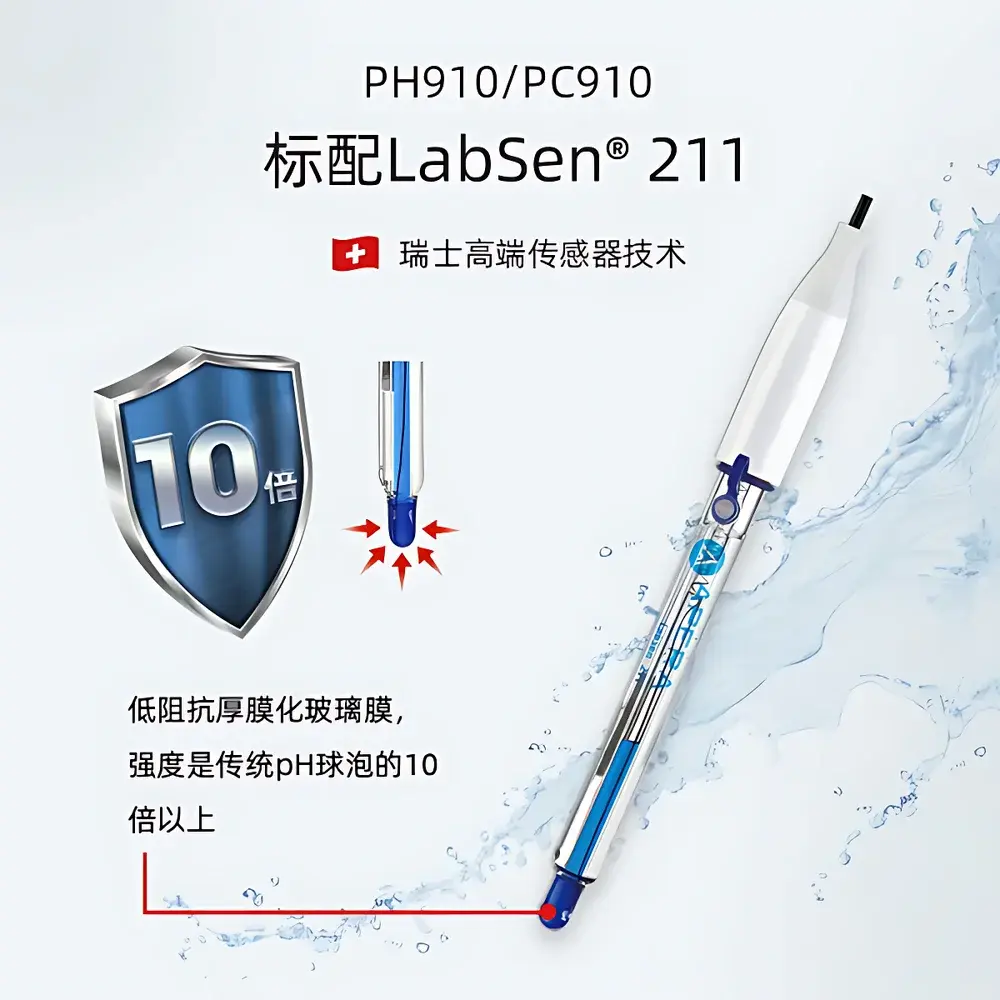
| Electrode Compatibility | LabSen®211 refillable glass pH composite electrode |
| Data Storage | 100 sets with timestamp, unit, temperature, and electrode slope |
| Connectivity | USB output (PC-Link-910 software included) |
| Power Supply | DC 9 V / 600 mA adapter |
| Dimensions (instrument only) | 195 × 215 × 100 mm |
| Weight | 0.9 kg |
Overview
The SANXIN PH910 Benchtop pH Meter is a precision electrochemical instrument engineered for high-reproducibility pH, mV, and temperature measurements in laboratory, quality control, and educational environments. Built upon potentiometric measurement principles, it determines hydrogen ion activity via a glass membrane electrode coupled with a stable Ag/AgCl reference system. The instrument complies with fundamental electrochemical metrology standards and supports traceable calibration workflows aligned with ISO/IEC 17025–recommended practices for analytical instrument validation. Its extended pH measurement range (–2.00 to 20.00 pH) enables reliable analysis of strongly acidic or alkaline samples—such as industrial cleaning agents, electroplating baths, or concentrated caustic solutions—beyond conventional aqueous limits.
Key Features
- LabSen®211 refillable glass pH composite electrode featuring a thick-film glass membrane (10× higher mechanical robustness vs. conventional electrodes), low-impedance response (< 100 MΩ at 25 °C), and gel-filled reference junction eliminating bubble formation during inverted use.
- TFT color display with intuitive multilingual graphical interface (English, German, Spanish, Chinese) supporting zero-training operation and real-time visual diagnostics.
- GLP-compliant data management: automatic timestamping, electrode slope monitoring, calibration history logging, and full audit trail for each measurement record.
- Intelligent auto-calibration with buffer recognition across three certified standard series: USA (e.g., 4.01, 7.00, 10.01), NIST (e.g., 4.005, 6.865, 9.180), and CH (Chinese national standards); includes guided step-by-step calibration prompts and electrode health diagnostics.
- Integrated temperature compensation (ATC/MTC) using MP500 thermistor probe; supports manual input when external probe is unavailable.
- USB interface with PC-Link-910 software for secure data export, report generation, and long-term archiving—compatible with FDA 21 CFR Part 11–aligned validation protocols when deployed in regulated GxP environments.
Sample Compatibility & Compliance
The PH910 is optimized for aqueous and mildly non-aqueous solutions including buffers, biological media, pharmaceutical formulations, food extracts, wastewater effluents, and electrochemical process streams. It accommodates standard 12-mm diameter electrodes and integrates seamlessly with the included 1602 universal electrode stand for single-handed positioning. All electrical components meet IEC 61010-1 safety requirements for laboratory instruments. Calibration traceability aligns with ISO 3696 (Grade 3 water), ASTM E70 (standard test method for pH of aqueous solutions), and USP (pH measurement). The device supports GLP documentation integrity through immutable storage of calibration parameters, slope values (>95% typical), and offset deviations.
Software & Data Management
PC-Link-910 software provides secure bidirectional communication, enabling batch export of measurement records in CSV and PDF formats. Each stored entry (up to 100 sets) contains sample ID, date/time stamp, measured pH/mV/°C values, electrode slope (%), offset (mV), calibration buffer IDs, and user-defined notes. Data fields are structured to support LIMS integration and satisfy internal QA documentation requirements. USB transfer logs include file creation metadata and checksum verification to ensure data integrity during migration. No cloud dependency—data remains under local administrative control at all times.
Applications
- QC/QA testing of raw materials and finished products in pharmaceutical, cosmetic, and beverage manufacturing per compendial methods (USP, EP, JP).
- Environmental monitoring of surface water, wastewater, and soil leachates in accordance with EPA Method 150.1 and ISO 10523.
- Academic teaching labs requiring rugged, intuitive instrumentation for electrochemistry and analytical chemistry coursework.
- R&D formulation development where precise pH control impacts reaction kinetics, solubility, or stability profiles.
- Calibration verification and routine performance checks of in-line pH sensors used in bioreactors or continuous processing systems.
FAQ
What calibration standards are supported?
The PH910 automatically recognizes and applies correction factors for USA, NIST, and CH-certified buffer series. Custom buffer values may be entered manually for proprietary or non-standard solutions.
Is the LabSen®211 electrode suitable for non-aqueous or low-ionic-strength samples?
Yes—the gel-filled reference system minimizes liquid junction potential drift, and the thick-film glass membrane maintains stable response in ethanol/water mixtures up to 30% v/v and dilute buffers (≥10 µS/cm conductivity).
Does the instrument support regulatory compliance for GMP environments?
It provides core GLP functionality (audit trail, calibration history, electronic signatures via PC-Link-910) and is deployable within validated systems meeting Annex 11 and 21 CFR Part 11 requirements when configured with appropriate procedural controls.
Can measurement data be exported directly to Excel or LIMS?
Yes—CSV exports retain all metadata (timestamps, slopes, units) and are natively compatible with Microsoft Excel, MATLAB, and most LIMS platforms via standardized import templates.
What is the expected service life of the LabSen®211 electrode under normal lab use?
With proper storage (in 3 M KCl solution) and routine cleaning, the electrode typically delivers >18 months of stable performance in daily QC applications, as verified by slope tracking and calibration consistency checks.
Related Products






