
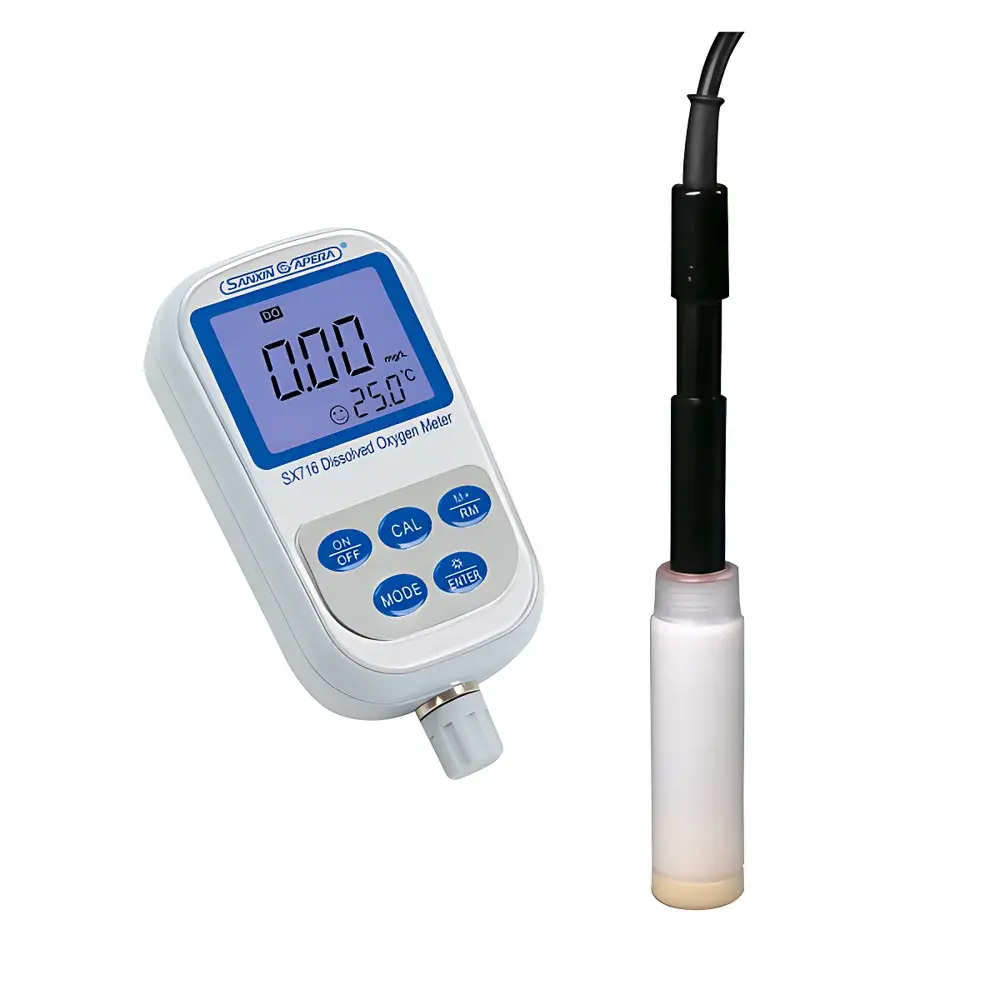
Sanxin SX716 Portable Dissolved Oxygen Meter
| Brand | Sanxin Peirui |
|---|---|
| Origin | Shanghai, China |
| Manufacturer Type | Direct Manufacturer |
| Product Category | Domestic |
| Model | SX716 |
| Instrument Type | Portable |
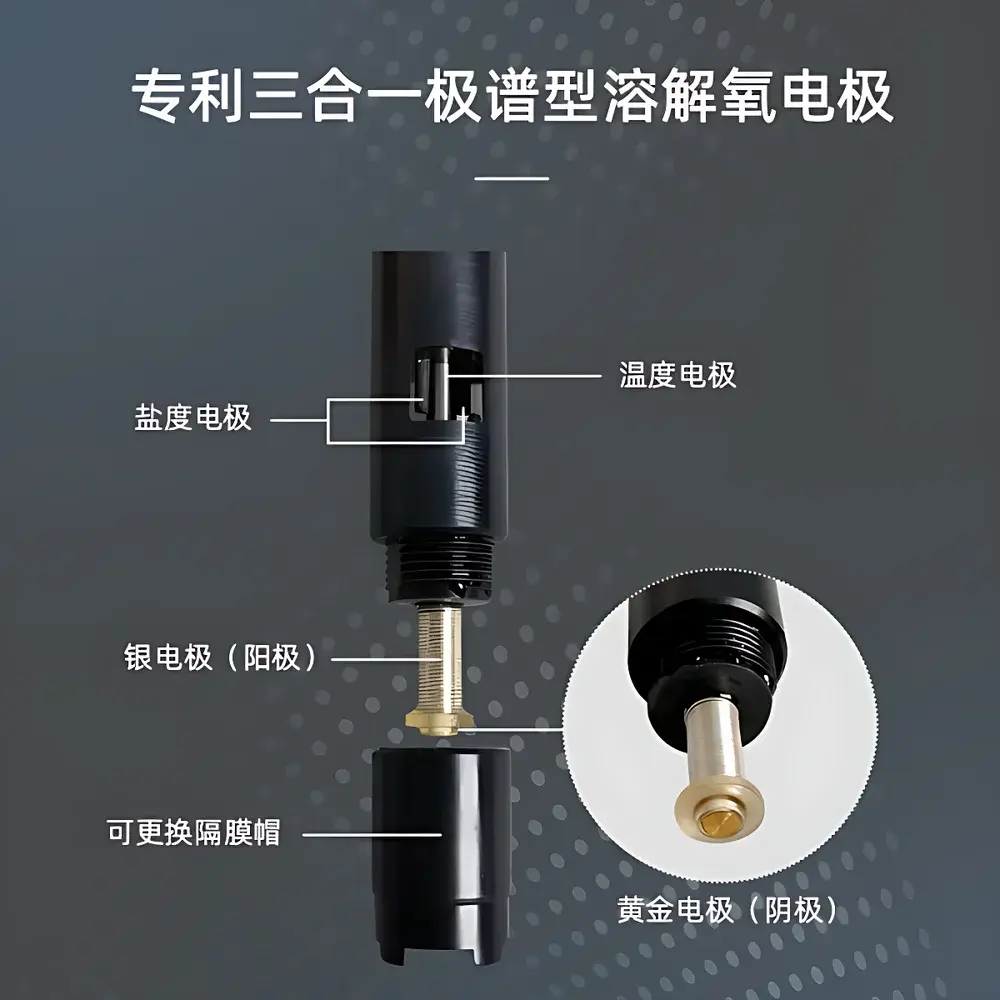
| Measurement Principle | Electrochemical Clark-type Polarographic Probe |
| Measurement Range | (0–20.00) mg/L (ppm), (0–200.0)% |
| Accuracy | Meter: ±0.10 mg/L |
| System (with probe) | ±0.40 mg/L |
| Repeatability | 0.1% |
| Detection Limit | 0.1 / 0.01 mg/L (ppm), 1 / 0.1 % |
| Response Time | ≤30 s (90% response at 25 °C) |
| Temperature Compensation Range | (0–45) °C (automatic) |
| Salinity Compensation Range | (0–45) ppt (automatic) |
| Barometric Pressure Compensation Range | (66–200) kPa (manual) |
| Data Storage | 100 sets (ID, DO value, unit, temperature) |
| Power Supply | 2 × AA batteries (1.5 V each) |
| Dimensions & Weight | Meter: 65 × 120 × 31 mm / 180 g |
| Carrying Case | 255 × 210 × 50 mm / 790 g |
| Environmental Operating Conditions | 5–35 °C, ≤85% RH |
| Ingress Protection Rating | IP57 |
| Certifications | ISO 9001:2000, CE, CMC |
Overview
The Sanxin SX716 Portable Dissolved Oxygen Meter is an electrochemical field instrument engineered for high-reliability dissolved oxygen (DO) measurement in natural waters, wastewater effluents, aquaculture systems, and environmental monitoring applications. It operates on the Clark-type polarographic principle: a gold cathode and silver/silver chloride anode are housed within a gas-permeable Teflon membrane, immersed in electrolyte solution. When polarized at −0.6 V vs. Ag/AgCl, molecular oxygen diffuses through the membrane and undergoes reduction at the cathode, generating a diffusion-limited current linearly proportional to the partial pressure of O₂ in the sample. This signal is digitally processed with temperature-, salinity-, and barometric pressure-compensated algorithms to yield DO concentration in both mg/L (ppm) and saturation percentage (%). Designed for rugged outdoor deployment, the SX716 integrates a microprocessor-controlled analog front end with digital filtering and sliding-average computation to suppress noise and improve stability—particularly critical in turbulent or low-conductivity field samples.
Key Features
- Patented integrated tri-functional polarographic DO probe (DO500) with built-in temperature and salinity sensors—enabling simultaneous, auto-compensated measurement without external modules
- Fast electrode polarization time: 3–5 minutes—reducing pre-measurement downtime in time-sensitive surveys
- IP57-rated enclosure ensures dust resistance and immersion protection up to 1 m for 30 minutes—validated for rain, splashing, and accidental submersion during field work
- High-contrast blue-backlit LCD with real-time stability indicator (smiley icon) confirms signal convergence before data logging
- Intelligent power management: automatic shutdown after 10 minutes of inactivity; low-battery warning with remaining voltage display
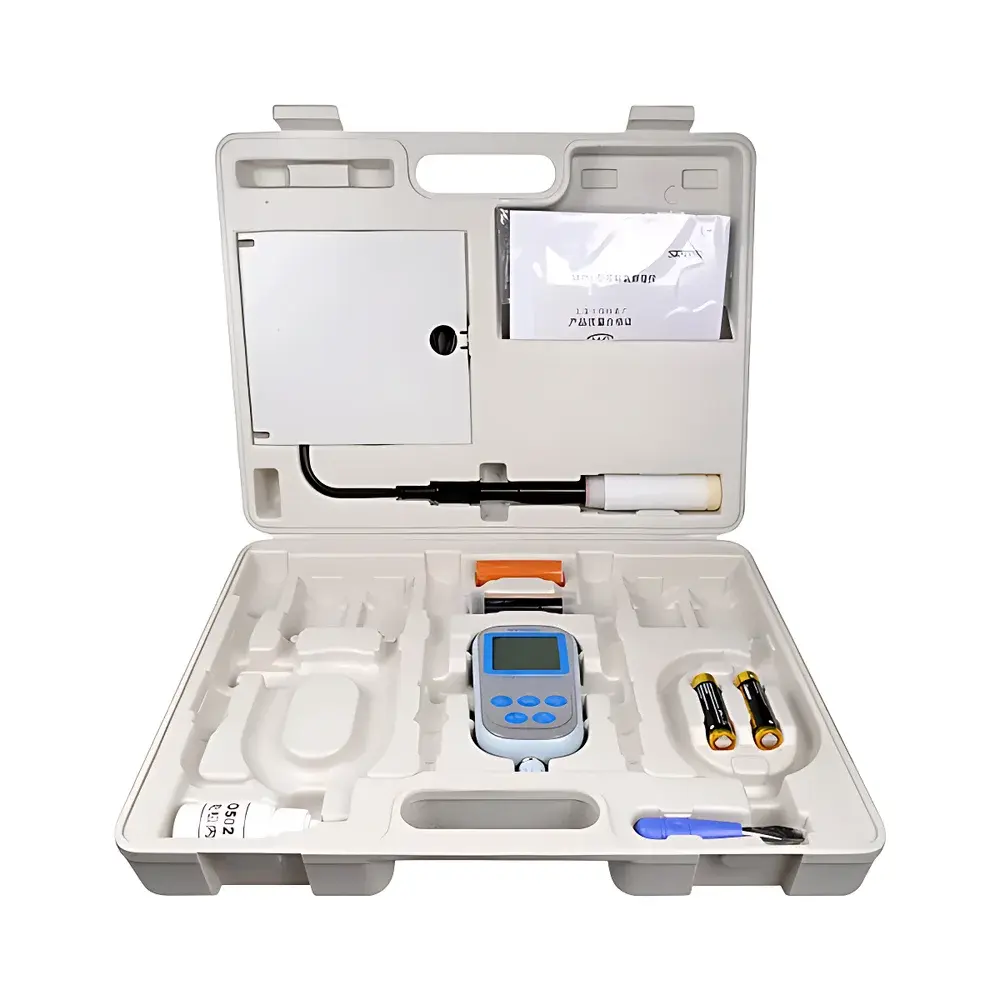
- Dual-mode calibration support: saturated air (100% O₂) and air-saturated water (near 100% at ambient conditions), plus optional zero-oxygen and salinity-specific calibration using included DO503 caps and DO502 electrolyte
- Ergonomic design with fold-out stand—converts seamlessly from handheld to benchtop configuration without accessories
Sample Compatibility & Compliance
The SX716 is validated for use across freshwater, brackish, and low-salinity marine environments (≤45 ppt), including rivers, lakes, reservoirs, aquaculture ponds, activated sludge tanks, and stormwater outfalls. Its polarographic sensor exhibits minimal interference from common ions (e.g., Cl⁻, NO₃⁻, SO₄²⁻) and negligible cross-sensitivity to CO₂ or H₂S under typical environmental pH ranges (5–9). The instrument complies with ISO 5814:2012 (Water quality — Determination of dissolved oxygen — Electrochemical probe method) and supports documentation traceability required under GLP-aligned field protocols. While not FDA 21 CFR Part 11 certified (as a non-GxP field instrument), its 100-point audit-ready data log—including timestamp, DO value, unit, temperature, and operator ID—facilitates integration into LIMS workflows when exported via manual transcription.
Software & Data Management
Data acquisition and review are performed directly on-device: each stored record contains measurement ID, DO value (mg/L and %), temperature (°C), and unit mode. No proprietary software or USB interface is provided; however, the structured 100-entry memory allows systematic manual transfer to spreadsheets or environmental databases. All calibration events—including date, medium (air/water), and offset values—are retained alongside measurements. The system supports full recall, selective deletion, and batch reset—enabling rapid reconfiguration between sampling sites. Firmware-level diagnostics report electrode status, membrane integrity warnings, and battery health—critical for maintaining measurement continuity during multi-day campaigns.
Applications
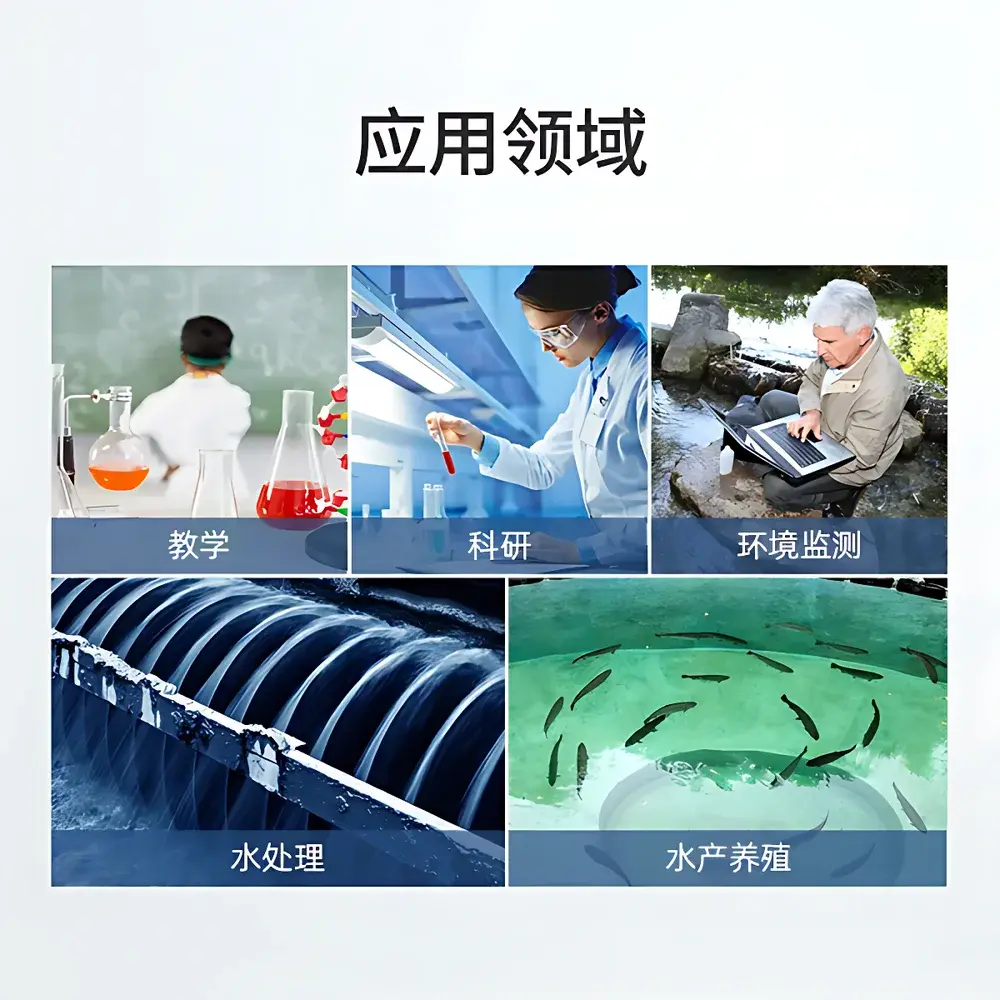
- Aquaculture management: real-time DO profiling across pond zones to prevent hypoxia-induced mortality in shrimp, tilapia, and salmonid operations
- Municipal wastewater treatment: monitoring aeration basin efficiency, return activated sludge (RAS) DO levels, and final effluent compliance
- Environmental impact assessment: baseline DO mapping upstream/downstream of discharge points per EPA Method 360.1 and ASTM D888
- Drinking water source surveillance: tracking seasonal stratification effects in reservoirs and groundwater-fed springs
- Academic field labs: student-led water quality modules requiring portable, self-contained instrumentation with pedagogical clarity in probe operation and calibration logic
FAQ
What calibration standards are required for routine use?
The SX716 requires only two standard media: air-saturated water (for 100% saturation calibration) and zero-oxygen solution (sodium sulfite, Na₂SO₃, 1% w/v) for span verification. No certified gas cylinders or permeation tubes are needed.
Can the DO500 probe be used in seawater?
Yes—the probe’s 0–45 ppt salinity compensation range covers most estuarine and coastal applications. For long-term deployment >72 h in full-strength seawater (>35 ppt), replace the DO503 membrane cap and refill electrolyte prior to each mission.
How does barometric pressure compensation affect accuracy?
Since DO solubility is inversely proportional to atmospheric pressure, manual entry of local kPa (via keypad) corrects for altitude or weather-driven fluctuations—improving absolute mg/L accuracy by up to ±0.25 mg/L above 500 m elevation.
Is the instrument suitable for continuous immersion?
No—the IP57 rating permits temporary submersion but not continuous underwater operation. For long-term in-situ monitoring, consider fixed-mount DO sensors with dedicated dataloggers.
What maintenance intervals are recommended for field durability?
Replace the DO503 membrane cap and replenish DO502 electrolyte every 3 months under weekly use; polish the cathode surface with included abrasive paper before each cap replacement to maintain electron transfer kinetics.







