
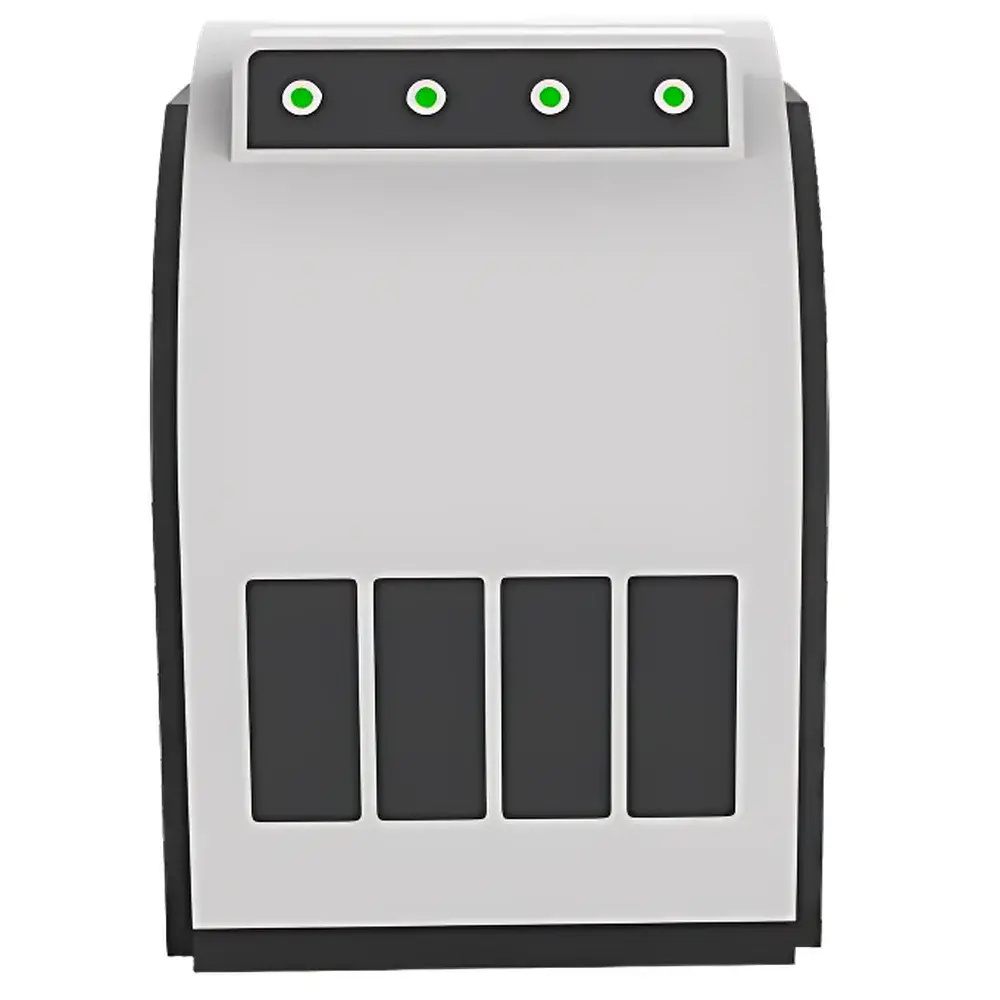
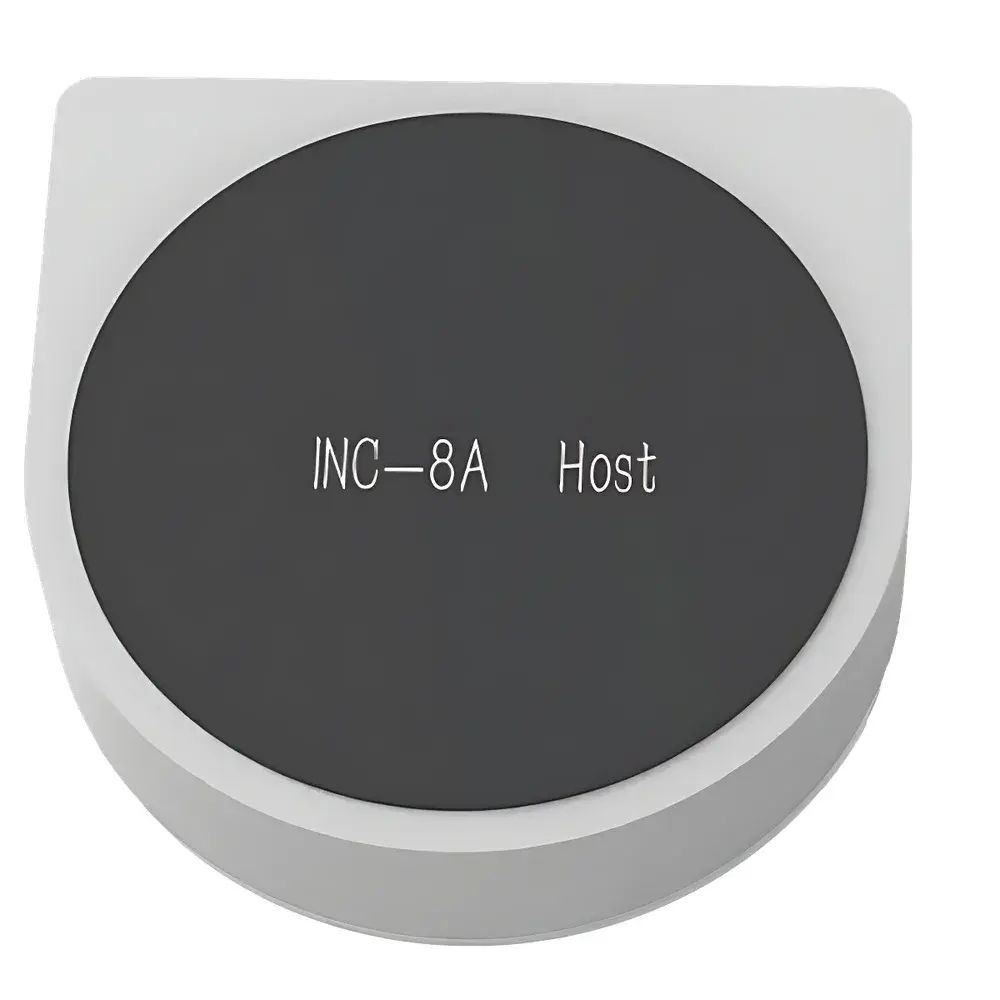
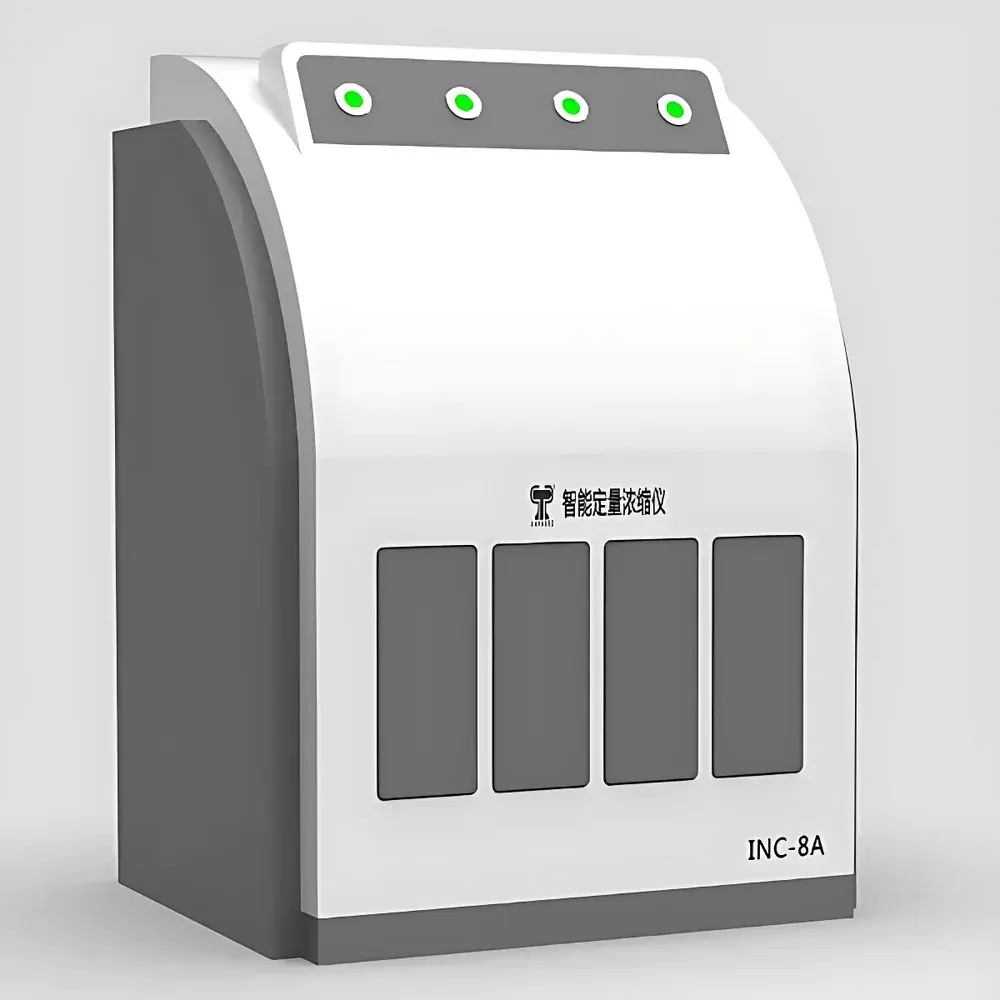
Saprete INC-8A+ Intelligent Automated Quantitative Concentrator
| Brand | Saprete |
|---|---|
| Origin | Beijing, China |
| Manufacturer Type | Direct Manufacturer |
| Region of Origin | Domestic (China) |
| Model | INC-8A+ |
| Instrument Type | Automated Quantitative Concentrator |
| Temperature Range | User-Programmable |
| Temperature Control Accuracy | ±0.1 °C |
| Sample Volume Capacity per Vial | 0–40 mL |
| Maximum Channel Capacity | 32 (expandable from base 8-channel configuration) |
| Quantitative Target Range | 0.2–10 mL (including dry-down and near-dry endpoints) |
Overview
The Saprete INC-8A+ Intelligent Automated Quantitative Concentrator is an engineered solution for high-precision, parallel sample concentration in analytical laboratories. Based on nitrogen gas-assisted evaporation under controlled thermal conditions, the system employs real-time liquid-level tracking via proprietary Leel-Tracing optical sensing—enabling dynamic adjustment of gas needle height and sweep flow rate relative to meniscus position. Unlike fixed-step or time-based nitrogen blow-down systems, the INC-8A+ operates on a closed-loop feedback principle: continuous optical monitoring of solvent surface displacement triggers synchronized vertical repositioning of each gas delivery needle and adaptive modulation of mass flow. This architecture ensures consistent heat and mass transfer coefficients across varying sample volumes, minimizing splashing, foaming, and analyte loss—critical for trace-level quantitation in regulated environments.
Key Features
- Leel-Tracing Liquid-Level Tracking: Each of up to 32 independent channels maintains sub-millimeter positional accuracy of the nitrogen needle relative to the receding solvent meniscus—eliminating reliance on preset descent profiles or fixed endpoint timers.
- True Quantitative Endpoint Control: Supports user-defined final volumes from 0.2 mL to 10 mL, including complete dry-down and near-dry modes. Pre-run vial calibration compensates for tube wall thickness and refractive index variations, ensuring volumetric repeatability independent of consumable batch or geometry.
- Modular Parallel Processing: Base 8-channel configuration expandable to 32 positions; each channel features independent control of temperature (dry-block heating), nitrogen flow rate (mass-flow controlled), and termination logic—enabling heterogeneous experimental designs within a single run.
- Automated Drawer-Based Sample Handling: Motorized drawer with position-sensing actuation enables fully automated sample loading/unloading. Individual vials may be inserted or removed mid-run without interrupting concurrent channels—a capability essential for staggered workflow integration.
- Sealed Gas Delivery Architecture: Fully enclosed nitrogen circuit with integrated pressure regulation, filtration, and leak detection minimizes ambient contamination risk and eliminates requirement for fume hood installation—reducing footprint and operational overhead.
- Intelligent Flow Optimization: Real-time adaptation of sweep gas velocity based on instantaneous liquid volume and surface area improves evaporation kinetics while maintaining analyte integrity—achieving 3× to 5× faster concentration versus conventional nitrogen evaporators and performance equivalent to 8–10 parallel rotary evaporators.
Sample Compatibility & Compliance
The INC-8A+ accommodates standard 10–40 mL glass or polypropylene test tubes (e.g., 16 × 100 mm, 18 × 150 mm formats) and supports common organic solvents including hexane, ethyl acetate, dichloromethane, methanol, and acetonitrile. Its dry-block heating design prevents condensate formation and water vapor interference—making it suitable for moisture-sensitive analytes. The system complies with general laboratory safety standards (IEC 61010-1) and supports audit-ready operation when integrated with validated LIMS or ELN platforms. While not pre-certified for specific regulatory submissions, its programmable parameters, electronic log generation, and configurable alarm thresholds align with GLP and GMP documentation requirements—including support for 21 CFR Part 11-compliant software extensions where deployed with validated third-party control suites.
Software & Data Management
Operation is managed through a dedicated Windows-based workstation interface supporting method creation, parameter scheduling, real-time status visualization (temperature, flow, position, elapsed time), and event-triggered notifications (e.g., completion alerts, fault conditions). All system actions—including vial calibration sequences, run logs, error codes, and user login events—are timestamped and stored locally with optional network backup. Export formats include CSV and PDF reports compatible with analytical data review workflows. Remote monitoring via Ethernet is supported; API access for integration with laboratory information management systems (LIMS) is available under OEM licensing agreements.
Applications
The INC-8A+ serves laboratories engaged in multi-residue analysis requiring reproducible, low-variance concentration prior to GC-MS, LC-MS/MS, or ICP-MS detection. Primary application domains include: environmental testing (aqueous extracts, soil leachates, sediment supernatants, solid waste digests); food safety (cereal commodities, tea matrices, muscle tissue homogenates, seafood extracts); pharmaceutical quality control (herbal supplements, active pharmaceutical ingredient isolates); petrochemical analysis (polymer dissolution fractions, additive extractions); and forensic toxicology (biological fluid extracts, evidentiary swab eluates). Its precision volumetric output directly supports ISO 17025-compliant uncertainty budgets for post-extraction recovery calculations.
FAQ
Does the INC-8A+ support method validation per ISO/IEC 17025?
Yes—when operated with documented calibration procedures (temperature probe verification, flow meter certification, volumetric endpoint verification using gravimetric standards), the system provides traceable, repeatable results suitable for inclusion in validation protocols.
Can different solvents be concentrated simultaneously in one run?
Yes—each channel’s temperature and flow profile is independently programmable, enabling co-processing of samples containing solvents with differing boiling points and volatility profiles.
Is nitrogen supply pressure regulated internally?
Yes—the unit integrates an internal pressure-reducing valve and mass flow controller per channel, accepting inlet pressures from 0.2–0.6 MPa and delivering stable, calibrated flows between 0–15 L/min.
What maintenance is required for long-term optical sensor reliability?
The Leel-Tracing module includes automatic self-diagnostic routines and requires only periodic cleaning of the optical window using lint-free wipes and isopropanol—no recalibration is needed under normal operating conditions.
Is remote software update capability available?
Firmware updates are delivered via secure USB media; over-the-air updates are not supported to maintain system integrity in regulated environments.



