
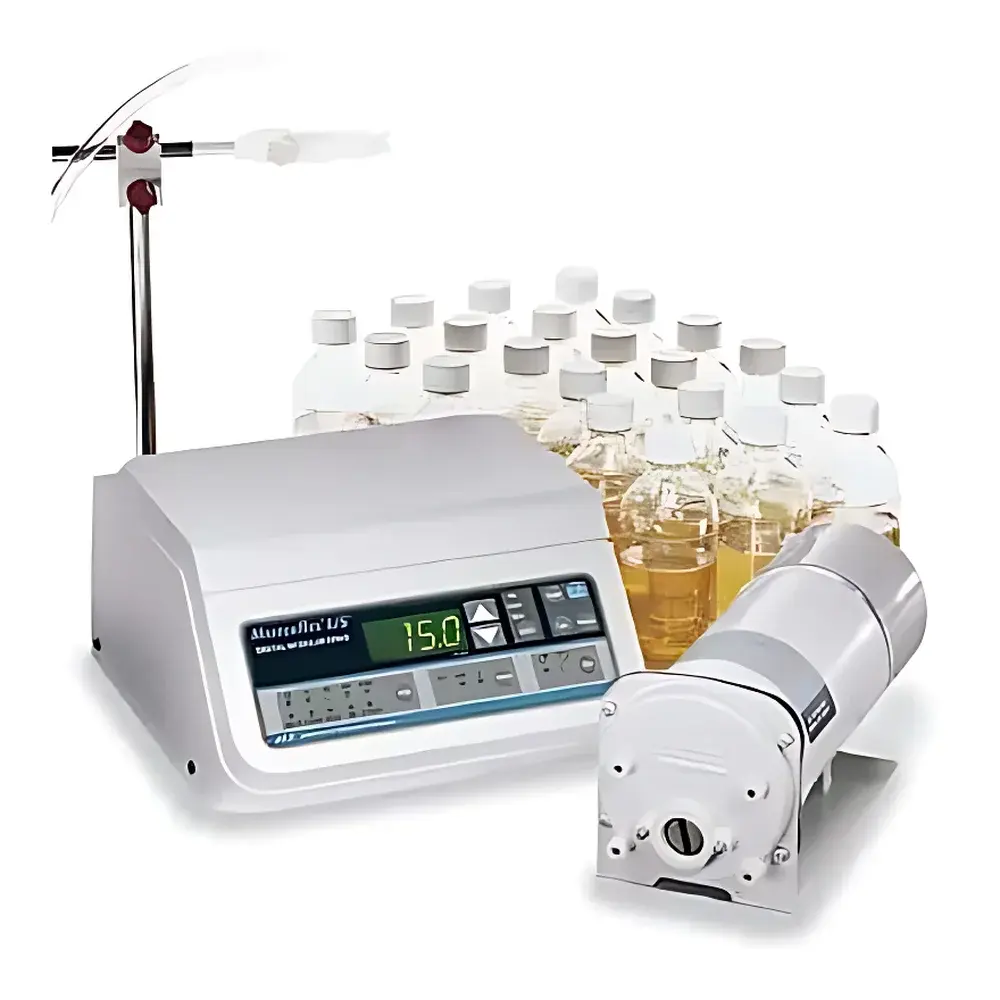
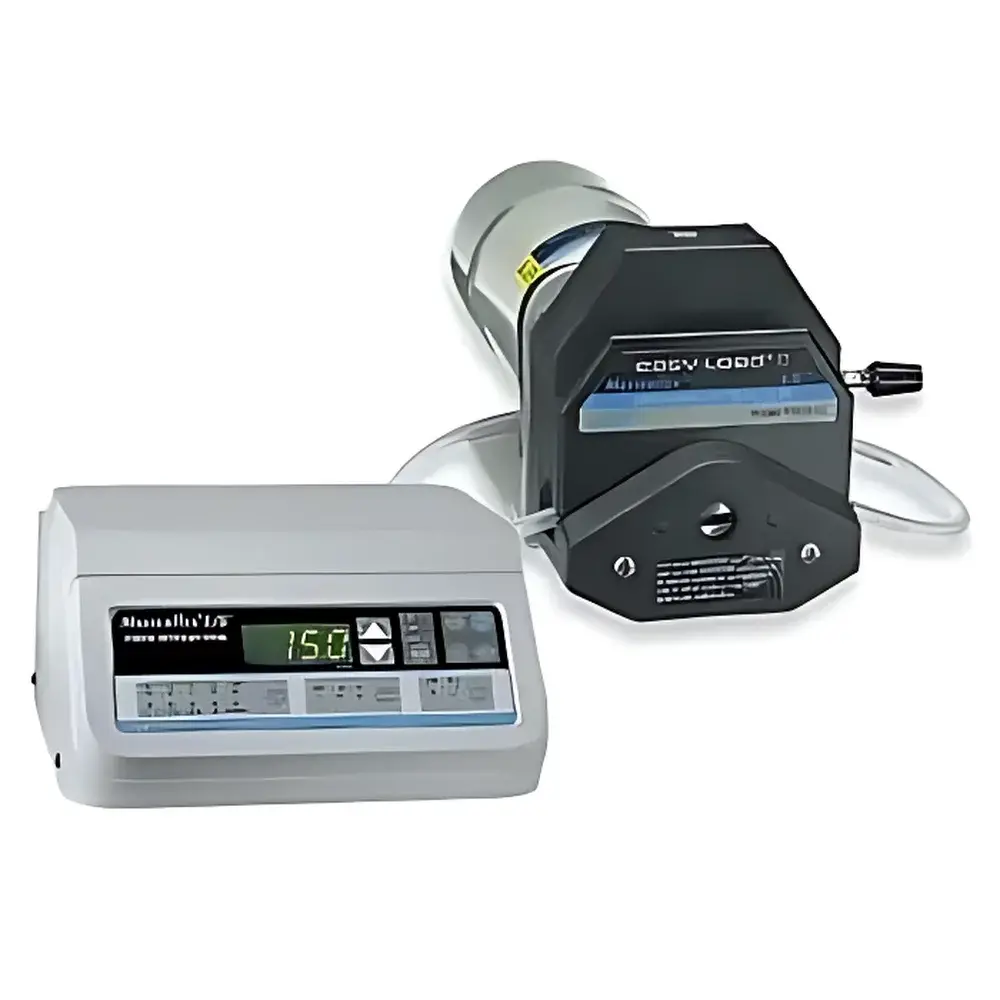
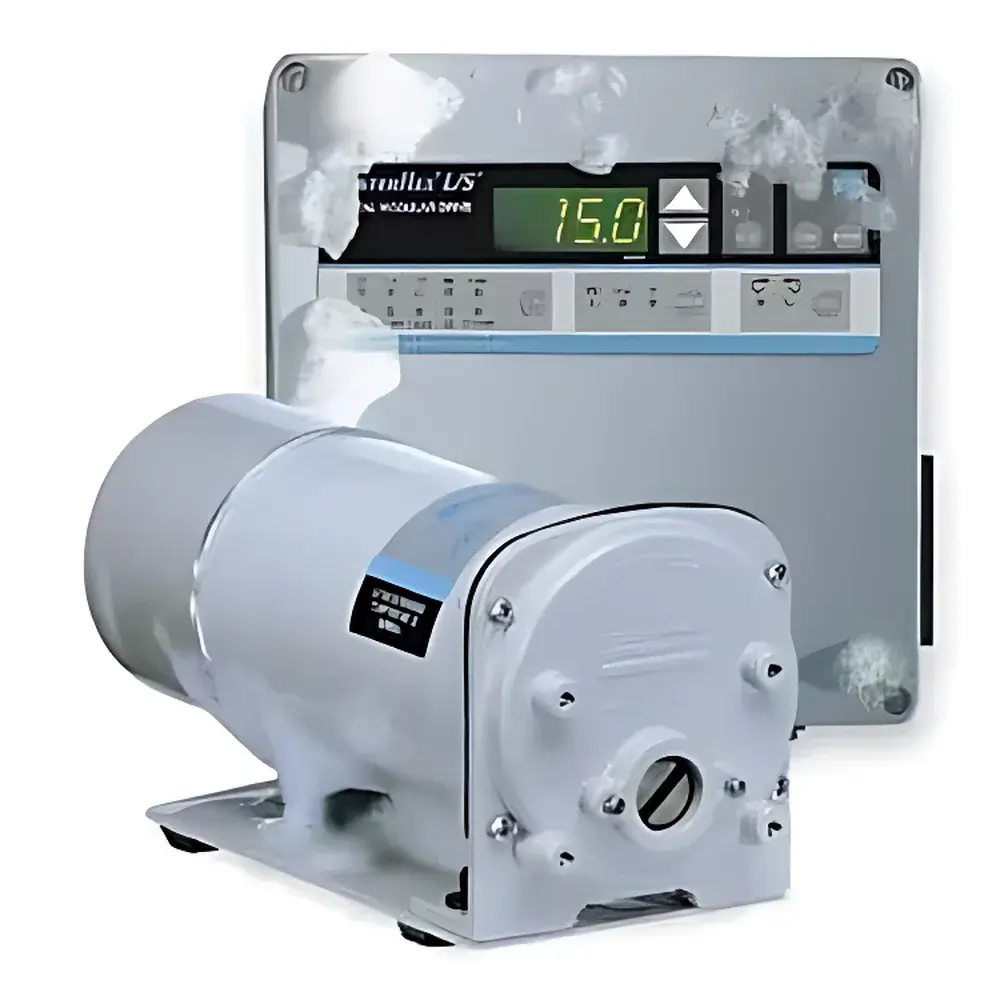
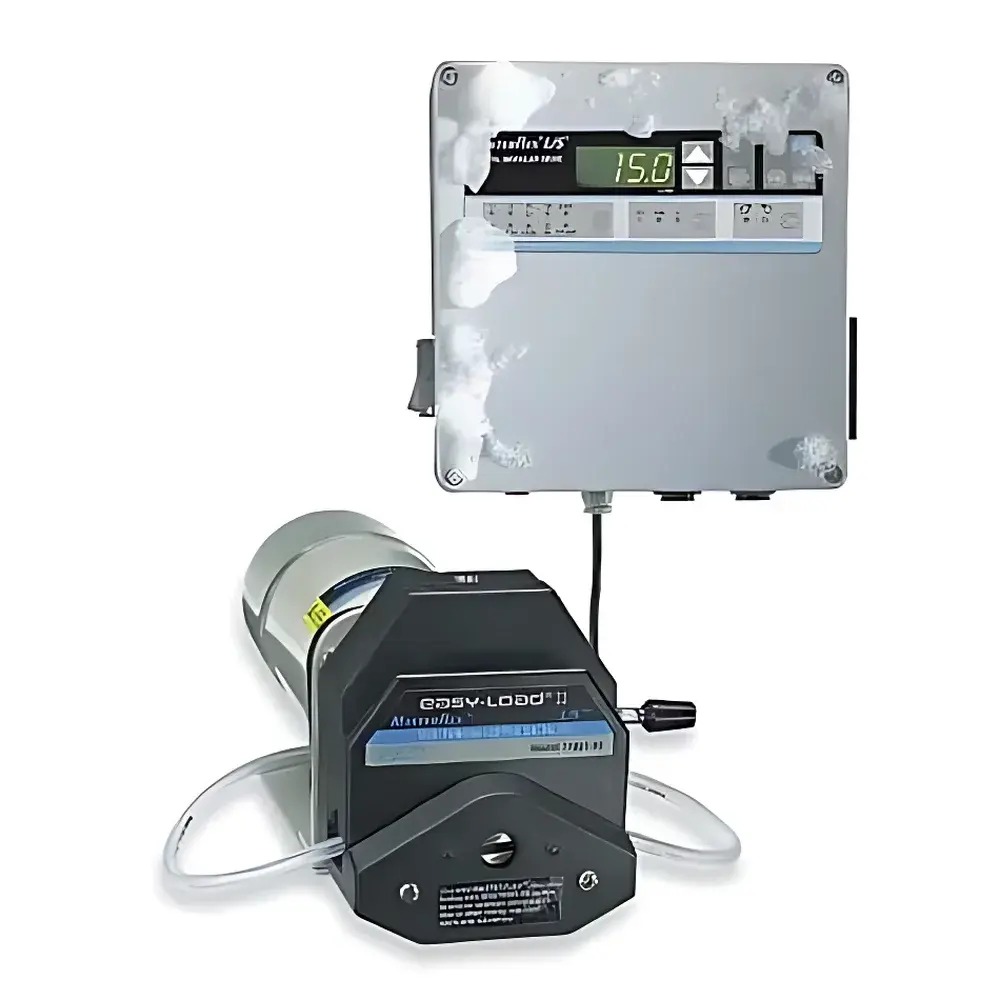
Masterflex LS Programmable Split-Body Peristaltic Pump
| Brand | Masterflex |
|---|---|
| Origin | USA |
| Model | 77301-20 |
| Flow Rate Range | 0.6–3400 mL/min |
| Speed Range | 10–600 rpm |
| Speed Accuracy | ±0.3% |
| Volume Dispensing Range | 1 mL–999 L |
| Repetition Count | 1–99 cycles |
| Interval Time Between Cycles | 1–9999 s |
| Analog I/O | 0–20 mA, 4–20 mA, 0–10 V, TTL pulse |
| Motor–Controller Cable Length | 7.6 m |
| Motor IP Rating | IP56 |
| Controller IP Rating (77301-20) | IP22 |
| Controller IP Rating (77301-30) | IP56 |
| Power Supply | 90–260 V AC, 1.1 A, 75 W |
| Compliance | ISO 9001:2000, UL, CE |
| Dispensing Accuracy | ±0.5% (with calibrated tubing) |
Overview
The Masterflex LS Programmable Split-Body Peristaltic Pump (Model 77301-20) is an industrial-grade, precision fluid transfer system engineered for reproducible, contamination-free peristaltic pumping in regulated laboratory, bioprocessing, and analytical environments. Operating on the principle of occlusive compression—where rollers sequentially compress flexible tubing against a rigid housing—the pump delivers pulseless, non-invasive flow without internal valves or seals. Its split-body architecture separates the motor drive unit from the control electronics, enabling physical isolation of sensitive electronics from wet or hazardous process zones while maintaining full operational integrity over a 7.6-meter cable run. Designed for continuous-duty applications requiring high repeatability and long-term stability, the pump integrates brushless DC motor technology to eliminate commutator wear and ensure maintenance-free operation across its full 10–600 rpm speed range.
Key Features
- Four-digit LED display showing real-time flow rate, rotational speed, elapsed time, dispensed volume, and cycle count
- Intuitive touch keypad with up/down arrow keys for parameter adjustment; directional reversal capability supports pre- and post-run tubing rinse protocols
- Keyboard lock function prevents inadvertent parameter changes during unattended operation
- High-fidelity analog and digital I/O interfaces—including 0–20 mA, 4–20 mA, 0–10 V, and TTL pulse signals—for seamless integration into PLC-controlled or SCADA-monitored systems
- Onboard memory stores one user-defined calibration profile per tubing size, supporting rapid reconfiguration across multiple fluid viscosities and chemistries
- IP56-rated motor housing permits direct washdown in humid, dusty, or splash-prone environments; controller enclosure (IP22 for 77301-20, IP56 for 77301-30) meets general-purpose lab installation requirements
- Supports dual-head configuration for parallel or sequential multi-stream delivery, including Y-branch manifold integration for flow summation
Sample Compatibility & Compliance
The LS series accommodates a broad spectrum of certified tubing materials—including Tygon® LFL, C-Flex®, Pharmapure®, Norprene®, Viton®, and Chem-Durance®—enabling compatibility with aggressive solvents, high-pH caustics, low-viscosity buffers, and shear-sensitive biologics. Tubing selection directly governs pressure rating (up to 10.2 bar with high-pressure heads), chemical resistance, and particulate leachables profile. All configurations comply with ISO 9001:2000 quality management standards and carry UL and CE markings for electrical safety. While not inherently 21 CFR Part 11 compliant, the pump’s analog/digital I/O and deterministic dispensing behavior support audit-ready integration within validated workflows when paired with compliant SCADA or LIMS platforms featuring electronic signature and audit trail capabilities.
Software & Data Management
As a hardware-level fluid actuator, the LS pump does not include embedded firmware-based software but provides deterministic, low-latency signal responsiveness for external control systems. Its programmable parameters—including target volume, cycle count, inter-cycle delay, and direction—are retained in non-volatile memory after power loss. For GLP/GMP-aligned operations, users may deploy third-party control software (e.g., LabVIEW, MATLAB, or custom Python scripts via RS-232 or analog interface) to log timestamped events, generate calibration reports, and enforce procedural constraints. The ±0.5% volumetric dispensing accuracy—validated per ASTM D1298 and ISO 8421—supports traceable liquid handling in QC testing, reagent preparation, and continuous feed applications.
Applications
- Automated media preparation and buffer exchange in cell culture and fermentation processes
- Controlled reagent dosing in HPLC, ICP-MS, and automated titration systems
- In-line sampling for online analyzers and process analytical technology (PAT) deployments
- Pharmaceutical fill-finish validation studies requiring repeatable micro-volume delivery
- Environmental water analysis where sample integrity mandates zero-metal-contact fluid paths
- Food and beverage R&D involving viscous sauces, dairy emulsions, or acidic fruit concentrates
FAQ
What tubing sizes are supported, and how do they affect flow performance?
The LS pump accepts tubing inner diameters from 0.8 mm to 9.6 mm (e.g., #13 through #36), with flow rates scaling predictably per manufacturer-provided calibration tables. Thicker-walled tubing (e.g., #15, #24, #35, #36) enhances pressure tolerance and longevity with viscous or abrasive fluids.
Can this pump be integrated into a GMP-compliant manufacturing environment?
Yes—when deployed with documented calibration procedures, validated tubing sets, and external audit-trail-capable control software, the LS pump satisfies functional requirements for Class 1000–10,000 cleanroom fluid transfer and batch record generation.
Is remote start/stop and direction control possible without a PC?
Yes—via optional footswitches (e.g., 07595-42), handheld remotes (07595-60), or industrial PLC outputs using standard 4–20 mA or TTL inputs.
How is accuracy maintained across varying tubing ages and temperatures?
Accuracy relies on periodic recalibration using gravimetric or volumetric methods per ISO/IEC 17025 guidelines; tubing fatigue and thermal expansion are mitigated by selecting chemically stable, low-creep polymers such as platinum-cured silicone or fluoropolymer composites.
Does the pump support continuous flow mode, or is it limited to discrete dispensing?
Both modes are fully supported: continuous flow at set rpm, or programmable timed dispensing with volume-, time-, or cycle-based termination logic.



