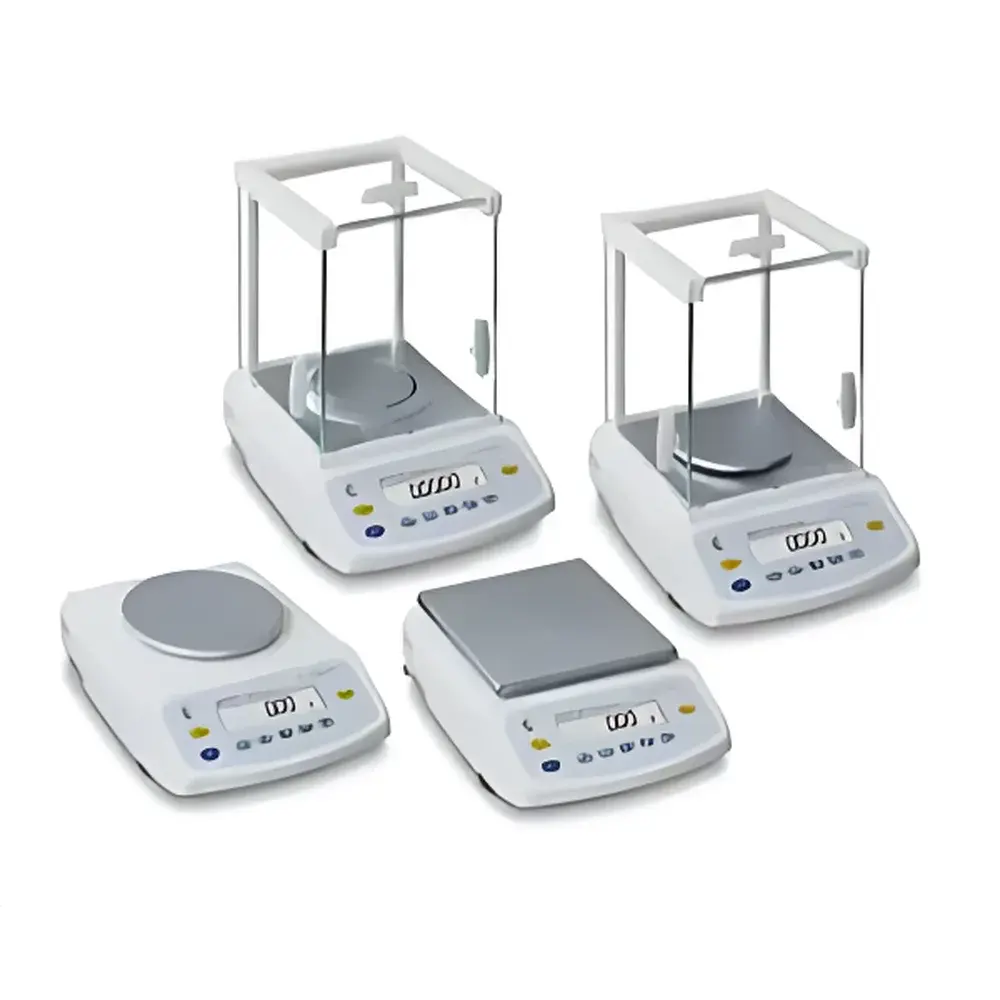
Sartorius BSA3202S Precision Balance
| Brand | Sartorius |
|---|---|
| Origin | Shanghai, China |
| Model | BSA3202S |
| Maximum Capacity | 3200 g |
| Readability | 0.01 g |
| Repeatability | ≤ ±0.01 g |
| Linearity | ≤ ±0.02 g |
| Calibration | Internal (CW variant) or External |
| Stabilization Time | ≤ 1.1 s |
| Pan Size | 180 × 180 mm |
| Interface | RS232 (GLP-compliant) |
| Compliance | GLP, ISO/IEC 17025-relevant operation protocols |
Overview
The Sartorius BSA3202S Precision Balance is an industrial-grade weighing instrument engineered for high-throughput laboratory and quality control environments requiring consistent accuracy at the 10 mg readability level. Based on electromagnetic force compensation (EMFC) technology, it delivers stable, drift-resistant measurements by dynamically balancing the gravitational load of a sample against a precisely controlled electromagnetic field. This principle ensures long-term stability, minimal thermal drift, and immunity to mechanical wear—critical attributes for applications demanding traceable, repeatable mass determination across shifts and operators. Designed and assembled in Shanghai under Sartorius’ global manufacturing standards, the BSA3202S complies with foundational metrological requirements aligned with OIML R76 and supports routine verification per ISO 9001 and ISO/IEC 17025 quality management frameworks.
Key Features
- Electromagnetic force compensation sensor with super-dual-lever monolithic design for enhanced mechanical stability and reduced susceptibility to off-center loading errors
- Integrated internal calibration system (CW version) featuring motorized, temperature-compensated built-in reference weights—enabling fully automated recalibration without manual intervention
- Five-sided draft shield constructed from anti-static coated glass, minimizing electrostatic interference and ensuring stable readings in low-humidity or static-prone environments
- Dynamic temperature compensation algorithm continuously adjusts zero and sensitivity based on real-time sensor housing temperature, mitigating thermal-induced measurement drift
- 40 MHz microcontroller (MC1 architecture) paired with surface-mount technology (SMT) circuitry enables sub-second stabilization (<1.1 s typical) and rapid data throughput
- Front-mounted bubble level and adjustable stainless-steel feet ensure rapid, reliable leveling—reducing setup time and operator dependency
- Dual tare keys (left/right positioned) accommodate ergonomic preferences across diverse user populations and glove-compatible workflows
- Bottom-loading hook assembly supports density determination, magnetic susceptibility testing, and large-volume container weighing without pan removal
Sample Compatibility & Compliance
The BSA3202S accommodates samples up to 3200 g on its 180 × 180 mm stainless-steel weighing pan, optimized for compatibility with standard lab containers, crucibles, filtration assemblies, and industrial parts. Its sealed sensor housing and IP42-rated enclosure provide protection against dust ingress and incidental splashes during routine handling. The balance supports GLP-compliant data integrity through RS232 output with timestamped, operator-ID–capable printouts—fully traceable to individual weighing events. While not certified for FDA 21 CFR Part 11 out-of-the-box, its audit trail functionality (via optional software integration) meets baseline requirements for regulated environments conducting non-critical QC testing, raw material receipt inspection, and formulation batch documentation.
Software & Data Management
Equipped with a standardized RS232 serial interface, the BSA3202S transmits weight data directly to LIMS, ERP, or custom laboratory software platforms using ASCII-based protocol. All outputs include date/time stamps, unit identifiers (g), net/gross/tare flags, and status codes (e.g., “STABLE”, “OVERLOAD”). Optional Sartorius DataControl or LabX Lite software enables automated report generation, statistical process control (SPC) charting, and electronic signature capture—facilitating alignment with internal SOPs and external accreditation audits. Firmware updates are delivered via USB-to-serial adapter, preserving configuration integrity across maintenance cycles.
Applications
- Raw material and finished product weight verification in pharmaceutical excipient and nutraceutical manufacturing
- Batch ingredient dispensing and recipe reconciliation in food and chemical production
- Sample preparation for ICP-OES, HPLC, and gravimetric analysis where ±10 mg repeatability satisfies method validation criteria
- Quality assurance checks for packaging fill weight, tablet count verification, and capsule weight uniformity (per USP & Ph. Eur. guidelines)
- Educational laboratories requiring robust, serviceable instrumentation for metrology training and uncertainty budgeting exercises
- Environmental testing labs performing soil moisture loss-on-ignition (LOI) and filter-based particulate mass quantification
FAQ
What is the difference between the BSA3202S and BSA3202S-CW models?
The “CW” suffix denotes internal calibration capability—motorized, temperature-compensated calibration weights are housed within the balance and activated automatically or on schedule. Non-CW units require external calibration masses.
Does this balance meet ISO/IEC 17025 requirements for accredited testing?
While the hardware supports metrological traceability and stability monitoring, full compliance requires documented calibration certificates (traceable to NMI standards), uncertainty budgets, and procedural controls implemented by the end-user laboratory.
Can the BSA3202S be integrated into a networked lab environment?
Yes—via RS232-to-Ethernet gateways or third-party middleware, enabling centralized data aggregation and remote status monitoring without native Ethernet hardware.
Is the anti-static glass shield ESD-safe for electronics handling?
The conductive coating dissipates static charges at >10⁹ Ω/sq surface resistivity—sufficient for general electrostatic mitigation but not rated for Class 0 ESD-sensitive device handling per ANSI/ESD S20.20.
What maintenance intervals are recommended for optimal performance?
Daily verification with certified check weights, weekly cleaning of pan and draft shield, and annual full calibration by an accredited service provider are advised per Sartorius Technical Bulletin TB-BSA-01.