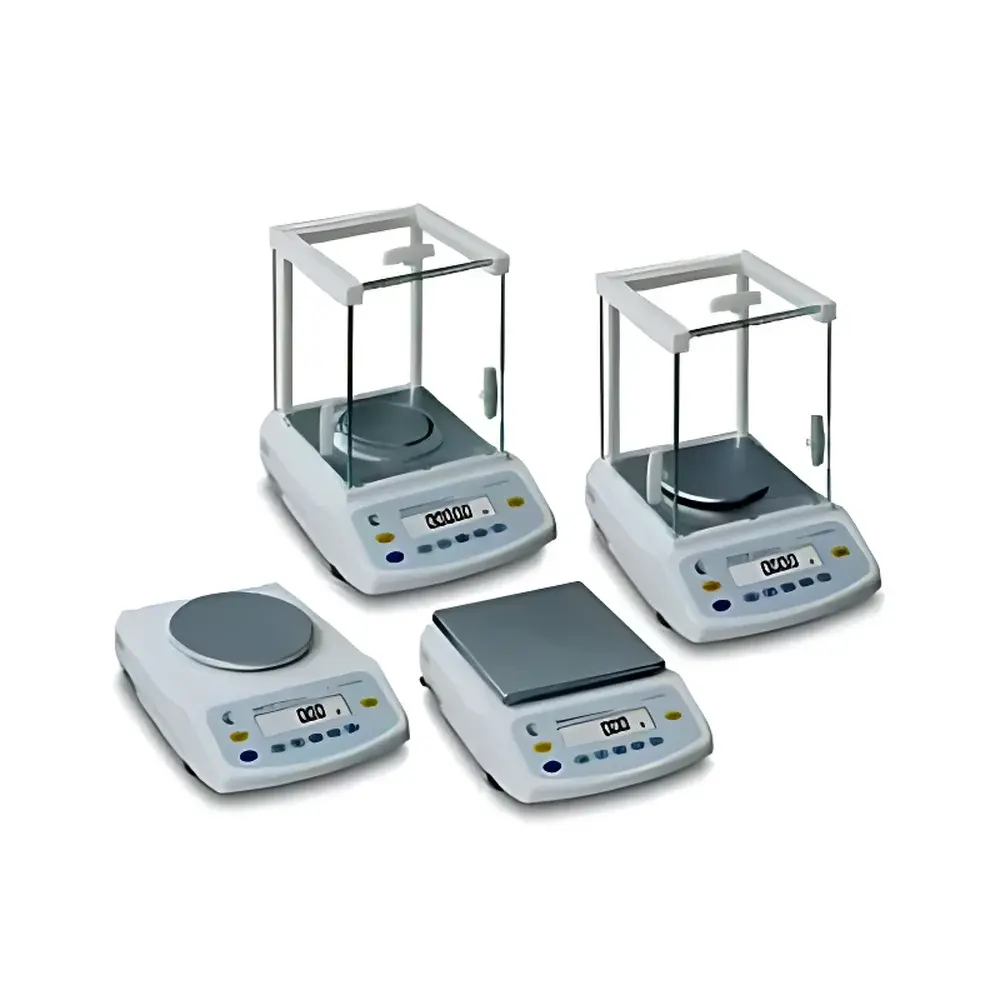
Sartorius BSA822-CW Precision Balance
| Brand | Sartorius |
|---|---|
| Origin | Germany |
| Model | BSA822-CW |
| Readability | 10 mg |
| Capacity | 820 g |
| Calibration | Internal motorized calibration |
| Display | Backlit LCD with 15 mm high characters |
| Pan Diameter | Ø 150 mm |
| Interface | RS-232C bidirectional |
| Compliance | ISO/IEC 17025, GLP, GMP-ready audit trail support |
| Built-in Applications | Percentage weighing, net summation, animal/dynamic weighing, unit conversion, arithmetic (×, ÷) |
| Optional Accessories | YDP03-0CE printer, ionizer (external), USB-RS232 adapter |
Overview
The Sartorius BSA822-CW Precision Balance is an entry-level yet rigorously engineered analytical-grade instrument designed for routine laboratory weighing tasks requiring consistent accuracy, operational robustness, and regulatory traceability. Based on electromagnetic force compensation (EMFC) transduction technology, it delivers stable and repeatable mass measurements under variable environmental conditions—including minor air currents, temperature fluctuations, and mechanical vibrations common in shared lab spaces. With a capacity of 820 g and readability of 10 mg, the BSA822-CW meets the performance criteria defined in ISO 9001, ISO/IEC 17025, and USP Chapter <41> for non-analytical weighing applications. Its German-manufactured load cell and digital signal processing architecture ensure long-term stability and minimal drift—critical for multi-shift QC workflows where recalibration frequency must be minimized without compromising data integrity.
Key Features
- Internal motorized calibration system with built-in reference weights—activated via single-key press to maintain traceable accuracy per ISO 17025 calibration requirements.
- Backlit LCD display with 15 mm character height and high-contrast rendering—ensures legibility under low ambient light or glare-prone environments (e.g., fume hoods, laminar flow cabinets).
- Ergonomic keypad layout with tactile feedback and context-sensitive soft keys—reduces operator error during repetitive batch weighing or SOP-driven procedures.
- Integrated software functions: percentage weighing, net summation across multiple containers, dynamic/animal weighing mode with damping optimization, unit conversion (g, oz, ct, etc.), and basic arithmetic operations (multiply/divide).
- RS-232C bidirectional interface compliant with standard ASCII protocol—enables seamless integration with LIMS, ELN, or custom data acquisition systems; supports automatic timestamped data export upon stabilization.
- Level indicator integrated adjacent to display—facilitates rapid visual verification of horizontal alignment prior to critical measurements, minimizing tilt-induced systematic error.
Sample Compatibility & Compliance
The BSA822-CW accommodates samples up to 820 g on its Ø150 mm stainless-steel weighing pan—optimized for compatibility with standard labware including beakers, weighing boats, crucibles, and sample vials. Its draft shield compatibility (sold separately) extends usability to volatile or hygroscopic materials. From a compliance perspective, the balance supports full GLP/GMP documentation workflows: all calibration events, user logins (via optional password protection), and printouts generated via YDP03-0CE printer include date/time stamps, operator ID, and instrument serial number—satisfying FDA 21 CFR Part 11 electronic record requirements when paired with validated software configurations. All internal firmware adheres to Sartorius’ quality management system certified to ISO 13485 and ISO 9001.
Software & Data Management
While the BSA822-CW operates autonomously via embedded firmware, its RS-232C port enables direct connection to PCs running Sartorius LabX Lite (freeware) or third-party SCADA platforms. Data output follows standardized format protocols—each line includes weight value, unit, stability flag, and timestamp—eliminating manual transcription errors. When interfaced with the YDP03-0CE thermal printer, users obtain hard-copy records compliant with ISO/GLP documentation standards: calibration reports, daily verification logs, and raw weighing data—all annotated with instrument identification and environmental metadata (if external sensors are connected). Audit trail functionality is implemented at firmware level, recording all parameter changes and calibration actions with immutable timestamps.
Applications
This balance serves as a primary tool across pharmaceutical QC labs (excipient dispensing, tablet weight checks), academic research facilities (reagent preparation, gravimetric analysis), food safety testing (moisture content pre-weighing), and industrial R&D (polymer blending ratios, catalyst dosing). Its dynamic weighing mode supports live monitoring of unstable specimens—such as live small animals or settling suspensions—while the net summation function streamlines multi-component formulation workflows. In regulated environments, the BSA822-CW frequently fulfills “non-critical” weighing roles within tiered balance qualification strategies—complementing higher-precision models used for reference standard preparation.
FAQ
Does the BSA822-CW support external ionizers for static-sensitive samples?
Yes—Sartorius offers an optional external ionizer (model YI01-0CE) that mounts adjacent to the weighing chamber to dissipate electrostatic charge on insulating samples.
Is GLP-compliant data printing possible without additional software?
Yes—the built-in printer interface generates fully traceable reports directly from the balance when connected to the YDP03-0CE printer; no PC or driver installation required.
Can the balance be integrated into a networked laboratory information management system (LIMS)?
Yes—via RS-232C using standard ASCII command sets; configuration files and integration guides are available in Sartorius’ Technical Documentation Library (TDL).
What is the recommended calibration frequency for routine use?
Per ISO/IEC 17025, initial calibration must be performed at installation; subsequent intervals depend on usage intensity and risk assessment—but internal motorized calibration allows daily verification without manual intervention.
Is the firmware upgradable in the field?
Firmware updates require authorized Sartorius service personnel and validated update packages—ensuring continued compliance with regulatory software lifecycle controls.