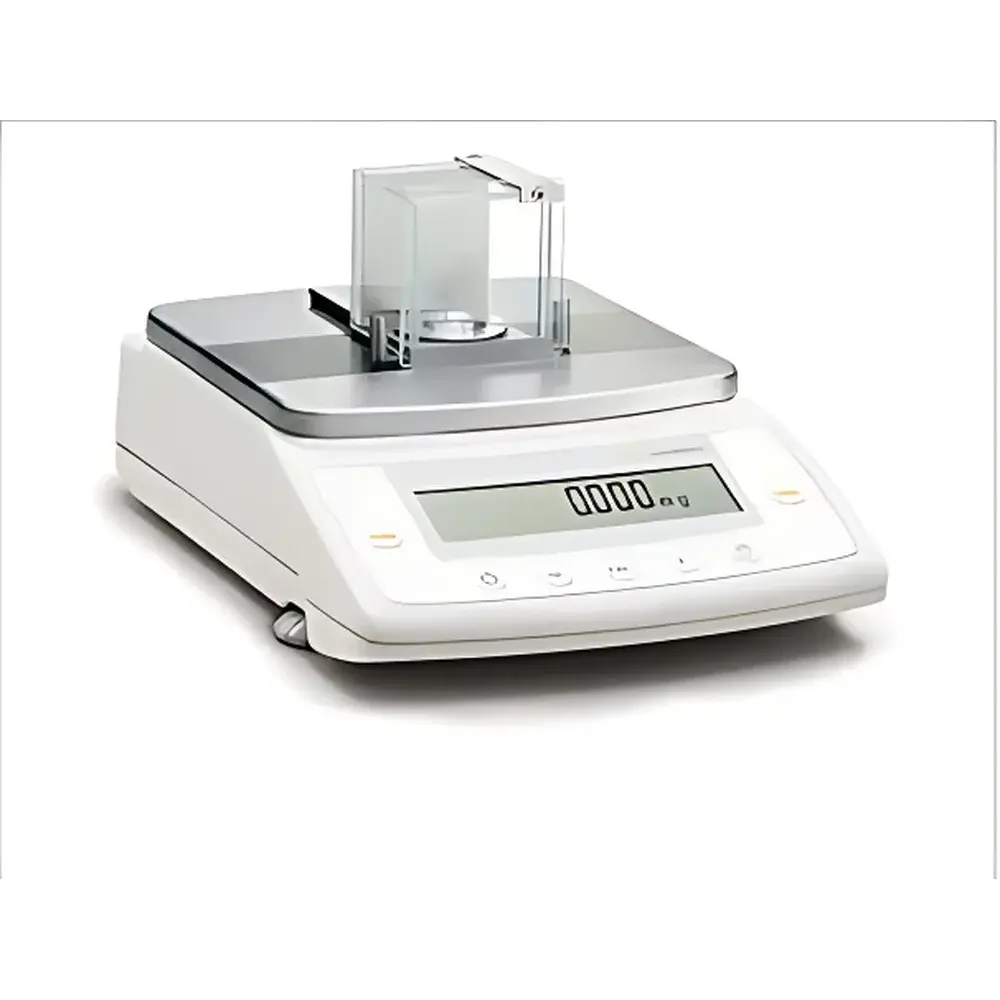
Sartorius CPA Micro Balance
| Brand | Sartorius |
|---|---|
| Origin | Germany |
| Model | CPA |
| Readability | 2 µg (CPA26P) |
| Capacity | 5 g to 21 g (adjustable, CPA26P) |
| Display | High-contrast LCD, 16 mm digit height |
| Weighing Sensor | Monolithic electromagnetic force compensation sensor |
| Calibration | Motor-driven internal calibration weights with isoCAL automatic calibration and adjustment |
| Draft Shield | Ergonomic sliding glass draft shield with optimized light transmission |
| Pan Diameter | 50 mm (standard), compatible with ≤120 mm filter membranes (CPA2P-F) |
| Construction | Stainless steel weighing chamber and high-grade metal housing |
| Compliance | Designed for USP <41> and <1251> compliance in analytical weighing applications |
| Software Interface | RS232 and USB connectivity for data export and GLP/GMP-compliant documentation |
Overview
The Sartorius CPA Micro Balance is a precision electromechanical analytical balance engineered for ultra-low-mass measurement tasks in regulated laboratory environments. Utilizing electromagnetic force compensation (EMFC) technology, the CPA series delivers stable, drift-resistant performance essential for critical pharmaceutical, quality control, and research applications. Its monolithic weighing sensor architecture—distinctive within its class—minimizes mechanical hysteresis and thermal influence, ensuring long-term repeatability and linearity across the full operating range. The CPA platform is specifically designed to meet the stringent requirements of United States Pharmacopeia (USP) General Chapters “Balances” and “Weighing on an Analytical Balance”, supporting minimum sample weights as low as 5 mg under standard environmental conditions. With adjustable capacity configurations—including the CPA26P (5 g to 21 g, 2 µg readability) and CPA2P-F (dual-range, optimized for filter membrane weighing)—the system provides flexibility without compromising metrological integrity.
Key Features
- Monolithic electromagnetic force compensation sensor for superior stability, reduced warm-up time, and minimal sensitivity to temperature gradients.
- isoCAL fully automated calibration and adjustment system: motor-driven internal weights initiate calibration upon user command or scheduled interval, maintaining traceable accuracy without manual intervention.
- Ergonomic draft shield with smooth-sliding tempered glass doors—designed to minimize air turbulence while permitting ambient illumination of the weighing pan for visual verification of small samples and filter placement.
- 16 mm high-contrast LCD display with large, legible digits—optimized for rapid reading under varied lighting conditions and for users wearing personal protective equipment (PPE).
- Stainless steel weighing chamber and corrosion-resistant metal housing facilitate rapid decontamination and comply with ISO 14644-1 Class 5 cleanroom-compatible cleaning protocols.
- Standard RS232 and USB interfaces support direct integration with LIMS, ELN, and electronic lab notebook systems; optional software enables audit-trail generation per FDA 21 CFR Part 11 requirements.
Sample Compatibility & Compliance
The CPA Micro Balance accommodates a wide range of sample formats, including powders, crystalline APIs, reference standards, and filtration media. Its 50 mm diameter weighing pan supports standard crucibles and vials, while the CPA2P-F variant extends compatibility to circular filter membranes up to 120 mm in diameter—enabling gravimetric analysis of particulate matter in environmental or pharmaceutical filtration validation. All CPA models are factory-verified against OIML R76-1 and NIST Handbook 44 metrological criteria. Instrument qualification documentation—including Installation Qualification (IQ), Operational Qualification (OQ), and Performance Qualification (PQ) templates—is available to support GxP-regulated deployment. Routine operation aligns with ISO/IEC 17025:2017 clause 6.4.3 (equipment verification) and ASTM E898-22 (standard practice for balance selection and use in analytical chemistry).
Software & Data Management
The CPA series supports seamless data capture via bidirectional serial or USB communication. When paired with Sartorius’ DataControl or LabX software (sold separately), users gain access to real-time weight logging, statistical process monitoring, automatic report generation, and full electronic signature capability. All weight events—including calibration logs, tare operations, and environmental condition stamps (if connected to external sensors)—are timestamped and stored with immutable audit trails. Data export formats include CSV, PDF, and XML, enabling interoperability with enterprise QMS platforms. System configuration settings are password-protected and version-controlled, satisfying ALCOA+ principles (Attributable, Legible, Contemporaneous, Original, Accurate, Complete, Consistent, Enduring, Available) for regulated data handling.
Applications
- Pharmaceutical: Minimum weight determination per USP , assay of potent active ingredients, residual solvent quantification, and filter integrity testing.
- Academic Research: Nanomaterial mass characterization, catalyst loading verification, and micro-scale reaction stoichiometry validation.
- Environmental Testing: Gravimetric analysis of PM2.5/PM10 filters, ash content determination in soil/sediment samples.
- Materials Science: Coating thickness validation via mass gain measurement, thin-film deposition yield assessment.
- Reference Laboratory Use: Transfer standard verification, certified reference material (CRM) preparation, and inter-laboratory comparison studies.
FAQ
What is the smallest sample mass the CPA26P can reliably weigh?
Per USP , the minimum weight is calculated as 2 × standard deviation of repeatability × 1000. For the CPA26P (2 µg readability), typical repeatability is ≤1 µg, yielding a recommended minimum sample weight of 5 mg under controlled conditions.
Does the CPA series support automatic adjustment for environmental drift?
Yes—the isoCAL function performs both automatic calibration and automatic adjustment (zero and span) at user-defined intervals or triggered by temperature change thresholds (>1.5 °C), ensuring continuous compliance with metrological specifications.
Can the draft shield be removed for cleaning or service?
No—the draft shield is integrated into the structural design and must remain installed during operation; however, all accessible surfaces—including the pan, shield interior, and stainless steel chamber—are wipe-clean compatible with 70% ethanol or isopropanol.
Is the CPA balance compliant with FDA 21 CFR Part 11?
The hardware supports Part 11 compliance when used with validated software (e.g., LabX), including electronic signatures, audit trails, and role-based access control—subject to site-specific validation per GAMP 5 guidelines.
What maintenance intervals are recommended for routine operation?
Daily verification with certified test weights is advised; full recalibration using internal weights should occur at least once per shift in high-precision environments, or per written SOP aligned with ISO/IEC 17025 requirements.