Sartorius Minisart Syringe Filter Series
| Brand | Sartorius |
|---|---|
| Origin | Germany |
| Product Line | Minisart |
| Membrane Types | Cellulose Acetate (CA), Polyethersulfone (PES), Glass Fiber (GF), Regenerated Cellulose (RC), Polytetrafluoroethylene (PTFE) |
| Sterility | Gamma-irradiated, Non-pyrogenic, DNase/RNase-free options available |
| Available Pore Sizes | 0.1 µm, 0.2 µm, 0.45 µm, 0.8 µm, 1.2 µm |
| Housing Material | Polypropylene |
| Diameter Options | 13 mm, 25 mm, 33 mm |
| Max Operating Pressure | ≤ 6 bar (87 psi) at 23 °C |
| Compatibility | Aqueous & organic solvents (membrane-dependent) |
| Regulatory Compliance | Meets ISO 8536-4, EN 14971 (risk management), and EU MDR 2017/745 requirements for in vitro diagnostic use where applicable |
Overview
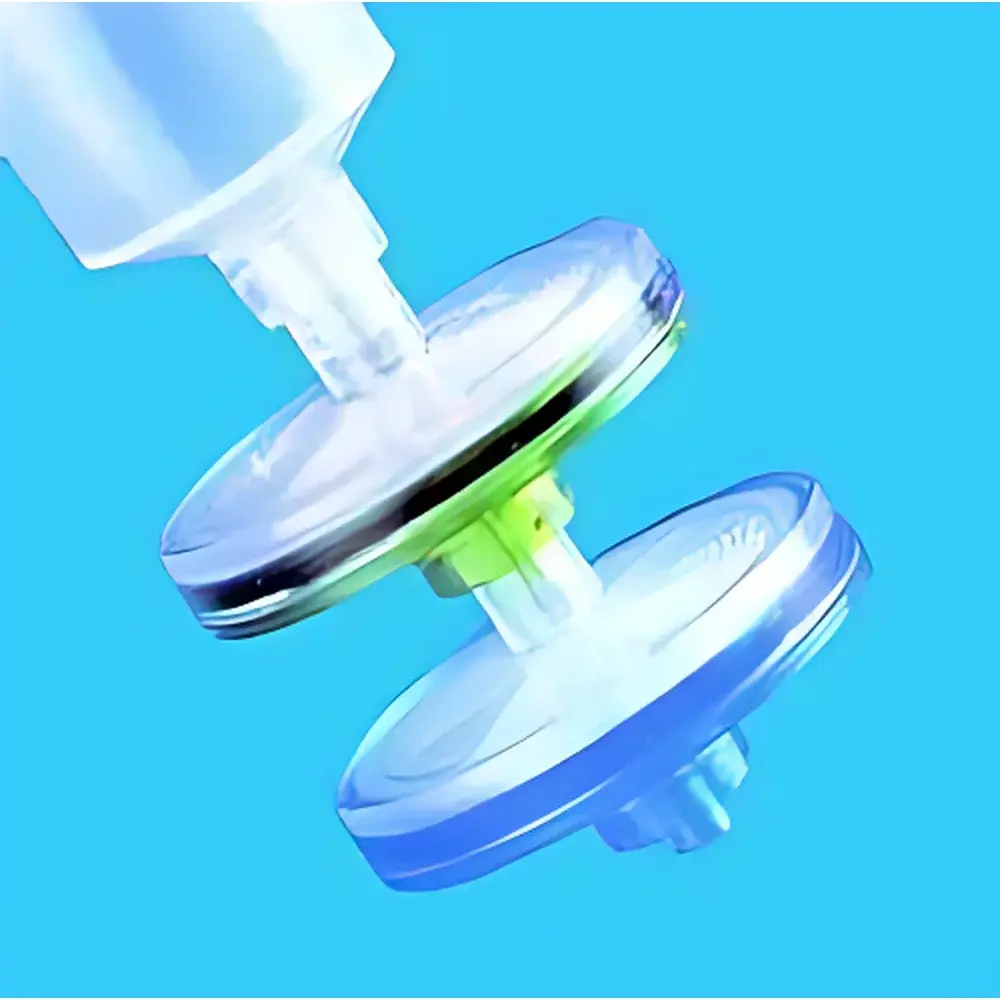
The Sartorius Minisart syringe filter series is a family of single-use, sterile, low-protein-binding membrane filters engineered for precision sample preparation in life science research, biopharmaceutical quality control, and analytical laboratory workflows. Designed according to strict German manufacturing standards, each Minisart unit integrates a chemically inert polypropylene housing with a precisely rated microporous membrane—enabling reliable particulate removal, sterilizing-grade filtration, or pre-filtration of challenging matrices. The system operates on the principle of pressure-driven dead-end filtration, where sample volume is manually or instrumentally forced through the membrane surface; retention efficiency is governed by nominal pore size, membrane chemistry, and flow dynamics. Critical applications include clarification of cell culture supernatants prior to HPLC analysis, sterilization of buffers for aseptic filling, and particulate removal from aggressive organic solvents used in GC sample preparation.
Key Features
- Gamma-irradiated sterility assurance (25 kGy) with documented bioburden reduction ≥ 10⁶ CFU per unit, compliant with ISO 11137.
- Low extractables profile validated per USP and , supporting sensitive assays including ELISA, mass spectrometry, and qPCR.
- Hydrophilic membranes (CA, PES, RC) pre-wetted for immediate aqueous compatibility; hydrophobic PTFE membranes optimized for non-aqueous solvents without pre-wetting.
- Integrated luer-lock inlet and luer-slip outlet ensure leak-free connection to syringes, autosamplers, or filtration manifolds.
- Consistent bubble point performance verified per ASTM F316-22, guaranteeing batch-to-batch reproducibility in retention integrity.
- Non-pyrogenic, DNase/RNase-free certification available upon request—essential for molecular biology and cell therapy workflows.
Sample Compatibility & Compliance
Minisart filters are classified by membrane chemistry to match physicochemical properties of target samples. Minisart N (CA or PES, 0.2 µm) meets ISO 13408-1 criteria for sterilizing filtration of aqueous pharmaceutical solutions. Minisart GF (1.2 µm glass fiber) provides high-capacity pre-filtration for viscous or particulate-laden media such as fermentation broths or soil extracts, reducing clogging of downstream 0.2 µm sterilizing filters. For organic-phase applications, Minisart RC (regenerated cellulose) exhibits broad solvent compatibility—including acetonitrile, methanol, and THF—while maintaining low analyte adsorption. Minisart SRP (PTFE) withstands concentrated acids, bases, and halogenated solvents (e.g., chloroform, DCM), making it suitable for environmental analysis and synthetic chemistry QC. All variants comply with EU MDR 2017/745 classification rules for IVD accessories and support GLP/GMP documentation via full traceability (batch number, manufacturing date, COA).
Software & Data Management
As a physical consumable device, the Minisart syringe filter does not incorporate embedded electronics or firmware. However, its integration into regulated environments is supported through comprehensive documentation packages: Certificate of Analysis (CoA) with individual batch testing data (pore size distribution, endotoxin levels < 0.03 EU/mL, protein binding < 5 ng/cm²), Certificate of Conformance (CoC), and risk assessment reports aligned with ISO 14971. Digital records—including electronic CoAs and lot-specific validation summaries—are accessible via Sartorius’ secure customer portal, enabling audit-ready data archiving per FDA 21 CFR Part 11 requirements when paired with validated LIMS or ELN systems.
Applications
- Sterile filtration of cell culture media, vaccines, and monoclonal antibody formulations prior to fill-finish operations.
- Clarification and particle removal from biological fluids (serum, plasma, urine) before LC-MS/MS quantification.
- Pre-filtration of turbid environmental water samples prior to ICP-MS heavy metal analysis.
- HPLC and UHPLC mobile phase degassing and inline protection of analytical columns.
- GC sample cleanup to prevent injector port contamination and column fouling.
- Preparation of nanoparticle suspensions for DLS or TEM analysis, ensuring absence of agglomerates > pore rating.
FAQ
What is the maximum recommended operating pressure for Minisart filters?
The maximum allowable pressure is 6 bar (87 psi) at 23 °C for all standard Minisart configurations; pressure must be reduced proportionally at elevated temperatures per manufacturer’s thermal derating curve.
Can Minisart RC filters be used for filtering protein solutions?
Yes—regenerated cellulose membranes exhibit low nonspecific protein binding (< 5 ng/cm² for BSA), making them suitable for filtering enzyme preparations or therapeutic proteins without significant activity loss.
Is there a difference between Minisart N and Minisart SRP in terms of sterilizing capability?
Minisart N (0.2 µm) is validated for sterilizing filtration per ISO 13408-1; Minisart SRP (PTFE) is not intended for sterilization but for particulate removal in aggressive solvents where sterility is not required.
Are Minisart filters compatible with automated liquid handlers?
Yes—13 mm and 25 mm formats are widely integrated into robotic platforms via standardized luer interfaces; compatibility with specific OEM fluidics should be confirmed using Sartorius’ application notes for Hamilton, Tecan, or Agilent systems.
Do Minisart filters require pre-rinsing before use?
Hydrophilic membranes (CA, PES, RC) do not require pre-wetting; hydrophobic PTFE (SRP) membranes must be pre-wetted with alcohol or acetone to enable aqueous flow—full wetting validation is included in the CoA.