
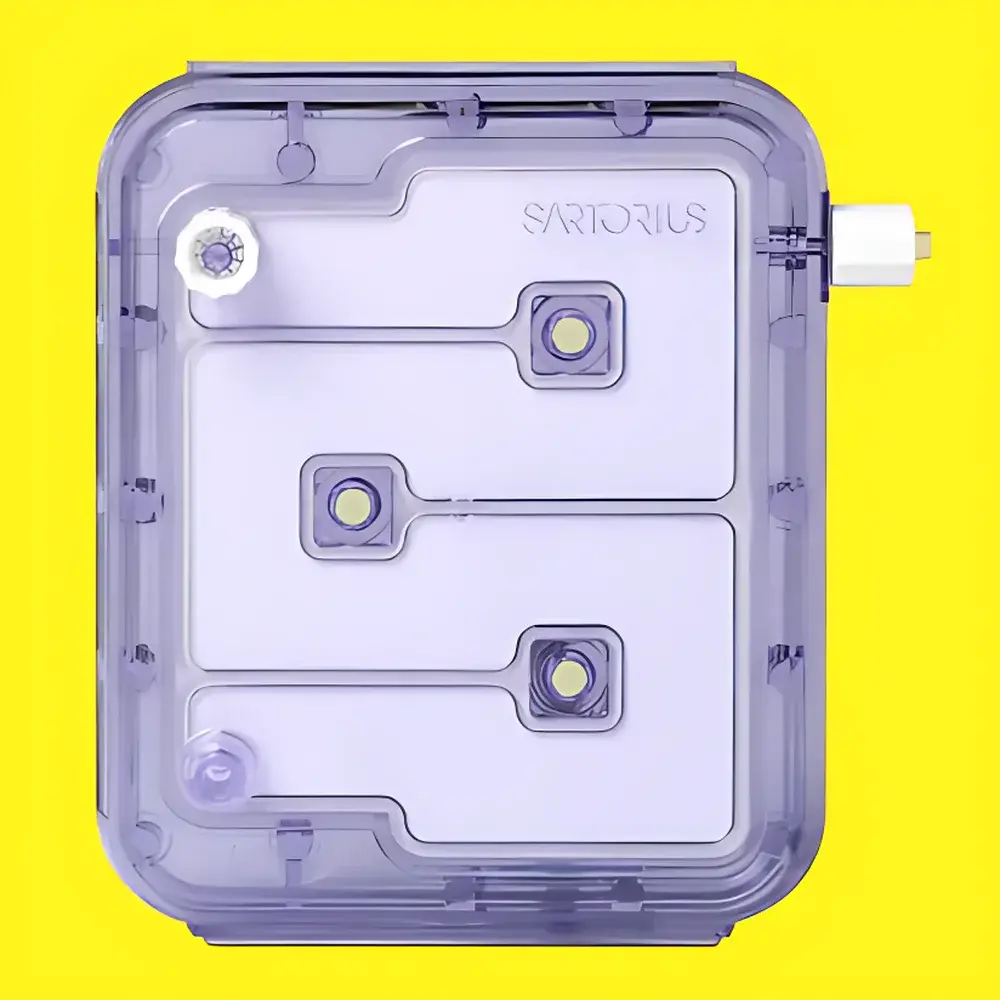
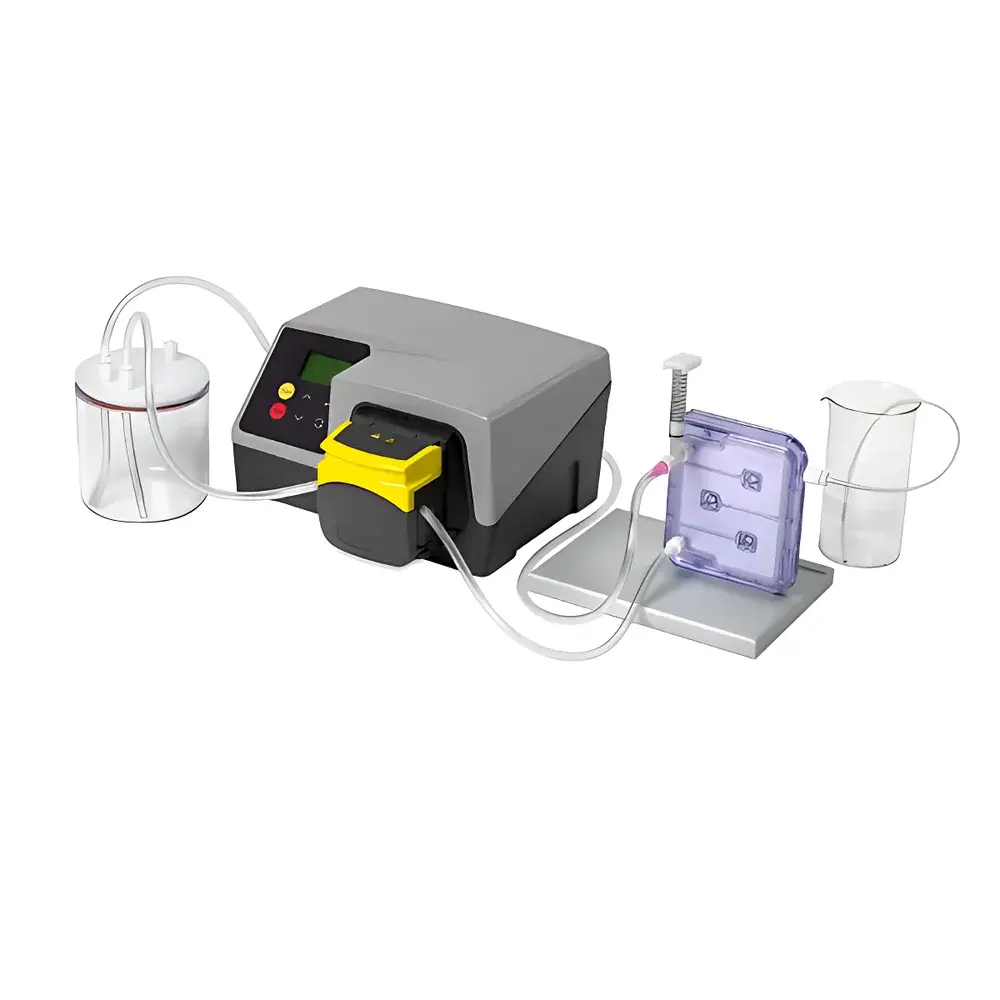
Sartorius Vivaflow® SU Tangential Flow Filtration (TFF) Cassette
| Brand | Sartorius |
|---|---|
| Origin | Germany |
| Manufacturer Type | Authorized Distributor |
| Product Category | Imported |
| Model | Vivaflow® SU |
| Pricing | Upon Request |
Overview
The Sartorius Vivaflow® SU Tangential Flow Filtration (TFF) Cassette is an engineered laboratory-scale TFF solution designed for efficient concentration, diafiltration, and clarification of biomolecules—including proteins, antibodies, viruses, plasmid DNA, mRNA, extracellular vesicles, and nanoparticles. Unlike dead-end filtration, TFF operates on the principle of cross-flow: feed solution is recirculated tangentially across the membrane surface under controlled hydrodynamic conditions, minimizing concentration polarization, fouling, and shear-induced damage. This enables high recovery yields (>90% typical for stable proteins), reproducible processing of feed volumes from 100 mL to 5 L, and scalable operation without process re-optimization. The Vivaflow® SU cassette integrates a pre-assembled, single-use polyethersulfone (PES) or regenerated cellulose (RC) membrane with precisely calibrated flow restrictors and optimized channel geometry—eliminating the need for external manifolds, pressure regulators, or complex pump control algorithms. Its design complies with fundamental principles outlined in ISO 13485–certified manufacturing and supports GLP-aligned documentation workflows.
Key Features
- True plug-and-play operation: Pre-sterilized, ready-to-use cassettes require only connection to a standard peristaltic pump and feed reservoir—no system priming, pressure calibration, or flow-rate tuning needed.
- System-agnostic compatibility: Operates efficiently with widely available lab-grade peristaltic pumps (e.g., Watson-Marlow, Masterflex), eliminating dependency on proprietary TFF platforms and reducing capital expenditure.
- Integrated flow control architecture: Fixed-orifice flow restrictors maintain optimal shear rate (typically <1,000 s⁻¹) and transmembrane pressure (<0.5 bar) across the full operating range, ensuring consistent flux and minimizing manual process development.
- Modular scalability: Multiple cassettes can be connected in series (for higher throughput) or parallel (for increased surface area or redundancy) using Sartorius-supplied serial connectors or optional Y/T-fittings—enabling seamless transition from benchtop to pilot-scale workflows.
- Sustainable material engineering: Vivaflow® SU reduces polymer mass by 30.5% versus prior-generation cassettes while maintaining structural integrity and fluidic performance; tubing kits are precision-cut to minimize waste and ensure leak-free connections.
Sample Compatibility & Compliance
Vivaflow® SU cassettes support a broad range of biologics and nanomaterials, including monoclonal antibodies (mAbs), viral vectors (AAV, lentivirus), liposomes, lipid nanoparticles (LNPs), and CRISPR ribonucleoprotein complexes. Membrane options include low-protein-binding PES (MWCO: 5 kDa, 10 kDa, 30 kDa, 50 kDa, 100 kDa, 500 kDa) and biocompatible regenerated cellulose (RC) for sensitive nucleic acid applications. All materials are USP Class VI certified, non-pyrogenic, and free of animal-derived components. The device meets ISO 10993–5 cytotoxicity requirements and is compatible with common aqueous buffers (PBS, Tris-HCl, HEPES) and mild sanitants (0.1–0.5 M NaOH). While not intended for GMP manufacturing, its design facilitates traceable, auditable processing aligned with FDA 21 CFR Part 11 data integrity expectations when paired with validated pump controllers and electronic logbooks.
Software & Data Management
The Vivaflow® SU is a hardware-only platform—no embedded firmware or proprietary software is required. Process parameters (feed volume, run time, pump RPM, temperature) are recorded manually or via third-party pump interfaces supporting analog/digital output (e.g., 4–20 mA, RS-232, Modbus). For regulated environments, users may integrate pump telemetry into ELN systems (e.g., LabArchives, Benchling) or LIMS platforms to generate audit trails compliant with ALCOA+ principles. Sartorius provides comprehensive technical documentation—including Certificate of Conformance, bioburden test reports, and extractables/leachables summaries—for inclusion in regulatory submissions (IND, BLA, MAA).
Applications
- Concentration of cell culture supernatants (e.g., CHO harvests) prior to chromatography
- Buffer exchange of purified proteins into formulation buffers without dilution
- Removal of residual host cell proteins (HCP) and DNA during downstream purification
- Size-based fractionation of exosomes and microvesicles (using 100–500 kDa MWCO)
- Preparative-scale diafiltration of mRNA-LNP formulations to remove unencapsulated RNA
- Rapid desalting of enzymatic digests prior to LC-MS analysis
- Scalable process development for continuous bioprocessing workflows
FAQ
Can Vivaflow® SU be used with viscous or particulate-containing feeds?
Yes—its open-channel flow path and low-shear design accommodate feeds with viscosities up to 20 cP and suspended solids ≤5% w/v, provided pre-filtration through a 0.45 µm depth filter is performed.
Is the cassette compatible with organic solvents?
No—Vivaflow® SU is intended for aqueous systems only; exposure to >5% v/v ethanol, acetonitrile, or DMSO may compromise membrane integrity.
What is the maximum recommended operating pressure?
The cassette is rated for continuous operation at ≤0.5 bar TMP; exceeding this may accelerate compaction and reduce long-term flux stability.
How should I validate recovery yield for my specific molecule?
Perform triplicate runs using UV280 absorbance or activity assays pre- and post-processing; recovery is calculated as (post-concentration activity × final volume) / (pre-concentration activity × initial volume).
Are there cleaning-in-place (CIP) protocols for reusable variants?
Vivaflow® SU is strictly single-use; for reusable alternatives, refer to Sartorius Vivaflow® R series cassettes with validated CIP procedures using 0.1 M NaOH followed by sterile water rinse.




