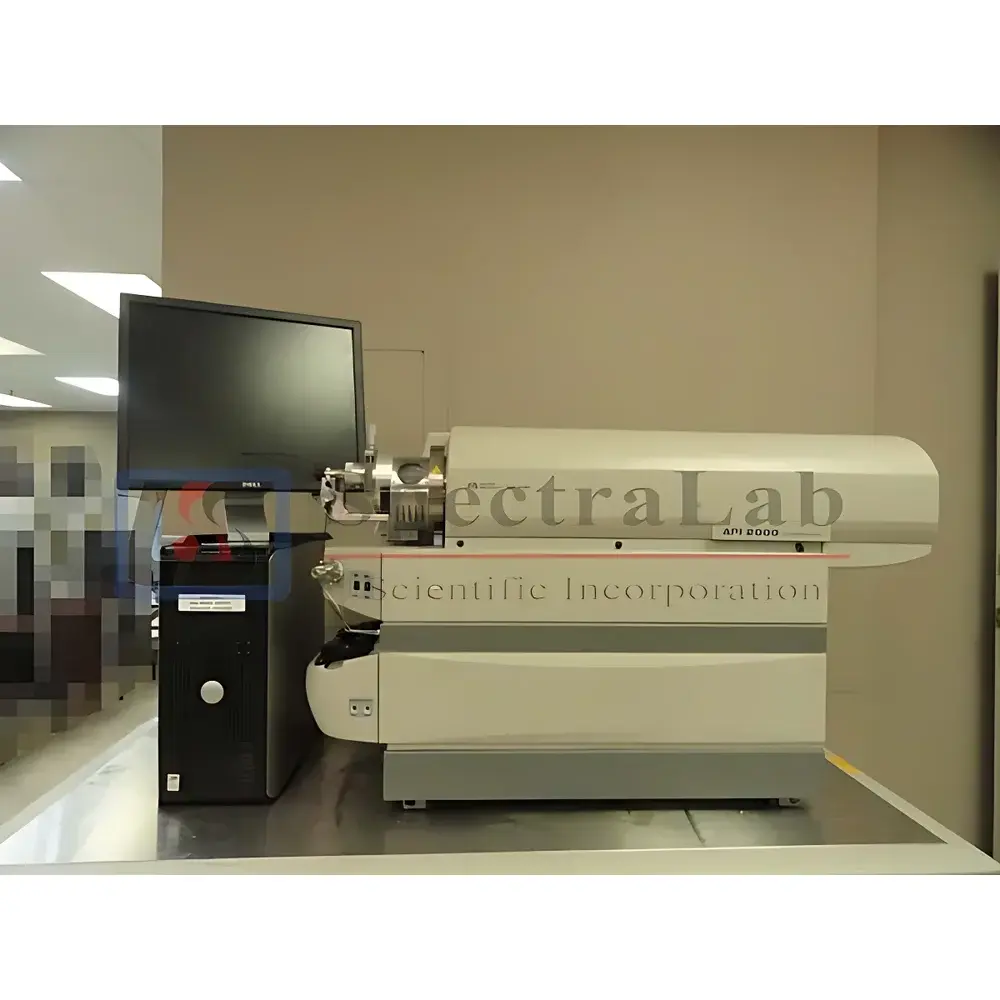
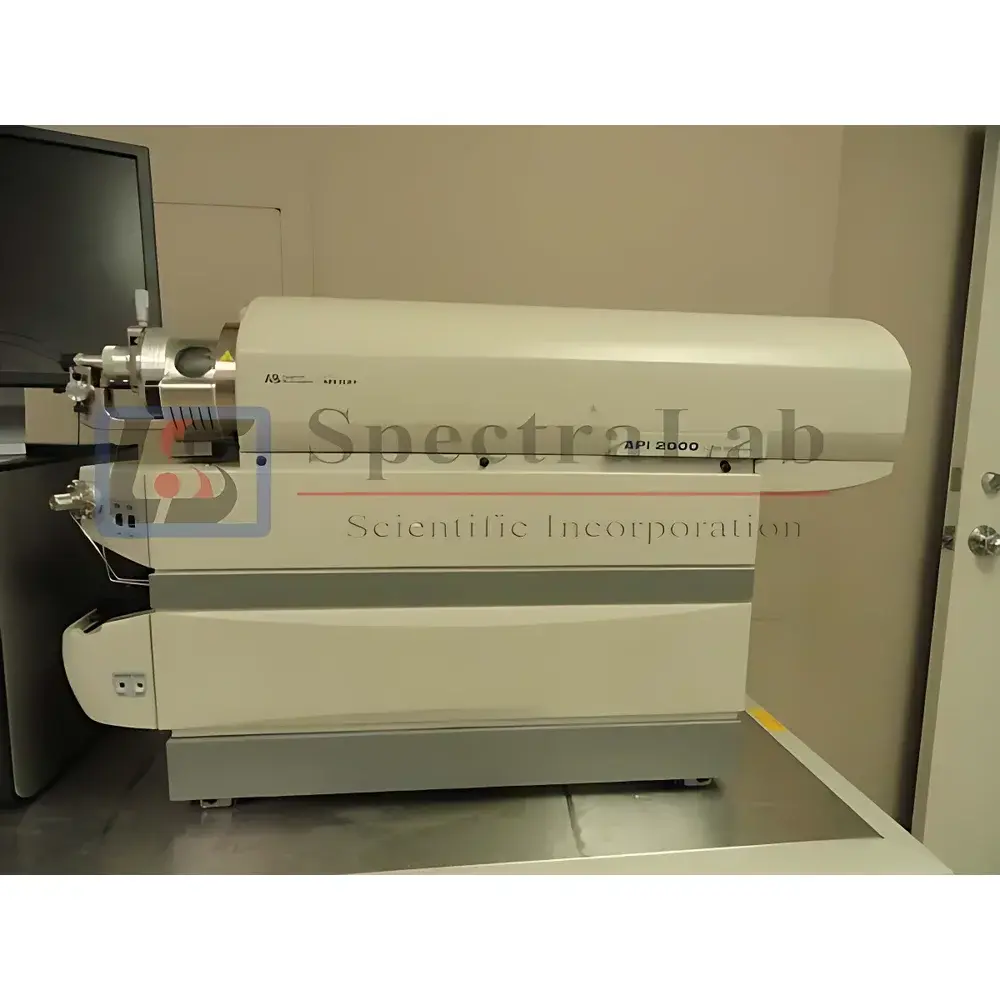
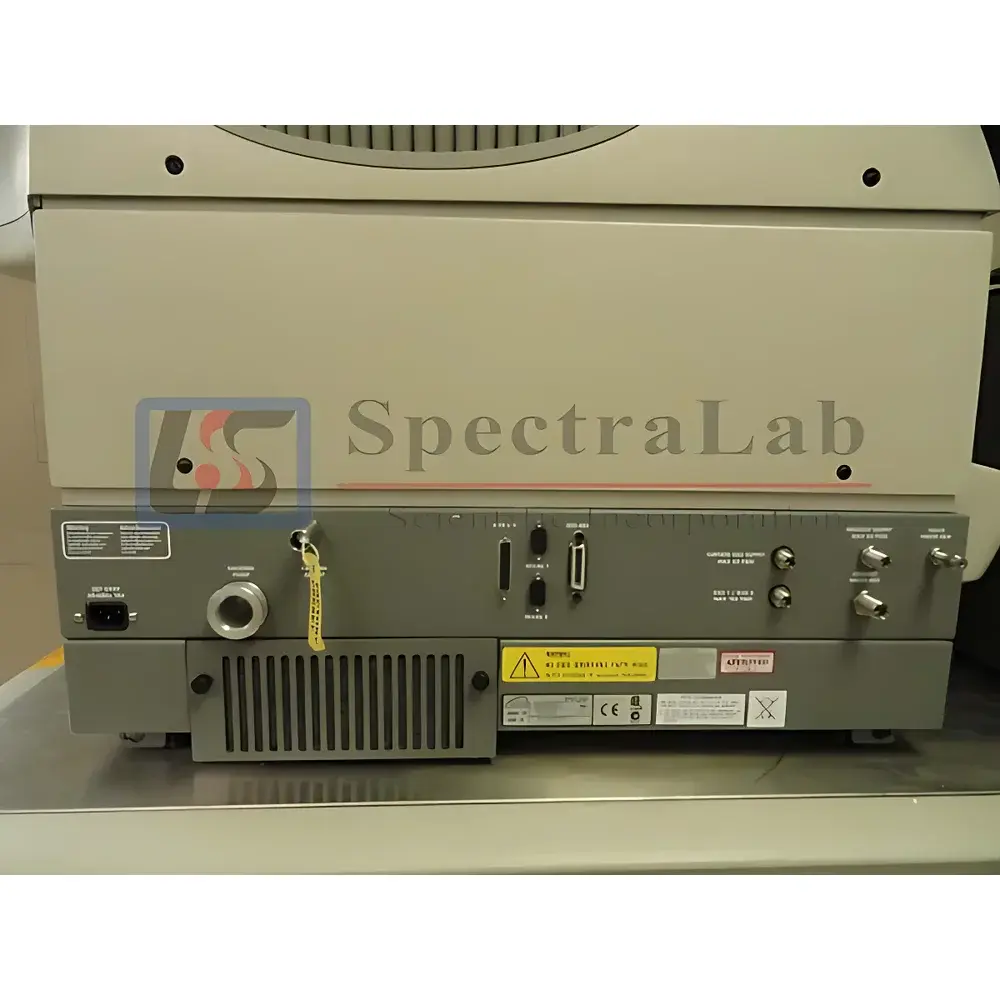
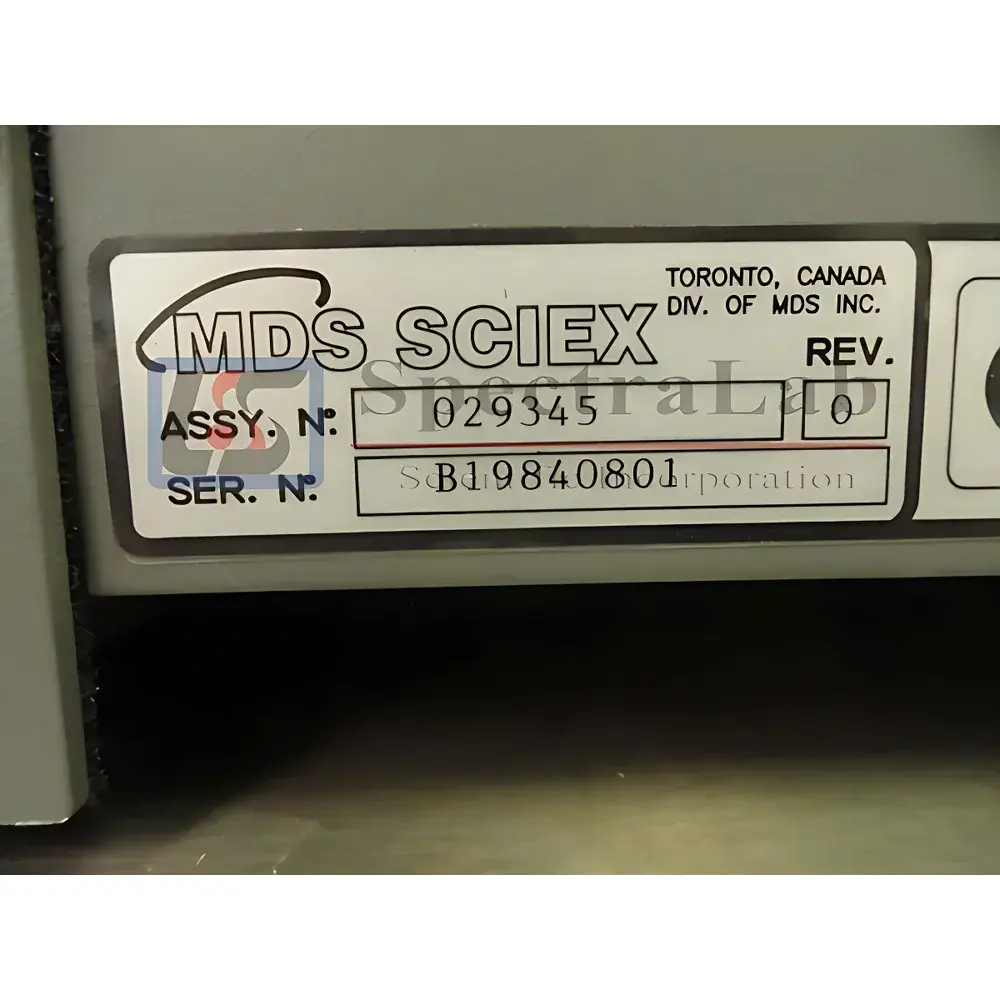
SCIEX API 2000 Triple Quadrupole Liquid Chromatography-Tandem Mass Spectrometer (Refurbished)
| Brand | SCIEX |
|---|---|
| Origin | USA |
| Model | API 2000 |
| Instrument Type | Triple Quadrupole Mass Spectrometer |
| Configuration | LC-MS/MS System |
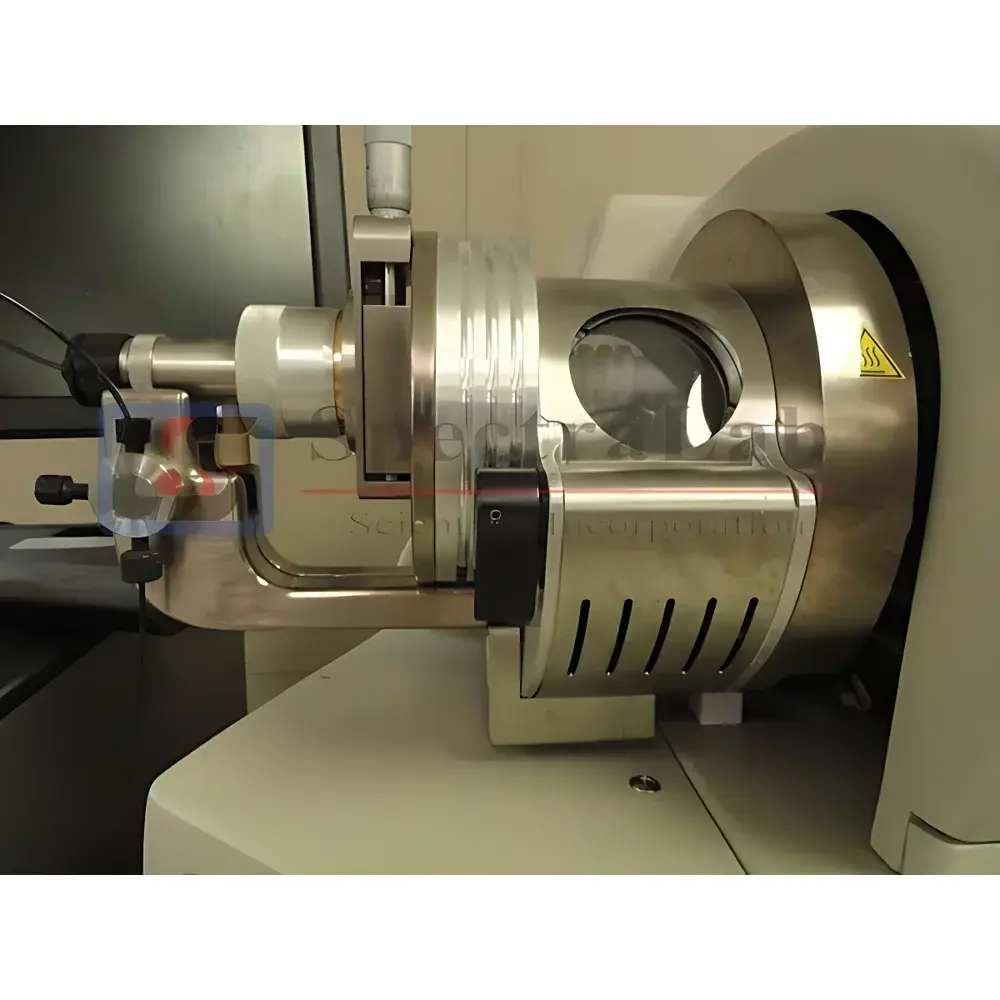
| Ionization Sources | TurboIonSpray® (ESI) and Heated Nebulizer (APCI) |
| Flow Rate Range (ESI) | 2–1000 µL/min |
| Flow Rate Range (APCI) | 0.2–2.0 mL/min |
| Collision Cell Technology | LINAC™ Linear Accelerator |
| Detection Mode | Pulse-counting Electron Multiplier |
| Dynamic Range | 1–4 × 10⁶ cps |
| Vacuum System | Air-cooled Differential Turbomolecular Pumps |
| Operating Temperature | 15–30 °C |
| Power Supply | 208–240 V AC, Single-phase |
| Required Gases | High-purity Nitrogen, Zero-air (oil-free, clean compressed air) |
| Dimensions (H×D×L) | 60.5 × 50 × 105 cm |
| Service History | Refurbished & Fully Tested |
| Operational Age | ~4 years |
| Warranty | 6 months limited hardware warranty |
Overview
The SCIEX API 2000 Triple Quadrupole Liquid Chromatography-Tandem Mass Spectrometer is a rigorously refurbished, benchtop LC-MS/MS platform engineered for quantitative and qualitative analysis of small molecules in complex biological matrices. Based on proven triple quadrupole architecture, the system employs electrospray ionization (ESI) and atmospheric pressure chemical ionization (APCI) to generate stable, reproducible precursor ions, followed by selective fragmentation in a patented LINAC™ (Linear Accelerator) collision cell and high-efficiency detection via pulse-counting electron multiplier. This configuration delivers exceptional sensitivity, specificity, and robustness for targeted quantitation—particularly in pharmacokinetic (PK), toxicokinetic (TK), and metabolite identification workflows. Designed for routine laboratory environments, the API 2000 operates without liquid nitrogen or chilled water, relying instead on air-cooled turbomolecular pumps and single-phase power—reducing infrastructure dependencies while maintaining analytical integrity across extended operational cycles.
Key Features
- Patented LINAC™ collision cell technology enabling high ion transmission efficiency, reduced memory effects, and improved signal-to-noise ratios in MRM (Multiple Reaction Monitoring) acquisitions.
- Dual-source capability with interchangeable TurboIonSpray® (ESI) and Heated Nebulizer (APCI) modules—supporting broad polarity coverage and compatibility with diverse LC flow rates (2–1000 µL/min for ESI; 0.2–2.0 mL/min for APCI).
- Integrated ion optics featuring collision-focused Q0 quadrupole for optimal precursor ion transmission into the collision cell.
- Fully software-controlled infusion pump and split valve—enabling automated method development, direct infusion screening, and column-switching configurations.
- Compact benchtop footprint (60.5 × 50 × 105 cm) with modular source design—allowing rapid source exchange without tools or realignment.
- Real-time performance monitoring and auto-tuning routines embedded in Analyst® software—minimizing downtime and ensuring consistent calibration stability between runs.
Sample Compatibility & Compliance
The API 2000 supports analysis of low-to-medium molecular weight compounds (typically < 2000 Da), including pharmaceuticals, metabolites, peptides, lipids, and environmental contaminants. Its wide linear dynamic range (1–4 × 10⁶ cps) accommodates both high-abundance endogenous analytes and trace-level xenobiotics without extensive sample dilution or concentration. The system complies with core regulatory expectations for GLP and GMP environments: Analyst® software provides audit-trail functionality, user access controls, and electronic signature support aligned with FDA 21 CFR Part 11 principles. While not pre-certified as a standalone 21 CFR Part 11-compliant system, its architecture enables validation under laboratory-specific SOPs. It meets essential ISO/IEC 17025 requirements for instrument qualification when deployed with documented IQ/OQ/PQ protocols. No modifications to original firmware or hardware are performed during refurbishment—ensuring traceability to manufacturer specifications.
Software & Data Management
Controlled exclusively through SCIEX Analyst® v1.6.2 (or later compatible versions), the API 2000 offers unified acquisition, processing, and reporting workflows. Analyst supports automated optimization of MS/MS parameters—including declustering potential (DP), collision energy (CE), and entrance/exit potentials—for single or multi-analyte methods. Real-time chromatogram overlays, peak integration with baseline correction, and customizable report templates facilitate rapid turnaround in regulated QC labs. Raw data files (.wiff) are stored in vendor-native format, fully compatible with third-party quantitation platforms (e.g., MultiQuant™, OpenLab CDS) via standardized export filters. All system logs—including tune reports, calibration history, and error events—are time-stamped and retained within the local database, supporting full traceability during internal audits or regulatory inspections.
Applications
- Quantitative bioanalysis of drugs and metabolites in plasma, serum, urine, and tissue homogenates using MRM transitions.
- High-throughput screening of impurities and degradants in pharmaceutical formulations per ICH Q3B/Q5 guidelines.
- Structural characterization of post-translational modifications (e.g., phosphorylation, glycosylation) via neutral loss scanning and precursor ion scanning.
- Environmental residue analysis—including pesticides, mycotoxins, and veterinary drug residues—in food and water matrices.
- Endogenous biomarker profiling in discovery-phase clinical studies where reproducibility and inter-laboratory transferability are critical.
FAQ
Is this unit factory-refurbished or dealer-refurbished?
This API 2000 system has undergone comprehensive technical refurbishment by SpectraLab Scientific’s certified service engineers—including full functional testing, vacuum integrity verification, ion source cleaning and recalibration, and replacement of consumable components (e.g., orifices, skimmer cones, detector elements) where wear exceeded OEM thresholds.
Does it include original documentation and software licenses?
Yes—each unit ships with original SCIEX documentation (operation manual, maintenance guide, safety instructions), a licensed copy of Analyst® software (activation key included), and a Certificate of Refurbishment detailing all performed procedures and test results.
Can it interface with modern HPLC systems?
Yes—the API 2000 features analog/digital I/O ports and native drivers for major LC vendors (Waters, Agilent, Shimadzu, Thermo Fisher), supporting synchronized gradient control, injection triggering, and UV/ECD co-detection.
What level of technical support is provided post-purchase?
SpectraLab offers remote diagnostics, application troubleshooting, and on-site service contracts (optional)—all delivered by SCIEX-trained field service engineers with direct access to original spare parts inventory.
Are consumables and replacement parts still available?
All critical consumables—including TurboIonSpray probes, APCI nebulizer needles, quadrupole rods, and detector assemblies—remain in active production or are held in long-term stock by authorized SCIEX distributors worldwide.