
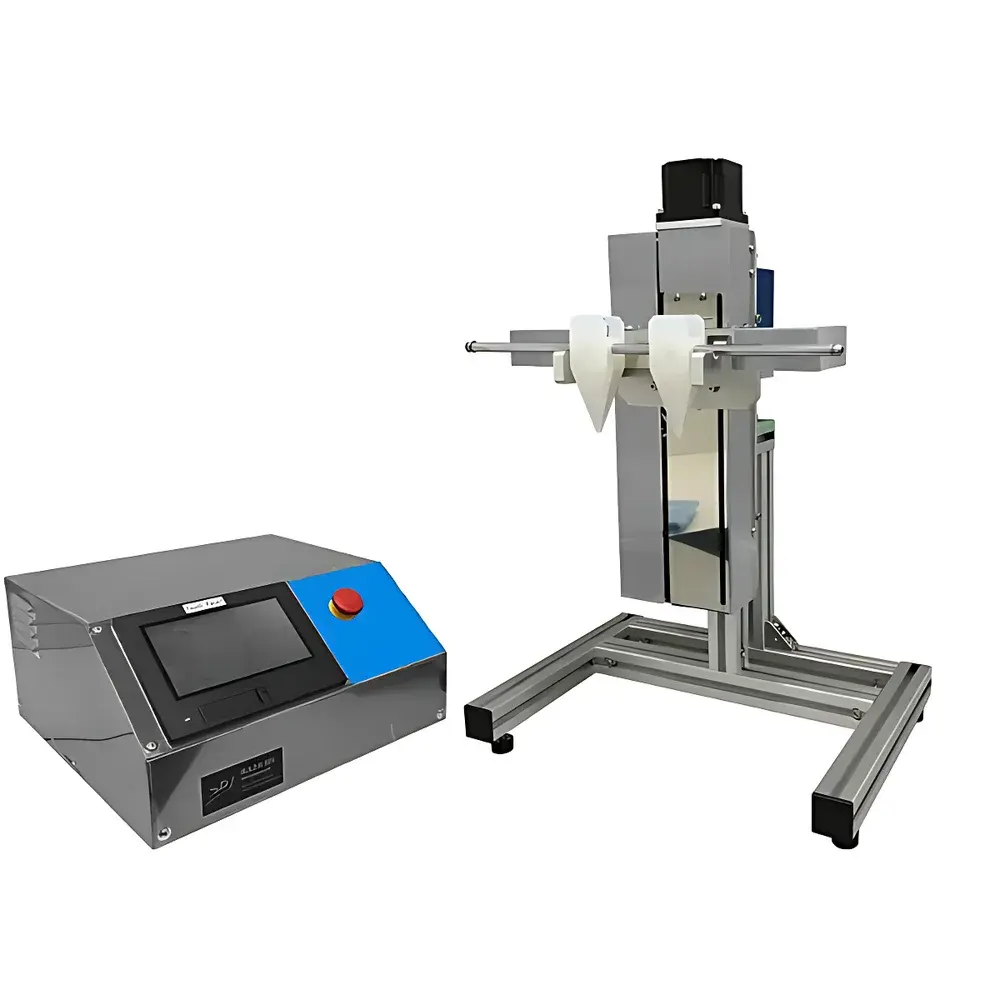
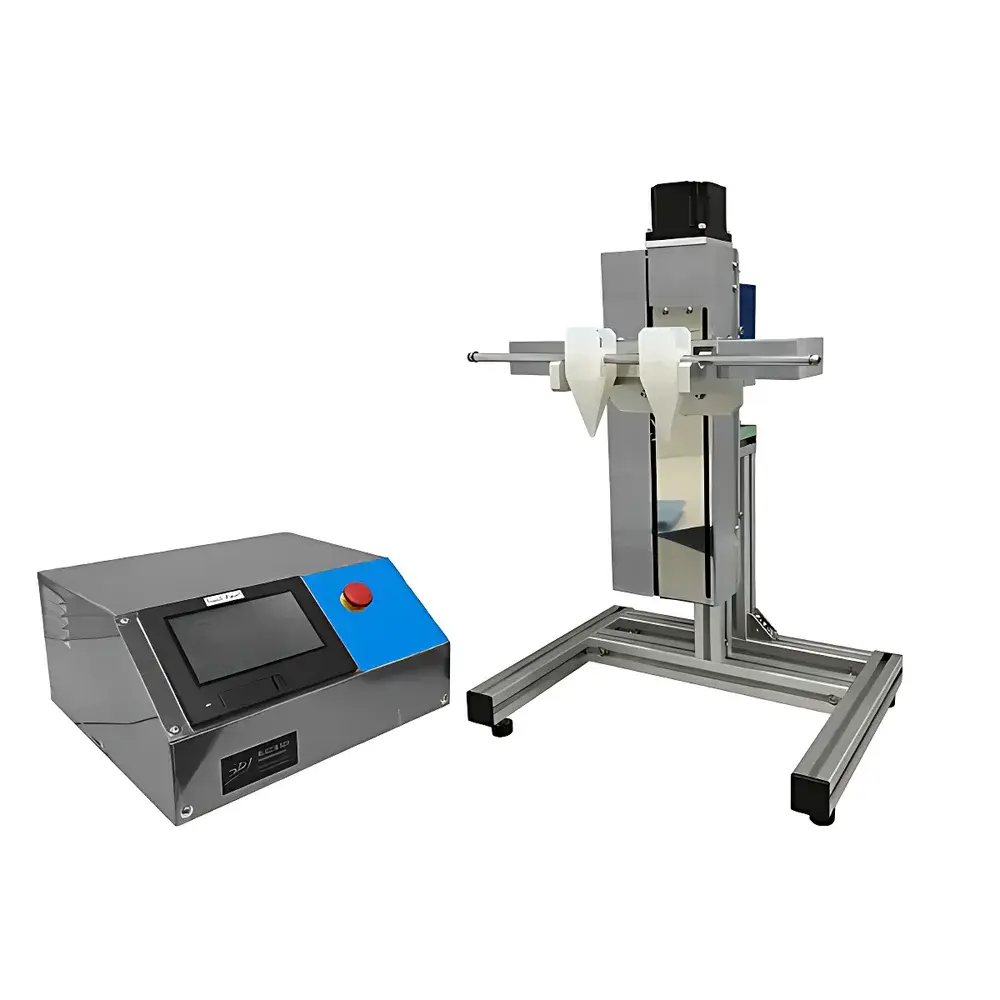
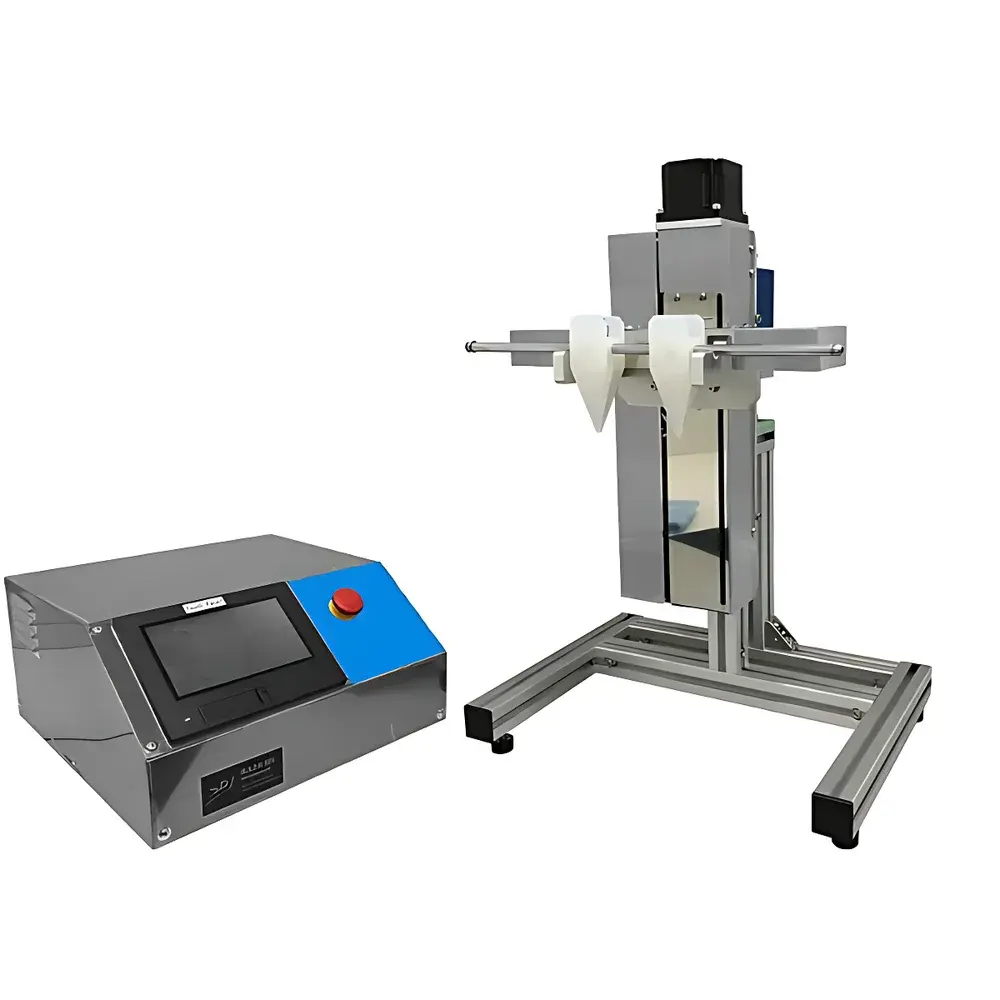
SDI MD-0408-N1-CE Dip Coater
| Brand | SDI |
|---|---|
| Origin | Japan |
| Model | MD-0408-N1-CE |
| Max Travel | 800 mm |
| Min Speed | 1 nm/s |
| Max Speed | 60 mm/s |
| Speed Resolution | 1 nm/s |
| Programmable Speed Steps | 16 |
| Preset Programs | 8 |
| Display Language | English/Japanese (toggleable) |
| Control Interface | Touchscreen Panel |
| Motor Feedback | Real-time speed, position, and remaining runtime |
| Operation Modes | Continuous, Manual (independent up/down speed), Reciprocal |
| Stop Positions | 16 configurable |
| Dwell Times | 16 programmable |
| Standard Clamp Material | Polypropylene (PP) |
| Power Supply | AC 100 V, 250 VA |
| Max Sample Height | 150 mm |
| Max Load Capacity | 1 kg |
Overview
The SDI MD-0408-N1-CE Dip Coater is a precision-engineered, benchtop immersion withdrawal system designed for controlled sol-gel thin-film deposition and other liquid-phase coating processes. It operates on the fundamental principle of dip-coating—where a vertically oriented substrate is immersed into a precursor solution (e.g., metal alkoxide sols, polymer dispersions, or nanoparticle colloids), then withdrawn at a precisely regulated velocity. Film thickness is governed by the interplay among withdrawal speed, solution viscosity, surface tension, gravitational drainage, and solvent evaporation kinetics—enabling reproducible nanoscale control over wet-film formation. This instrument is specifically engineered for laboratory-scale research in functional oxide coatings, anti-reflective layers, gas-sensing films, perovskite photovoltaics, and self-assembled monolayers. Its CE marking confirms compliance with EU health, safety, and environmental protection directives, making it suitable for use in accredited academic, industrial R&D, and quality control laboratories operating under ISO/IEC 17025 or GLP frameworks.
Key Features
- Ultra-low-speed capability: Continuous, stable withdrawal from 1 nm/s to 60 mm/s—with true 1 nm/s resolution—enabling sub-monolayer film growth and kinetic studies of gelation onset.
- High-precision motion control: Brushless DC motor with real-time feedback on current speed, absolute position, and estimated remaining runtime—critical for process traceability and method validation.
- Advanced programmability: 16-step variable-speed profiles with 16 user-defined stop positions and dwell times; supports both continuous ramping and discrete segment execution.
- Intuitive human-machine interface: Full-color touchscreen panel with one-touch language switching between English and Japanese—optimized for multilingual lab environments without requiring firmware reconfiguration.
- Flexible operational modes: Includes manual mode (independently set upward/downward speeds), reciprocal dipping (for bilayer or gradient film fabrication), and repeat-run functionality for statistical process replication.
- Dedicated hardware design: PP-standard sample clamp ensures chemical compatibility with common solvents (e.g., ethanol, isopropanol, acetic acid); compact footprint (W × D × H ≈ 280 × 320 × 450 mm) suits standard fume hoods and gloveboxes.
Sample Compatibility & Compliance
The MD-0408-N1-CE accommodates rigid planar substrates up to 150 mm in height and 1 kg in mass—including microscope slides, ITO/glass wafers, silicon substrates, copper foil, PMMA sheets, and ceramic tiles. Its open architecture permits integration with custom fixtures for non-standard geometries. The system complies with EN 61000-6-2 (immunity) and EN 61000-6-3 (emission) standards, and carries full CE marking per Directive 2014/30/EU (EMC) and 2014/35/EU (LVD). While not inherently 21 CFR Part 11–compliant, audit-ready operation is supported via external logging of touchscreen inputs and motor telemetry—facilitating alignment with FDA-regulated material development workflows when paired with validated electronic lab notebooks (ELNs).
Software & Data Management
This model operates autonomously via its embedded controller—no PC connection required for routine operation. All program parameters (speed steps, dwell durations, stop points) are stored non-volatilely within the unit’s flash memory, retaining configurations across power cycles. For extended data integrity, users may manually log run metadata (date/time, program ID, substrate ID, ambient RH/T) in accordance with ISO 15189 documentation requirements. Optional RS-232 or USB-to-serial interfaces (available upon request) allow integration with third-party SCADA systems or custom Python/Matlab scripts for automated batch reporting—supporting traceability in GMP-aligned thin-film process development.
Applications
- Sol-gel synthesis of TiO₂, SiO₂, ZrO₂, and SnO₂ antireflective or photocatalytic coatings.
- Fabrication of mesoporous silica thin films for sensor platforms and drug delivery matrices.
- Controlled assembly of colloidal nanoparticles (e.g., Au, Ag, Fe₃O₄) into ordered 2D arrays.
- Deposition of hybrid organic-inorganic perovskites (e.g., MAPbI₃) for optoelectronic device prototyping.
- Preparation of hydrophobic/hydrophilic gradient surfaces via multi-speed sequential dipping.
- Process optimization studies correlating withdrawal kinetics with ellipsometric thickness, AFM roughness, and XRD crystallinity.
FAQ
What is the minimum controllable withdrawal speed, and how is it stabilized at nanometer-per-second levels?
The MD-0408-N1-CE achieves 1 nm/s via high-resolution encoder feedback and closed-loop motor control—eliminating belt slip or stepper-motor microstepping artifacts. Speed stability is maintained ±0.5% over 10-minute runs under ambient lab conditions.
Can the instrument handle viscous sols (>100 mPa·s) without meniscus breakage?
Yes—its low-acceleration ramp profiles and vibration-damped vertical stage minimize meniscus oscillation; optimal performance is observed with solutions having Newtonian rheology and surface tension >20 mN/m.
Is the PP clamp resistant to strong acids or bases used in etching pre-treatments?
Polypropylene exhibits good resistance to dilute HCl, HNO₃, and NaOH (<2 mol/L) at room temperature; for aggressive chemistries, optional PTFE or quartz clamps are available.
Does the system support automated multi-cycle dipping (e.g., layer-by-layer assembly)?
Yes—reciprocal mode enables programmable up-and-down motion with independent speed/dwell settings per direction, enabling precise LbL build-up without manual intervention.
How is calibration verified, and is NIST-traceable certification available?
Speed and position accuracy are factory-verified using laser interferometry; formal calibration certificates (ISO/IEC 17025 accredited) can be provided as an add-on service through authorized SDI calibration centers.



